How the Buy Box Is Won
Price is the part everyone knows about and the smallest part of the answer. What decides it is mostly the promise you can keep after the sale.


Loading Article banner
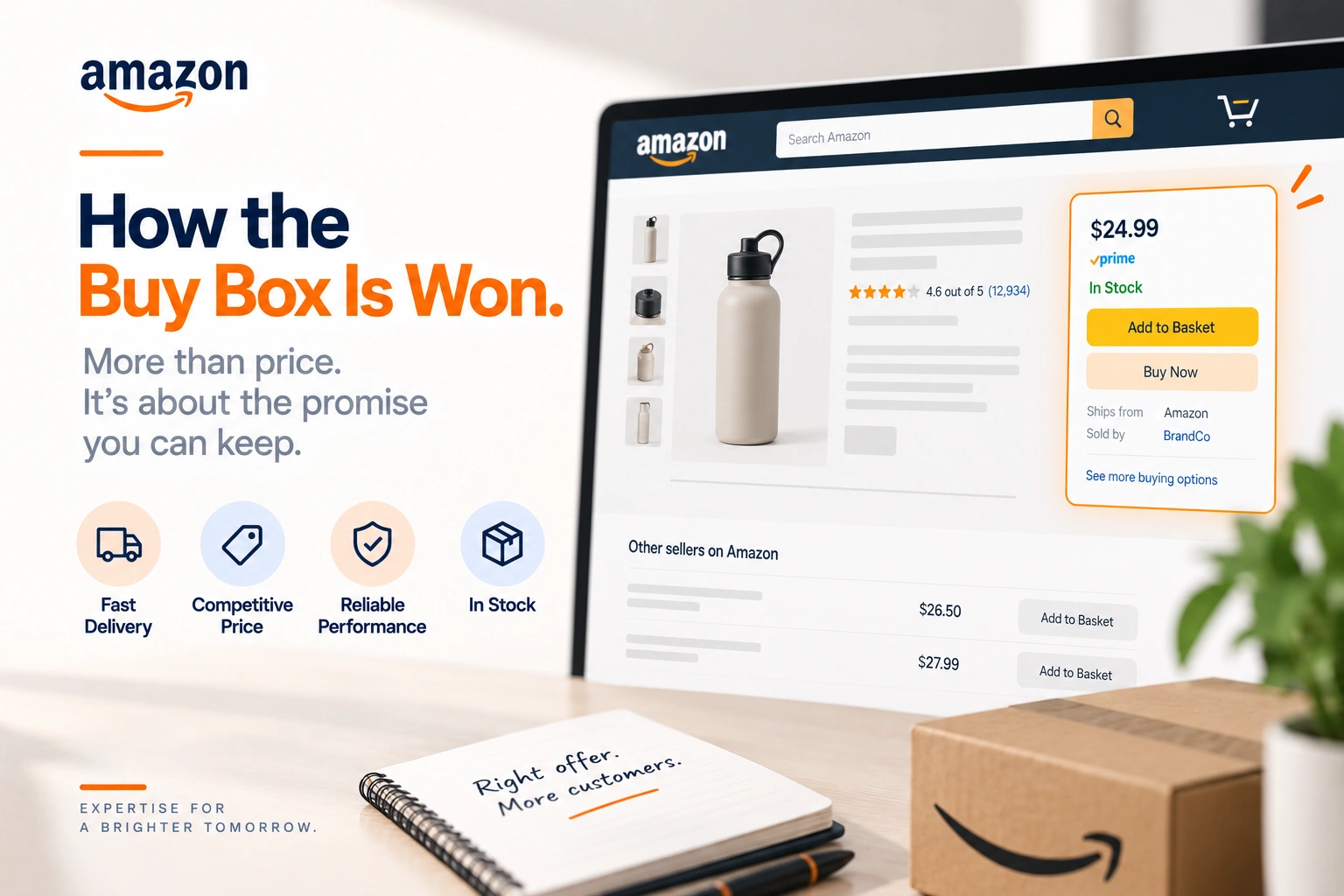
Several sellers can offer the same product on the same page. One of them gets the Add to Basket button, and that seller takes the overwhelming majority of the sales on that page. Everybody else is behind a link most shoppers never open.
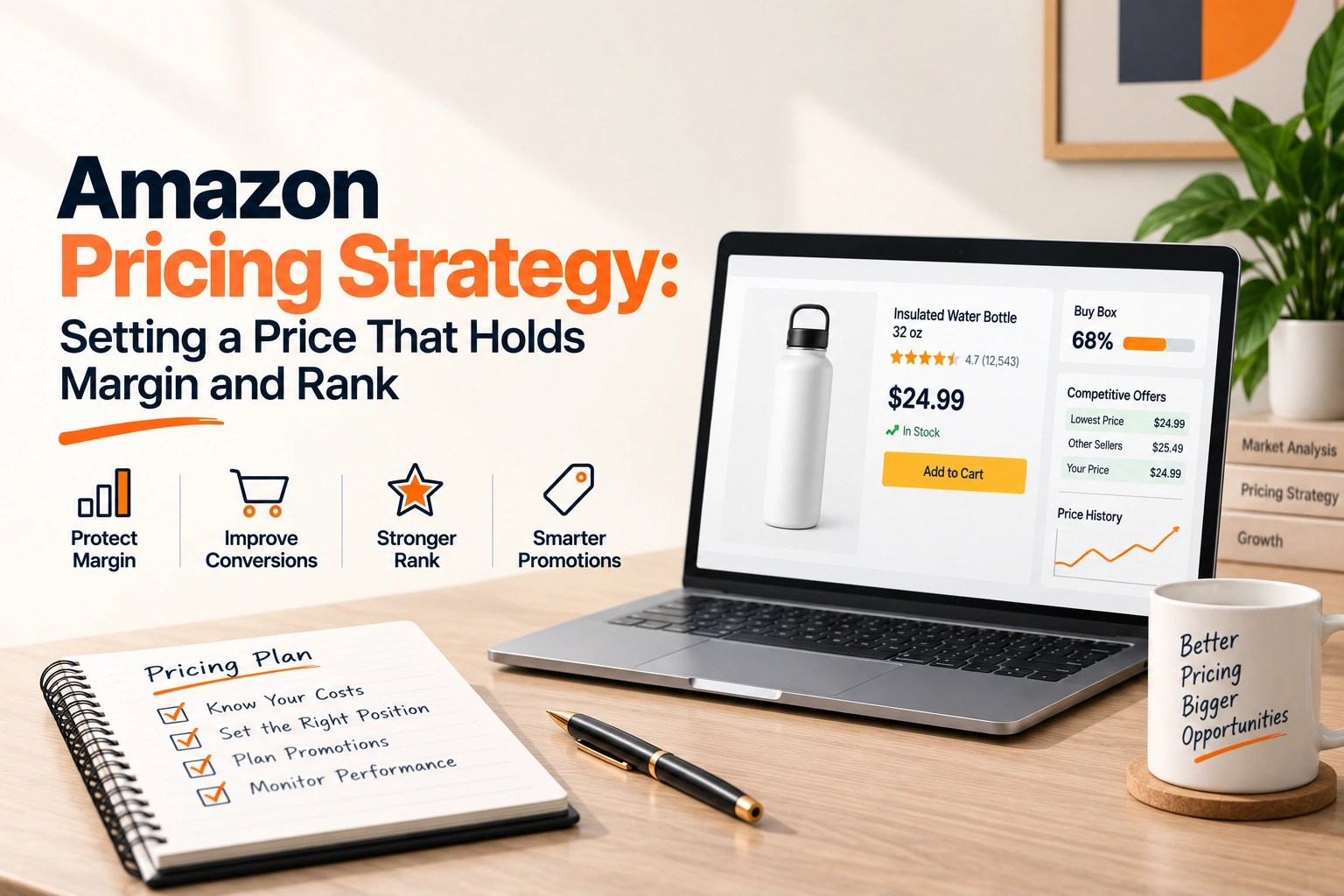
That button is the buy box, and the share of page views where you held it is what Seller Central calls your buy box percentage.
Why it exists
It is a promise about the delivery, not a reward for the seller. Amazon is choosing which offer it is willing to stand behind for a shopper who does not want to compare merchants, and most shoppers do not.
That framing explains almost every rule underneath it. The winning offer is the one Amazon expects to arrive fastest, in the condition described, with the least chance of a problem afterwards.
What actually decides it
Delivery. The single biggest input. Amazon says the fulfilment method itself is not scored and the delivery promise is: the speed, free shipping and free returns. An FBA offer is competing on Amazon's own promise, which is fast and free by construction; a merchant-fulfilled offer is competing on yours, and yours has to be genuinely fast, genuinely free and genuinely reliable to keep up. This is the reason most of the buy box question is still really the FBA or FBM question, even though the method is not the thing being weighed.
Landed price. Item plus delivery, not the item alone. An offer a little dearer with free delivery frequently beats a cheaper one with postage on top.
Seller performance. Late shipments, cancellations, defect rate, response times. These are the metrics on your account health page, and they are the ones that quietly cost you the button before they ever cost you the account.
Stock. An offer that cannot ship is not an offer. Running out does not just stop sales that day, it hands the position to somebody else and you have to earn it back.
Condition. Used offers do not compete with new ones for the same button; they have their own.
Amazon calls it the Featured Offer, and the gate came off in 2026
Amazon's own name for the button is the Featured Offer, and that is what Seller Central reports it as; buy box is the name sellers use. Until 2026, winning it was a two-step process. First Amazon decided whether a seller was eligible at all, on account-level performance, and only then did it rank the offers of the eligible sellers on the measures above. A seller whose metrics fell below the bar was out of the running on every listing, whatever the price or the delivery.
Starting in July 2026 Amazon removed the eligibility step, rolling the change out store by store through the end of the year, and its announcement put it plainly: every seller's offers are now in the running to be evaluated. Nothing changes in the ranking. Amazon lists the same six things it weighs, total price with delivery, delivery speed, free shipping, free returns, seller performance and stock, and it names four things it does not weigh: customer reviews, star ratings, the Prime badge and the fulfilment method.
So performance did not stop mattering; it stopped being a locked door. An account with a dented late-shipment rate is no longer shut out of the button on every listing, but its offers are ranked with that rate counted against them, so the fix is the fix it always was. What has changed is the competition: more offers on every page are in the running, including offers from sellers who used to be gated out.
The change also produced the forum threads. In the weeks after it reached their stores, brand owners who are the only seller of their own product reported their Featured Offer share falling from 100% to somewhere between a half and three quarters with nothing changed on their side, and Amazon's forum staff had no explanation beyond the general one. That is a reported experience, not a rule, and the useful reading of it is the next section: when the share moves and you did not, look at what Amazon is comparing your offer against, which for a sole seller means the pages where the button was shown to nobody.
Why your share moves when you changed nothing
Because the other side of the comparison moved. A competitor came back into stock, someone repriced, a seller with faster delivery arrived, or your own stock got low enough that Amazon started splitting the page between offers.
The button can also rotate between comparable offers, so two sellers close on every measure share the page over the day rather than one taking all of it. A percentage that sits in the seventies is often that rather than something wrong.
And on some pages nobody wins it. When Amazon judges the price too high against its own reference, the button disappears for everyone and the page shows a See All Buying Options link instead, which converts far worse for all of you.
What a seller can control
Fulfilment method, stock cover, landed price, and the performance metrics. That is the list. Everything else is somebody else's decision.
Which means the practical work is unglamorous: keep the fast-moving lines in stock, keep delivery promises you can meet, price including delivery rather than beside it, and fix defect and late-shipment rates before they matter.
Repricing, and where it goes wrong
Automatic repricing wins the button by cutting the price against whoever is cheapest, which works and is also how a category ends up unprofitable for everybody in it.
Set a floor that reflects your real costs, including fees, returns and advertising, and let the tool work above it rather than through it. A rule that has no floor eventually finds the price at which you lose money on every sale, and it finds it faster than you will notice.
If you own the brand
Then the question changes. Other sellers offering your product is legitimate if their stock is genuine, and the answer is not usually an enforcement report. It is Brand Registry, control of the listing, and being the offer Amazon prefers on every measure that decides the button.
Distribution is the other half. Most unwanted sellers arrive because somebody in your own supply chain sold to them, which is a contract question rather than a marketplace one.
What we do with this
Buy box share is one of the first things we read on a new Amazon account, because a listing that converts and does not hold the button is a different problem from one that holds the button and does not convert, and the fix for one does nothing for the other.
The same shape of question exists elsewhere. Walmart also picks a winning offer, and eBay decides which listing to show rather than which seller, which is why the same catalogue performs differently on each.
If your share is falling and nothing on your side changed, it is worth having somebody read the numbers.
Frequently asked questions
The questions that come up most often on this subject.
The Add to Basket button on a product page that several sellers offer. One seller holds it at a time and takes the overwhelming majority of that page's sales; every other offer sits behind a link most shoppers never open.
The share of page views where your offer held the button. Seller Central reports it per product and across the account, and it is the number to read when sales fall without traffic falling.
No, and this is the most common misunderstanding. Price counts as the landed price, item plus delivery, and it is weighed against fulfilment speed, stock and seller performance. A slightly dearer FBA offer beats a cheaper merchant-fulfilled one routinely.
No, but it is the strongest single input, because the offer is competing on Amazon's own delivery promise rather than yours. A merchant-fulfilled seller can win with genuinely fast, genuinely reliable delivery and good metrics, and has to be better on the rest to do it.
Almost always because the other side moved: a competitor restocked or repriced, a faster seller arrived, or your own stock dropped low enough that Amazon began splitting the page. Check your stock and the other offers before changing your price.
Amazon suppresses it when it judges the price too high against its own reference, and then the page shows See All Buying Options instead of a button. Everybody's conversion falls, so it is worth catching quickly.
In effect, yes. It rotates between offers that are close on every measure, so two comparable sellers split the page over a day. A percentage in the seventies is often that rather than a fault.
If their stock is genuine you cannot stop them offering it, so the answer is to be the offer Amazon prefers: fulfilment, stock cover, landed price and performance. Where the stock is not genuine, that is a Brand Registry matter, and where it keeps arriving, it is usually a distribution contract matter.
Not for the same button. Conditions have their own buy boxes, so a used offer does not take the new one, though it does sit on the same page and can take the sale from a shopper who was happy either way.
On a competitive catalogue, yes, with a floor that reflects your real costs including fees, returns and advertising. Without a floor a repricer eventually finds the price at which every sale loses money, and it finds it faster than you will notice.
Yes. Featured Offer is Amazon's name for the Add to Basket button, and the figure Seller Central reports as Featured Offer percentage is the buy box share; buy box is what sellers call it. The same measures decide both because they are one thing.
The separate seller-eligibility step, yes. From July 2026, rolling out across its stores through the end of the year, Amazon no longer decides first whether a seller is eligible on account performance and then ranks only the eligible; every seller's offers are ranked. Performance still counts inside that ranking, so a poor late-shipment or defect rate still costs the button, just not on every listing at once.
Not as such. Amazon says the fulfilment method, the Prime badge, customer reviews and star ratings are not factors. What is scored is what those things usually bring: delivery speed, free shipping, free returns and stock. FBA wins the button so often because it supplies all four by default, not because it is FBA.