

Food & Beverage
+29.50%Revenue on a Sub-£2K Budget
Three campaigns, seventy orders a month, and bidding aimed at the wrong goal.
Read the case studyFood sells on repeat purchase, and marketplaces add rules on labels, storage and expiration dates. We keep the catalogue compliant and the stock moving, so a first order turns into a repeat one.
Loading Food & Beverage hero image
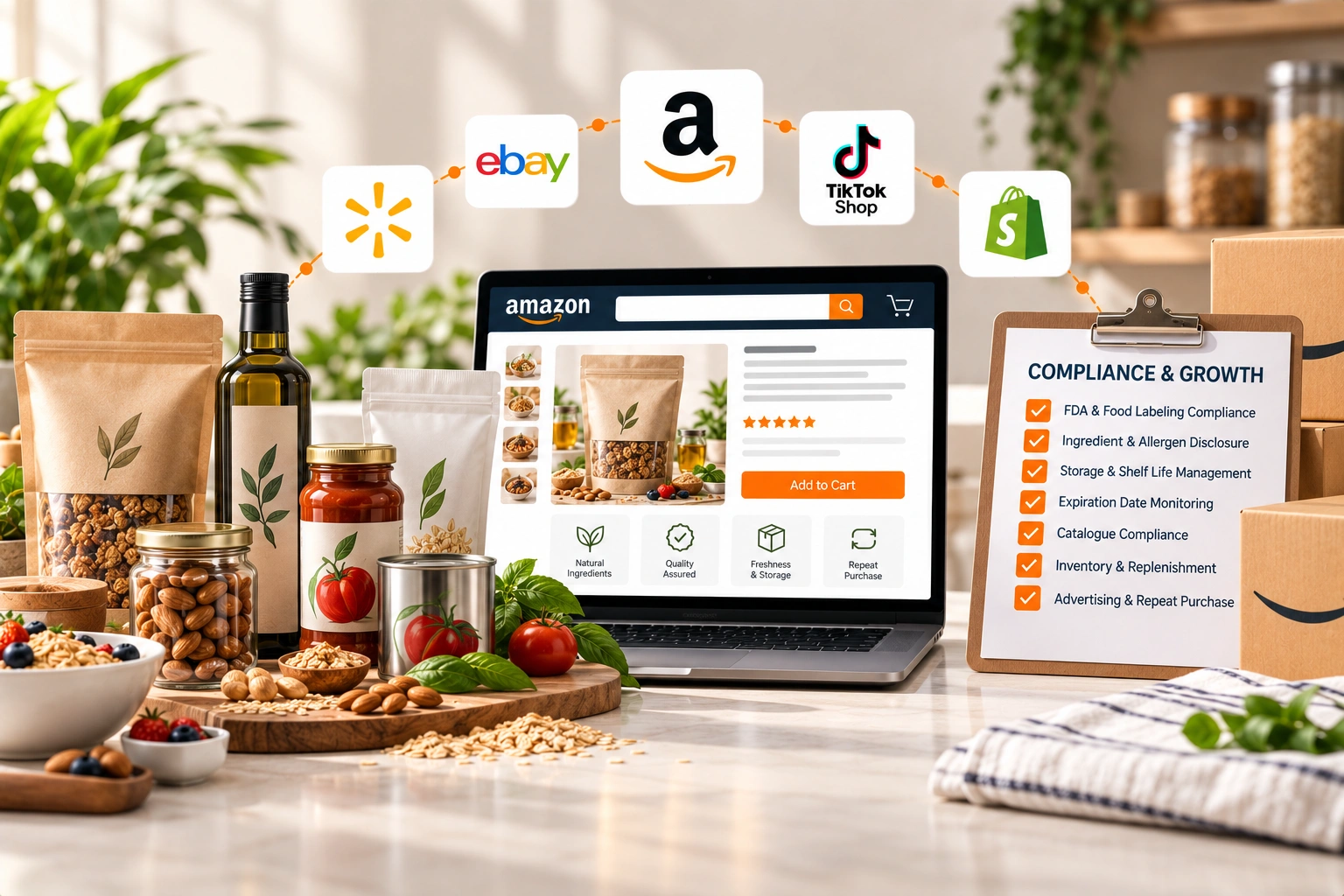
The three areas that decide margin in grocery.
Grocery and gourmet food can require approval on Amazon, and a listing must match the product label, ingredients and allergens included. We prepare the documents and keep listing and label in step.
Fulfilment centres accept food only with enough shelf life left and remove stock as it nears its date. Inventory is planned around those dates so product is not destroyed or sold at a loss.
Grocery margins are thin on a first order. Subscribe and Save, bundles and advertising aimed at returning buyers make the account profitable over a customer's lifetime.
A pantry buyer who orders by the case.
Food sells on Amazon in cases and multipacks, delivered on a schedule, rather than as single units. The listing is built for the case, the price per unit is what the buyer compares, and Subscribe and Save is where the account earns.
Walmart buys everyday food at everyday prices and is the natural second channel for snacks, beverages and pantry staples that already sell in stores. Its marketplace grocery category has its own setup and freshness rules.
The buyers who search hardest are the ones with a constraint: gluten free, keto, halal, low sugar. A listing that states the constraint in the title and proves it on the label wins a search a general brand cannot.
The label, the date and the temperature.
A food listing carries the Nutrition Facts panel, the ingredient list and the allergen statement as images, and the text has to agree with them. Amazon suppresses food listings whose images leave the label out.
FBA checks remaining shelf life at check-in and disposes of stock that gets close to its date, so a shipment is sized to sell through well before expiry. A lot code and a best before date printed on every unit are required, not optional.
Chocolate, gummies and anything that softens are meltable inventory, which FBA does not accept during the warm months, from the middle of April to the middle of October, and which ships from the seller or a temperature controlled warehouse in that window. The calendar for those products starts in autumn.
The services a food brand uses most: the grocery approval and the label on the listing, FBA planned around shelf life and the meltable window, and the advertising that builds the reorder.
Holiday, resolutions and a margin measured per case.
Fourth quarter gifting and January resolutions are the peaks; summer is the meltable gap for confectionery and a peak for beverages. Advertising and inbound follow the product's own season, not the general calendar.
Fulfilment fees are charged per shipped unit, so a six pack pays one fee where six singles pay six. Pack sizes are chosen against the fee tiers as much as against the buyer.
Liquids are heavy, and fulfilment fees rise with weight, so a beverage brand prices for the fee or ships from its own warehouse. Concentrates and powders travel better than bottles.
What we changed on real accounts, and what it moved.
Each category sells under its own rules, and each has its own page.
Supplements, vitamins and wellness products, listed within the rules that govern them.
Learn MoreSkincare, cosmetics, haircare and personal care brands.
Learn MoreApparel, shoes, jewellery and fashion accessories.
Learn MoreOutdoor living, gardening supplies and lawn care.
Learn MoreHardware, power tools and home improvement products.
Learn MoreIt is the address the first read goes to.