Health & Wellness
+46.24%Sales, +$222K in Six Months
Two weeks of January carried the year, then the line fell away.
Read the case studySupplements and wellness products sell under stricter rules than almost any other category. We keep listings compliant and documents current, so growth is never undone by a suppressed listing or a policy flag.
Loading Health & Wellness hero image
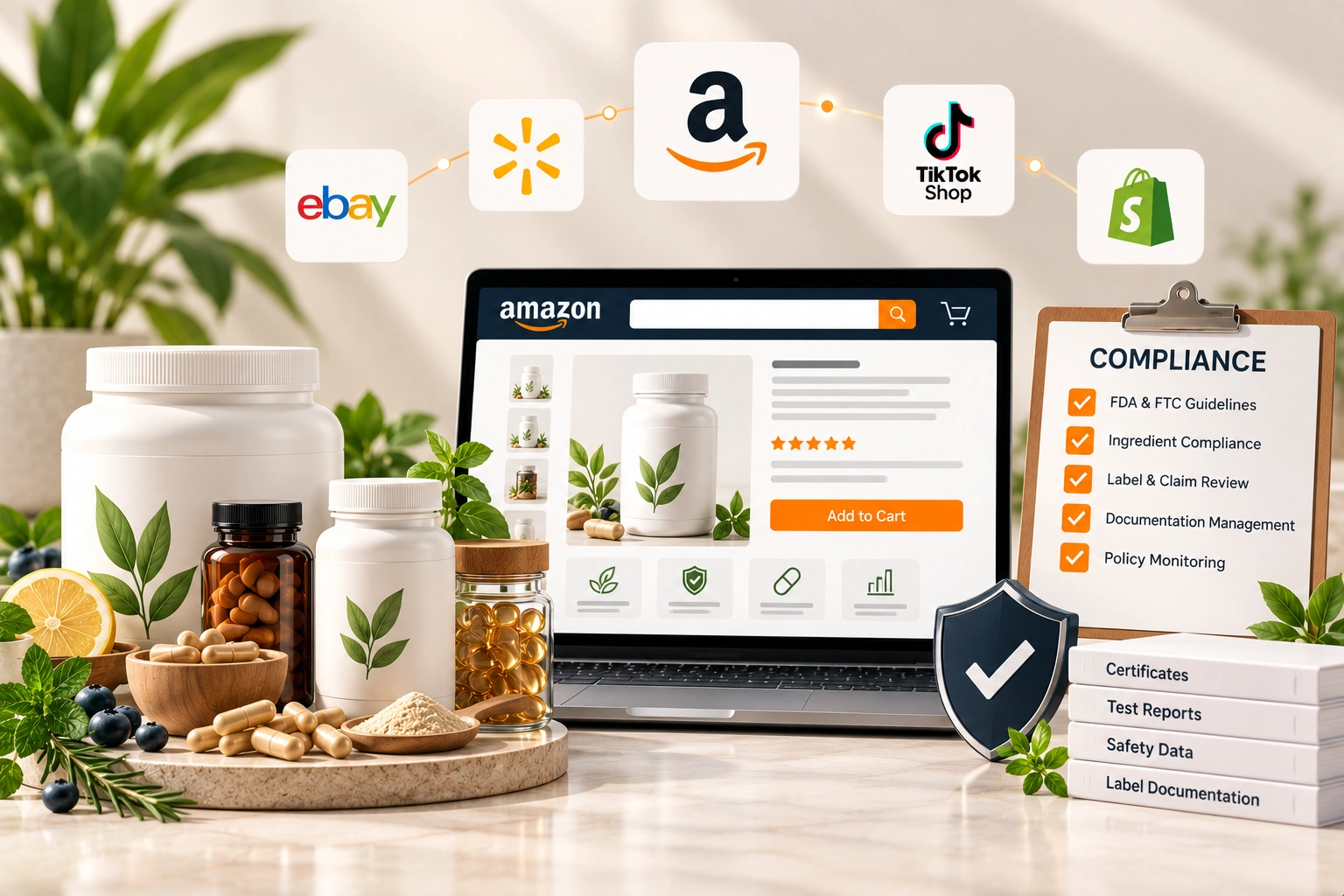
Three things decide whether a wellness brand grows or spends its time on appeals.
A supplement may describe how an ingredient supports the body, never that it treats or prevents a disease. Titles, bullets, images and A+ content are written to that line before they go live.
Amazon asks dietary supplements for verification by an approved testing organisation and labels that match the product, and a missing document can take a listing down. We track what each product needs.
Wellness shoppers read ingredients, dosage and reviews closely. Clear labels, comparison content and consistent answers convert better than louder claims.
A repeat buyer who reads the label twice.
Supplements are searched by ingredient and by outcome, and Amazon's category is where most of that search lands. A brand's page competes with private labels on price and with clinical brands on trust, and wins on the second.
A capsule bought every month is worth more than a launch, so the listing, the price and the coupon are set for the second order rather than the first. Subscribe and Save uptake is the number to watch.
Walmart's wellness buyer skews to household staples at everyday prices. TikTok Shop sells the visible routine, gummies, powders and sleep, through creators, with the platform's own claim rules applied to every video.
Beyond the claim itself: the label, the tests and the words.
A dietary supplement label carries a Supplement Facts panel, the serving, each ingredient and its amount, and the disclaimer that goes with a structure or function claim. A listing image that shows a different label from the bottle is the fastest way to a suppression.
Amazon asks supplement sellers for documents that show the product is what it says, such as a certificate of analysis from an accredited laboratory or a manufacturing certificate, and can ask again when the listing changes. Keep them current before they are requested.
Disease names, cure, treat, prevent and drug comparisons in the title, the bullets or the search terms are what the automated checks catch. The safe vocabulary describes support, maintenance and ingredients, and it converts as well.
The services a supplement brand uses most: compliant listings, the documents Amazon asks for, the advertising that runs on them, and the reinstatement work when a claim is flagged.
January and September, and a margin that lives on repeat.
New Year resolutions lift searches in January, and September brings a second lift around routine and immunity. Stock and advertising are planned for both, with Prime Day and the fourth quarter as gift moments for the premium end.
Supplement keywords are among the more expensive clicks on Amazon, because national brands bid on them. Ranking is built on long tail ingredient and outcome terms first, and the head terms are defended later.
Bottles are cheap to store and ship, and expiry dates set the clock. FBA takes remaining shelf life into account at check-in and removes stock as it nears the date, so inbound quantities follow the sell-through rate, not the discount.
What we changed on real accounts, and what it moved.
Each category sells under its own rules, and each has its own page.
Skincare, cosmetics, haircare and personal care brands.
Learn MoreApparel, shoes, jewellery and fashion accessories.
Learn MoreOutdoor living, gardening supplies and lawn care.
Learn MoreHardware, power tools and home improvement products.
Learn MoreIt is the address the first read goes to.