Amazon Pricing Strategy: Setting a Price That Holds Margin and Rank
Repricing is the mechanism. The strategy is the decision above it: where to sit against the market, what a coupon or a deal actually buys, and how Amazon's own pricing rules decide who is allowed to be seen.


Loading Article banner
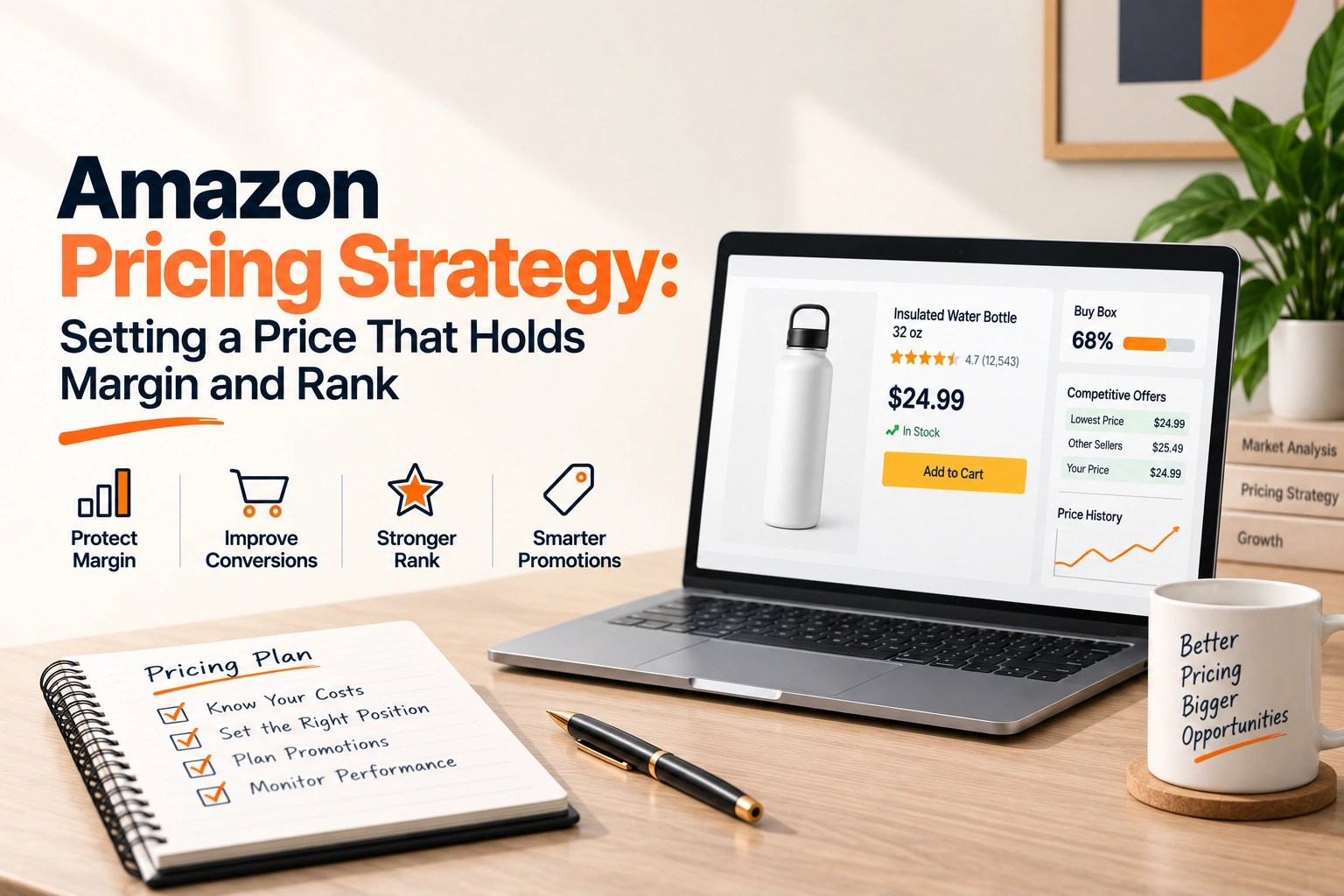
Most sellers do not have a pricing strategy on Amazon. They have a repricer, and the repricer has a floor, and the price is wherever the last competitor left it. That is a reaction, and a reaction to a market of sellers who are all reacting to each other ends in the same place every time: the floor, with the margin gone and the rank no better than it was.
A strategy is the decision above the repricer: where the product sits against the market on purpose, what a promotion is for, and what Amazon's own pricing rules will let it do. Those rules come first, because they decide who is allowed to be seen at all.
Amazon prices against the whole internet, and so must you
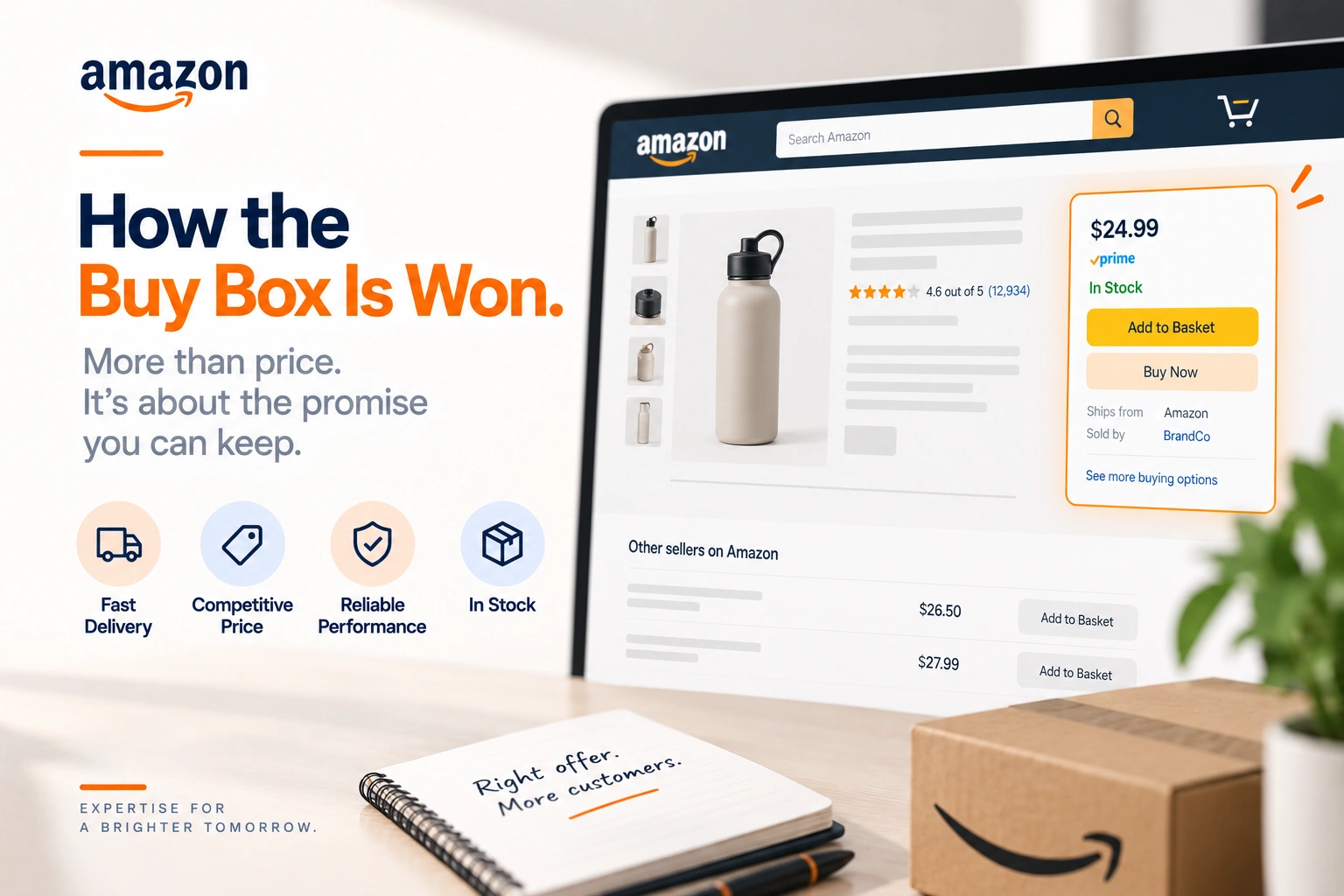
Amazon's Marketplace Fair Pricing Policy says it monitors the prices of items in its store, including shipping, and compares them with other prices available to its customers. A price it judges to be significantly higher than recent prices offered on or off Amazon is a practice that harms customer trust, and Amazon's response runs from removing the Featured Offer, through removing the offer, to suspending the account in serious or repeated cases.
The practical version of that policy is the Pricing Health page in Seller Central, which lists every offer currently ineligible to be the Featured Offer because it is not competitive with the lowest price at other reputable retailers, which Amazon calls the Competitive External Price, or because it is priced significantly above the recent prices Amazon has seen. An offer on that list is still live and still costs storage; it simply is not the one the buy button points at.
So the first input to a strategy is not the competitor on the listing. It is the lowest price for the same product anywhere Amazon can see, and a brand whose own site, or whose wholesale customers, undercut its Amazon price has set a ceiling on Amazon without meaning to. Channel price discipline is a pricing strategy in itself.
Where to sit: lead, match or hold
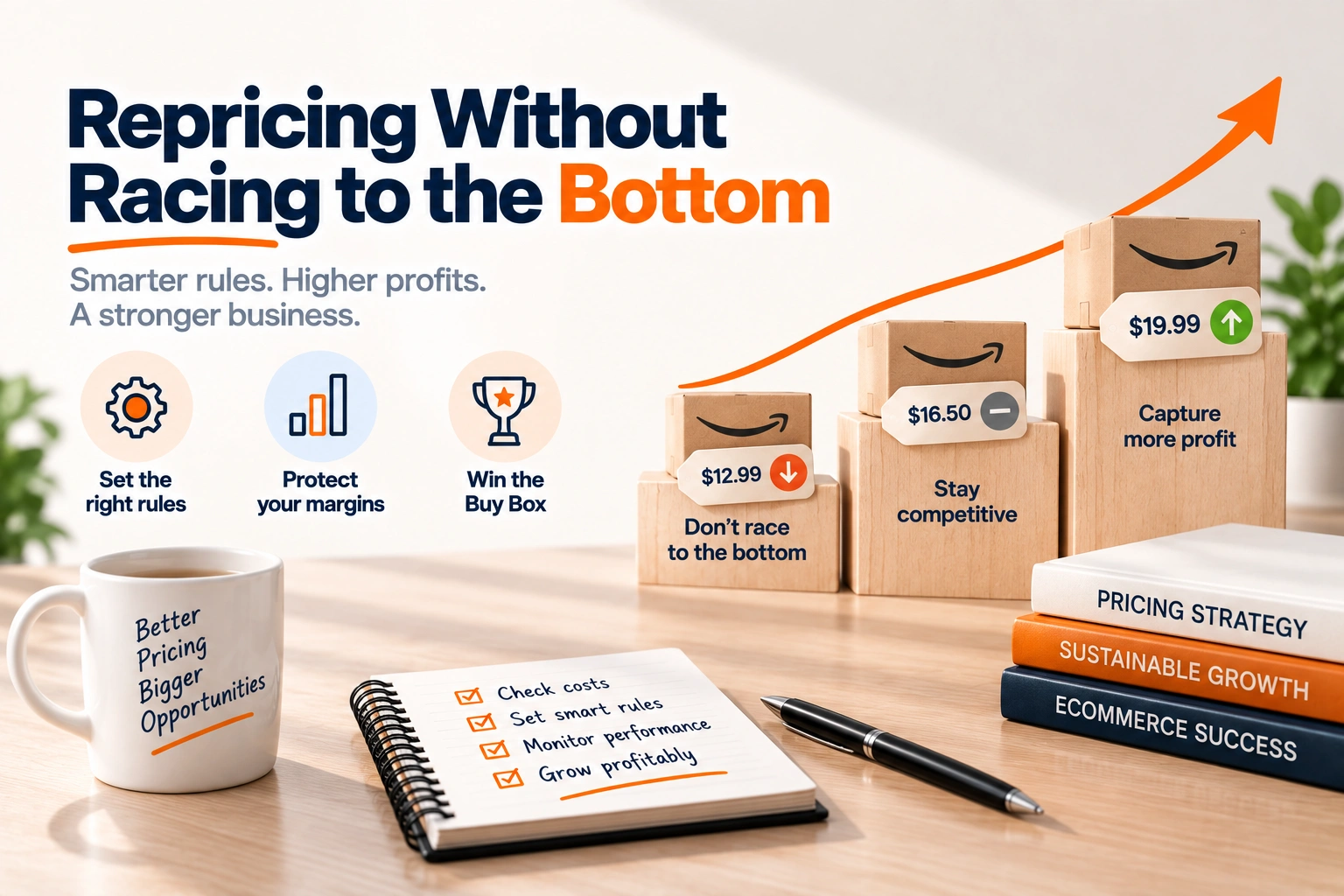
Against sellers on the same listing there are three positions, and each is a decision with a cost. Lead takes the Featured Offer most of the time, at the lowest margin, and invites the next seller to go a cent lower, which is how a listing races to the floor. It pays for a launch, where the share of the buy button is what ranks the product, and for lines where the seller has a structural cost advantage nobody else can follow. Match shares the Featured Offer on the other inputs, fulfilment, shipping speed, seller metrics and stock, and holds the price where the market is; it is the default for a seller whose account health is better than the competition's, because the tie goes to the better seller. Hold keeps the price above the market and accepts a smaller share of the button in exchange for margin; it works for a brand that owns the listing, controls its distribution and has the reviews, and it does not work for a reseller of a product ten other people also stock.
The mistake is choosing lead by default. A product that leads at a loss to win the button is buying rank with money it does not have, and the rank it buys belongs to the listing, which every seller on it shares. Which position a product is in should be a line in the plan, reviewed monthly, and the repricer's floor and ceiling should be set from it, which is the subject of a repricing strategy for marketplace sellers.
Dynamic pricing: Amazon's, and yours
Amazon itself prices dynamically on its retail offers, changing prices as demand, stock and competitors' prices move, and it makes a version of the same tool available to sellers for nothing. Automate Pricing is included in the Professional selling plan, needs an active offer on the product, and runs one of a handful of rules: match, undercut or sit slightly above the current Featured Offer; match, undercut or sit above the lowest price in the store; track the Competitive External Price beyond Amazon; a sales based rule that lowers the price when stock sits unsold; and a business rule that competes for the Business Featured Offer. A minimum price is required, a maximum is optional, and Amazon's own advice is to set both. Rule changes take up to an hour to apply and later price updates usually land in under 15 minutes.
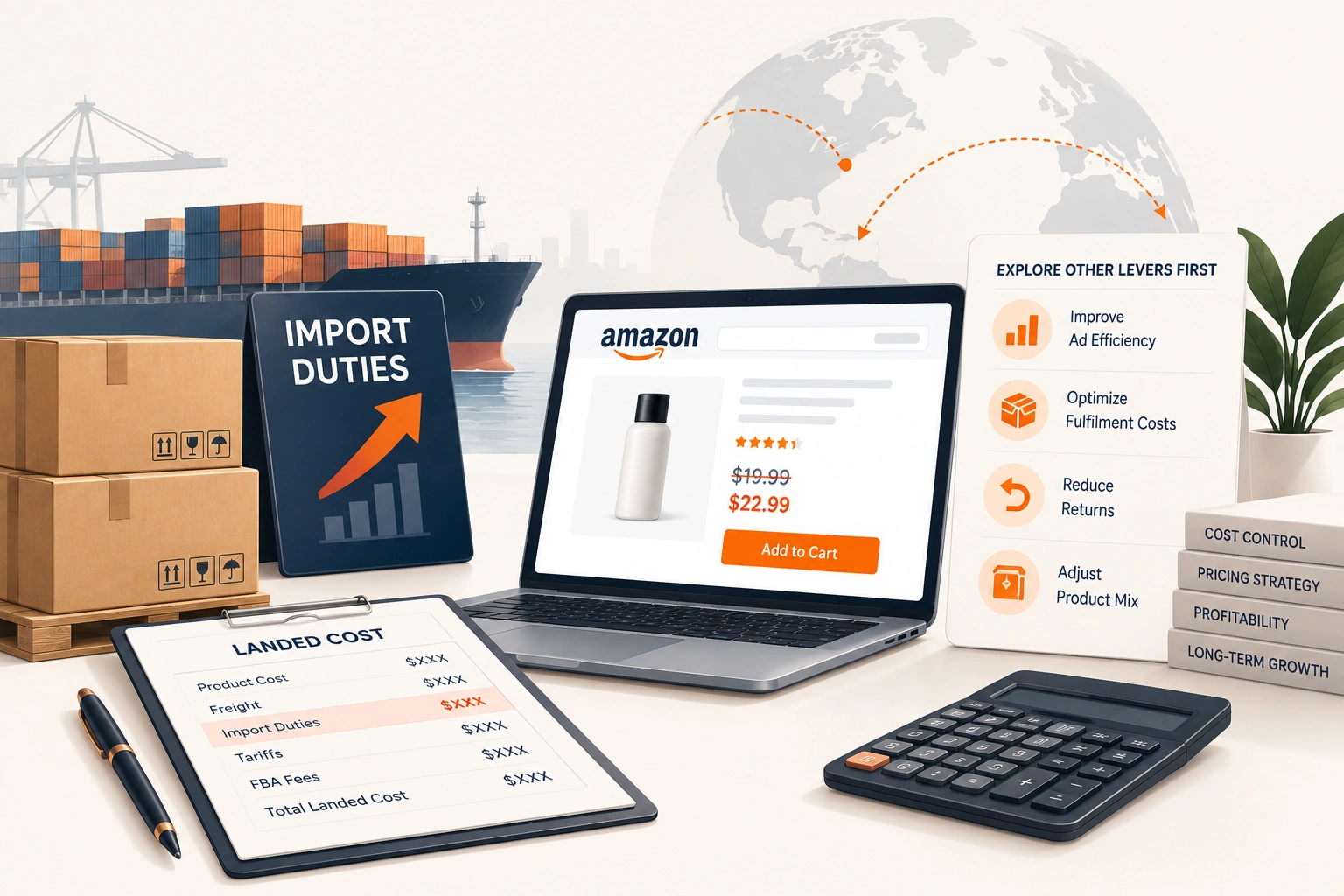
The tool is not the strategy. Every rule needs a floor, and the floor is the strategy's first number: the price below which the unit loses money once the referral fee, the fulfilment fee, storage, returns and advertising are paid. Most sellers set the floor from the cost of goods and forget the rest, which is why what it costs to sell on Amazon comes before this article, and the fee schedule is the reference the floor is built from. A repricer that is allowed to go below the true floor is a machine for selling at a loss faster than a person could.
Promotions: what a coupon or a deal actually buys
A promotion on Amazon is a temporary price, and it is worth being precise about what it costs and what it earns, because the fees changed in 2025. Coupons, the clipped discount shown on the listing and in search, moved on 2 June 2025 from a per unit fee to an up front fee of $5 per coupon plus 2.5% of the sales the coupon is redeemed on, as Amazon announced in Seller Central. A Prime Exclusive Discount has to be at least 10% off the non member, non promotional price, on a product in new condition with a rating of three stars or none, and the event versions of it, the Prime Day and holiday discounts, carry a flat fee per campaign that Amazon publishes ahead of each event.
What a promotion earns is a temporary lift in conversion, and conversion is what Amazon's ranking reads. So a coupon on a product that is already converting is mostly margin given away, while a coupon on a launch, or on a product whose sessions are fine and whose conversion is not, buys the sales velocity that moves rank, and the rank stays after the coupon ends. That is the test for every promotion: does it change a number the algorithm reads, or only the number the customer pays. A discount that does the second is a price cut wearing a badge.
The other thing a promotion does is set a reference. Amazon's fair pricing policy names misleading reference prices as a practice that harms customer trust, and a product that runs a discount most of the year has, in Amazon's eyes and the customer's, a normal price that is the discounted one. The strike through only means something if the price it strikes through was real, recently, and for most of the time.
Anchoring, and the price the customer thinks is normal
The listing shows a price, and often a reference price beside it, and the customer reads the two together. A brand that controls its listing can anchor deliberately: a list price that is genuinely charged elsewhere, a pack size that makes the per unit price read as fair, and a variation ladder in which the size most customers want is priced to look like the sensible middle. None of that lowers the price. It changes what the price is compared with.
What it cannot do is invent the anchor. The reference price has to be a price the product actually sold at, and Amazon checks. The honest version of anchoring is a stable everyday price held for months, so that a real promotion, when it comes, is measured against something the customer believes.
The plan, per product
A pricing strategy fits on one line per product: the true floor, the position against the market, the everyday price, the promotion calendar and what each promotion is meant to move, and the review date. The repricer is set from that line and not the other way round. Rank is checked against price monthly, because a price that holds margin and loses the button on every session is not a strategy either; what moves rank at the listing level, and how price sits among the other inputs, is in what moves rank on Amazon.
The same plan, with different fees and a different buy button, is what a Walmart pricing strategy needs, and a brand selling on both should write the two lines side by side, because a Walmart price that undercuts the Amazon price is a Competitive External Price Amazon will find.
Keep reading
For the brands we run, pricing is a weekly job inside our Amazon marketplace management: the floor rebuilt when a fee changes, the position reviewed against the Featured Offer share, promotions run for a reason and measured against rank rather than against the discount, and the Pricing Health page checked before anything else, because an offer that is not eligible to be seen has no price at all.
Frequently asked questions
The questions that come up most often on this subject.
On its own retail offers Amazon prices dynamically, moving prices with demand, stock and the prices it sees from competitors on and off Amazon. For sellers it enforces a Marketplace Fair Pricing Policy: an offer priced significantly higher than recent prices on or off Amazon can lose the Featured Offer, the listing, or in repeated cases the account, and the Pricing Health page in Seller Central shows which offers are affected.
Yes, on its own offers, and it gives sellers the same capability. Automate Pricing, free with the Professional selling plan, changes a seller's price under a rule the seller chooses: against the Featured Offer, against the lowest price in the store, against the lowest external price, or on sales velocity. It needs a minimum price and Amazon advises a maximum too.
No. Matching the lowest price by default races the listing to the floor and hands the margin to nobody. The Featured Offer is decided on price together with fulfilment, delivery speed, seller metrics and stock, so a seller with better metrics can share it at the market price, and a brand that owns its listing and its distribution can hold above it. Leading on price is for launches and for a real cost advantage.
Since 2 June 2025, as announced in Seller Central, a coupon costs an up front $5 per coupon plus 2.5% of the sales redeemed through it, on top of the discount itself. Before that the fee was charged per unit sold. The referral and fulfilment fees on each order are unchanged by the coupon.
A discount of at least 10% off the non member, non promotional price, on a product in new condition with a rating of three stars or more or no rating yet. The everyday version is offered on Prime and non Prime offers; the event versions, for Prime Day and the holiday period, carry a flat campaign fee that Amazon publishes ahead of the event.