Listing optimisation gets sold as a rewrite. In practice it is two separate jobs that happen to share a page, and confusing them is why so many rewrites change nothing.
The first job is relevance: making the listing eligible to appear for the searches you want. The second is conversion: making the shopper who lands buy. Amazon rewards the second by showing you more of the first, which is the whole mechanism.
The title, the bullet points, the description or A+ content, the
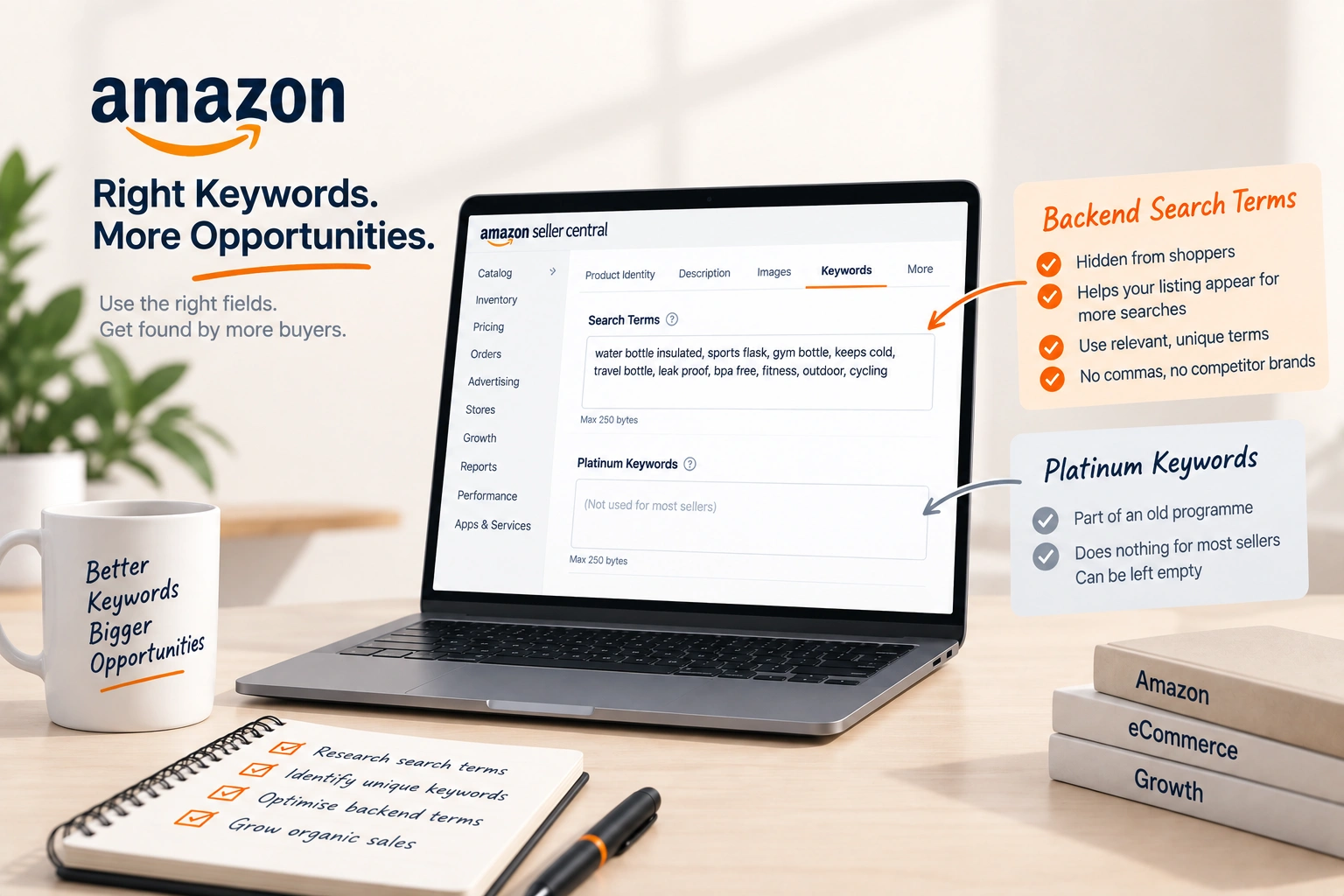
backend search terms, and the structured attributes behind the listing. Between them they decide what searches the listing can appear for at all.
The commonest failure is not the words. It is the attributes: an item with the wrong browse node, missing variation data or an empty size field is competing with one hand tied, and no amount of title rewriting fixes it.
Backend search terms are their own subject, with rules people routinely get wrong. We cover them in
how paid search works on Amazon.
A title has to carry the terms the listing should be found for, and it has to be readable in the width a phone gives it. Those pull in opposite directions, and the second matters more than most sellers act as though it does.
The pattern that works: brand, the product in the words a shopper would use, then the one or two attributes that decide the purchase. Size, count, colour, compatibility. Everything else belongs in the bullets.
Keyword stuffing past that point costs conversion and buys very little relevance, because the terms are already in the listing somewhere Amazon can read them.
The five bullets are where a shopper decides. Written as a feature list they read as a specification; written as answers to the five things that stop somebody buying, they close.
Get those five from your own evidence: the questions on the listing, the negative reviews on yours and on competitors', and the tickets your support team answers most often. That is a better brief than any keyword tool produces.
One idea per bullet, front loaded, because the first few words are what gets read on a phone.
Image order is a conversion decision. The main image sells the click; the second and third carry the objections the bullets are answering; the last is usually where a size chart or a comparison belongs.
The gap most catalogues have is the infographic that answers the question the reviews keep asking. Adding it is cheaper than any advertising change and it moves conversion on the listing rather than on one campaign.
The rules on image size, background and content are strict and worth reading properly rather than approximating.
By the time somebody reaches A+ content they are interested and comparing. It is the place for the comparison chart, the use cases, and the brand reason to prefer you, not a second run at the bullets.
It also replaces the plain description on listings that have it, which is worth knowing: text that was doing a job in the description does not automatically survive.
Attributes and category first, because they decide eligibility and cost nothing to fix. Then images, because they move conversion most per hour spent. Then the title. Then bullets, then A+ content, then backend terms.
That order is deliberately not the order the page is written in. It is the order of return.
Change one thing at a time on a listing with meaningful traffic, and give it a fortnight. Changing five things at once produces a number you cannot attribute, which is how sellers end up repeating work that never worked.
Advertising and listing quality are not separate projects. A campaign sends traffic to a page; if the page converts badly, the campaign pays for the failure and the
organic rank falls with it.
The search terms report is also the best listing research available, because it is what real shoppers typed before they bought. Terms converting well in ads belong in the listing; terms spending without converting belong nowhere. That relationship is the subject of
the strategies built on those search terms.
Listing work is part of
Amazon account management rather than a one-off exercise: a catalogue drifts, competitors change, and a listing optimised eighteen months ago is a listing optimised for a different search page.
The same discipline transfers with different rules on
Walmart and
eBay, and the creative behind it is
design work rather than copywriting.
If you would rather have it audited than described,
tell us which listings.
Related reading: Adding Keywords to Amazon Listings Without Ruining Them, A+ Content and Premium A+: What Each Is Worth and Brand Analytics: The Market Data Nobody Opens.
Related reading: Amazon's 75 Character Title Limit and Item Highlights: What Changed and What to Write, How the Amazon Catalogue Works: ASINs, Contributions and Who Controls a Listing, Amazon Product Not Showing in Search: How to Test Indexing and What to Fix, Amazon Product Image Requirements 2026: Main Image Rules and What Gets Suppressed, eCommerce Product Photography That Sells, Amazon Product Variations, and What They Cost You, The Amazon Brand Store, and What It Is Actually For and Amazon Conversion Rate, and What Good Actually Looks Like.