Keyword Research When Shoppers Ask Instead of Type: Alexa for Shopping, Rufus, and What a Listing Must Answer
Amazon's shopping assistant answers questions from the listing, the reviews and the Q&A, and Amazon's ads now answer them too. Why the questions belong in keyword research beside the phrases, how to collect them, and what a listing has to state for the assistant to find it.


Loading Article banner
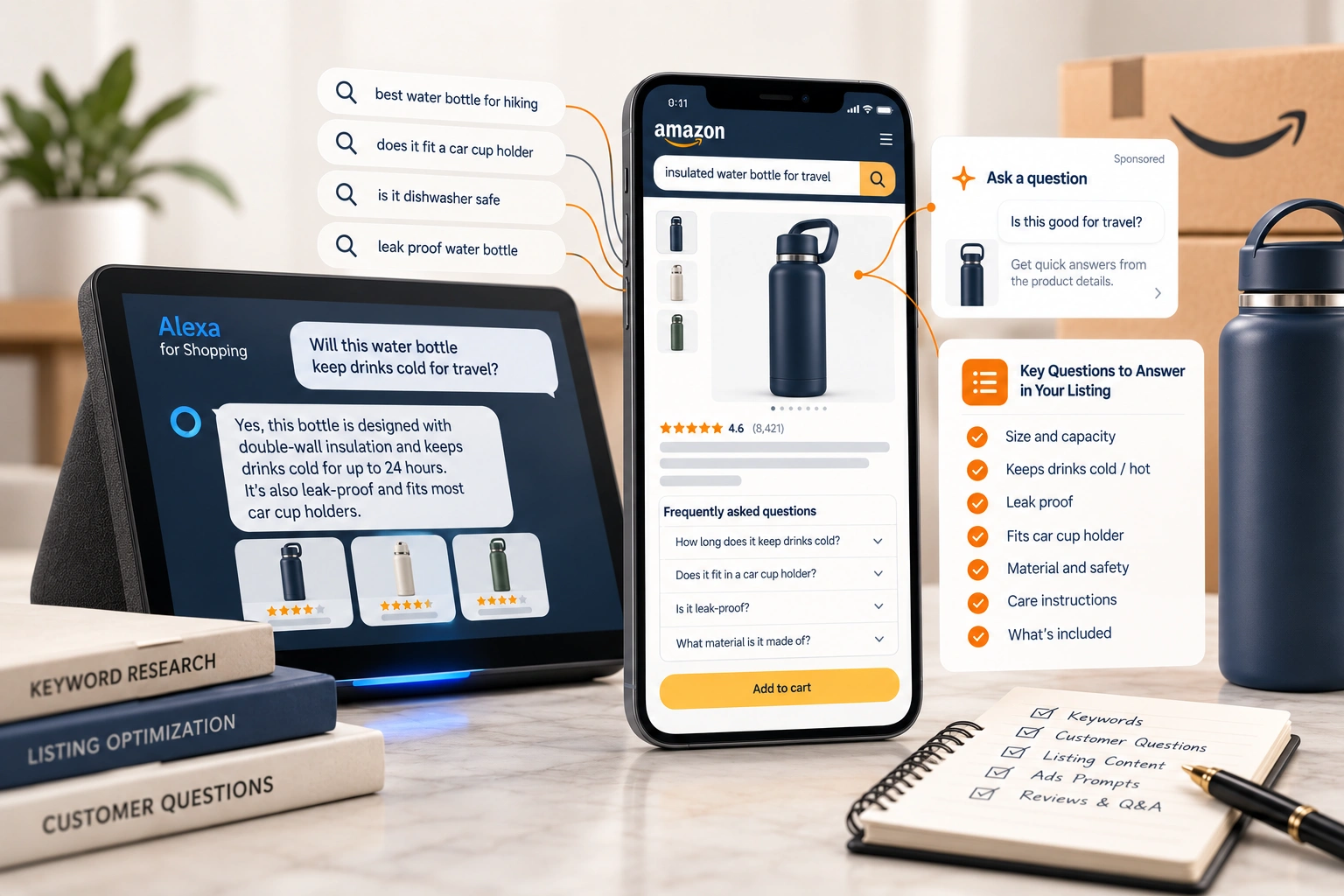
Keyword research on Amazon has always meant phrases: what shoppers type, how often, and which of those phrases a listing can win. A growing share of shoppers now do something else. They ask. "Are these durable?" "What do I need for cold weather golf?" "Best dinosaur toys for a 5-year-old." Amazon's shopping assistant answers, and it answers from the listing.
That changes what the research has to produce. The phrases still matter, because search still runs on them. But a listing also has to answer the questions its buyers ask, in words the assistant can find, or it is left out of the answer. This is what Amazon has said about how the assistant works, what its ads now do, and how to research the questions alongside the keywords.
What the assistant reads
Amazon introduced Rufus as an assistant "trained on Amazon's extensive product catalog, customer reviews, community Q&As, and information from across the web." On a product page, it answers "specific questions about individual products" using "listing details, customer reviews, and community Q&As." Those three are the whole of what a seller can influence directly: what the listing says, what customers say in reviews, and what the questions and answers on the page say.
This year Amazon folded Rufus into Alexa for Shopping, which it describes as combining Rufus's product knowledge with Alexa's personal knowledge of the customer. Amazon says Rufus "helped over 300 million customers in 2025." Alexa for Shopping is available in the US on the Amazon Shopping app, the website and Echo Show devices, and it can compare products, make personalised recommendations and track prices.
The ads now answer questions too
On 25 March 2026 Amazon made Sponsored Products prompts and Sponsored Brands prompts generally available in the US. Amazon describes them as an "AI-powered enhancement to your existing campaigns that automatically engages shoppers with relevant product information," shown "in shopping results and product detail pages on Amazon," and able to "open a dialog in Rufus or respond to the customer directly on the page."
Three details matter for a seller. Campaigns are "automatically enrolled in prompts," so they are probably running already. The prompts draw on "Amazon's first-party signals from your detail pages, Brand Store, campaign data, and more," so a thin listing produces thin prompts. And they are charged within the campaign's cost per click, and can be reviewed and paused in the Ads Console. Reading the prompts Amazon has generated is one of the few direct views a seller gets of what Amazon's systems think the listing says.
What changes in the research
Keep the phrase research. Search terms still decide where a listing appears in ordinary results, and Brand Analytics and the search terms report are still where that demand is measured. What changes is that phrases are no longer the whole of it.
Add the questions. Collect them from the places buyers already ask: the product's own Q&A, its reviews, the competitors' reviews and Q&A, and the messages customer service answers every week. Group them by what they are really asking about: size, fit, compatibility, durability, what is in the box, who it suits, how it compares with the obvious alternative. For an insulated water bottle, the groups might be how long it keeps a drink cold, whether it fits a car cup holder, whether it can go in the dishwasher, whether it leaks in a bag, and what the lid is made of. Each is a fact the listing can state, and each is a question somebody will ask.
Then map each group to the part of the listing that should answer it. The question "will this fit a 2019 model" needs the compatibility stated plainly in the bullets, not implied by a photograph. "Is it safe for a toddler" needs the age range and the material in words. An answer that exists only in an image, or only in a customer review from two years ago, is an answer the listing is leaving to chance.
What a listing must state
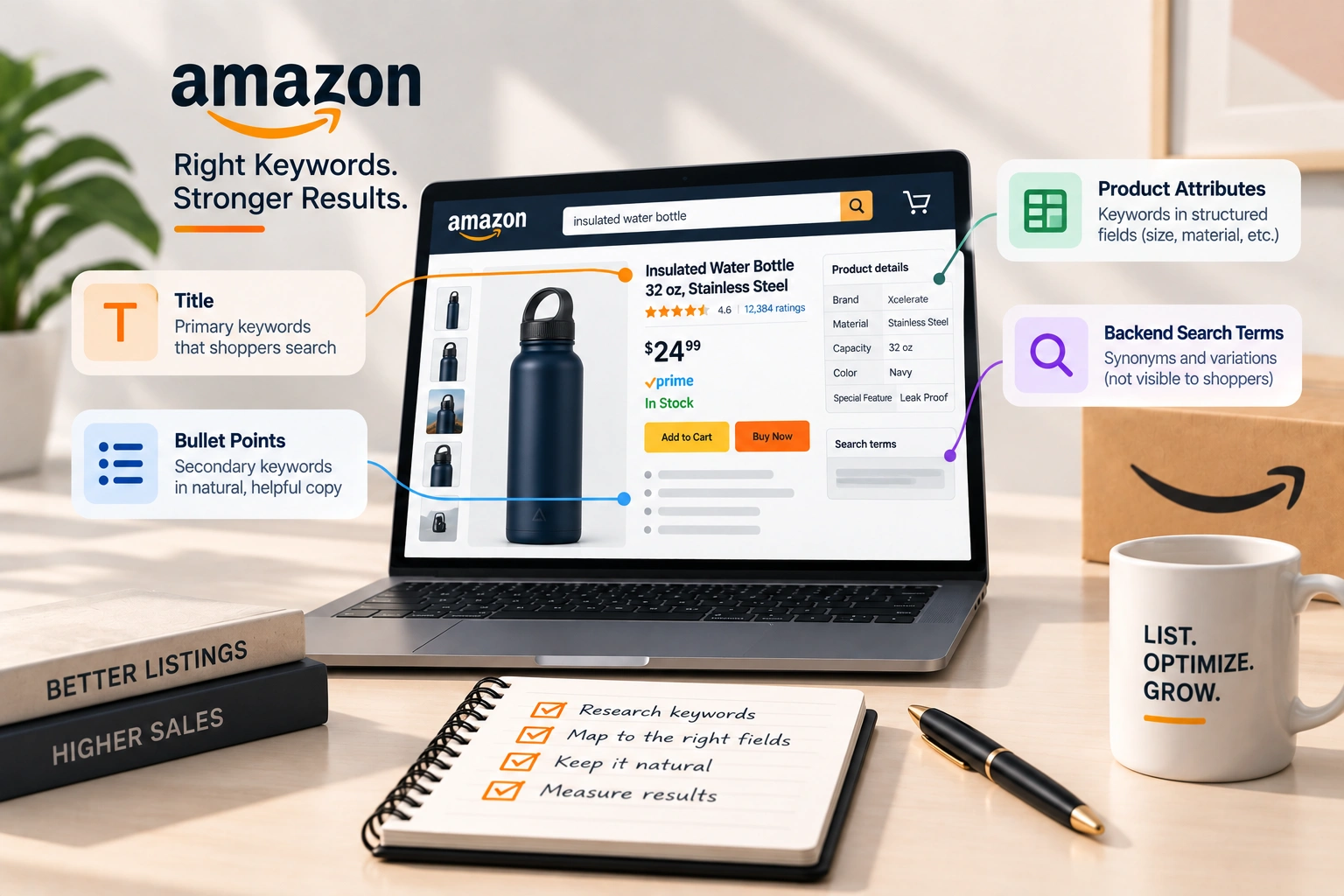
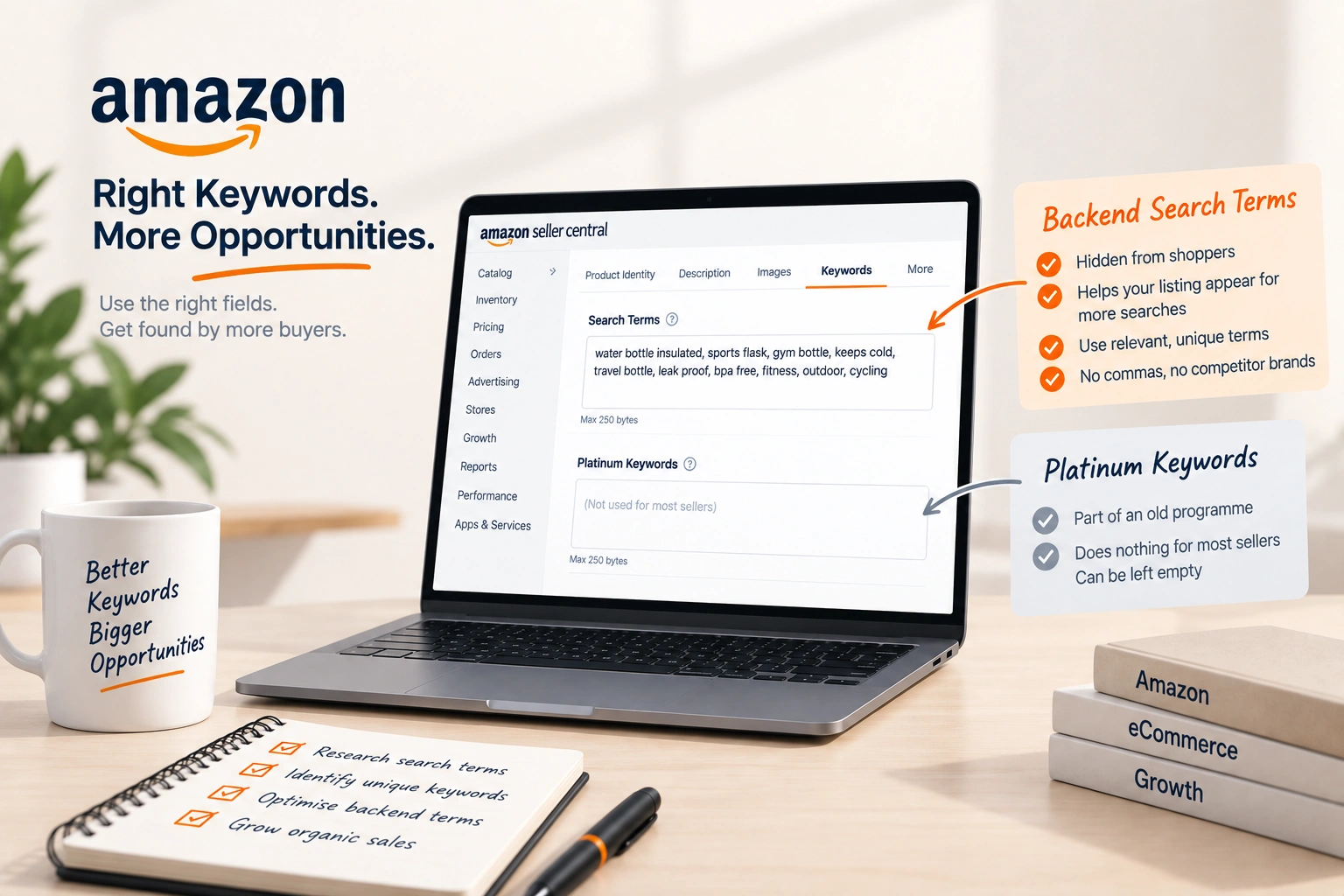
Facts in words, where the assistant can read them. Measurements with units, materials, what is included, compatibility, the age or use it is for, care instructions. The title has limits, so most of this belongs in the bullets, the description and the item attributes; the 75 character title limit covers what the title can still carry. The backend fields matter less for questions than for phrases, and backend search terms sets out what they do.
Answer the recurring questions on the page. If buyers keep asking the same thing in the Q&A, the listing is missing a sentence. Put it in the bullets, and the question stops needing an answer from a stranger.
Treat the reviews as part of the listing. The assistant reads them, and a product whose reviews keep mentioning a flaw will have that flaw in its answers. That is a product or packaging problem to fix, not a keyword problem to write around.
What nobody outside Amazon knows
Amazon has not published how the assistant chooses which products to mention or in what order. Anyone selling a formula for ranking in its answers is guessing. What Amazon has said is where the answers come from, and that is enough to act on: a listing that states the facts its buyers ask about gives the assistant something to use, and one that does not leaves the answer to reviews and competitors.
How we work on it
Keyword research done this way produces two maps for a product: the phrases, with their demand, and the questions, grouped and matched to the place in the listing that answers them. The prompts running in a brand's campaigns belong beside them, read as part of its Amazon Advertising, since they show what Amazon has made of the page. A question with no answer on the page, and a prompt that says something the brand would not, are the two findings worth acting on first.
Frequently asked questions
The questions that come up most often on this subject.
It is Amazon's AI shopping assistant for US customers on the Amazon Shopping app, the website and Echo Show devices. Amazon folded Rufus into it this year, and it compares products, makes personalised recommendations and tracks prices.
On a product page, Amazon says it answers from the listing details, customer reviews and community Q&As. Rufus was trained on Amazon's product catalogue, customer reviews, community Q&As and information from across the web.
They are AI-generated prompts added to existing Sponsored Products and Sponsored Brands campaigns, shown in shopping results and on product pages, that can open a dialog in Rufus. They became generally available in the US on 25 March 2026, campaigns are enrolled automatically, they are charged within the campaign's cost per click, and they can be paused in the Ads Console.
Collect the questions buyers ask in reviews, Q&A and customer messages, group them, and make sure the bullets, description and attributes state the answers in words: measurements, materials, compatibility, what is included and who it suits. Amazon has not published how the assistant ranks products.
Yes. Ordinary search still runs on phrases, and Brand Analytics and the search terms report still measure that demand. The questions are an addition to keyword research, not a replacement for it.