The Amazon Search Terms Report, and How to Read It
The one report that says what shoppers actually typed. Most accounts download it, sort by spend, and miss the two decisions it exists to inform.


Loading Article banner
There is one report in an Amazon account that contains information no tool can supply: what real shoppers typed before they bought from you. Everything else is inference.
It is also the report most accounts glance at, sort by spend, and close. Two decisions come out of it every week, and both of them compound.
What it is, and what it is not
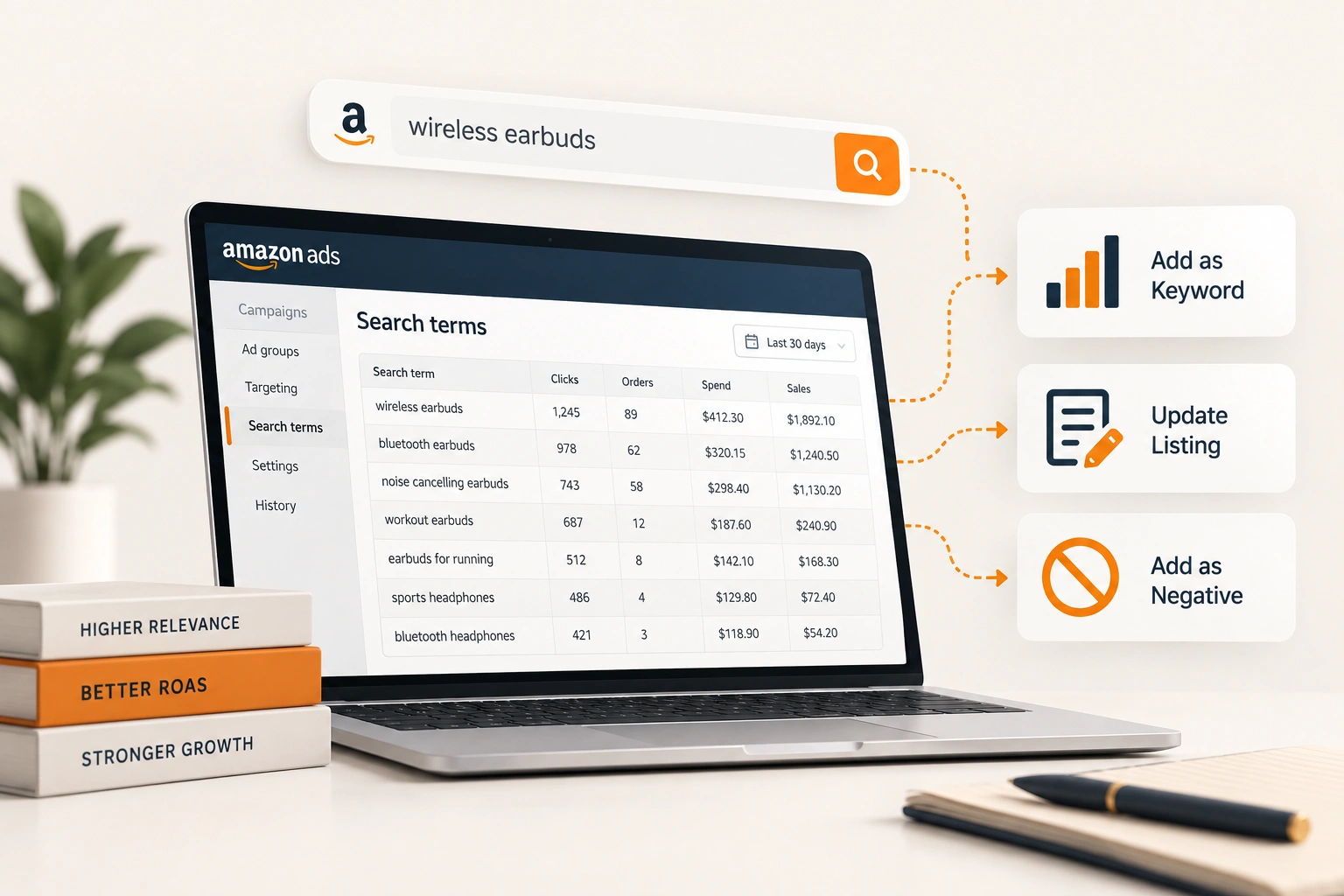
The search terms report shows the actual queries that triggered your ads, against the keywords or targets that matched them. The keyword report shows what you bid on. Those are different things and the gap between them is where the money goes.
A broad keyword can match hundreds of queries. Some of them are your product described differently, some are a competitor's product, and some are nothing to do with you at all. Only the search terms report tells you which.
Decision one: what to add
Any search term that has converted more than once, at an acceptable cost, deserves its own exact match keyword with its own bid. That takes the term out of the auction lottery a broad match runs and gives it a bid set by what it is worth.
The same terms belong in the listing, because a query that converts in advertising is a query the listing should rank for organically. That is the loop between paid and organic, and it only runs if somebody carries the terms across.
Decision two: what to stop paying for
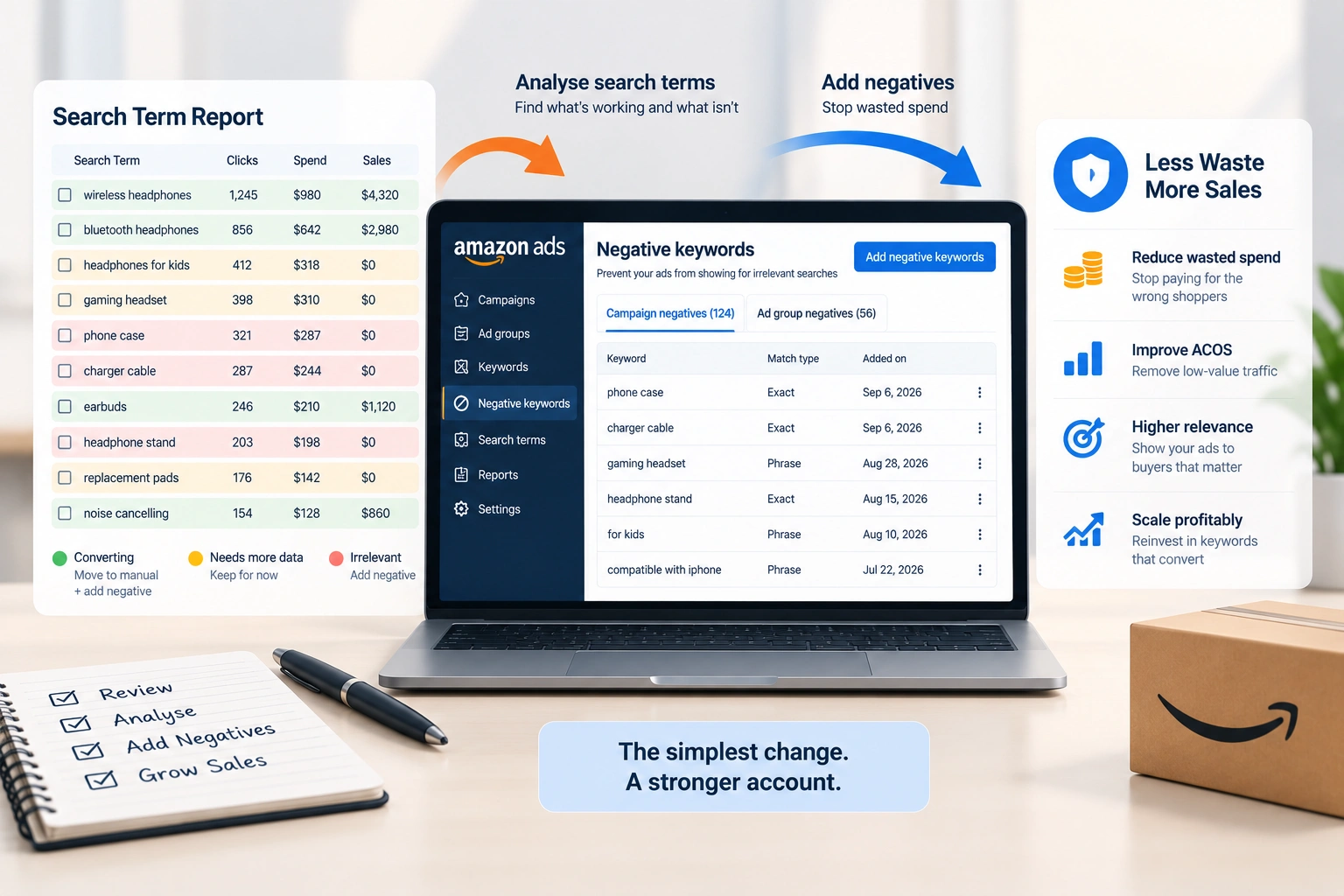
Any search term with clicks and no sales, past the point where the absence is meaningful, becomes a negative. How many clicks is enough depends on your conversion rate: if you convert at one in ten, ten clicks with no sale is normal and forty is not.
Negatives are the cheapest work available in any account. They cost an afternoon and they stop paying for traffic that was never going to buy.
The mistake is negating too early on too little data, which removes terms that were converting at a normal rate for your category. That is covered in the article on negative keywords.
The third thing it tells you, which is free
Product research. Terms appearing repeatedly that describe something adjacent to what you sell are demand you are not serving, and they are demand recorded in your own account rather than in a keyword tool's estimate.
The same is true of the words shoppers use. A catalogue written in the brand's vocabulary and searched in the customer's is a catalogue with a translation problem, and this report is the dictionary.
How often to read it
Weekly on the campaigns carrying most of the spend, monthly on the rest. The cadence matters more than the depth: a report read every week catches a term burning budget after seven days rather than after a quarter.
Automatic campaigns deserve the closest reading, because their whole job is discovering terms you did not think of. An automatic campaign nobody mines is a discovery budget with nobody collecting the discoveries, which is the point of running automatic and manual together.
What the report will not tell you
Volume. It reports what your ads matched, not what the market searched, so a term absent from it may be a term nobody searched or one your bids never reached.
And it withholds some queries, especially rare ones, so the rows never quite add up to the totals. That is Google and Amazon both protecting individual searches, and it is worth knowing before somebody spends an afternoon reconciling the difference.
What we do with this
Reading it is part of the weekly routine in Amazon account management, and the terms it produces go in two directions: into the campaigns as keywords and negatives, and into the listings as the words shoppers actually use.
The equivalent report exists on Walmart with thinner data, and on Google Ads where the same discipline applies to a much larger match surface.
Keep reading
If nobody has read yours in a month, that is usually where the first savings are.
Frequently asked questions
The questions that come up most often on this subject.
The report of actual shopper queries that triggered your ads, against the keywords or targets that matched them. It is the only source in the account for what people really typed, as opposed to what you bid on, and the gap between those two is where wasted spend lives.
The keyword report shows what you chose to bid on. The search terms report shows what shoppers actually searched. A single broad keyword can match hundreds of queries, and only this report says which of them were your product, a competitor's, or nothing to do with you.
Weekly for the campaigns carrying most of the spend, monthly for the rest. The cadence matters more than the depth: read weekly, a term burning budget is caught after seven days instead of after a quarter.
When it has enough clicks with no sales that the absence means something, which depends on your conversion rate. Converting at one in ten, forty clicks and no sale is a clear signal and ten is not. Negating too early removes terms that were converting normally for the category.
When it has converted more than once at an acceptable cost. Giving it an exact match keyword with its own bid takes it out of the broad match lottery and prices it at what it is worth to you.
Yes, and this is the step most accounts skip. A query that converts in advertising is a query the listing should rank for organically, and carrying the terms across is the whole of the loop between paid and organic.
Amazon withholds rare queries to protect individual searches, so the rows always sum to less than the total. That is expected rather than a fault, and it is worth knowing before somebody spends an afternoon trying to reconcile the difference.
No. It shows what your ads matched, not what the market searched. A term missing from it may be a term nobody searched, or one your bids never reached, and those are different problems.
Automatic campaigns, because discovering terms nobody thought of is their entire job. An automatic campaign that nobody mines is a discovery budget with nobody collecting the discoveries.
The collection and the obvious cases, yes: pulling the report, flagging terms past a click threshold with no sales, and surfacing converting terms not yet in the listing. What cannot be automated is the judgement about a term that is close to your product but not quite it, which is where the interesting decisions are.