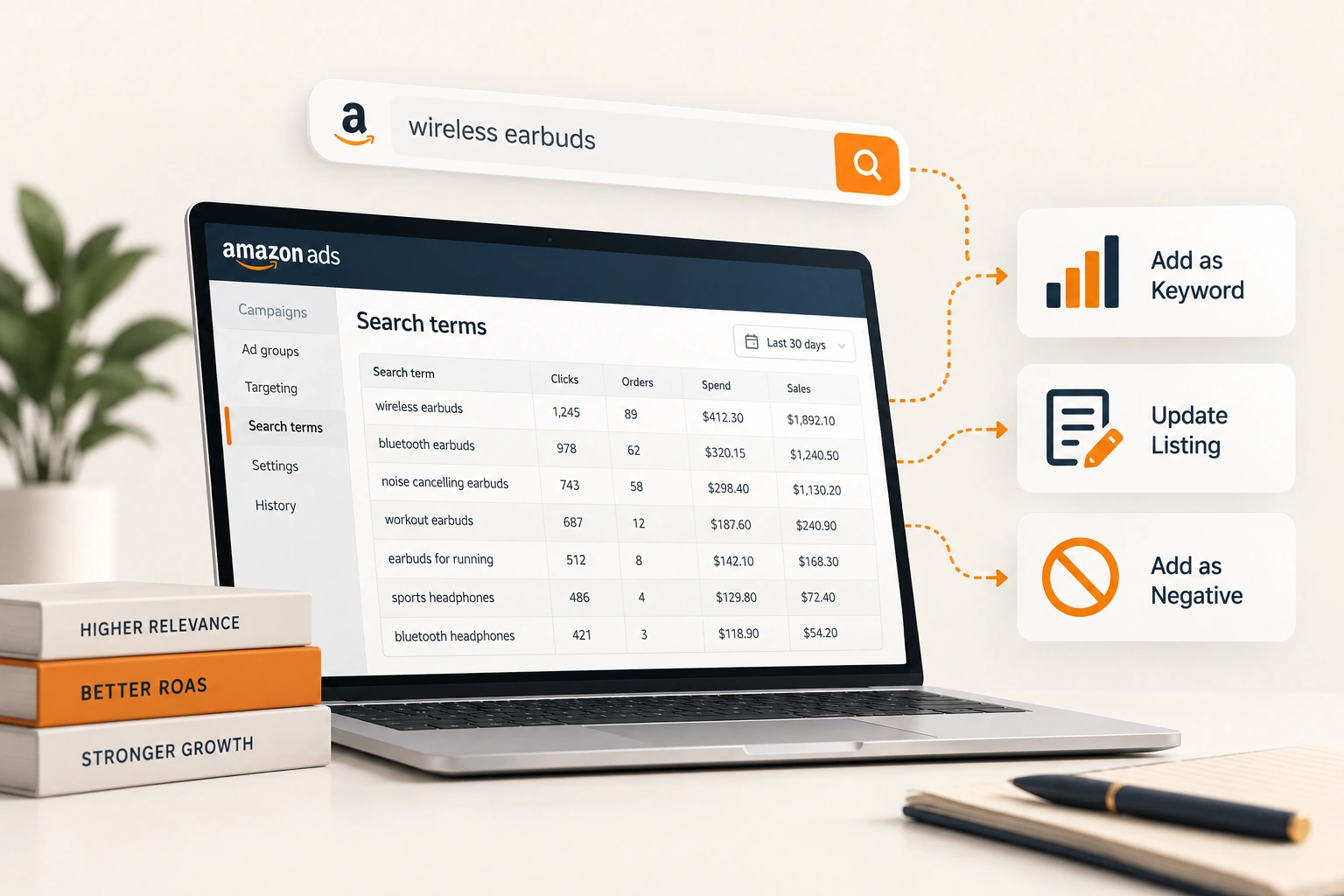
Negative Keywords: The Cheapest Work in Amazon PPC
No bid is low enough to make the wrong shopper buy. Negatives are the only lever that removes spend without removing sales, and most accounts barely use them.


Loading Article banner
Every other lever in an Amazon account trades one thing for another. Raise a bid and you buy placement with margin. Lower it and you save money by appearing less. Negative keywords are the only lever that removes spend without removing a single sale, and most accounts use a fraction of what they should.
The reason is simple: adding negatives is reading work rather than adjusting work, and reading is easier to postpone.
What a negative actually does
It tells Amazon not to show your product for a term, regardless of what your keywords say. It is the counterweight to broad match and automatic campaigns, which are deliberately loose so they can discover demand you had not thought of.
Loose matching without negatives is not discovery. It is a budget with no floor.
The three piles
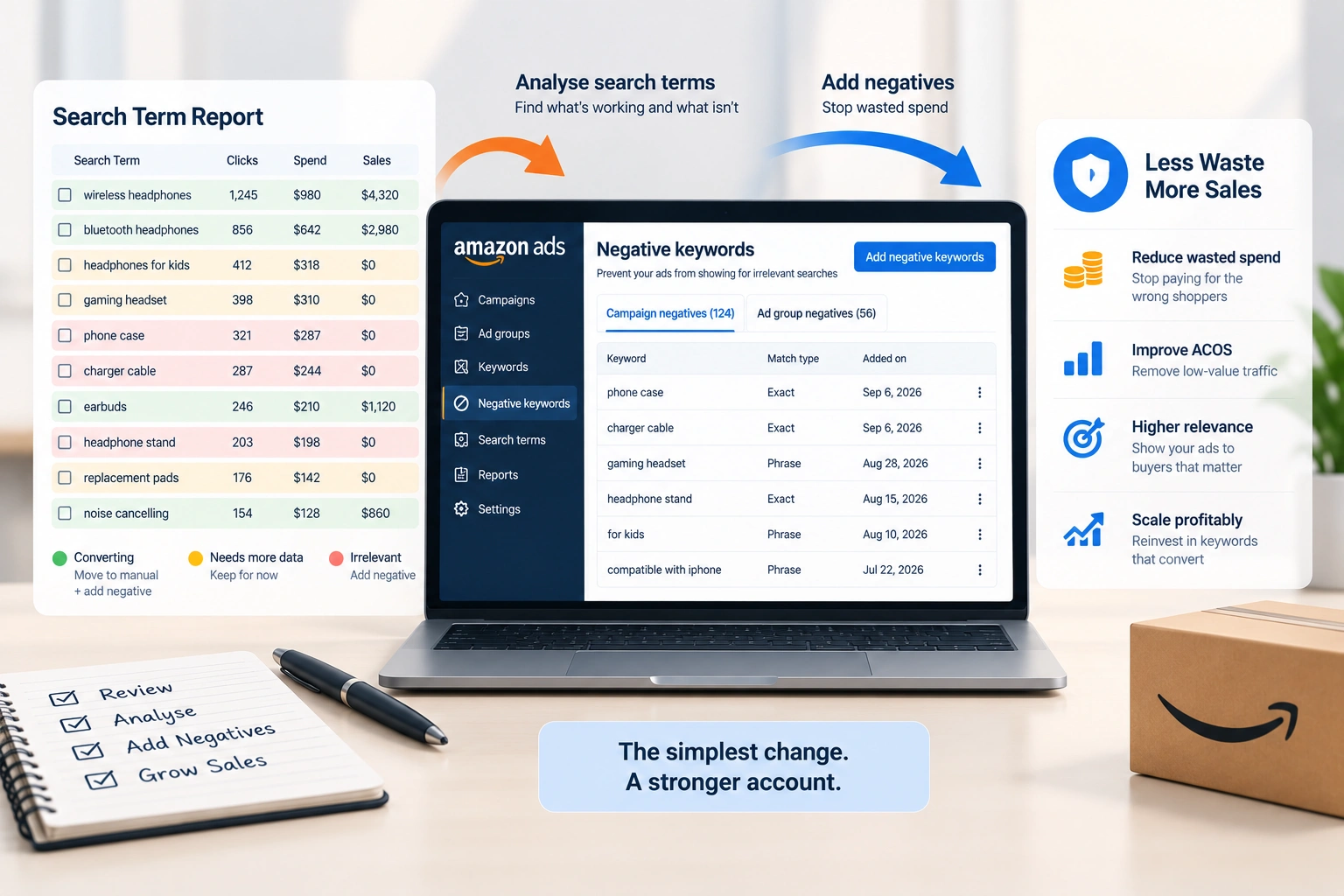
Open the search term report for the last thirty days, sort by spend, and read the top fifty. Each term goes into one of three piles.
Converting: promote it to its own exact match keyword with a bid of its own, and add it as a negative in the campaign that discovered it, so the two stop bidding against each other with your money on both sides.
Spending without converting, but plausibly relevant: leave it if it has not had enough clicks to be judged, and negate it once it has.
Simply wrong: negate it immediately and without hesitation. Somebody searching for a different product is not a shopper you are failing to convert. No bid is low enough to make them buy.
Choose the match type deliberately
Negative exact blocks one term. Negative phrase blocks everything containing it, which is powerful and is where the damage happens.
Adding a common word as a negative phrase can silently remove a family of terms that were converting, and because they simply stop appearing, nothing in the account announces the loss. When in doubt use exact, and reserve phrase for words that are unambiguously wrong for your product.
Where to put them
At ad group level for terms specific to one product, and at campaign level for terms wrong for everything in it. Putting everything at campaign level is quicker and eventually blocks a term that was fine for a different product in the same campaign.
This is easier when campaigns are separated by the job they do rather than lumped together, which is the structural argument made in campaign structure for a product launch.
Review them, because they do not expire
A negative added during a launch two years ago is still blocking that term today. Products change, listings improve, and a term that could not convert against your old title may convert perfectly well against your new one.
Once a quarter, read the negative list. It is a short job and it is the only way anything ever comes off it.
Where this sits
Negatives are one line in a longer routine, and the rest of it is in the weekly optimization routine. If you want more tactics of this kind, eighteen Amazon PPC strategies covers the ones that reliably pay for themselves.
And if the search term report never gets read because there is never time, that is a scale problem rather than a discipline problem. Seven clear signs you have outgrown manual management is the checklist for that.
What we do with this
Reading the search term report on a schedule is the whole of this job, and it is the first thing to disappear when a week gets busy. Why loose matching exists at all is in how Amazon pay per click works, and keeping the reading on a schedule is part of Amazon advertising management.
Frequently asked questions
The questions that come up most often on this subject.
Negative exact blocks only that precise term. Negative phrase blocks anything containing it. Phrase is powerful and easy to overreach with, because one careless entry can block a family of terms that were converting.
Enough that a zero means something. If your listing converts at ten percent, ten to fifteen clicks with no sale is a reasonable line. Below that you are excluding a term you have not measured.
Yes, in two ways. A negative phrase that is too broad removes converting terms along with the waste, and negatives that are never reviewed keep blocking terms long after the reason has gone.
At ad group level for terms that are wrong for one product, and at campaign level only for terms that are wrong for everything in the campaign. Putting every negative at campaign level is quicker, and sooner or later blocks a term that was fine for another product in the same campaign.