Amazon Paid Search: How Pay Per Click Search Marketing Works on Amazon
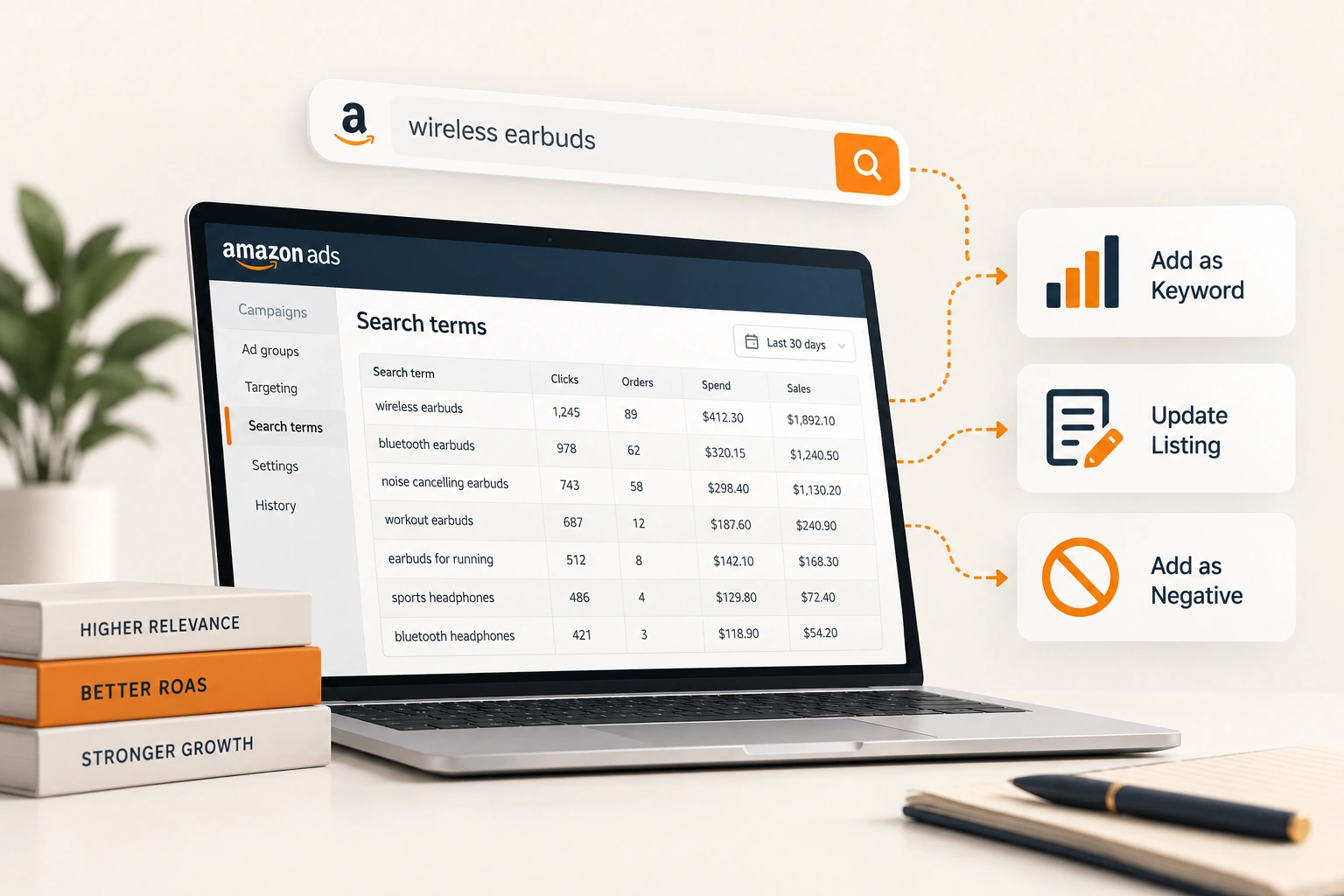
Amazon is a search engine that happens to sell things. Understanding it as paid search, rather than as banner advertising, changes what you measure and what you bid on.


Loading Article banner

What pay per click actually means here
Why intent makes Amazon different from other search marketing
The three questions a paid search account answers
Match types, and why the loose ones earn their place
What to measure, and what to ignore
What changes when you sell through FBA
Most Amazon PPC advice is written as though fulfilment were somebody else's problem. For an FBA seller it is not: fulfilment decides the margin, the stock position decides how much demand you can afford to create, and the Buy Box decides whether the ads run at all. FBA changes the numbers you feed into the decisions above rather than the decisions themselves.
The real margin is smaller than the spreadsheet says. Work out the maximum you can pay for a click and you get a number. Subtract the referral fee, the fulfilment fee, monthly storage and the returns you will process, and the number gets meaningfully smaller. Break even ACoS is derived from margin, and a target set against the wrong margin looks fine for a quarter and loses money the whole time. Calculate it against what lands in your account per unit, not against price minus cost of goods.
Stock is an advertising input. Advertising creates demand, and under FBA you cannot fulfil demand you do not have stock for. Running out mid campaign is worse than never advertising: you lose the rank you paid for, and buying it back costs more than holding it would have. So bids move with cover: plenty of weeks of stock and a campaign that is working, push; three weeks of cover and a shipment that has not cleared, ease off. Restock limits make this sharper still, because the ceiling is not your warehouse, it is a number Amazon sets and moves.
No Buy Box, no ads. Sponsored Products stop serving when you are not winning the Buy Box on that listing, not fewer impressions, none. The first thing to check when a campaign stops spending overnight is not the bid, the budget or the keyword; it is whether you still hold the Buy Box. A price change from a competing seller on your own listing can end a campaign without anything in the advertising console mentioning it.
Launches wait for the stock to be live. Stock has to be received and checked in before advertising can do anything, and a launch campaign started against inventory still in transit spends money sending shoppers to a listing that cannot ship. Line the campaign up to start when the units are live, not when the shipment is booked.
Seasonality cuts both ways. Storage fees rise in the last quarter, which changes the margin in exactly the months you most want to advertise. A target that made sense in June is not the same target in November, and neither is the maximum bid. Recalculate before the season rather than during it: a twenty minute job that decides how the busiest quarter of the year performs.
Where this goes next
Running this for brands, from structure to the weekly reading of the search term report, is what our Amazon advertising management covers.
Keep reading
- How to choose a PPC strategy, before choosing tactics
- Campaign structure for a product launch
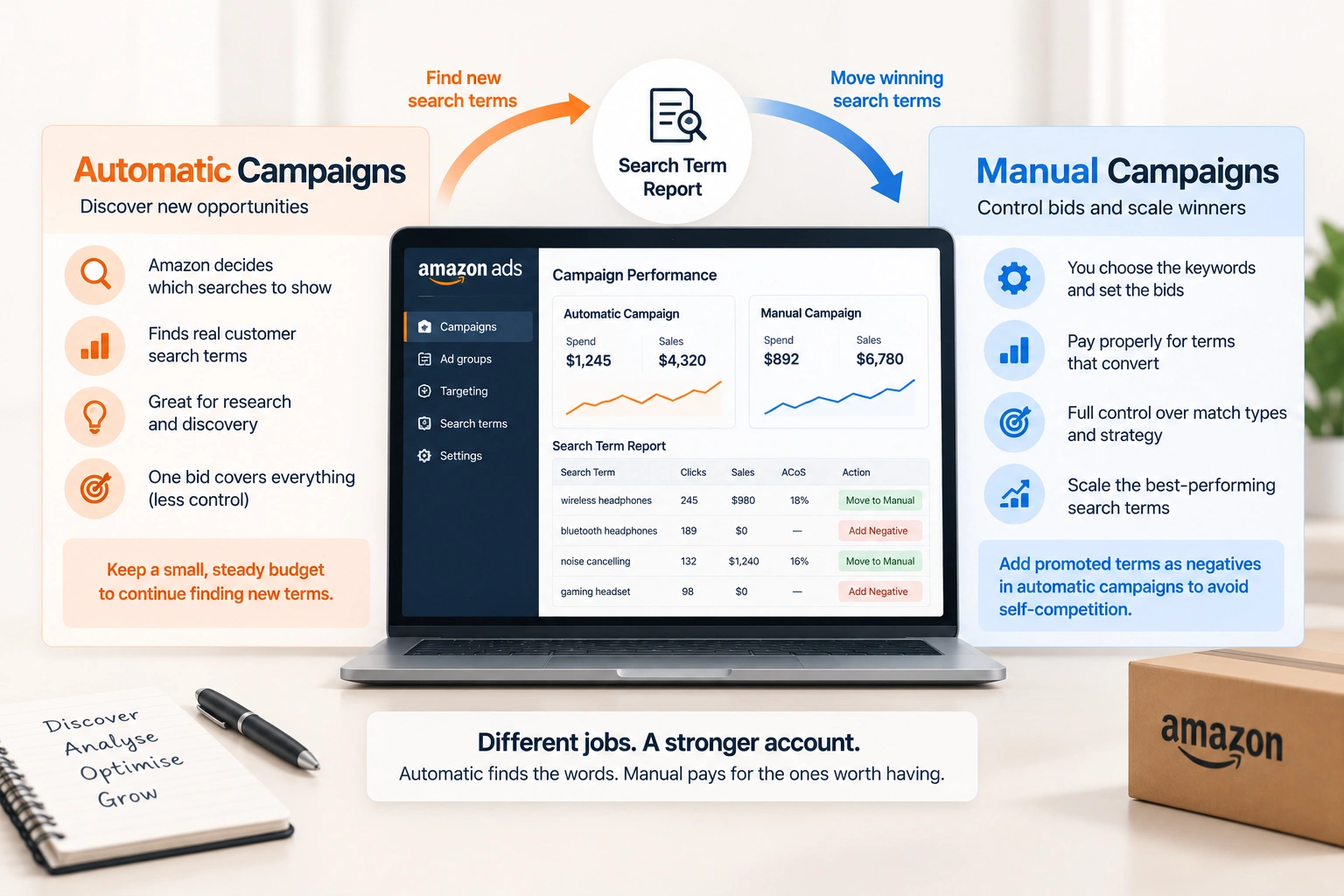
- Automatic and manual campaigns, and the handover between them
- Ad types, and when each one earns its budget
- Negative keywords, the cheapest work in the account
- The weekly routine that moves ACoS
- The audit that finds wasted spend
- Why a campaign spends without converting
- How Amazon SEO and PPC feed each other
- In house, agency or software: which suits which account
- What Amazon PPC management actually involves
Related reading: our Amazon PPC service page, Amazon PPC Cost Per Click: What a Click Costs and What Moves It, The Amazon Search Terms Report, and How to Read It, ACoS, TACoS and ROAS: What Each One Answers and Amazon DSP, and Whether You Are Ready for It.
Frequently asked questions
The questions that come up most often on this subject.