ROAS Standards for Amazon PPC, TikTok Shop Advertising, and Walmart Connect: Goals to Aim for in 2026
In 2026, brands shouldn’t rely on copy-pasted ROAS “benchmarks.” Set targets using your break-even economics. Then adjust for each channel’s mechanics.


Loading Article banner
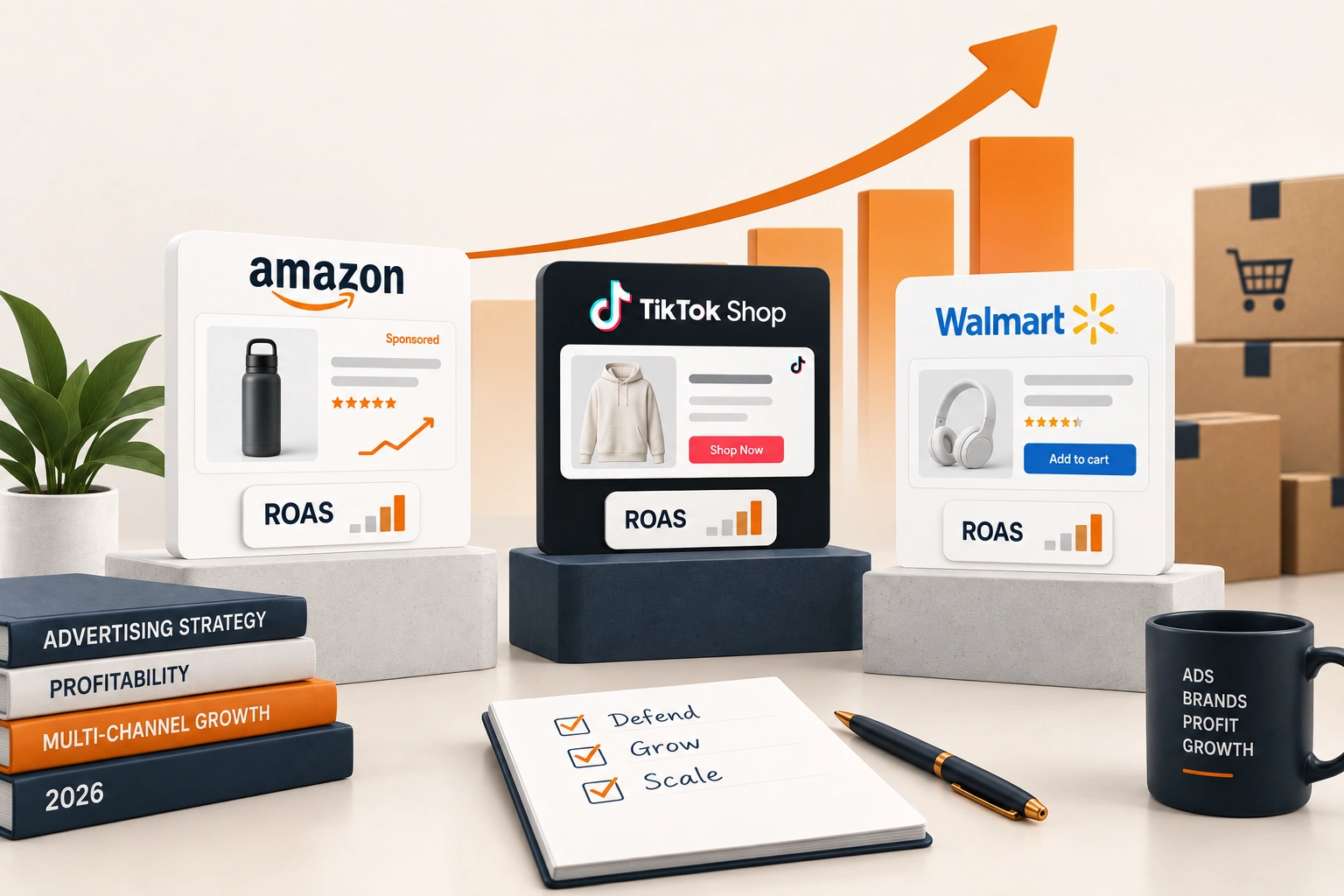
TL:DR; In 2026, brands shouldn’t rely on copy-pasted ROAS “benchmarks.” Set targets using your break-even economics. Then adjust for each channel’s mechanics. Amazon search rewards high conversion rates and precise keywords. TikTok Shop needs lots of creative and clear profit visibility. Walmart expansion requires operational readiness and clean measurement.
Key Takeaways:
- ROAS targets must start with your break-even economics and cashflow realities, not generic averages.
- Ad efficiency is downstream of conversion: if listings don’t convert, bid tweaks won’t save your ROAS.
- On Amazon, focus on listing relevance and “Rufus-ready” content coverage. Use Helium 10 Listing Builder AI. It includes a keyword bank and AI based on marketplace data.
- On tiktok shop news, separate “reported platform efficiency” from “true ROI” by tracking fees, ad spend, and creator costs together.
- For multi-channel growth in 2026, build one connected performance narrative across Amazon, TikTok, and Walmart.
- Use ROAS tiers (Defend / Grow / Scale) so you don’t throttle growth by forcing one number across every campaign type.
What ROAS should a brand aim for in 2026 (and why using “average ROAS” is the wrong baseline)?
If you own a growing eCommerce brand, you are not optimizing vanity efficiency. You are optimizing profit and predictable growth.
Your 2026 ROAS target should be a decision rule: the ROAS you need to protect contribution profit at the SKU level, while still allowing enough spend to grow.
Why benchmarks fail: They ignore differences in margin, fees, and inventory risk. Each channel earns ROAS in a different way. Search, discovery, and expansion do not work the same.
How can you define Amazon PPC ROAS goals in 2026 without optimizing so aggressively that growth hits a ceiling?
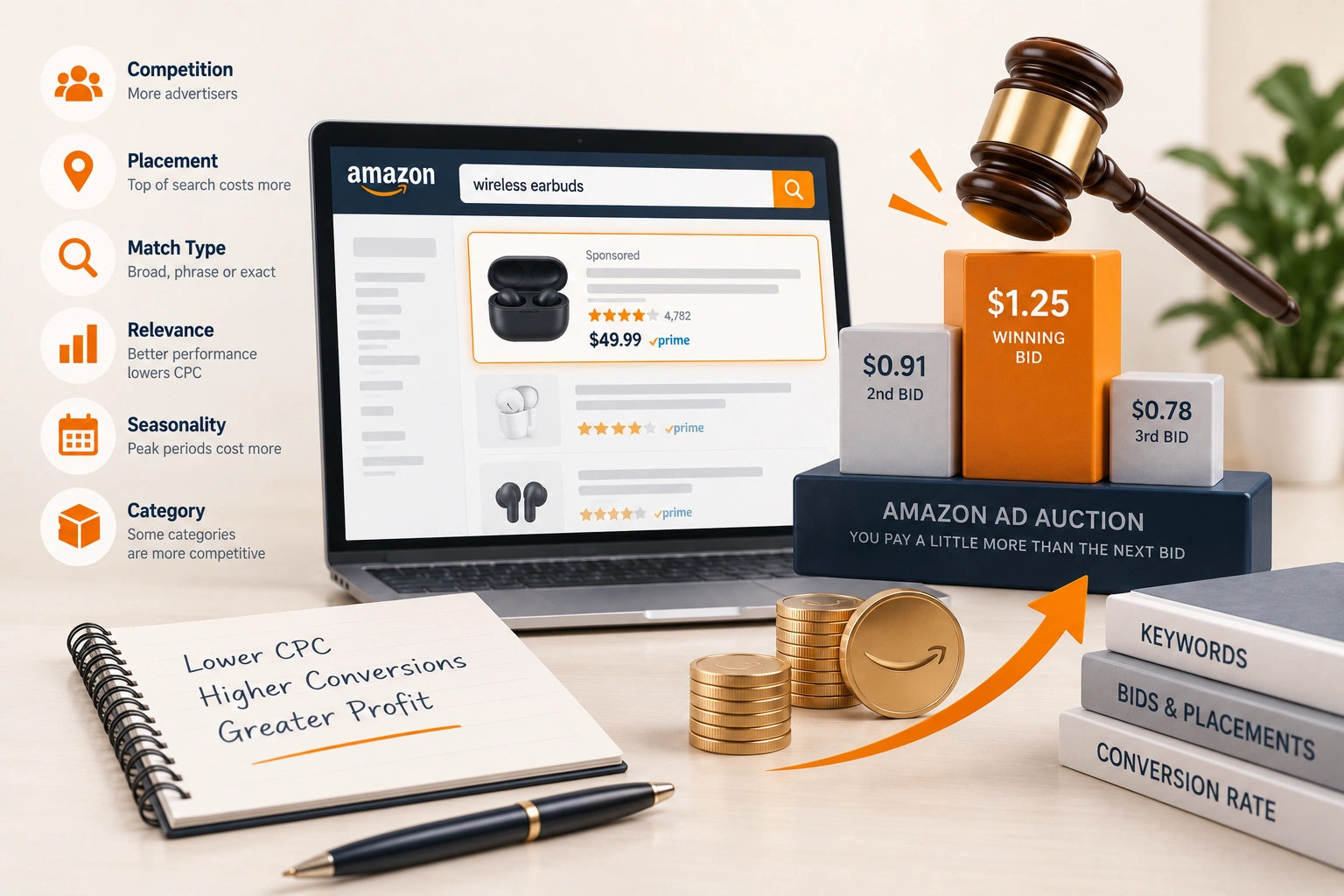
Amazon sellers often waste time trying to “bid their way” to better ROAS while ignoring conversion drivers. The faster path is to make your listing more relevant and more persuasive, especially as Amazon SEO evolves and shopper discovery experiences like Rufus influence how listings perform.
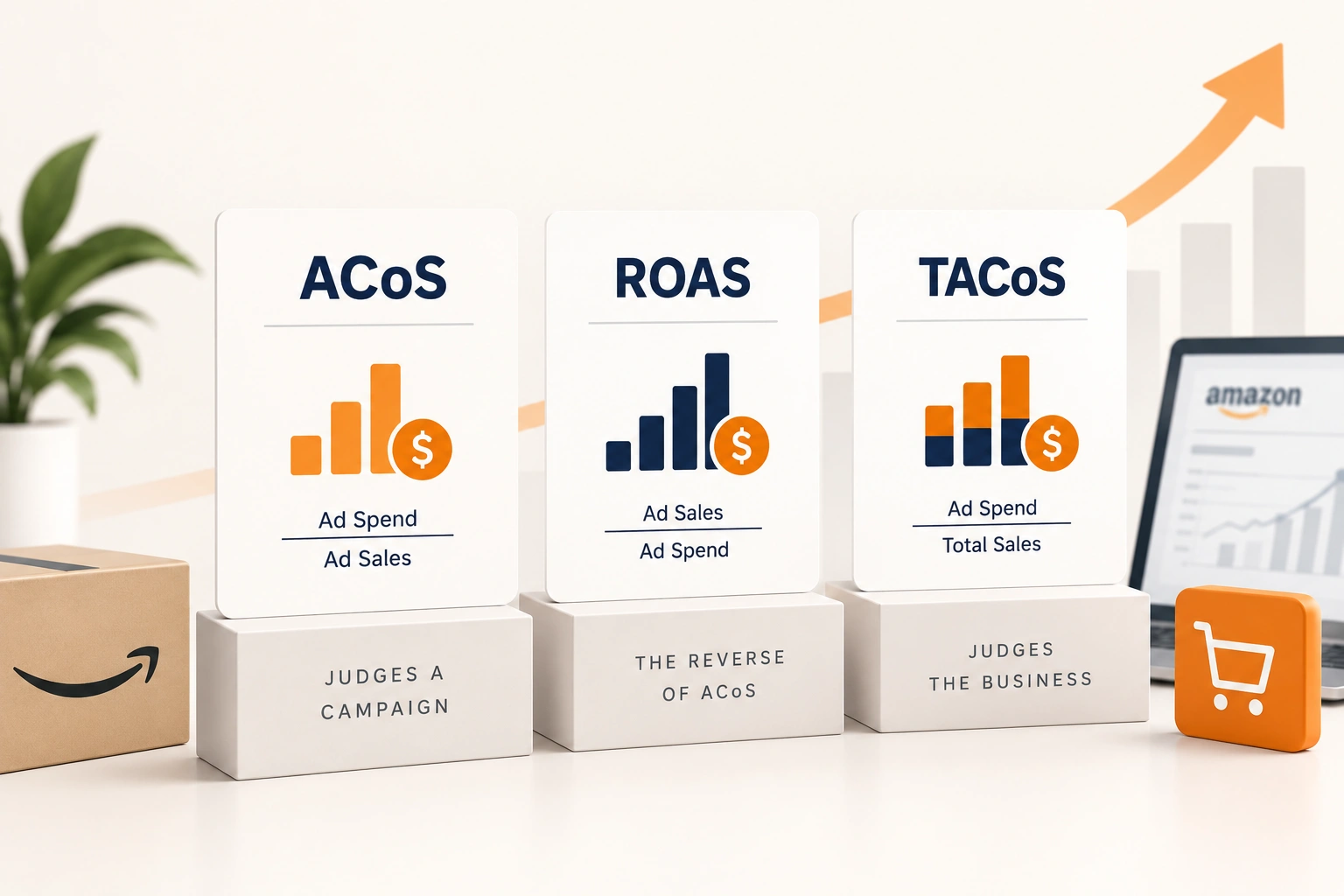
If you’re looking for practical team refreshers, begin with these Amazon PPC strategies and then set targets around profit, not pride. Monitor blended performance in addition to ROAS by using Amazon TACoS, so you understand how advertising influences overall revenue, not only directly attributed sales.
Where Helium 10 Listing Builder AI helps: it blends keyword research, a keyword bank, and AI using marketplace data. It can diagnose, prioritize, and rewrite listings for Amazon SEO Services and Rufus-style shopper questions.
Practical target-setting (Amazon):
- Set a higher ROAS bar for branded defense and proven hero SKUs.
- Set a more flexible ROAS band for non-branded growth terms, so you don’t starve the campaigns that actually expand share.
- Standardize process (especially with a lean team) using a clear playbook to manage your own Amazon ads and keep waste under control.
- Lock in coverage by tightening keyword research for PPC so you’re not paying for irrelevant traffic.
Where research tools such as Jungle Scout fit
Product and keyword research tools such as Jungle Scout estimate demand, track keyword rank and show what competing listings are doing. Used alongside the advertising console, they help separate search terms worth bidding on from traffic that will not convert, and they make it easier to judge whether a ROAS target is realistic for the category. Treat their sales and volume figures as estimates rather than exact data, and check them against your own search term reports before moving budget.
How do you evaluate TikTok Shop Ads ROAS in 2026 when “real ROI” factors in platform fees, creator costs, and ad spend?
TikTok Shop performance is easy to misread if you only look at ad dashboards. For 2026 planning, treat ROAS as one input but make decisions based on “true ROI” (every sale, every fee, and all spend).
A practical approach:
- Keep one ROAS target for in-platform optimization.
- Keep a second “true ROI” target that reflects real profitability after fees and creator costs.
If your team is aligning TikTok with marketplace outcomes, this breakdown of the halo effect, how TikTok ignites Amazon seo, helps you set targets that don’t over-credit (or under-credit) TikTok’s contribution.
What Walmart Connect ROAS targets make sense in 2026 for brands expanding beyond Amazon?
2026 growth is increasingly multi-channel; Amazon, TikTok Shop, and Walmart.
Since the available documentation doesn’t provide numerical Walmart Connect benchmark figures, the best method is to define ROAS goals based on your Walmart-specific unit economics and operational preparedness (in-stock levels, price competitiveness, and listing quality).
For channel context and how brands approach the ecosystem, start with this 1-on-1 on Walmart Connect and then operationalize with a practical guide to Walmart ads.
Which ROAS “benchmark framework” should you apply across Amazon, TikTok Shop, and Walmart Connect in 2026?
Use a framework, not a single number. In 2026, the goal is an outcome-oriented system that supports channel expansion, profitability, and brand visibility.
| Channel | How ROAS is best used | What to anchor targets to | Recommended target structure | Fastest ways ROAS breaks |
|---|---|---|---|---|
| Amazon PPC | Efficiency + precision at the SKU/keyword level | Conversion rate, listing relevance, keyword prioritization | Defend / Grow / Scale ROAS tiers by campaign intent | Weak listings, poor keyword coverage, outdated content |
| TikTok Shop Ads | Creative + offer testing paired with profit visibility | “True ROI” including fees, ad spend, and creator costs | Two targets: in-platform ROAS + true ROI target | Not tracking fees/creator spend; scaling without a profit model |
| Walmart Connect | Expansion efficiency with retailer-specific economics | Walmart unit economics + operational readiness | Defend / Grow / Scale ROAS tiers aligned to expansion stage | Availability/pricing issues; inconsistent listing quality |
How can you put 2026 ROAS goals into practice without stalling growth?
Most brands don’t lose because they lack a ROAS goal, they lose because they enforce one ROAS number everywhere and accidentally cap the campaigns that create growth.
Use a 3-tier system:
- Defend: protect profitable demand (brand terms, hero SKUs)
- Grow: expand share efficiently (core non-branded and proven segments)
- Scale: invest to unlock new demand (new audiences, new creatives, new channels)
If your team is weighing automation against hands-on management, use this comparison of rules-based and AI advertising. This will help you pick targeting bands that won’t punish testing. This matters even more as Amazon moves to an AI-first sales model.
How ROAS Benchmarks Fit into a Broader 2026 eCommerce Growth Strategy
While hitting strong ROAS targets across Amazon PPC, TikTok Shop, and Walmart Connect is critical, it’s only one piece of a much larger growth framework. In 2026, brands that scale successfully are not just optimizing ad performance, they are aligning advertising with full-funnel strategy, customer retention, and data-driven decision-making.
ROAS should be viewed as a performance indicator within a broader system that includes conversion rate optimization, creative testing, inventory planning, and omnichannel expansion. Focusing only on ad returns without strengthening these foundational areas often leads to short-term gains but long-term inefficiencies.
For a deeper breakdown of how to build a resilient and scalable eCommerce strategy in 2026, including how advertising benchmarks fit into the bigger picture, you can explore our detailed guide on how to scale an eCommerce brand profitably in 2026.
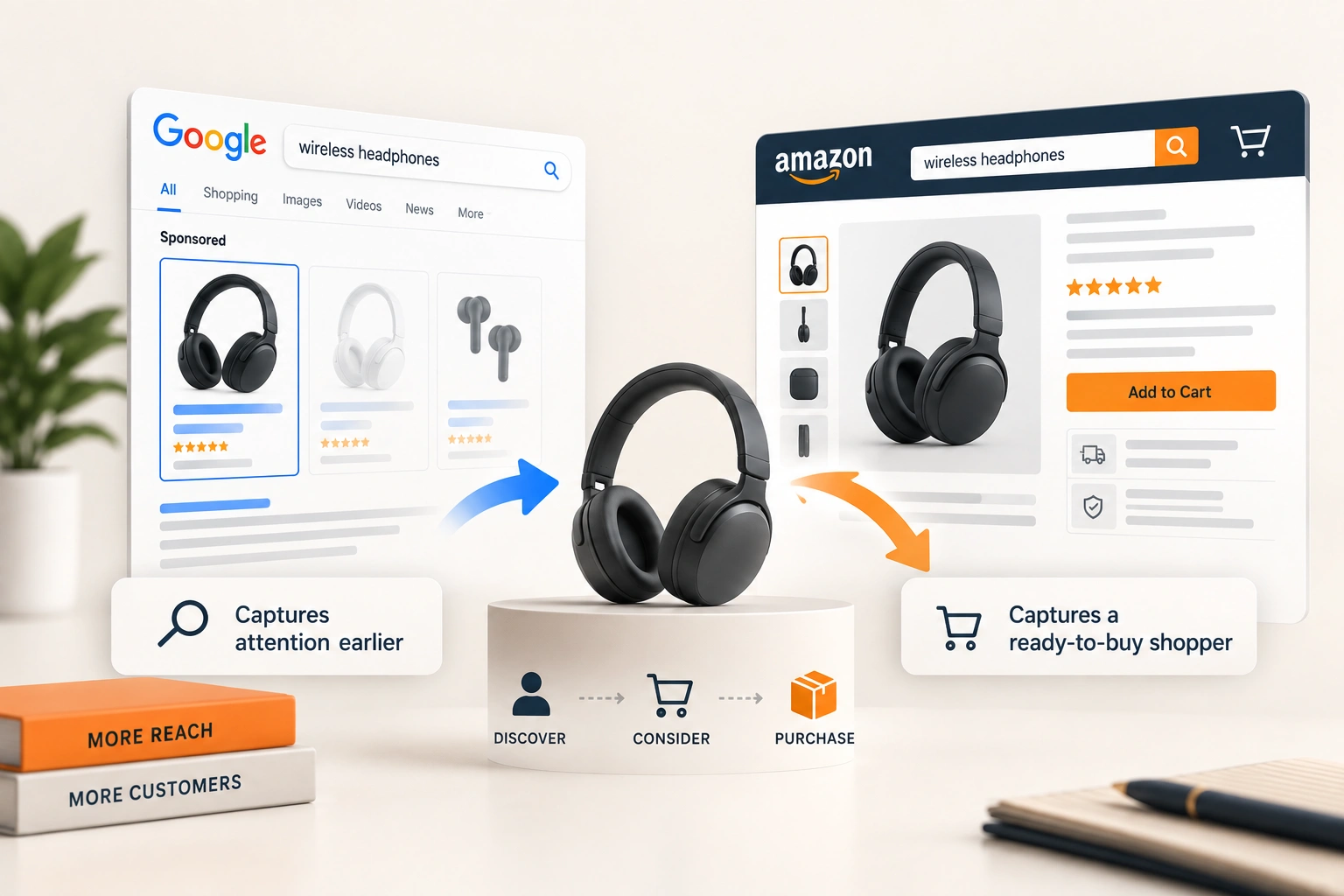
Where the spend sits on Google Ads rather than inside a marketplace, the arithmetic is the same and the auction is not: the benchmark is still your own break-even, and the channel only changes how quickly you find out.
Keep reading
Related reading: eCommerce Growth Strategy: Four Levers, One Constraint.
Frequently asked questions
The questions that come up most often on this subject.