eCommerce Performance Marketing: How Product Brands Scale Profitably
An eCommerce performance marketing agency helps businesses increase sales, improve ROI, and scale profitably by running advertising and account management against sales and margin data.


Loading Article banner
Growing an eCommerce business has never been easier, yet staying profitable has never been harder. Advertising costs continue to rise, competition increases every day, and customers have more choices than ever before. Many online businesses spend thousands on marketing but struggle to see real profits. They generate traffic but fail to convert visitors into loyal customers.
That is where an eCommerce performance marketing agency makes a difference.
Instead of focusing only on clicks or impressions, performance marketing is built around measurable business results. Every campaign is designed to generate sales, improve return on ad spend, lower customer acquisition costs, and increase long term profitability.
Whether you sell on Amazon, Shopify, Walmart Marketplace, Etsy, TikTok Shop, or multiple eCommerce platforms, having a data driven marketing strategy is becoming essential in 2026. The right combination of paid advertising, conversion optimization, customer retention, and eCommerce management can help businesses grow faster without wasting their marketing budget.
In this guide, you will learn what an eCommerce performance marketing agency does, why it matters, how to choose one, and the proven strategies successful brands use to scale profitably in today's competitive eCommerce landscape.
What Is an eCommerce Performance Marketing Agency?
AneCommerce performance marketing agency is a marketing partner that helps online businesses grow through measurable marketing campaigns.
Unlike traditional agencies that focus mainly on brand awareness, performance marketing agencies measure success using real business outcomes such as:
Revenue growth
Sales volume
Return on Ad Spend (ROAS)
Customer Acquisition Cost (CAC)
Customer Lifetime Value (LTV)
Every marketing decision is backed by data, testing, and continuous optimization.
How Is It Different from Traditional Marketing?
Traditional marketing often focuses on exposure.
Performance marketing focuses on results.
For example:
Traditional marketing may celebrate one million ad impressions.
Performance marketing asks:
How many people bought?
How much profit did the campaign generate?
Was the advertising budget profitable?
Can the campaign scale further?
That difference makes performance marketing especially valuable for eCommerce businesses.
Why eCommerce Businesses Need Performance Marketing in 2026
The eCommerce industry has changed dramatically.
Consumers now shop across multiple channels including:
Amazon
Shopify
Walmart Marketplace
TikTok Shop
Instagram Shops
Facebook Shops
Google Shopping
This creates more opportunities but also more competition.
Successful brands need more than good products. They need efficient marketing systems.
Common challenges include:
Rising advertising costs
Lower organic reach
High customer acquisition costs
Low conversion rates
Cart abandonment
Inventory planning
Marketplace competition
Performance marketing solves these problems by continuously improving every stage of the customer journey.
How an eCommerce Performance Marketing Agency Helps Businesses Grow
A professional agency combines multiple services into one complete growth strategy.
Paid Advertising Management
Paid advertising remains one of the fastest ways to grow.
Agencies manage campaigns across:
Google Ads
Meta Ads
Amazon Ads
Microsoft Ads
TikTok Ads
Pinterest Ads
Instead of spending more money, they focus on spending smarter.
Conversion Rate Optimization (CRO)
Driving visitors to a website is only half the job.
The real goal is converting those visitors into buyers.
Agencies improve:
Product pages
Landing pages
Checkout process
Mobile experience
Product images
Product descriptions
Calls to action
Small improvements often create significant revenue growth.
eCommerce Management
Strong eCommerce management ensures that marketing and operations work together.
This includes:
Product catalog optimization
Inventory planning
Pricing strategies
Marketplace management
Customer experience improvements
Sales reporting
Marketing performs better when the eCommerce foundation is strong.
Email and SMS Marketing
Acquiring new customers is expensive.
Keeping existing customers is far more profitable.
Agencies build automated flows for:
Welcome emails
Cart recovery
Post purchase follow up
Win back campaigns
Loyalty offers
These campaigns increase repeat purchases with very little additional advertising spend.
Performance Marketing Channels That Drive eCommerce Growth
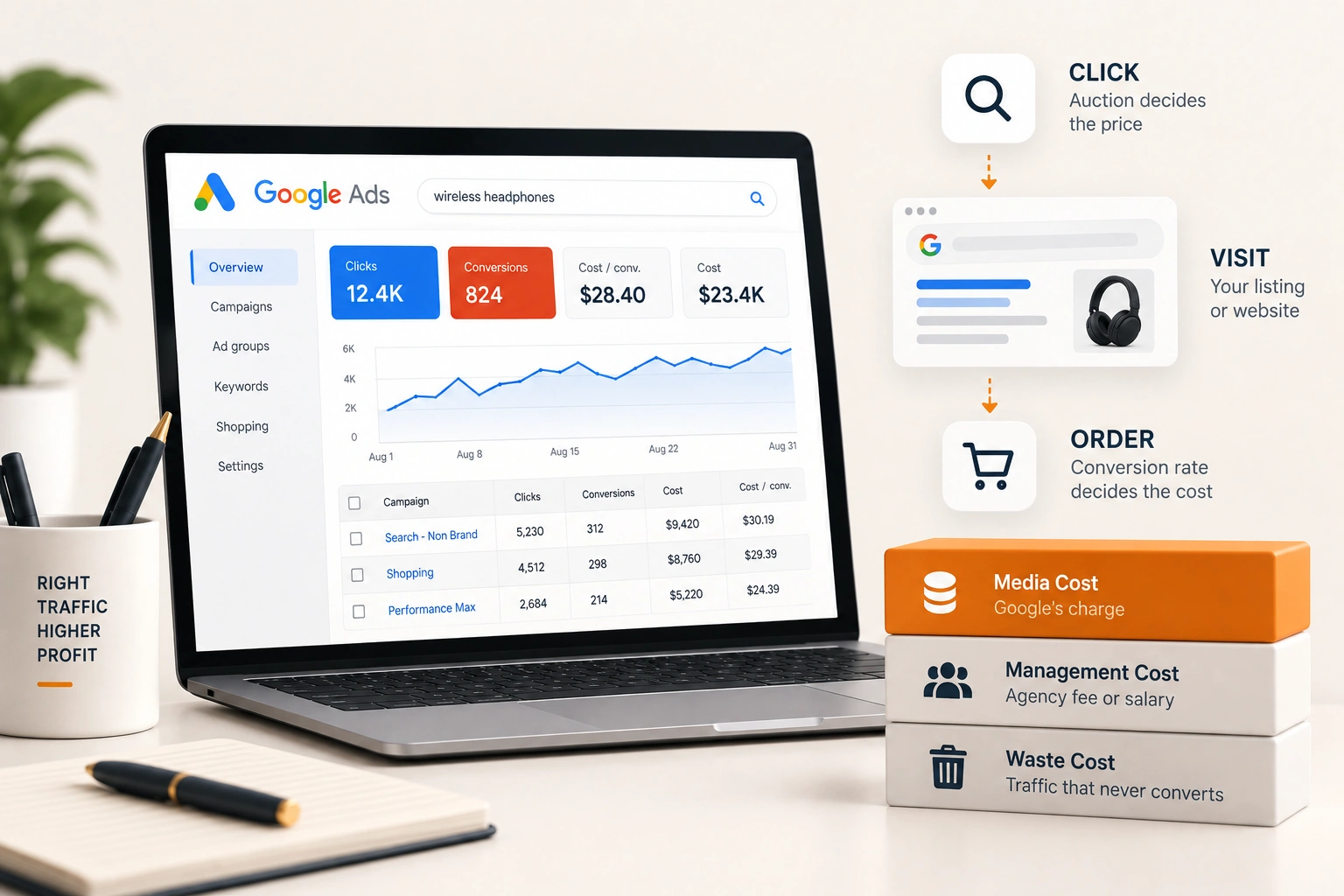
Google Ads
Google Ads captures shoppers who are actively searching for products.
Popular campaign types include:
Search Ads
Shopping Ads
Performance Max
Display Remarketing
These campaigns generate highly qualified traffic.
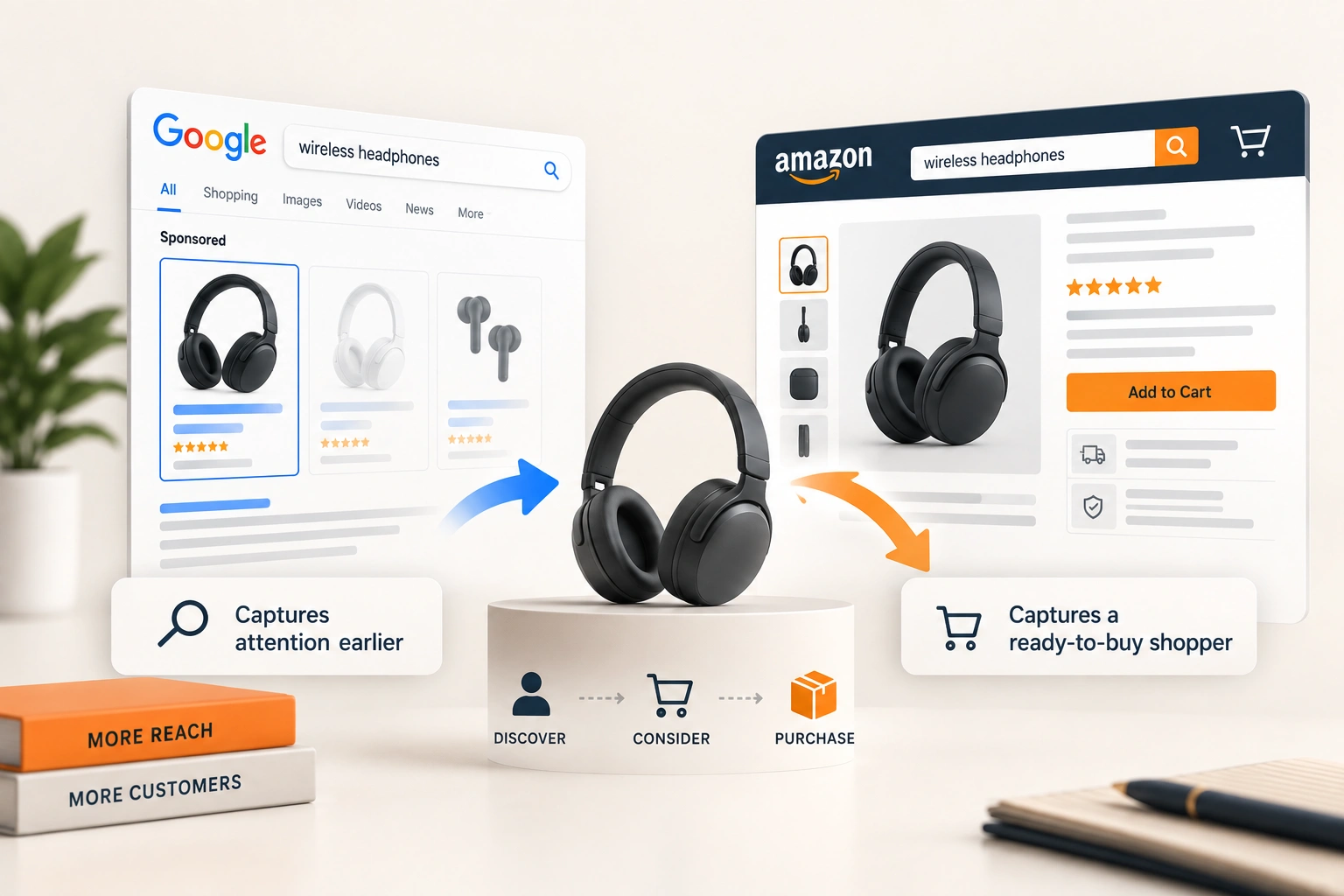
Amazon Advertising
Amazon sellers benefit from:
Sponsored Products
Sponsored Brands
Sponsored Display
Amazon DSP
Successful Amazon advertising combines keyword targeting, bid optimization, listing optimization, and profitability analysis.
On Amazon, most of performance marketing sits outside the ad account
Performance marketing on Amazon is usually treated as a synonym for advertising, which is convenient because advertising is the part with a dashboard. It is also the reason so many accounts are trying to solve a listing problem with a bid. Advertising buys visits. Everything that turns a visit into a sale happens somewhere else.
The main image decides whether anything else matters. In a results page of thumbnails, the main image is most of the decision. A better one raises click through rate on every term at once, paid and organic, without a single change in the advertising console. It is among the cheapest changes available and one of the least often revisited, because it was signed off at launch and has felt settled ever since.
The title carries the words and the promise. It has to contain the terms people search for and still read like something a person wrote. Read yours next to the three products above you in the results: if theirs answer a question and yours lists attributes, that is a conversion gap no bid will close.
Reviews are an advertising input. Nothing in the advertising console mentions reviews, and they change what advertising costs. Better reviews raise conversion, higher conversion raises the relevance Amazon assigns you, and higher relevance wins placement at a lower bid. A product with a poor review position pays more for the same placement than a product with a good one, and no amount of campaign work removes that penalty.
Price is the lever nobody wants to pull, and the fastest. A price change moves conversion immediately, and conversion moves both organic rank and the cost of every click. A small reduction that lifts conversion can be cheaper than the extra bid required to buy the same number of sales at the old price, and the arithmetic usually surprises whoever was defending the margin.
Stock quietly undoes everything. Running out does not pause the consequences. Rank falls, the momentum bought with advertising disperses, and getting back costs more than staying would have. Availability is a performance lever with no dashboard, which is why it is the one most often missed in a review meeting.
Where advertising genuinely earns its place is launching, when there is no organic rank to work with; defending terms you already own; buying visibility in a season you cannot rank into quickly enough; and testing which terms convert before committing to them in a listing. What it cannot do is compensate for a listing that does not convert, and the symptom of asking it to is a campaign with healthy traffic and disappointing sales.
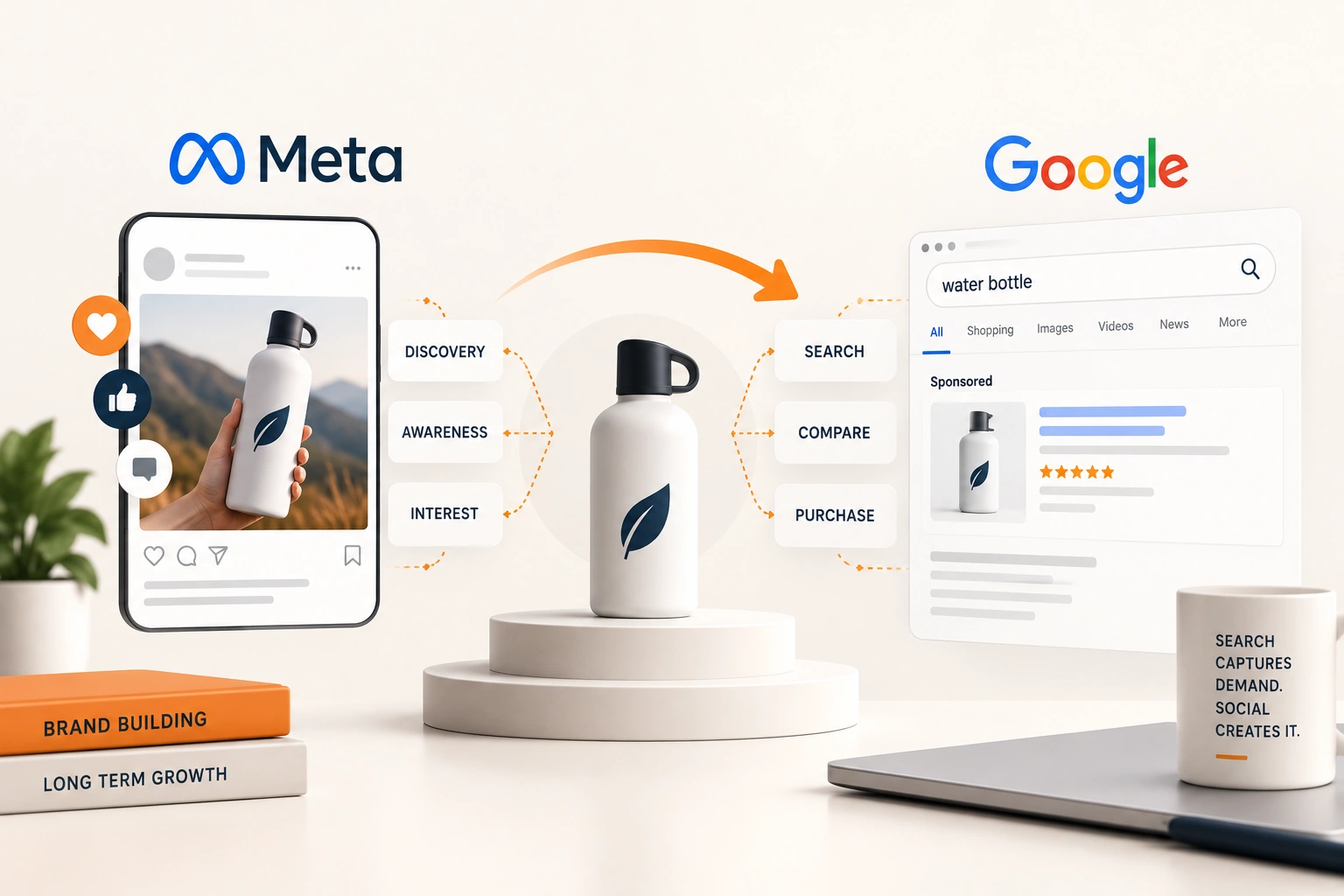
Meta Advertising
Facebook and Instagram remain powerful channels for eCommerce.
They work especially well for:
Brand awareness
Product launches
Retargeting
Customer acquisition
Dynamic product ads
TikTok Advertising
TikTok continues to influence eCommerce purchasing decisions.
Brands use:
Short videos
Creator partnerships
User generated content
Spark Ads
This channel is particularly effective for lifestyle and consumer products.
Email Marketing
Email delivers one of the highest returns among digital marketing channels.
Automation helps increase:
Repeat purchases
Customer loyalty
Average order value
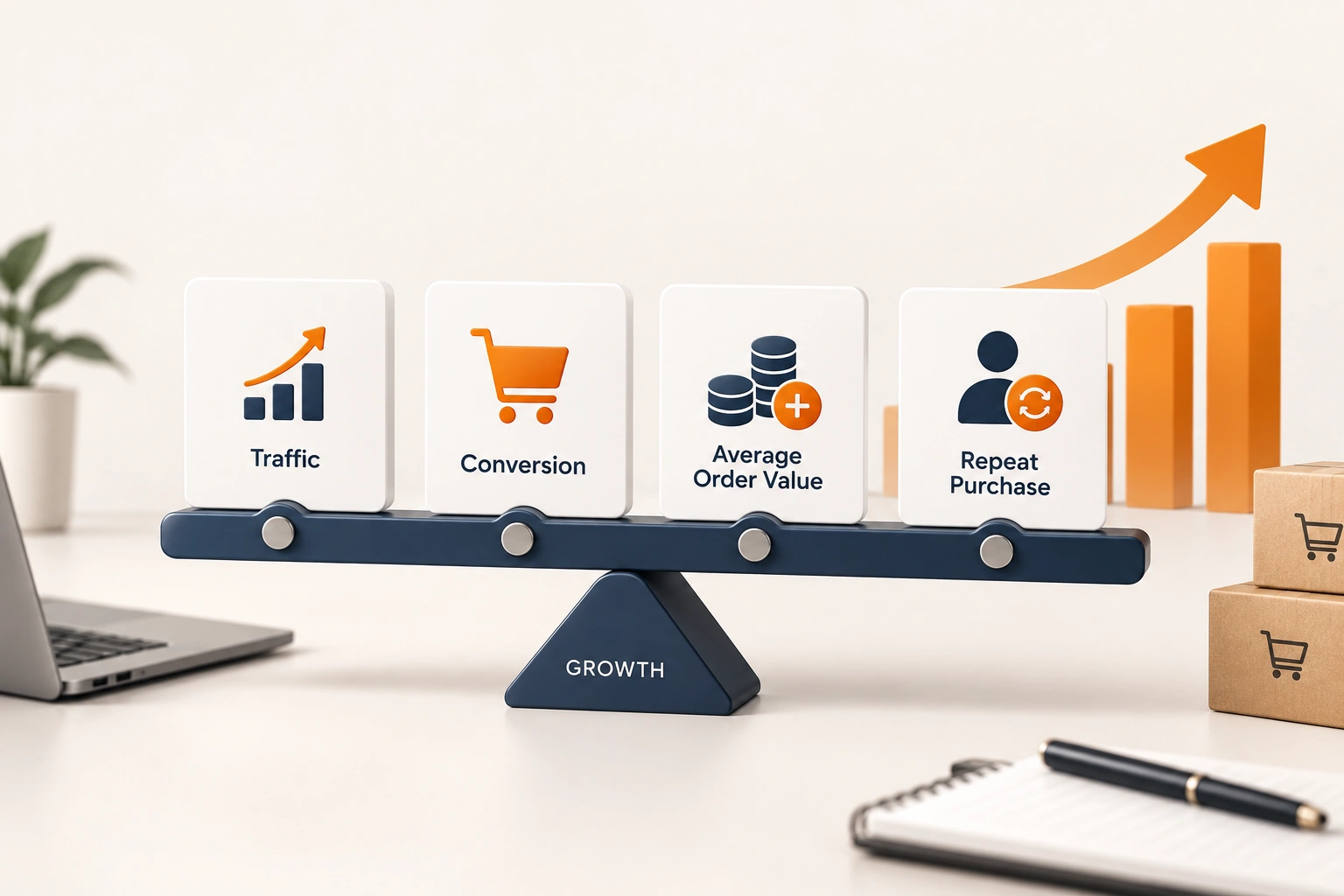
KPIs Every eCommerce Business Should Track
Many businesses focus only on sales.
Successful brands measure profitability.
Important metrics include:
KPI | Why It Matters |
ROAS | Measures advertising efficiency |
CAC | Shows customer acquisition cost |
Conversion Rate | Indicates website performance |
Average Order Value | Measures customer spending |
Customer Lifetime Value | Predicts future revenue |
Repeat Purchase Rate | Measures customer loyalty |
Gross Profit Margin | Determines business profitability |
Cart Abandonment Rate | Identifies checkout issues |
Tracking these numbers helps businesses make smarter marketing decisions.
Common Mistakes That Limit eCommerce Growth
Many businesses struggle because they repeat the same mistakes.
Focusing Only on Traffic
More visitors do not always mean more revenue.
Quality matters more than quantity.
Ignoring Product Page Optimization
Poor images, weak product descriptions, and missing reviews reduce conversions.
Even excellent advertising cannot fix a poor product page.
Running Ads Without Data
Advertising without tracking leads to wasted budgets.
Every campaign should monitor:
Sales
Profit
ROAS
Customer acquisition costs
Not Testing Creatives
Winning ads rarely appear on the first attempt.
Continuous testing improves performance over time.
Neglecting Existing Customers
Returning customers often spend more than first time buyers.
Retention marketing is one of the most profitable growth strategies.
How AI Is Changing eCommerce Marketing in 2026
Artificial intelligence is transforming eCommerce.
Instead of replacing marketers, AI helps them make smarter decisions.
Modern agencies use AI to:
Analyze customer behavior
Predict buying patterns
Generate advertising variations
Optimize bidding strategies
Personalize product recommendations
Forecast inventory demand
Improve audience targeting
This approach supports AI Optimization (AIO) by creating structured, helpful content that search engines and AI assistants can easily understand.
Businesses that combine human expertise with AI tools gain a significant competitive advantage.
How to Choose the Right eCommerce Performance Marketing Agency
Not every agency delivers the same results.
Look for a partner that understands eCommerce, not just digital marketing.
Experience Across eCommerce Platforms
Choose agencies familiar with:
Amazon
Shopify
WooCommerce
Walmart Marketplace
BigCommerce
Magento
Platform specific knowledge leads to better results.
Transparent Reporting
A trustworthy agency provides regular reports showing:
Revenue
Profitability
Campaign performance
Growth opportunities
Avoid agencies that focus only on impressions or clicks.
Data Driven Strategy
Good agencies continuously test:
Audiences
Creative assets
Landing pages
Product offers
Pricing strategies
Testing never stops.
Long Term Growth Focus
The best agencies build sustainable growth rather than chasing short term wins.
That includes:
Customer retention
Brand loyalty
Profit optimization
Operational improvements
Simple Growth Strategy for Beginners
If you are just starting an eCommerce business, follow this roadmap.
Step 1
Choose products people already want.
Research demand before investing.
Step 2
Build optimized product pages with:
Clear titles
High quality images
Helpful descriptions
Customer reviews
Step 3
Launch paid advertising with a small budget.
Measure every dollar spent.
Step 4
Improve conversion rates before increasing ad spend.
Fix the leaks before adding more traffic.
Step 5
Scale only campaigns that consistently generate profit.
Growing profitable campaigns is much easier than fixing unprofitable ones.
Frequently Asked Questions
What does an eCommerce performance marketing agency do?
An eCommerce performance marketing agency helps online businesses increase revenue using measurable marketing strategies such as paid advertising, conversion optimization, email marketing, customer retention, and analytics.
Is performance marketing good for small eCommerce businesses?
Yes. Small businesses often benefit the most because performance marketing focuses on maximizing every marketing dollar instead of simply increasing traffic.
How much should eCommerce businesses spend on advertising?
The budget depends on your goals, industry, margins, and competition. Most successful brands begin with a manageable budget, measure profitability, and gradually increase spending once campaigns produce consistent returns.
Does performance marketing work for Amazon sellers?
Absolutely. Amazon sellers use performance marketing to improve Sponsored Ads performance, optimize listings, increase conversions, and grow organic rankings while maintaining profitability.
Can Shopify stores benefit from performance marketing?
Yes. Shopify businesses commonly use Google Ads, Meta Ads, email marketing, SEO, conversion optimization, and customer retention strategies to increase revenue and improve customer lifetime value.
What is the difference between eCommerce management and performance marketing?
eCommerce management focuses on operating and growing the online business, including product listings, inventory, pricing, and customer experience. Performance marketing focuses on generating profitable traffic, sales, and customer acquisition through measurable marketing campaigns.
How does AI improve eCommerce marketing?
AI helps analyze customer behavior, automate campaign optimization, personalize shopping experiences, forecast demand, and improve advertising performance, allowing businesses to make faster and smarter marketing decisions.
Conclusion
Building a successful eCommerce business in 2026 requires more than launching products and running advertisements. Sustainable growth comes from making every marketing decision measurable, profitable, and customer focused. An experienced eCommerce performance marketing agency combines paid advertising, conversion rate optimization, customer retention, analytics, and strategic eCommerce management to help businesses scale without sacrificing profitability.
Whether you are an Amazon seller, Shopify store owner, marketplace brand, online retailer, or entrepreneur starting your first eCommerce business, focusing on data driven growth will give you a stronger competitive advantage. By tracking the right performance metrics, improving the customer journey, leveraging AI powered insights, and continuously testing your campaigns, you can increase revenue while maintaining healthy profit margins.
The eCommerce landscape will continue to evolve, but the businesses that prioritize customer experience, measurable results, and continuous optimization will be best positioned for long term success. If your goal is sustainable growth rather than short term sales spikes, partnering with the right eCommerce performance marketing agency can be one of the smartest investments you make.
Keep reading
Frequently asked questions
The questions that come up most often on this subject.