Google Ads vs Amazon Ads: Which Buys What
Amazon buys a purchase from somebody already shopping. Google buys attention earlier, and sometimes sends it to Amazon to convert.


Loading Article banner
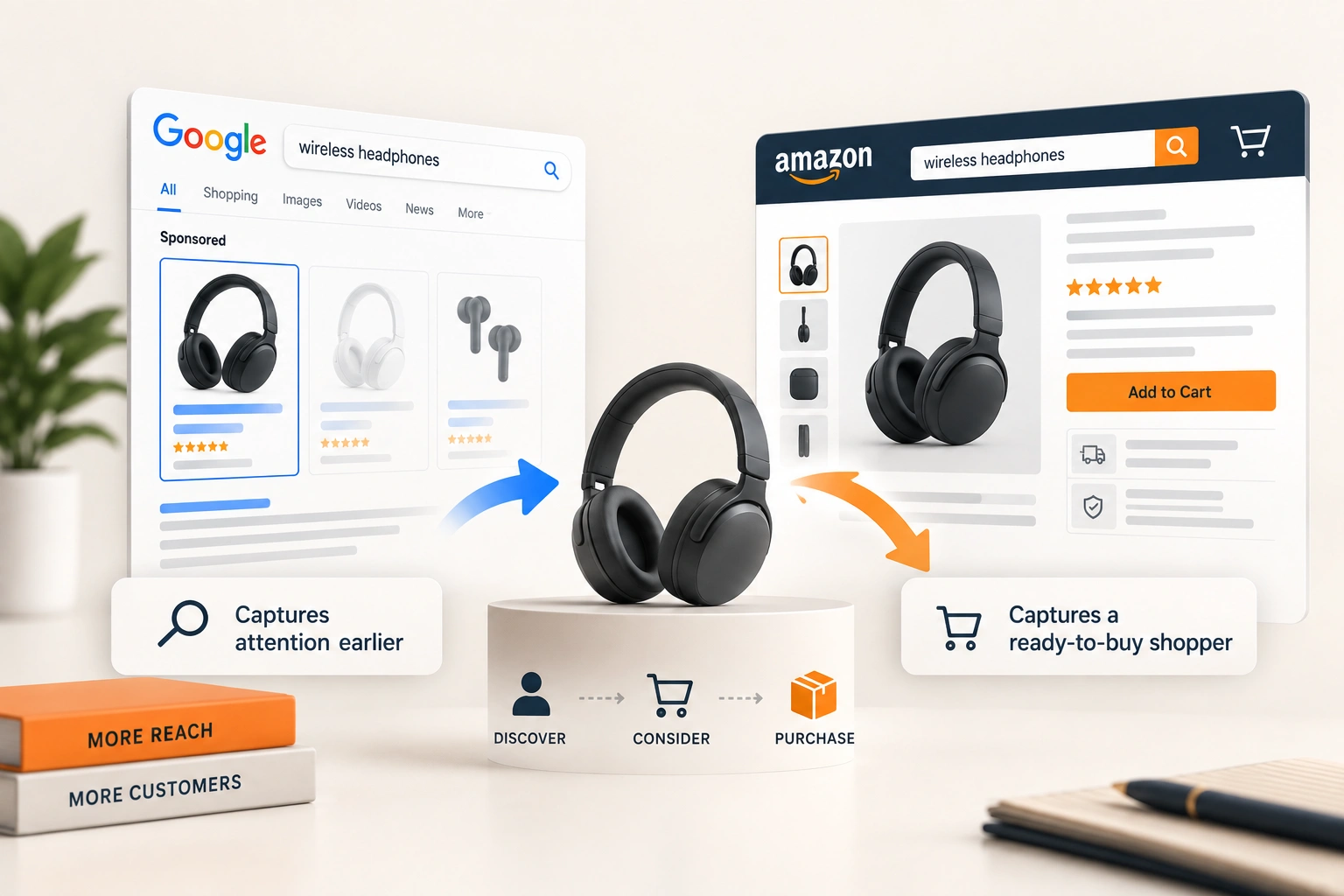
Both are search auctions and they buy different things. Amazon buys a shopper who is already in a shop with a card out. Google buys a person who is looking, and who may end up buying anywhere.
That difference decides which one is cheaper per order, which one is easier to measure, and why the two are frequently judged unfairly against each other.
Intent, and what it is worth
An Amazon search is a shopping search almost by definition. There is no informational half of the audience and very little browsing. That makes conversion rates higher and the auction more expensive per click, and it usually makes cost per order lower.
A Google search covers the whole spectrum, from somebody researching a category to somebody typing a model number. The same campaign can buy both, which is why keyword and match type discipline matters more there than anywhere.
Attribution, and where it gets awkward
Amazon reports what happened inside Amazon, which is a closed and complete loop for the sale it caused.
Google reports what happened on your site, and if the customer finished the purchase on a marketplace instead, Google will not see it and neither will you. A brand judging Google purely on last-click site revenue is systematically undervaluing it.
That is not a reason to abandon measurement. It is a reason to watch blended numbers and to run holdout tests when the question is whether a channel is contributing.
Running Google Ads to an Amazon listing
It is allowed and it can work, in specific circumstances: a product with weak organic Amazon rank that needs velocity, a launch, or a term where the marketplace listing converts materially better than your own site.
The trade is that you pay Google for the click and Amazon its referral fee on the sale, so the margin has to carry both. And you have handed the customer relationship to the marketplace, which matters for anything with repeat purchase.
Where the site converts comparably, sending the traffic to your own store is almost always the better answer.
The feed is the campaign on both
Google Shopping matches on the product feed, and Amazon matches on the listing. In both cases the product data does the work that keywords do in a text campaign, and in both cases most accounts leave it as the raw export from a store platform.
Fixing titles, attributes and identifiers frequently moves more than any bid change available on either platform.
What each is bad at
Amazon cannot reach anybody who is not already on Amazon, which makes it useless for a product nobody is searching for and excellent for one they are.
Google can reach everybody and will happily spend the budget doing it. Left broad, it buys research traffic, competitor comparisons and people who will never buy, and the reports look busy while the orders do not move.
Both share one blind spot: neither sees what the other caused. A brand running both and judging each on its own numbers is looking at two partial accounts of the same customer.
How to judge them together
On contribution margin, across the whole business, over a period long enough to include the delay between attention and purchase. Not on each platform's own ROAS, which are two numbers counted differently and not comparable.
Benchmarks by channel move constantly and are worth reading with suspicion; ours are in the ROAS standards article.
What we do with this
We run both, which is the only way the attribution question gets an honest answer: Google Ads and Amazon account management read together rather than defended separately.
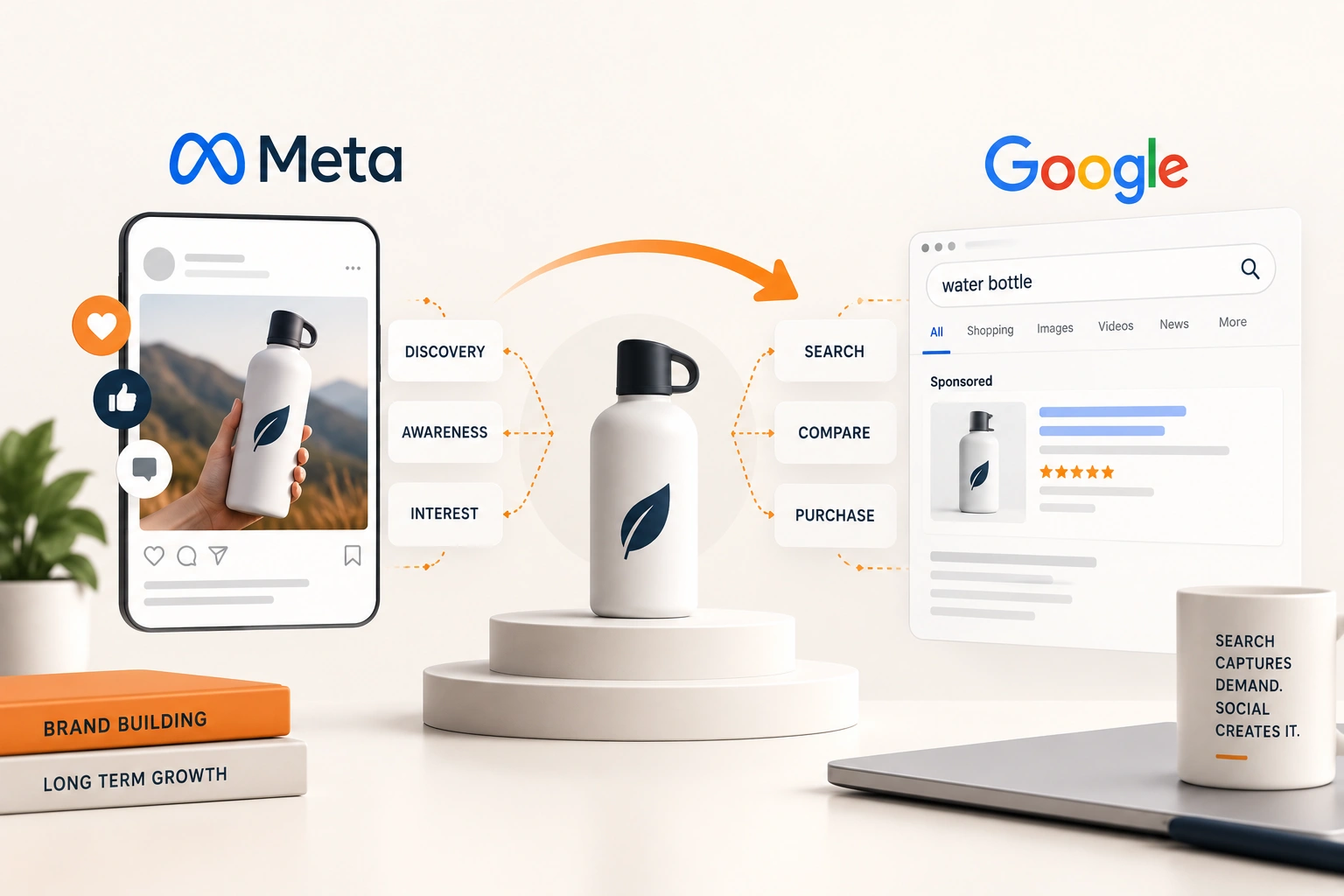
The same logic extends to Meta, which creates demand the other two capture, and to Walmart, where the same product competes on a different auction.
Keep reading
If your channels are being judged in isolation and the numbers do not agree, that is usually why.
Frequently asked questions
The questions that come up most often on this subject.
If the product sells mainly on Amazon, start there: the intent is higher and the loop is closed, so the cost per order is usually lower and the measurement is cleaner. Google earns its place when you are building a direct channel, when the category has demand Amazon does not capture, or when you need reach earlier in the decision.
Per click, usually Google in most categories. Per order, usually Amazon, because the intent is higher and the conversion rate follows. Cost per click is the wrong comparison and it is the one everybody makes.
Yes, and it works in specific cases: a launch, a product with weak organic rank that needs velocity, or a term where the listing converts far better than your own site. You pay Google for the click and Amazon its referral fee on the sale, so the margin has to carry both.
Frequently because the purchase finished somewhere Google cannot see, on a marketplace listing rather than on your site. A brand judging Google on last-click site revenue alone systematically undervalues it, which is why blended reporting and holdout tests exist.
Less than people assume. They buy different moments: Google reaches somebody still deciding, Amazon reaches somebody already shopping. The genuine overlap is brand terms, where both can be paying for demand that already existed.
Amazon, usually, because it puts the product in front of shoppers already looking for the category and generates the sales velocity that ranking follows. Google is better once you know the product converts and you want demand the marketplace is not capturing.
Do not compare their ROAS figures directly; they are counted differently and both exclude what happened on the other. Judge contribution margin across the business over a period long enough to include the delay between attention and purchase.
On Google Shopping the feed is the campaign, and on Amazon the listing is. In both, product data does the work keywords do in a text campaign, and in both, most accounts never touch the raw export from their store platform.
The research transfers, the lists do not. Amazon search terms are shopping language and Google's include research and comparison intent, so a keyword set copied across brings the wrong half of the audience on one of the two.
Put it where the demand already is, which for most product businesses is the marketplace, and add the other once the first is steady and measured. Splitting a small budget across two auctions usually produces two campaigns too thin to learn from.