
Google Ads management for eCommerce brands
Search, Shopping, Performance Max and Display, run against contribution margin rather than against a ROAS target somebody inherited. Most accounts we take over are not underspending, they are spending well on the wrong half of the catalogue.

Loading Google Ads hero image

What’s included in Google Ads
Google Search Ads management
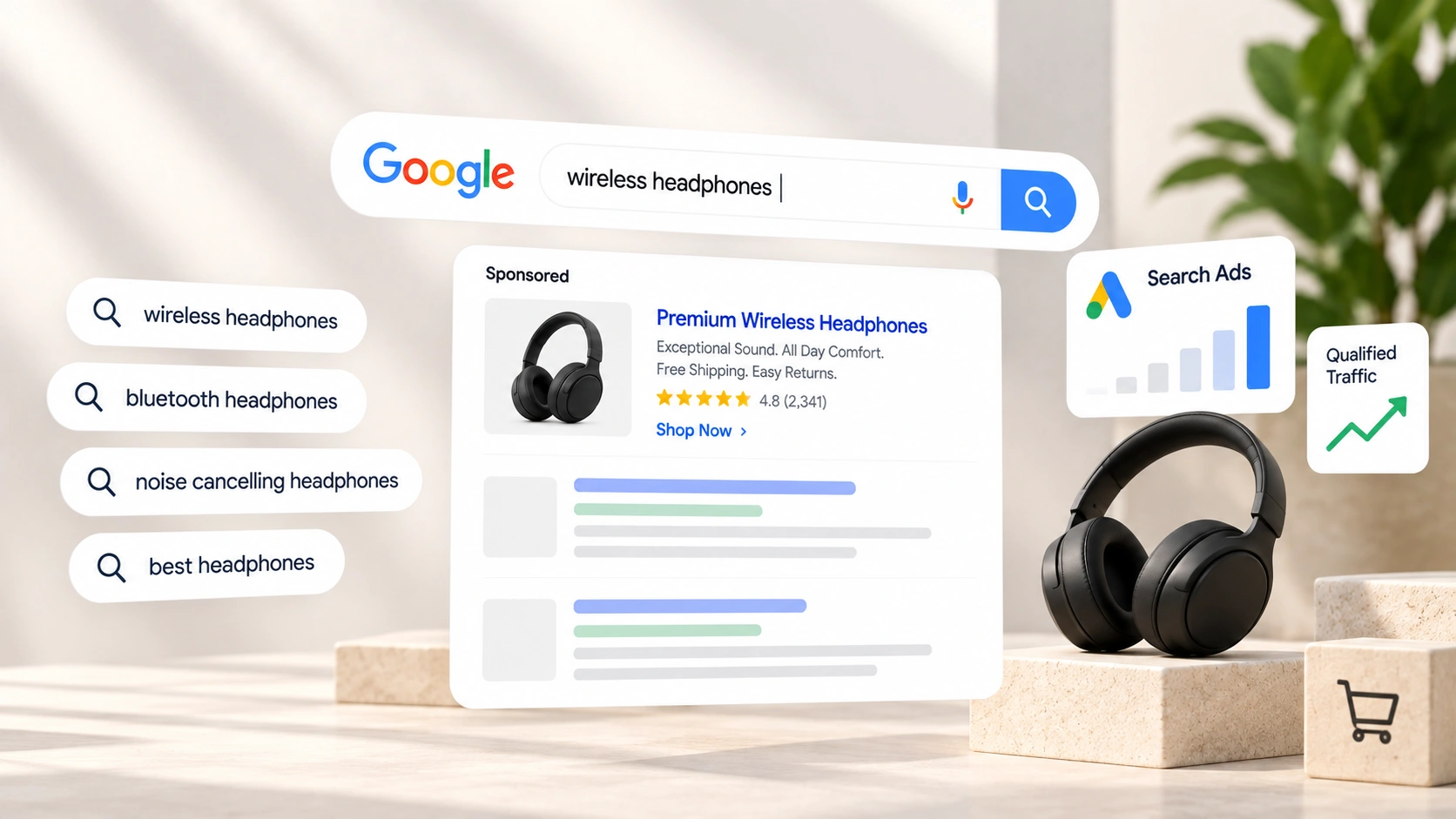
Keyword and query management on the campaigns that capture existing demand. Match types, negatives, ad group structure and the search terms report read weekly. Search is where intent is highest and where wasted spend hides most easily, because a broad match keyword will find traffic whether or not it is yours.
- Keyword research, match types and campaign structure
- Search terms report mining and negative keyword lists
- Brand and competitor campaign strategy
Google Shopping Ads and feed optimisation
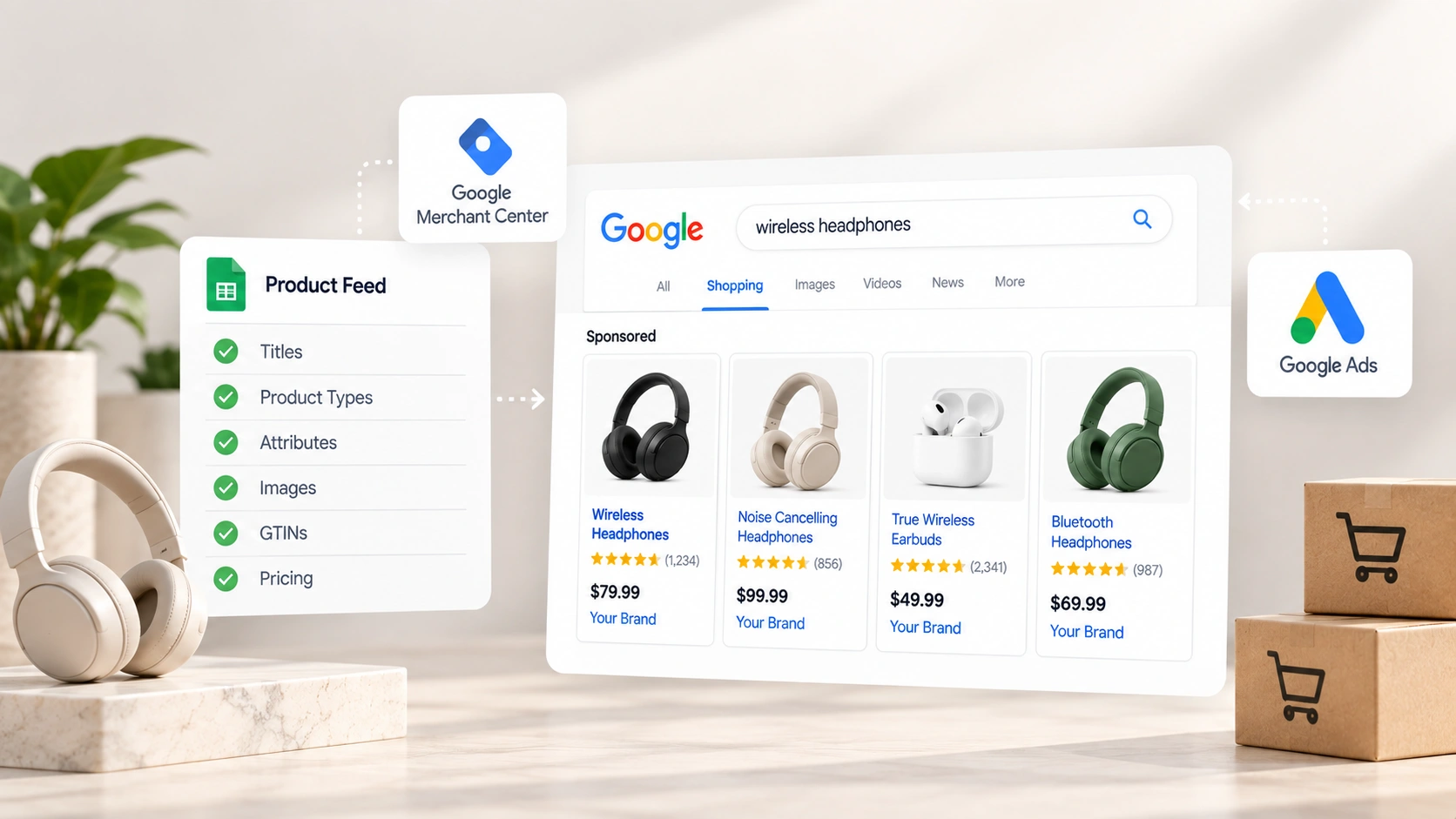
The feed is the campaign. Titles, product types, attributes, images, GTINs and pricing decide what Shopping shows you for, and most feeds are the raw export from a store platform. Fixing the feed usually moves more than any bid change available.
- Merchant Center setup, diagnostics and disapprovals
- Feed titles, attributes, GTINs and product types
- Shopping campaign structure and priority settings
Performance Max campaigns
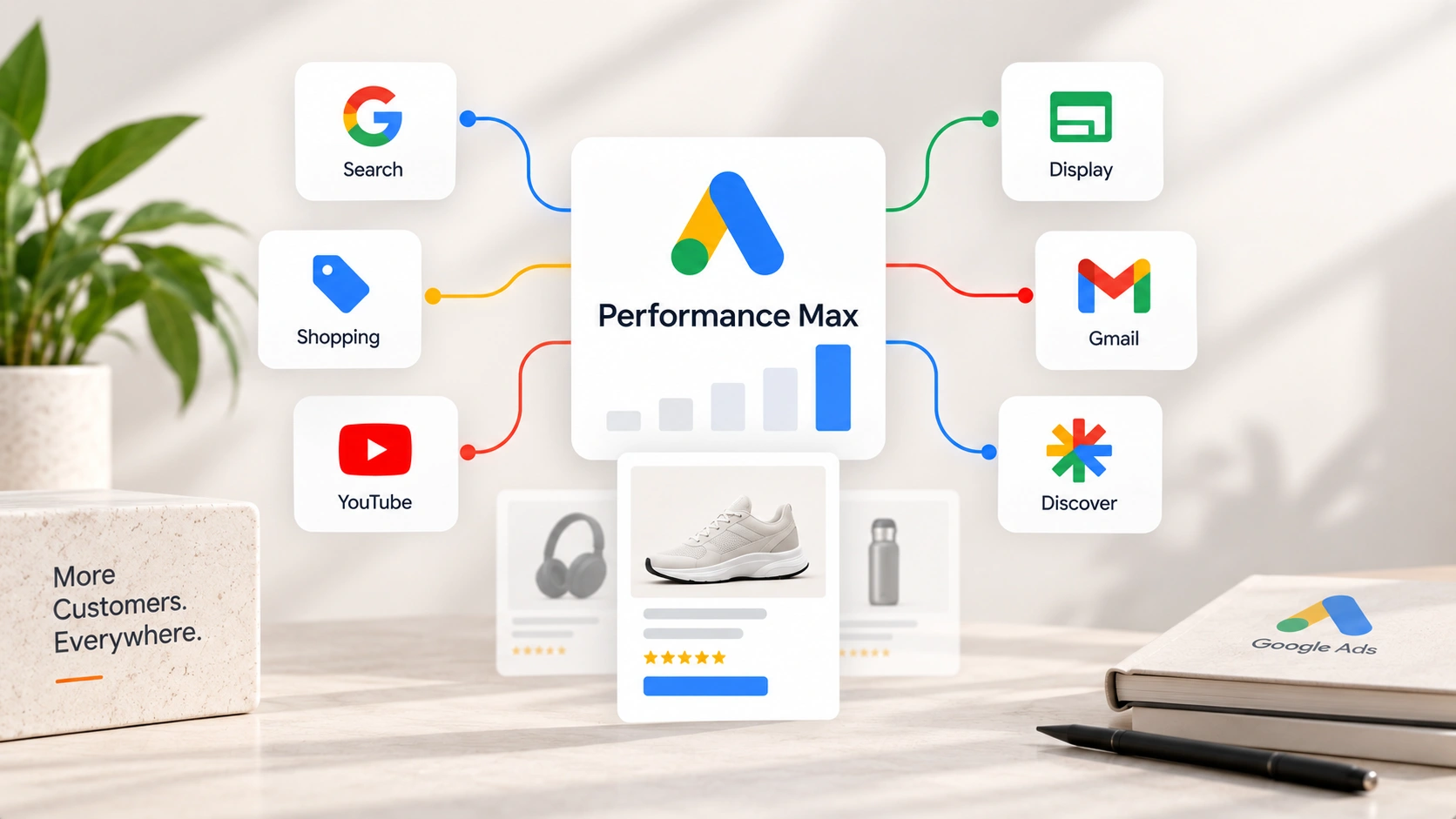
PMax spends across Search, Shopping, Display, YouTube, Gmail and Discover with limited visibility into where. Run well it is efficient. Run without asset group structure, audience signals, exclusions and channel reporting it becomes an expensive way to buy brand traffic you already had.
- Asset group structure by product margin and category
- Audience signals, exclusions and brand traffic control
- Channel and placement reporting where the API exposes it
Display and YouTube advertising
Upper funnel reach and the retargeting that catches people who did not buy first time. Judged on incrementality rather than on last click, because display will always report conversions it did not cause if you let it.
- Display prospecting and placement exclusions
- YouTube campaigns and creative formats
- Retargeting sequences and frequency control

Remarketing and audience strategy
Who to reach again, how soon and how often. Cart abandoners, past purchasers, category browsers and lookalikes, segmented so the message matches how close somebody was to buying rather than treating every visitor as the same person.
- Customer match and first party audience lists
- Segmented remarketing by intent and recency
- Exclusions so existing customers are not paid for twice

Bid and budget management
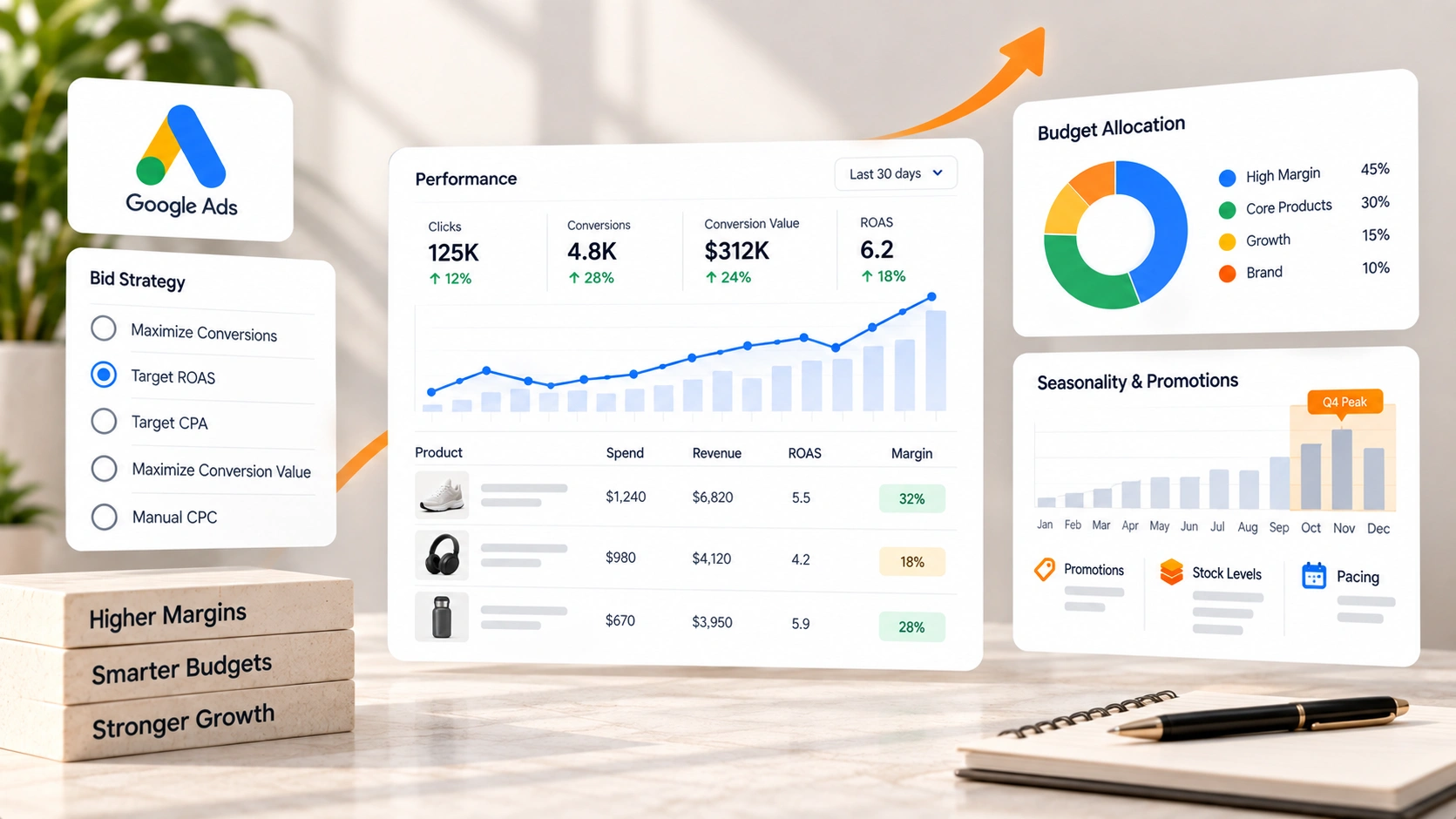
Smart bidding does the arithmetic; the strategy is deciding what it is optimising towards and which products deserve the budget. A single account-wide ROAS target on a catalogue with mixed margins quietly funds the least profitable half of it.
- Bid strategy selection and target setting by margin
- Budget allocation across campaigns and product groups
- Seasonality, promotion and stock-aware pacing
Conversion tracking and measurement
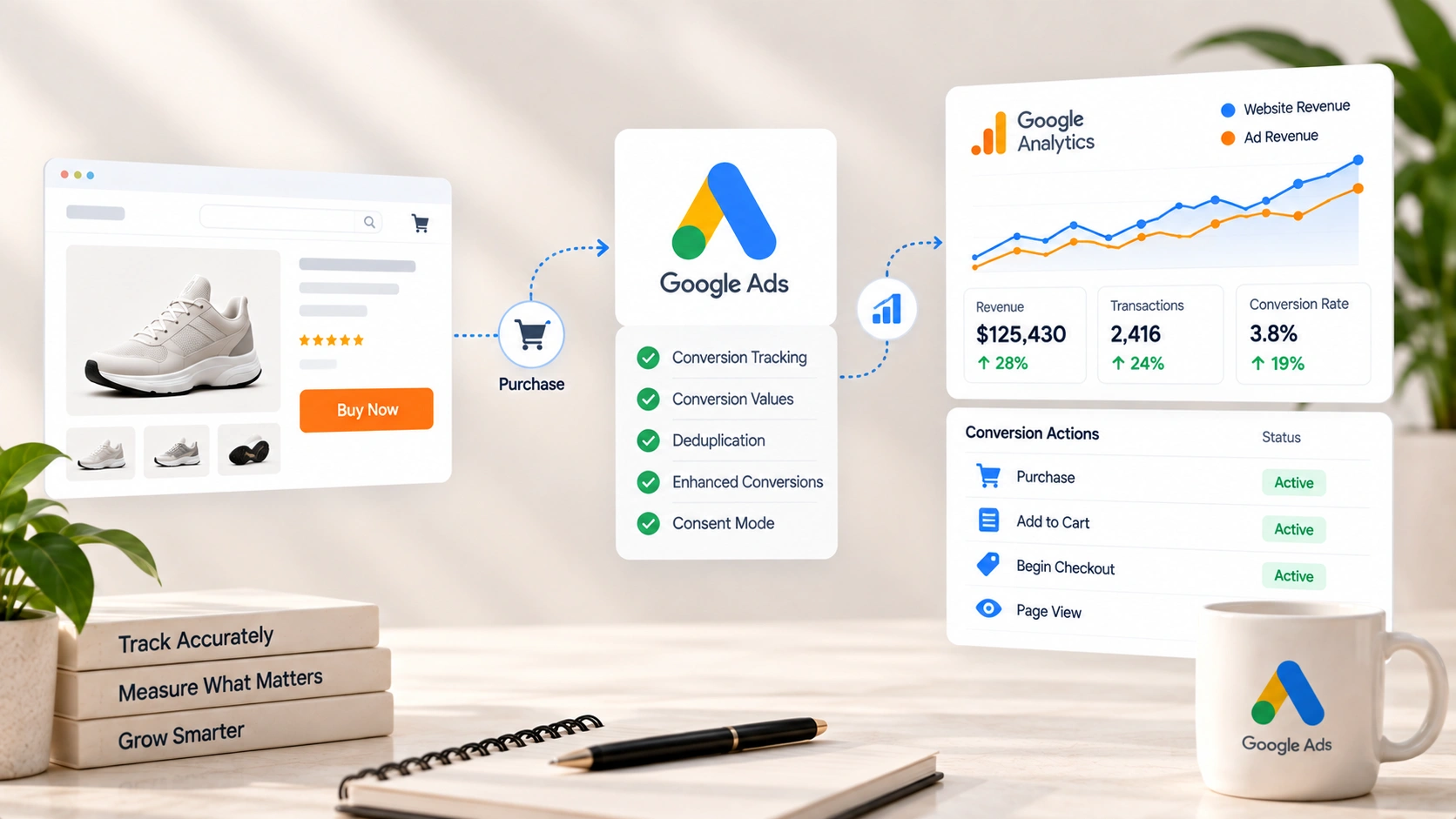
If the tracking is wrong every other decision is wrong. Conversion actions, values, deduplication, enhanced conversions and consent handling, checked against the store's own numbers rather than trusted because the platform reports them.
- Conversion action setup, values and deduplication
- Enhanced conversions and consent mode
- Reconciliation against store and analytics revenue
Ad copy and creative testing
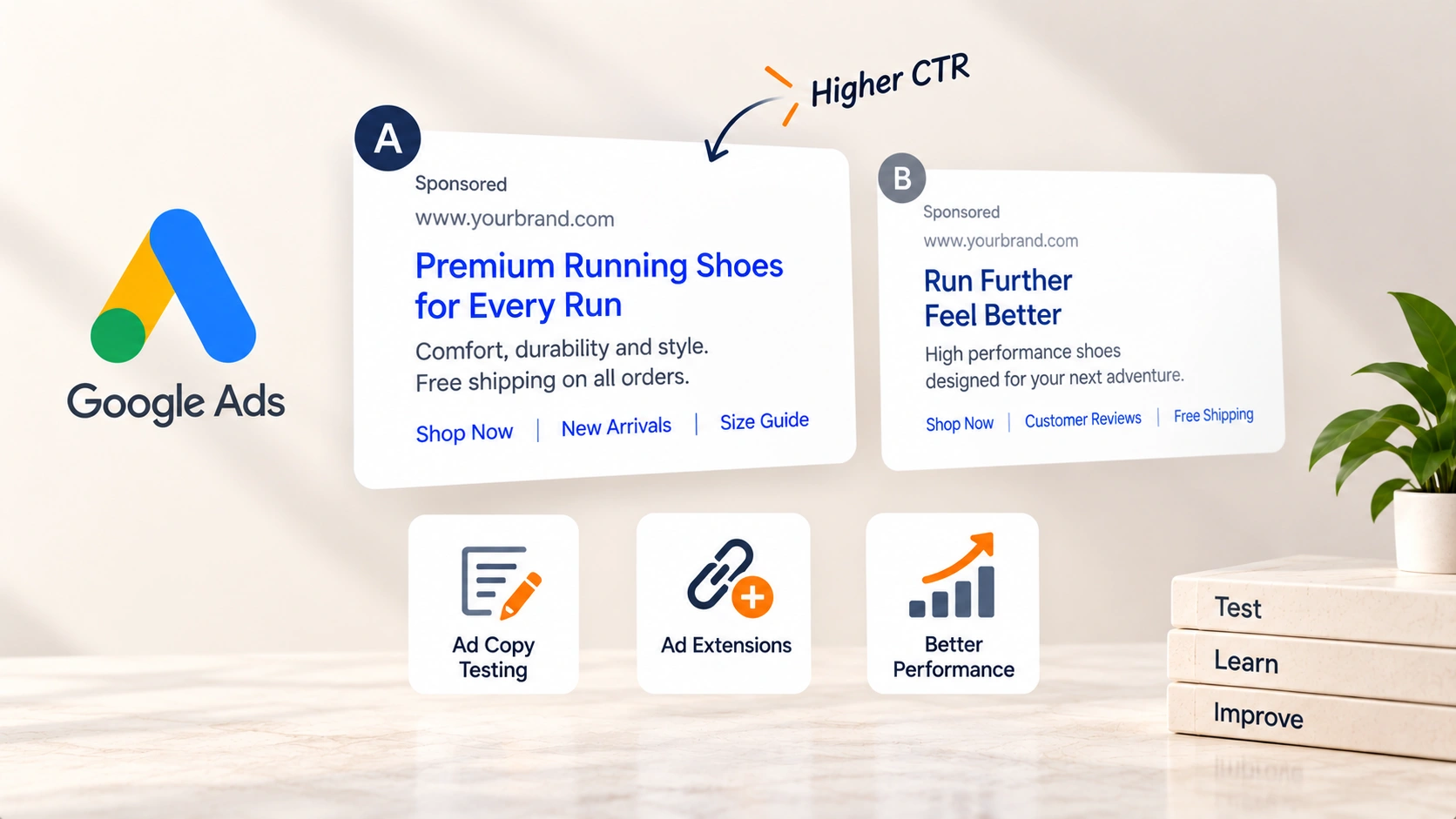
Responsive search ads, assets, extensions and the messaging that decides whether a high position earns a click. Tested rather than rewritten on instinct, and refreshed when performance decays rather than on a schedule.
- Responsive search ad assets and pinning strategy
- Sitelinks, callouts and structured snippets
- Creative testing and refresh on decay
Landing page and conversion work
The cheapest way to improve return on ad spend is usually the page, not the bid. Message match between ad and landing page, page speed, and the friction between arriving and buying. We will tell you when the account is fine and the page is the problem.
- Ad to landing page message match
- Page speed and mobile conversion
- Post-click friction and checkout drop-off

Competitor and market analysis
Auction insights, impression share, where you are being outbid and on what, and whether the brand terms you assume are safe are being bid on by resellers or competitors. Useful mainly for deciding what not to compete for.
- Auction insights and impression share tracking
- Competitor bidding and brand term defence
- Category price positioning

Account audit and takeover
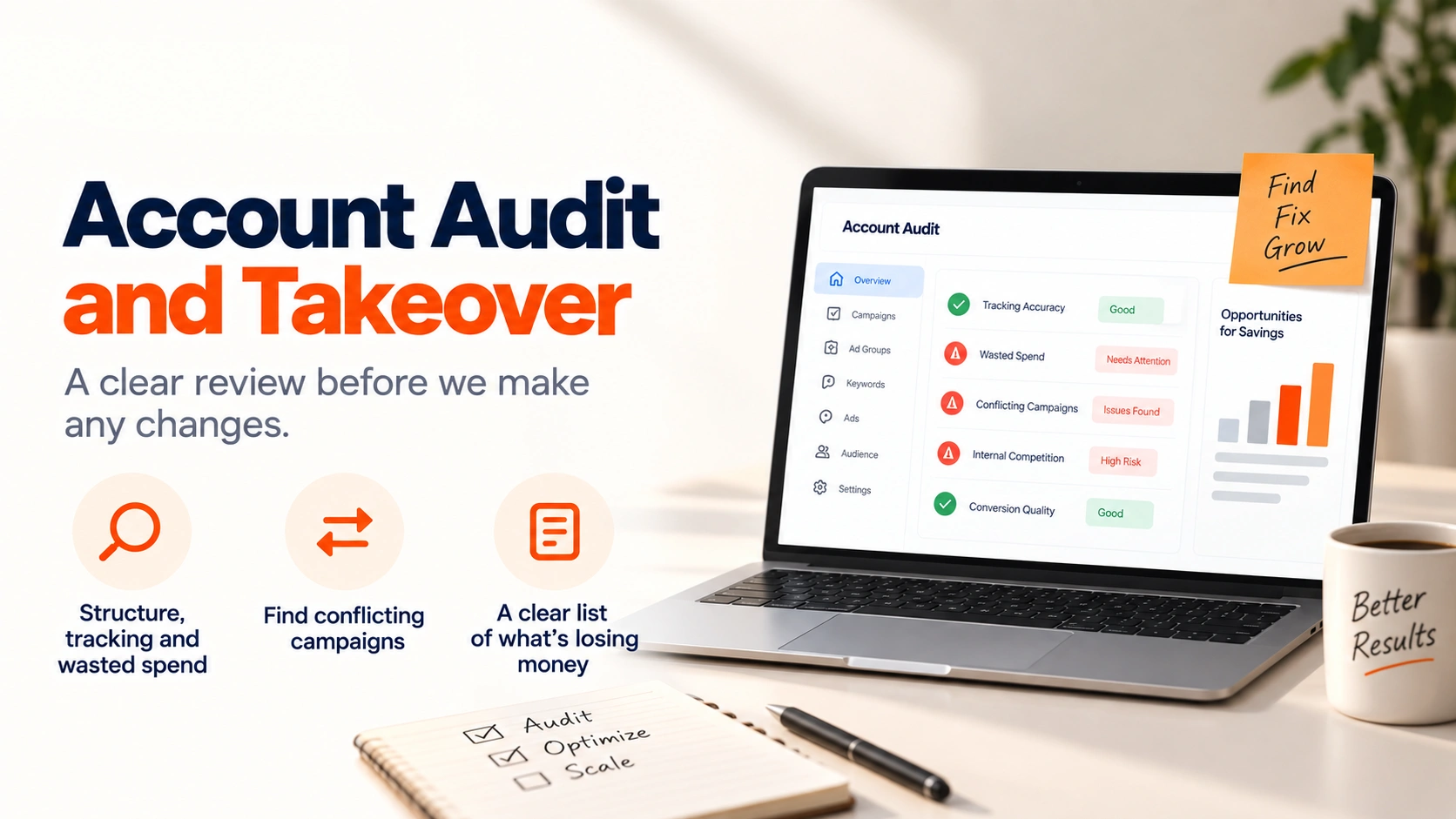
Before changing anything, a read of the account as it stands: structure, tracking accuracy, wasted spend, conflicting campaigns and the things reported as conversions that are not. Most takeovers find the first month of savings here rather than in new campaigns.
- Structure, tracking and wasted spend review
- Conflicting campaigns and internal competition
- A written list of what is losing money, in order
Reporting on profit, not platform metrics
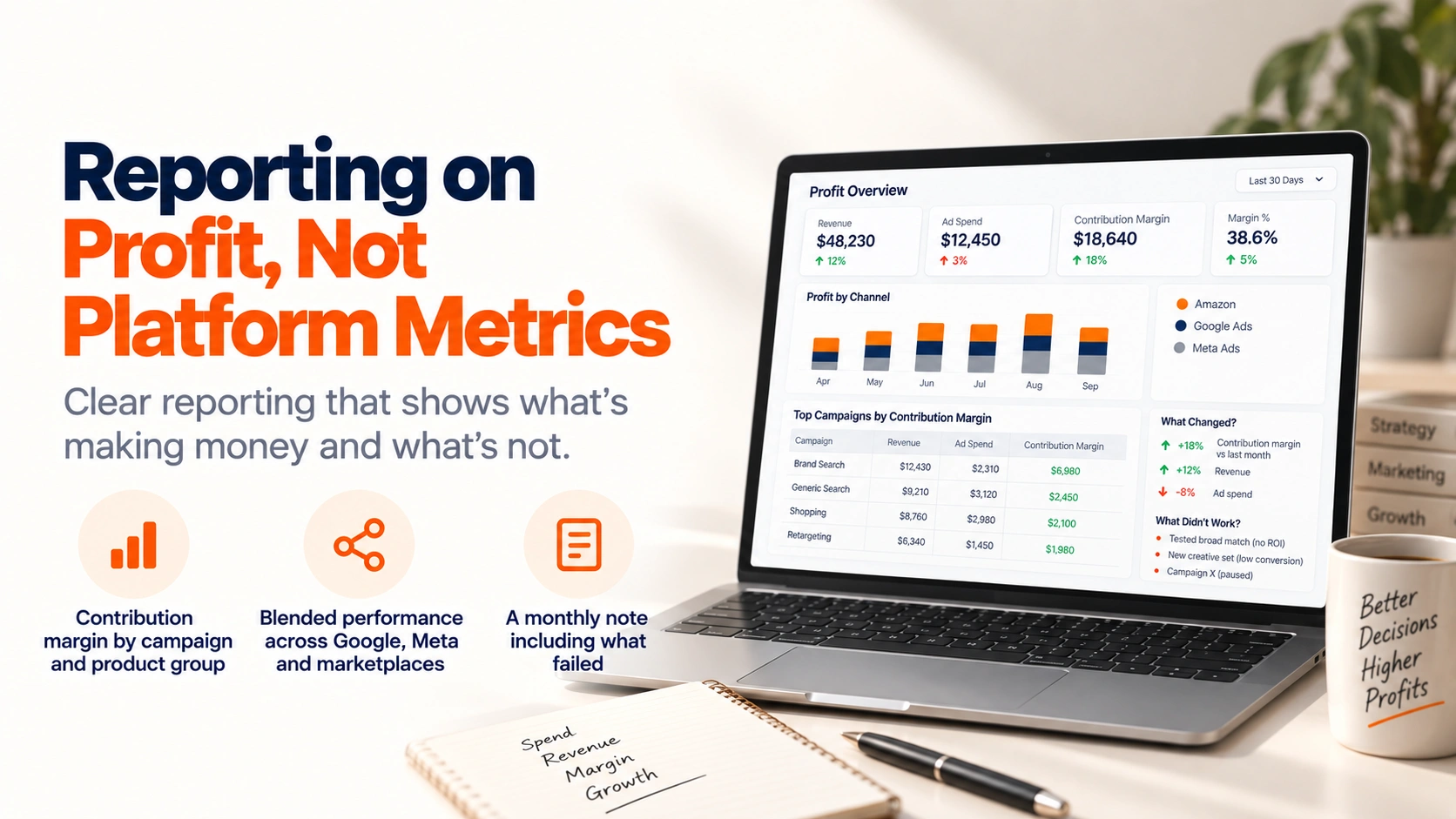
ROAS is a platform metric and contribution margin is a business one. The reporting shows spend, revenue and margin by campaign and product group, what changed since last month, and what was tried that did not work.
- Contribution margin by campaign and product group
- Blended performance across Google, Meta and marketplaces
- A written monthly note including what failed
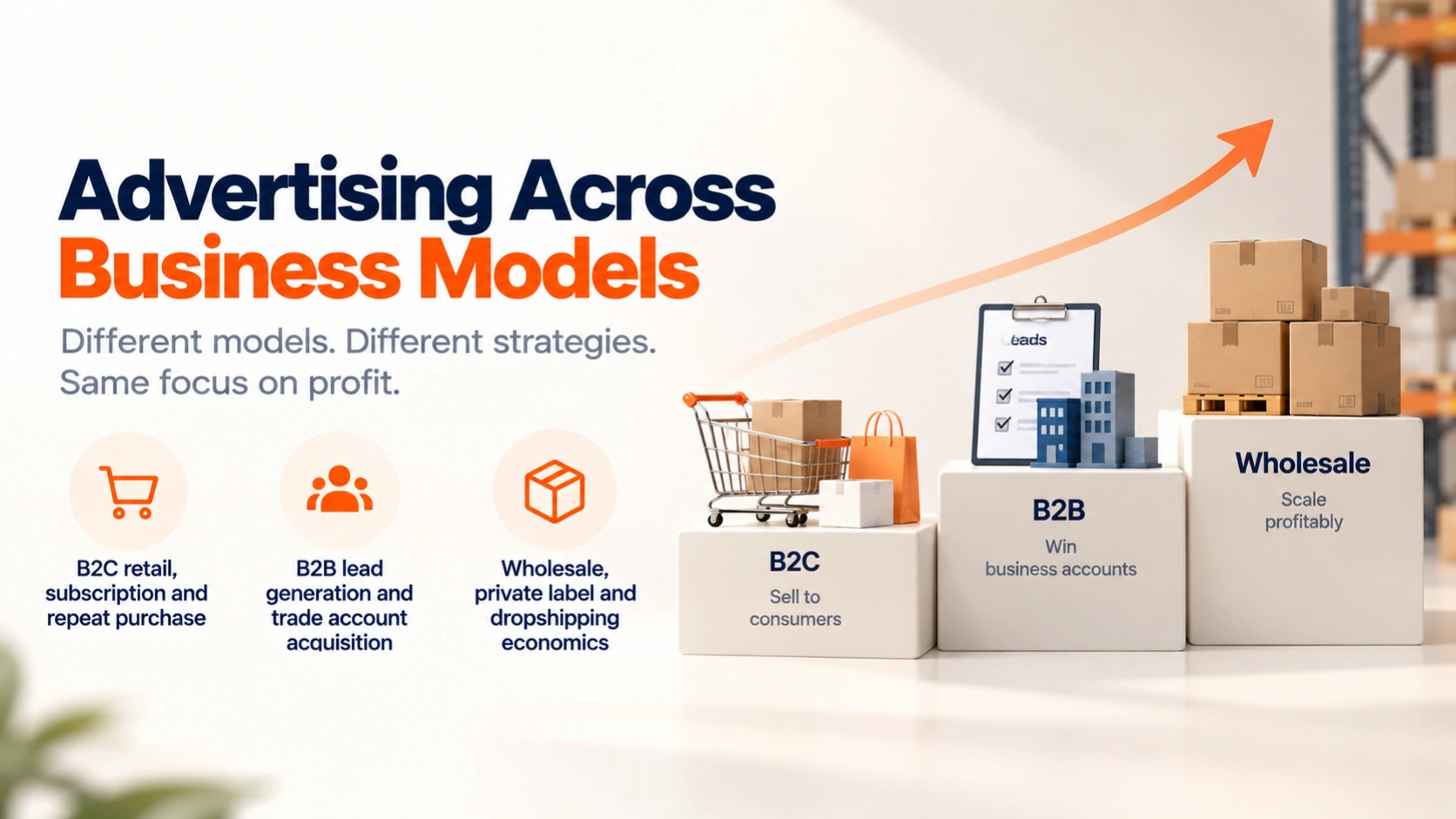
Advertising across business models
The account structure changes with the model. B2B needs longer attribution and lead value rather than transaction value; wholesale needs bulk and trade intent separated from retail; dropshipping needs margin headroom checked before any bid is set.
- B2C retail, subscription and repeat purchase
- B2B lead generation and trade account acquisition
- Wholesale, private label and dropshipping economics
How it works
- 01
Audit the account and the tracking
Structure, spend distribution, search terms, feed health and conversion accuracy. Tracking comes first because every other judgement rests on it, and a surprising number of accounts are optimising towards a conversion action that fires on the wrong page or counts the same order twice.
- 02
Stop the waste
Negative keywords, disapproved products, campaigns competing with each other for the same query, brand traffic being bought that was already free, and product groups spending on items that cannot be profitable at any conversion rate. This is where the first month usually pays for itself.
- 03
Fix the feed
For any brand selling products, Merchant Center is the foundation. Disapprovals cleared, titles and attributes rewritten for how people actually search, GTINs and product types corrected, and the catalogue segmented so budget can follow margin rather than volume.
- 04
Rebuild the structure
Campaigns arranged so that budget can be steered by product margin and by intent, asset groups built deliberately rather than by default, and audience signals given to the automation rather than left for it to guess.
- 05
Test and scale
Bid targets moved in steps against measured margin, creative tested, new campaign types trialled with a budget cap and a decision date. Scaling is deliberate: an account that doubles spend in a week is an account nobody can read afterwards.
- 06
Report and review
Monthly reporting on contribution margin by campaign and product group, a quarterly review of what to stop, and no attempt to present a flat month as a good one. You keep the account, the data and the audiences throughout.
How the fee works
What you would pay
Drag the slider, use the arrows or type an exact figure.
Estimated monthly service fee
$3,150/month
- Base fee
- $1,100
- Performance fee
- $2,050
- 1
$1,500/month flat while monthly sales are up to $20K
- 2
Above $20K, $1,100/month base plus a performance fee on your topline sales
- 3
Performance fee capped at $50,000/month; the base fee continues on top
At $80,000 in monthly sales, the estimated fee is $3,150 a month: a $1,100 base fee plus a $2,050 performance fee.
Frequently asked questions
Other services we offer
- Conversion Rate Optimization
Conversion Rate Optimization
Conversion rate optimisation for eCommerce: funnel analysis, page and offer work, checkout friction and testing that reaches a decision.
Learn More - eCommerce SEO
eCommerce SEO
eCommerce SEO for Shopify, WooCommerce and custom stores: technical structure, category and product content, internal linking and reporting on revenue.
Learn More - Keyword Research
Keyword Research
Keyword research for marketplaces and for Google. Intent, realistic difficulty, and one owning page per cluster so your own pages stop competing.
Learn More
Guides on Google Ads
What we have written about the work, for anybody weighing it up before they ask us.




Loading case studies