
The words your buyers use, and what each one is worth
Search terms for marketplaces and for Google, separated by intent, by difficulty and by what they actually convert on. Volume is the easy half. The useful half is knowing which terms a catalogue can win, and which ones belong to somebody with ten years of authority behind them.

Loading Keyword Research hero image
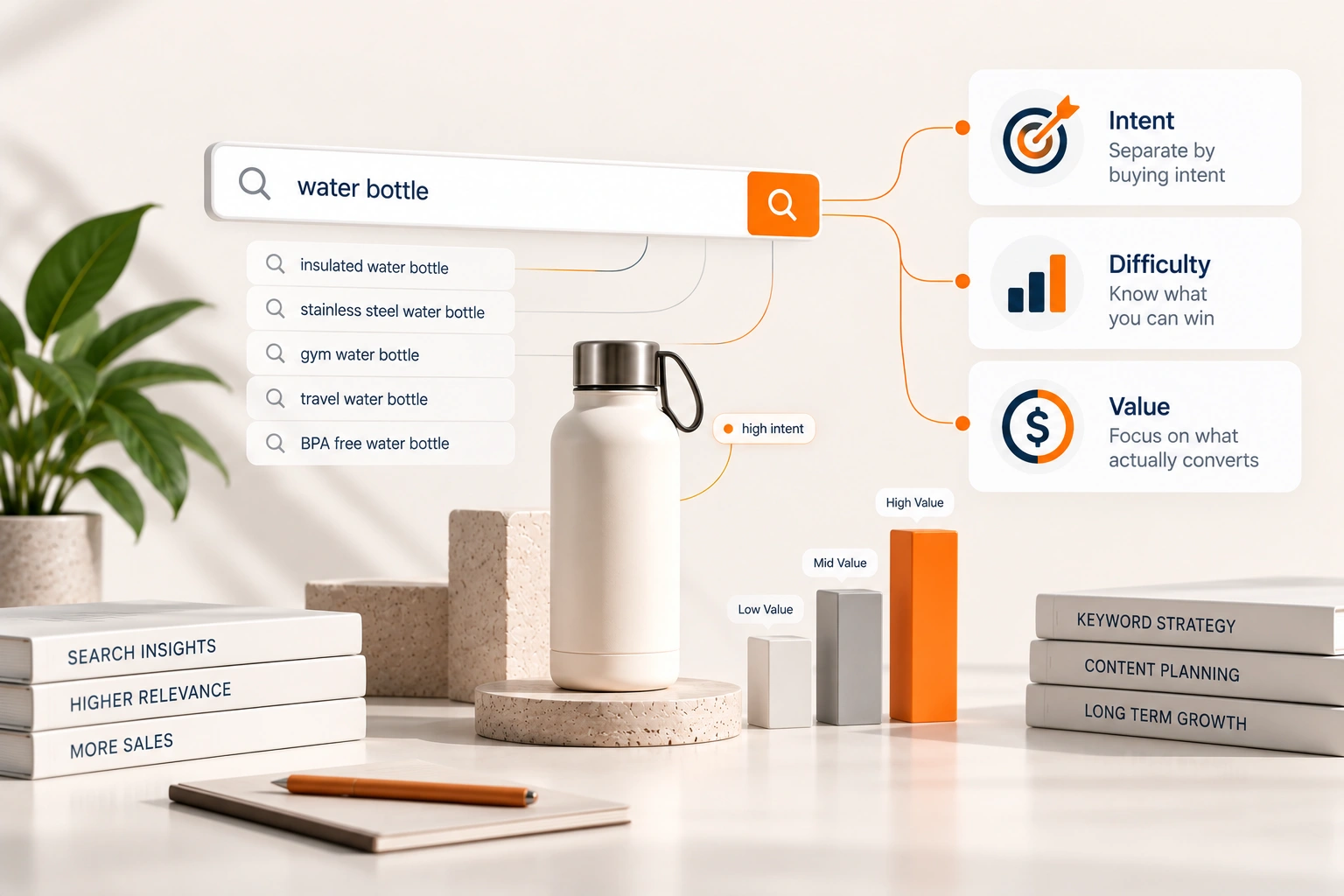
What’s included in Keyword Research
Marketplace and search engine terms, kept apart
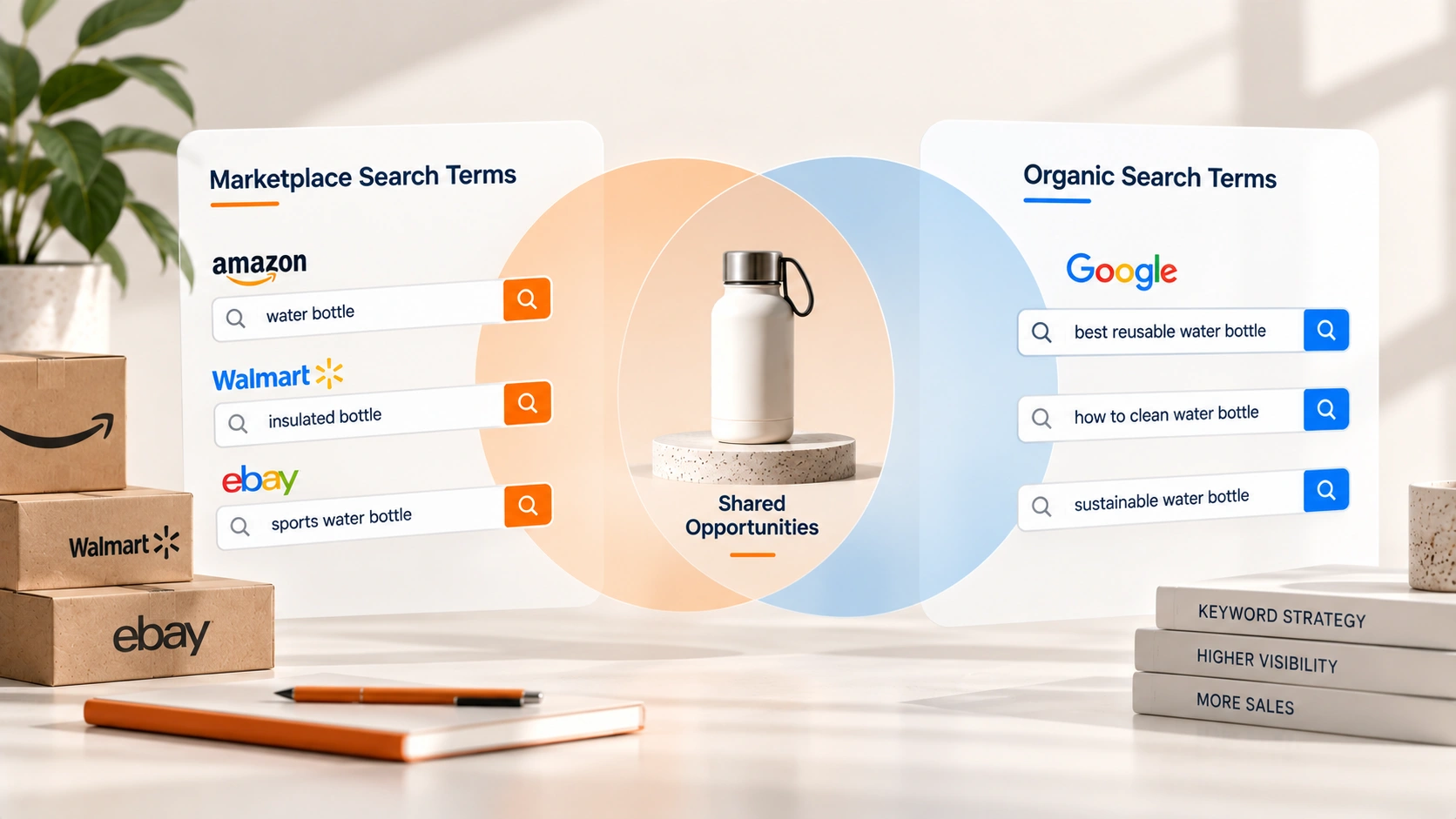
Amazon, Walmart and eBay rank listings inside their own search engines on conversion and sales velocity. Google ranks pages on something else entirely. The same product needs two different term sets, and treating them as one list is how a listing ends up carrying phrases that only ever mattered to an article.
- Marketplace search terms
- Organic search terms
- Where the two overlap
Intent before volume
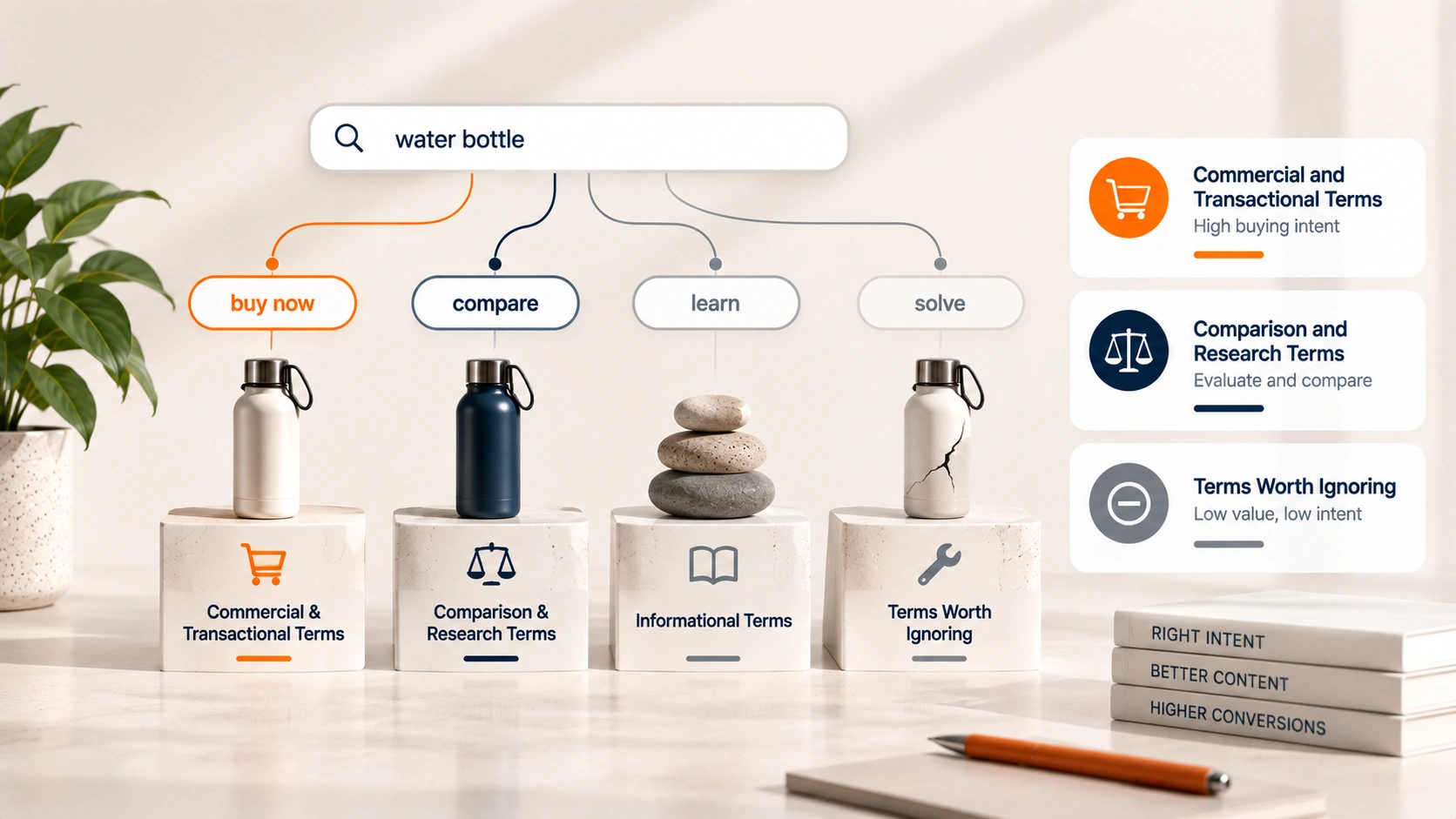
Every term sorted by what the person typing it wants. To buy now, to compare, to understand, or to solve a problem they have not yet connected to your product. A page written for the wrong one of those four converts badly however well it ranks.
- Commercial and transactional terms
- Comparison and research terms
- Terms worth ignoring
Difficulty you can act on
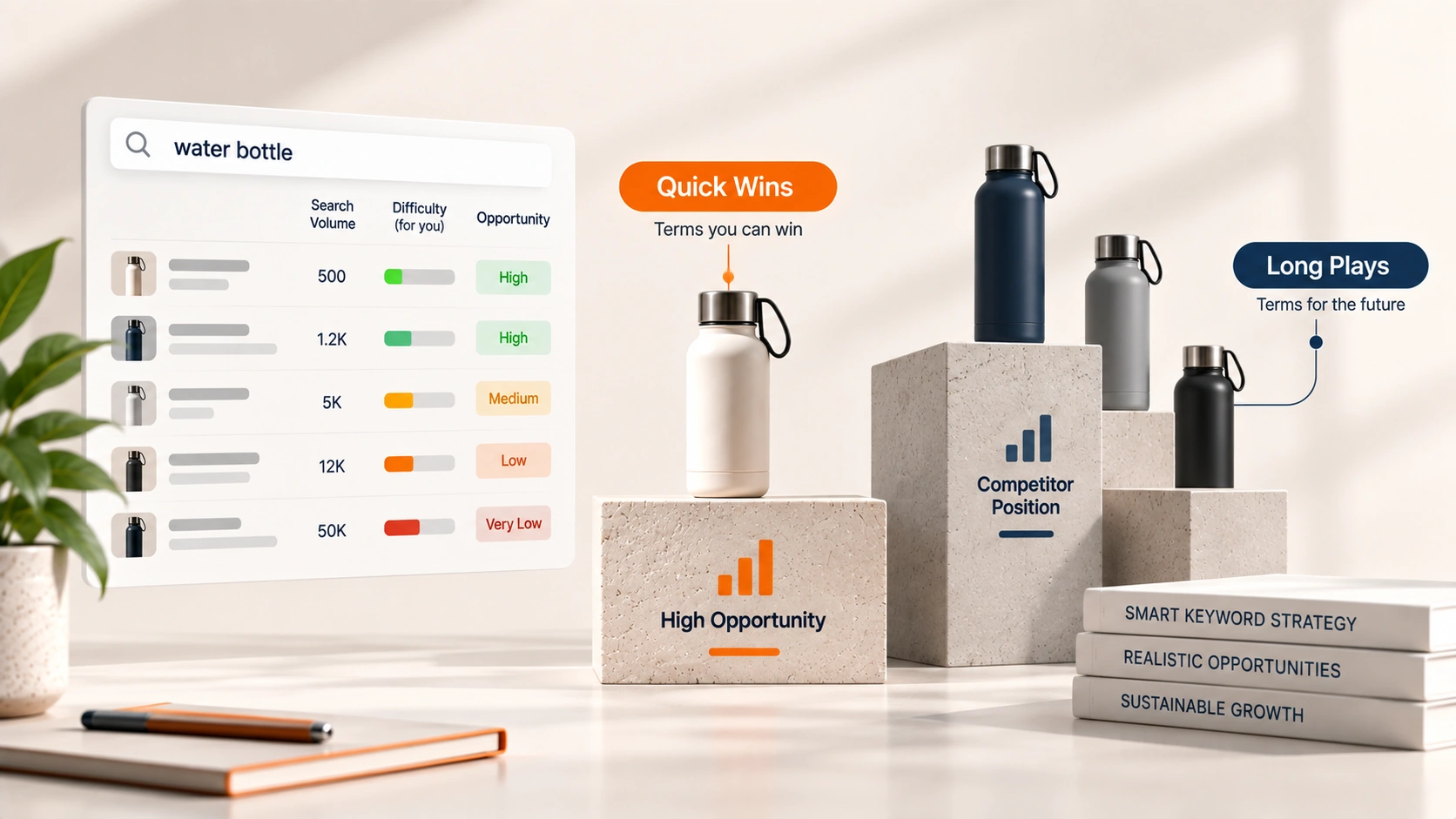
How hard a term is for your domain and your catalogue rather than a generic score out of a hundred. A term with 500 searches you can win is worth more than one with 50,000 you cannot, and most keyword reports are sorted the wrong way round.
- Winnability by term
- Competitor position
- Quick wins and long plays
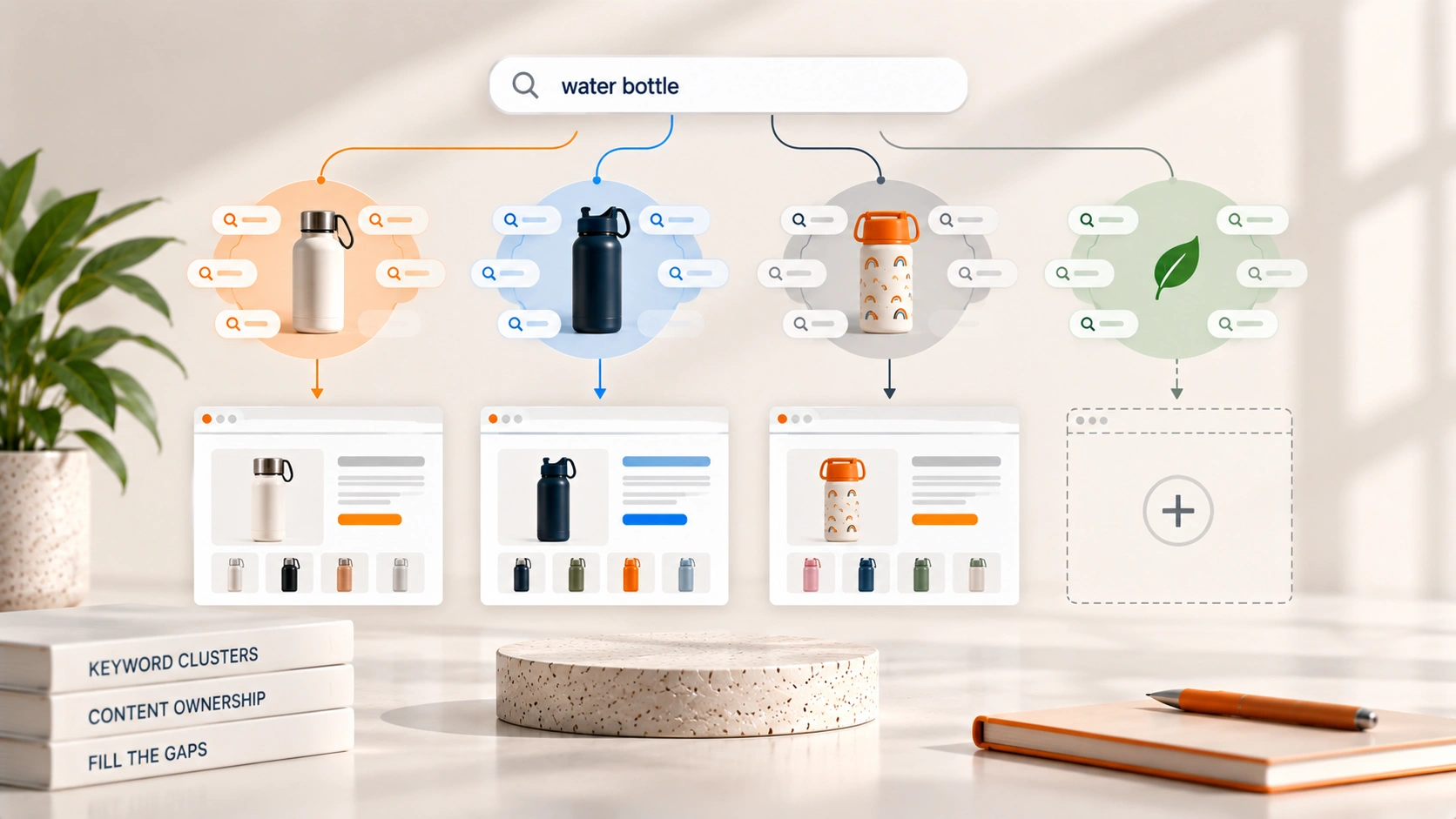
One owning page per cluster
Terms grouped into clusters and each cluster assigned to the single page that should own it. This is the part that stops two of your own pages competing for the same query, which is a problem brands create by accident and discover long afterwards.
- Cluster mapping
- Owning page per cluster
- Gaps where no page exists
How it works
- 1
Understand the catalogue and the buyer
What you sell, who buys it, what they call it, and what they call it when they are comparing rather than buying. Product teams and customers rarely use the same words, and the customer's are the ones that matter.
- 2
Pull the demand from both sides
Marketplace search data and organic search data, plus what your own listings and on-site search already say about what people look for and fail to find.
- 3
Sort, cluster and score
By intent first, then by difficulty against your actual position. The output is a decision about where effort goes, not a spreadsheet of everything that exists.
- 4
Map terms to pages
Each cluster given an owning page, existing or to be built, with the gaps named. That map is what the listing work, the content and the advertising all run against afterwards.
Keyword Research pricing
What’s included
- Marketplace and Google search terms
- Separated by intent
- Scored by difficulty
Frequently asked questions
Other services we offer
- Product Listing Optimization
Product Listing Optimization
Product listing optimisation for Amazon, Walmart, eBay and TikTok Shop. Titles, bullets, backend fields, images and variations, measured on conversion.
Learn More - eCommerce SEO
eCommerce SEO
eCommerce SEO for Shopify, WooCommerce and custom stores: technical structure, category and product content, internal linking and reporting on revenue.
Learn More - Amazon Advertising
Amazon Advertising
Amazon advertising managed against contribution margin: Sponsored Products, Brands, Display and DSP, structured by intent and reported on profit.
Learn More
Loading case studies