
Retail growth, without rebuilding your operation to get it
A partnership for brands whose products deserve more retail reach than their current route to market gives them. We build the commercial plan, open the channels and run the selling, while your inventory stays yours until it sells. You do not stand up a 3P team, a DTC function or a new operating department to take part.

Loading Retail Growth Partnership hero image
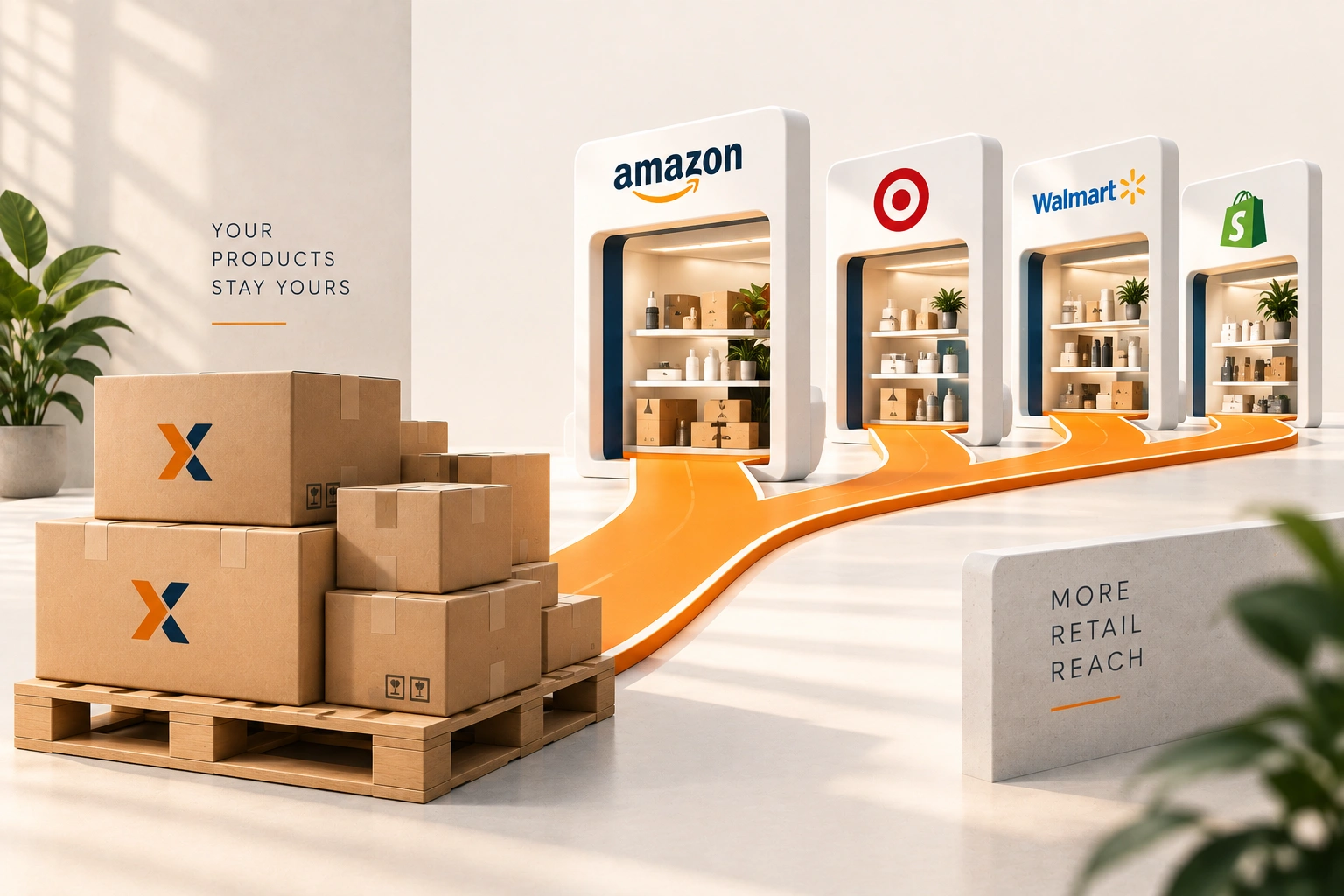
What’s included in Retail Growth Partnership
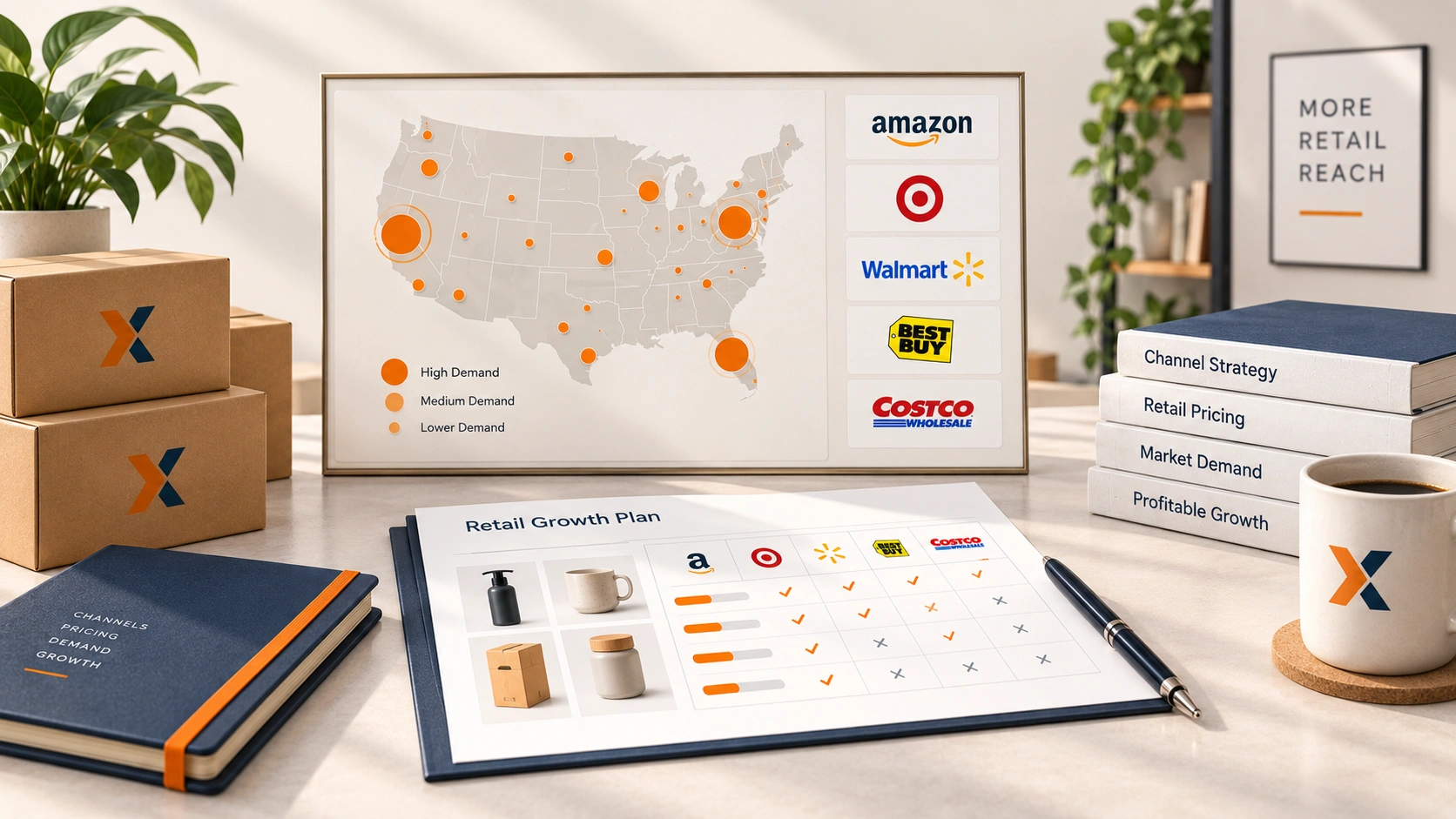
The retail growth plan
Which of your products have retail demand that is not being served, where that demand sits, and what it would take to reach it. The plan names the channels and the ranges rather than describing an opportunity in general, and it says where the opportunity is not worth taking.
- Range and channel selection against real demand
- Retail pricing position, by channel
- What we would not put into retail, and why
Your brand, at retail pricing
Products are sold under your brand, presented the way you want the brand presented, at retail pricing rather than at a wholesale price somebody else marks up. The commercial relationship with the end buyer is a retail one, which is what keeps the brand's own pricing and positioning intact.
- Sold under your brand, not relabelled
- Retail pricing, set against the channel
- Brand presentation stays in your control

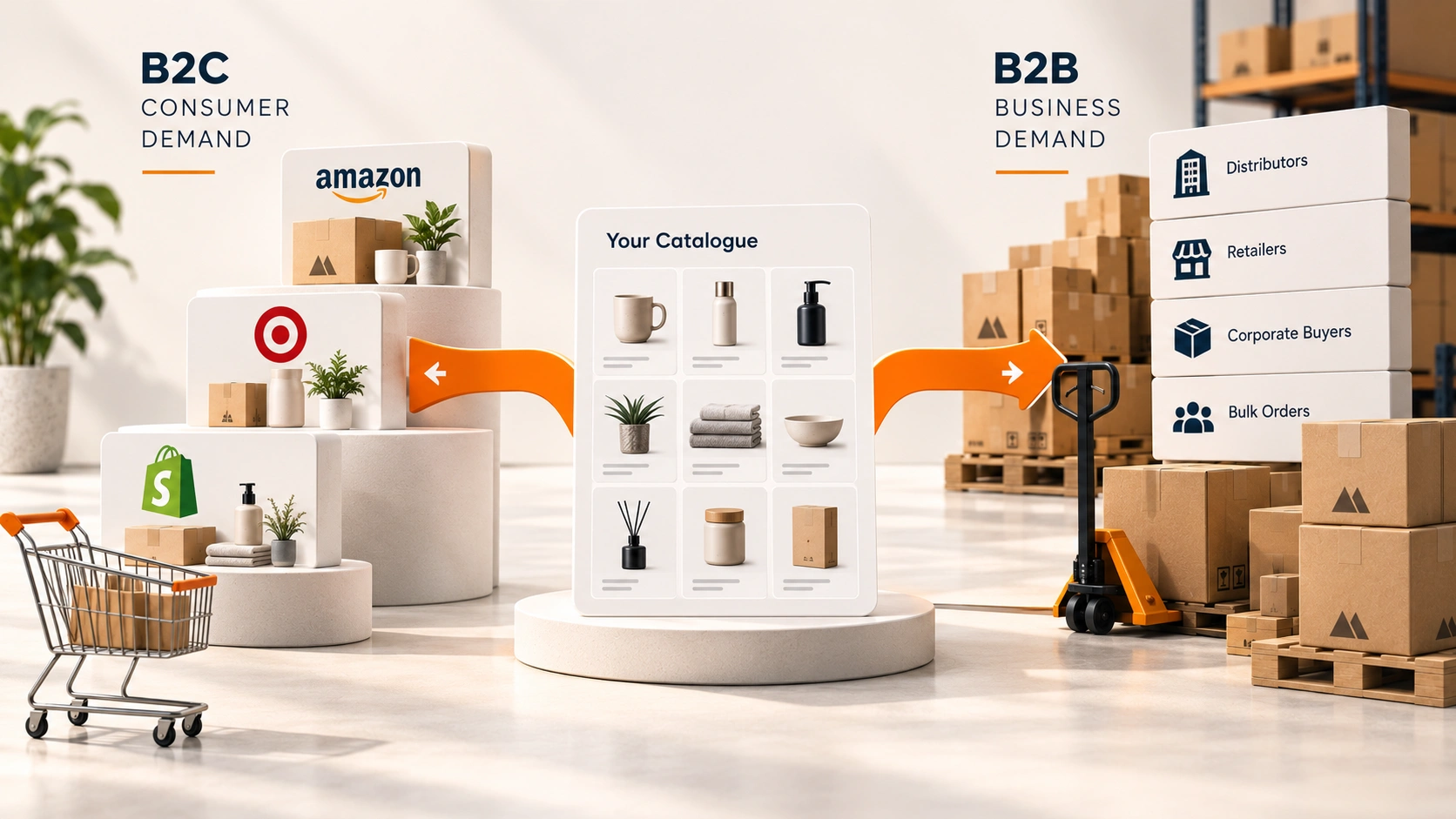
B2C and B2B demand, together
Consumer demand and business buying are two different jobs against one catalogue: volume, pricing structure, buying cycle and the questions a buyer asks before ordering are not the same. The partnership covers both rather than treating business demand as consumer demand at a larger order size.
- Consumer retail channels
- Business and bulk buyers
- One catalogue, two sets of buying behaviour
Channel execution, day to day
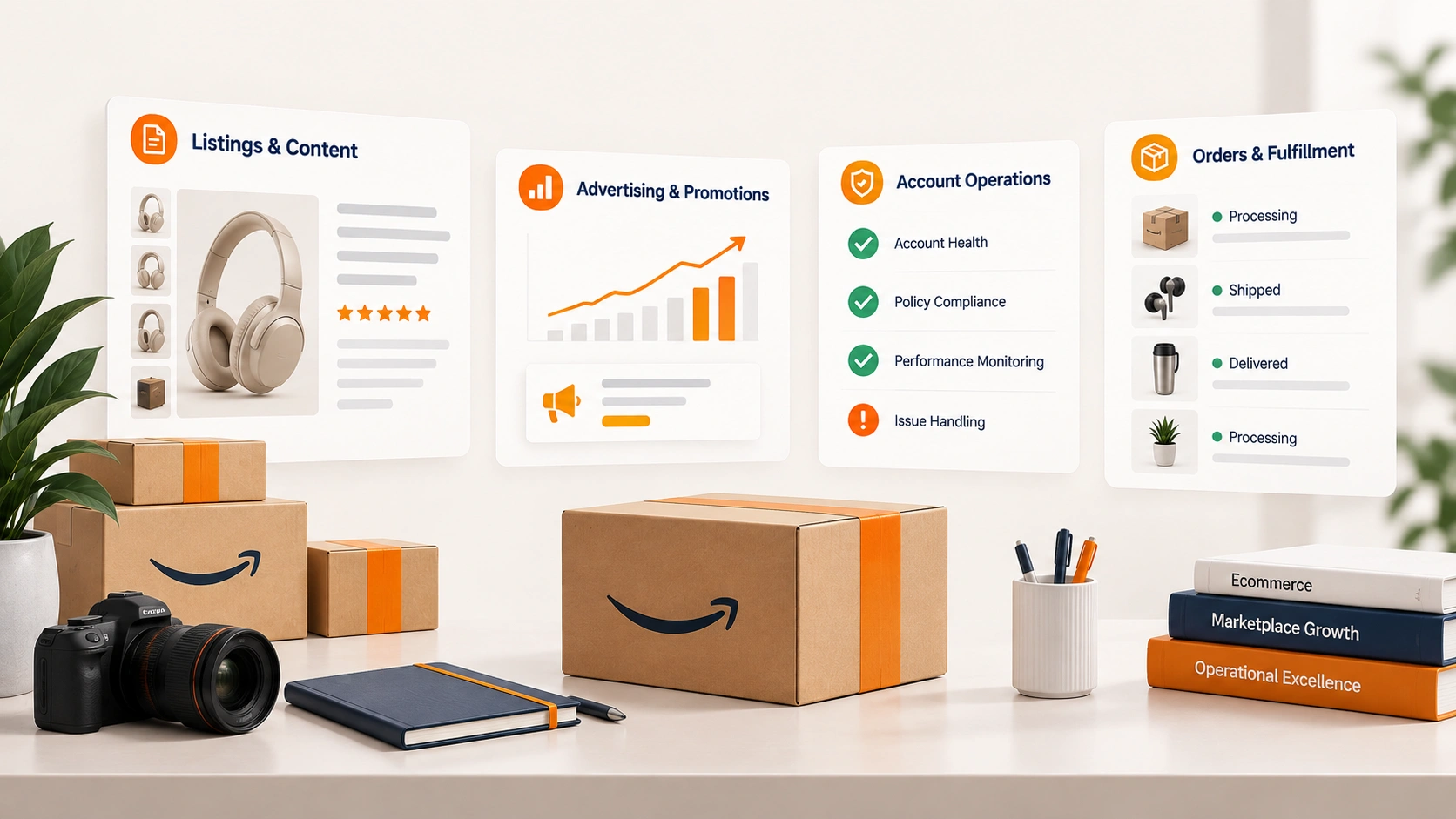
Listings and content, catalogue accuracy, advertising, promotions, account health, orders and the issues that arrive without warning. This is the operating work that decides whether a retail plan produces revenue or a list of live listings nobody buys from.
- Listing, content and catalogue work
- Advertising and promotional activity
- Account operations and issue handling
Forecasting and inventory planning
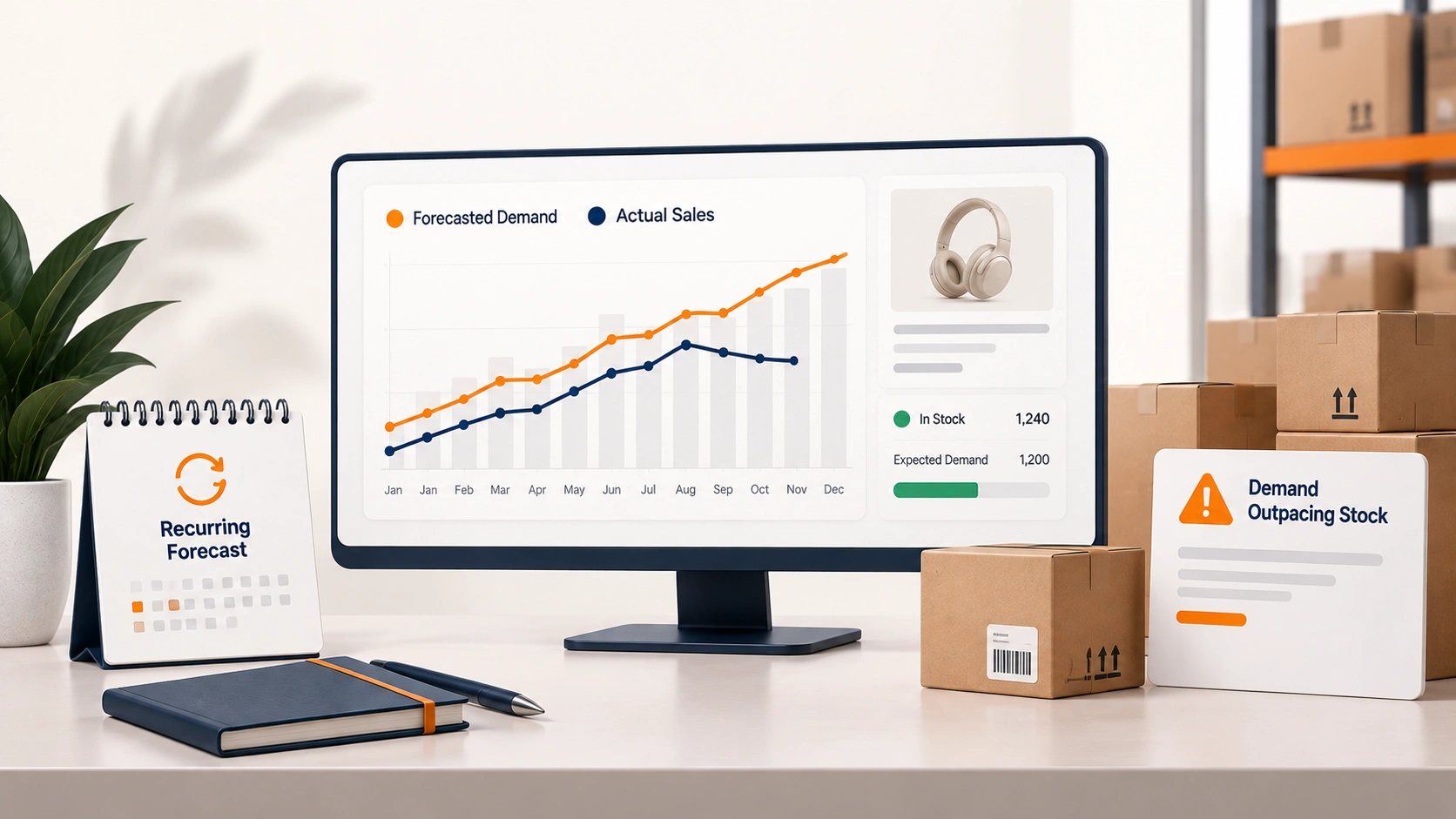
A recurring forecast, kept against what the channels are actually doing rather than set once at the start. The point is that stock availability and retail demand stay aligned: growth that arrives when there is nothing to sell is not growth, and stock that sits against demand that never came is expensive.
- Recurring demand forecasts, not a one-off plan
- Availability planned against expected demand
- Early warning when the two are drifting apart
Either operating model, whichever fits
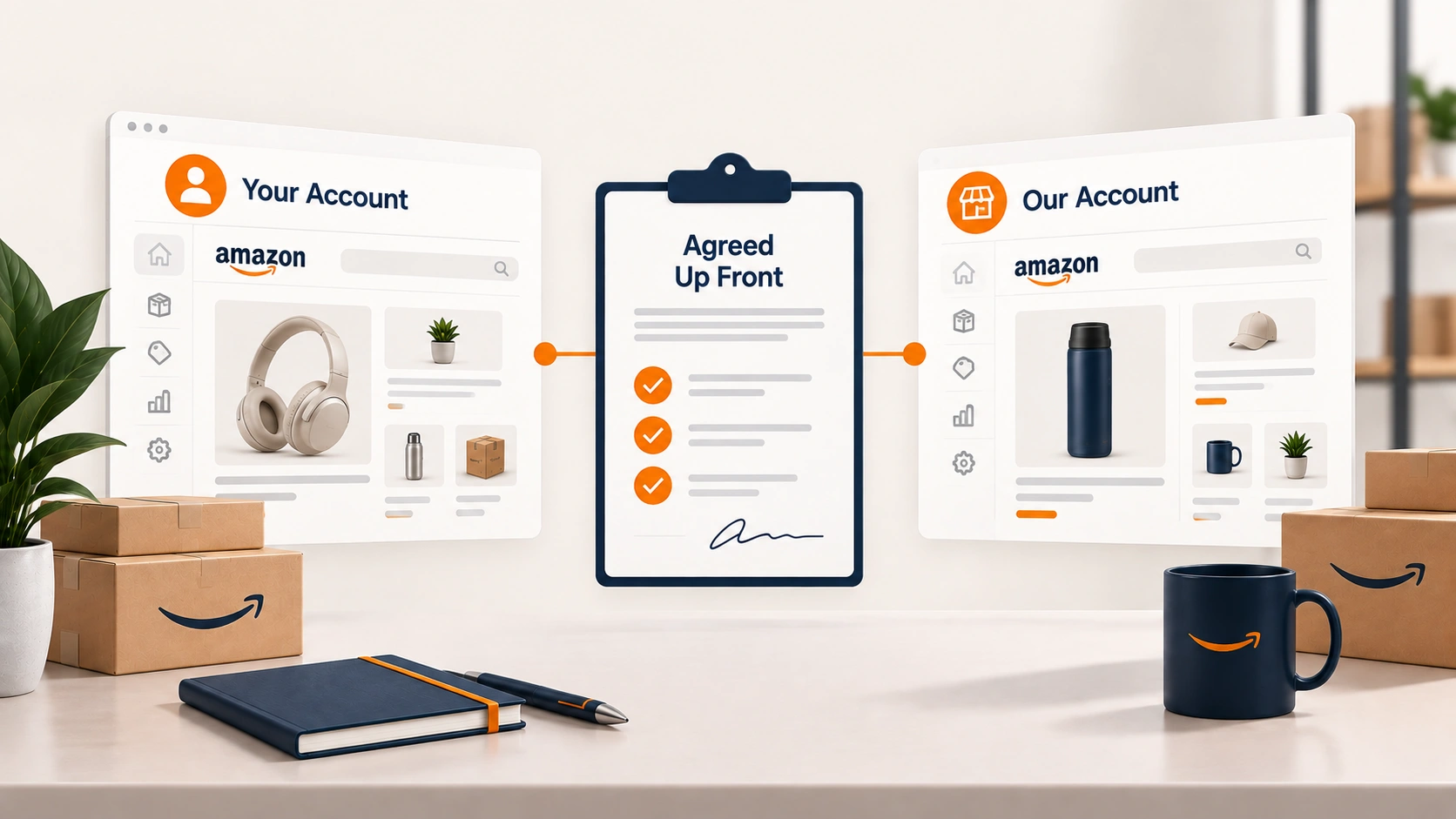
The selling runs through your own account, or through an Xcelerate account, depending on what the channel and the arrangement call for. Which one is agreed before anything goes live rather than discovered afterwards, because it decides where the account, the data and the day to day sit.
- Through your account, where that is right
- Through ours, where that is right
- Agreed up front, in writing
How it works
- 01
Read the catalogue and the market
Which products have retail demand, where that demand is, what is already serving it, and which parts of your range are worth putting in front of it. This is the part that decides whether there is an opportunity at all, and we will say when there is not.
- 02
Build the commercial plan
Ranges, channels, retail pricing position and the sequence: what opens first, what follows it and what has to be true before the next step is worth taking. Consumer and business demand are planned separately, because they buy differently.
- 03
Agree the operating model
Whether the selling runs through your account or through ours, how inventory moves, and what each side is responsible for day to day. Settled before anything is listed, because it decides where the accounts, the data and the work sit.
- 04
Open the channels and run them
Listings and content, catalogue, advertising, promotions and the ordinary operations of a live retail channel, run by our team rather than handed to you as a plan to implement.
- 05
Forecast, plan and keep them aligned
A recurring forecast against what the channels are doing, so availability and expected demand stay in step as the partnership grows rather than being reconciled after a stockout.
How the fee works
What you would pay
Drag the slider, use the arrows or type an exact figure.
Estimated monthly service fee
$3,150/month
- Base fee
- $1,100
- Performance fee
- $2,050
- 1
$1,500/month flat while monthly sales are up to $20K
- 2
Above $20K, $1,100/month base plus a performance fee on your topline sales
- 3
Performance fee capped at $50,000/month; the base fee continues on top
At $80,000 in monthly sales, the estimated fee is $3,150 a month: a $1,100 base fee plus a $2,050 performance fee.
Frequently asked questions
Other services we offer
- Unit Economics
Unit Economics
Contribution margin per SKU and per channel: fees, fulfilment, storage, returns, advertising and landed cost in one model you can decide from.
Learn More - Amazon
Amazon
Amazon agency for brands already selling: listings and A+ content, PPC, account health, FBA inventory and reimbursements, reported on contribution margin.
Learn More - Walmart
Walmart
Walmart marketplace management: item setup and catalogue compliance, listing content, Walmart Connect advertising, WFS and pricing strategy for brands.
Learn More
Guides on Retail Growth Partnership
What we have written about the work, for anybody weighing it up before they ask us.

Loading case studies