
Shopify SEO and store growth, run as one job
Organic traffic, conversion and the technical work underneath both. Most Shopify stores are not losing to their competitors' content, they are losing to their own theme, their collection structure and a hundred pages Google never had a reason to index.

Loading Shopify hero image
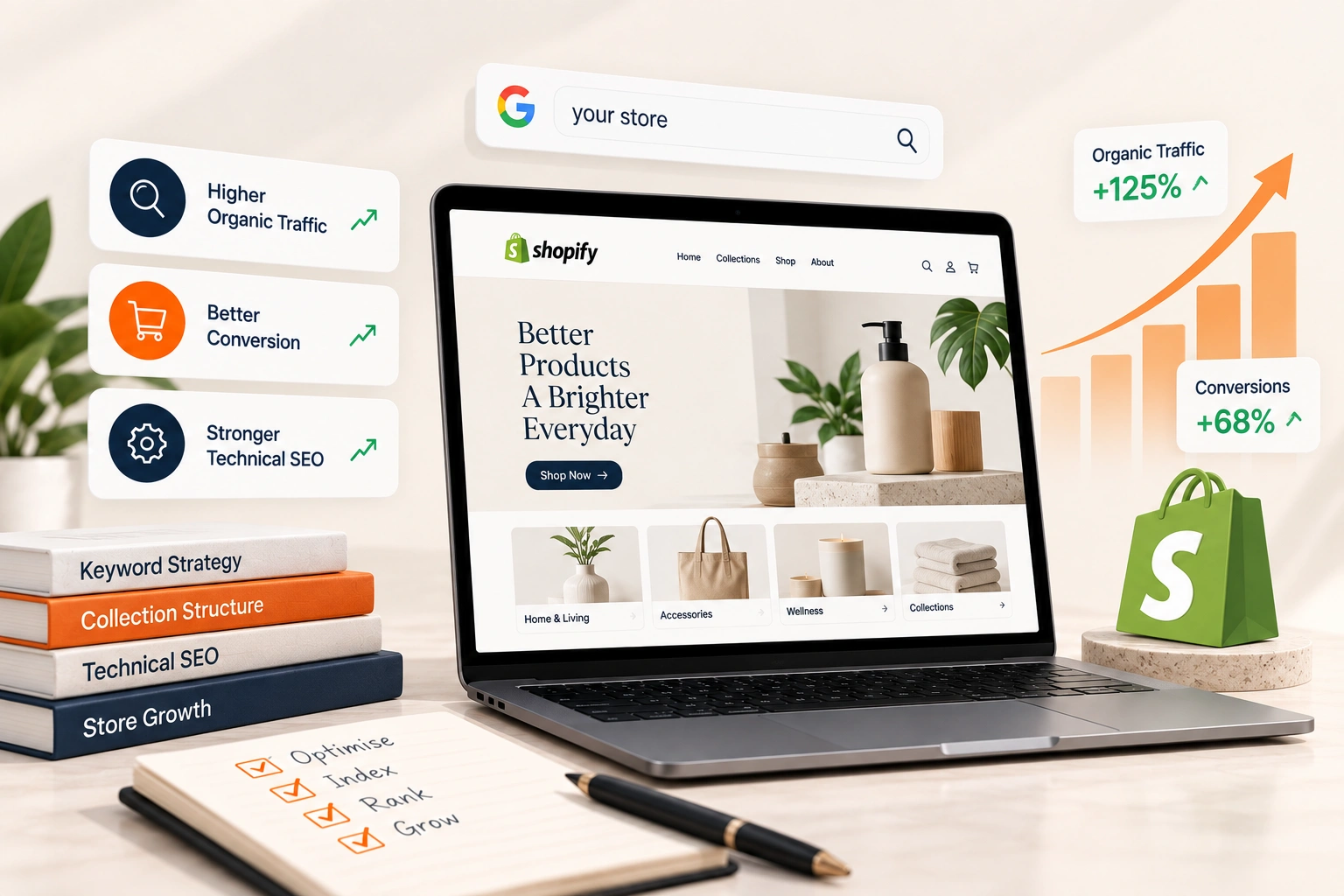
What’s included in Shopify
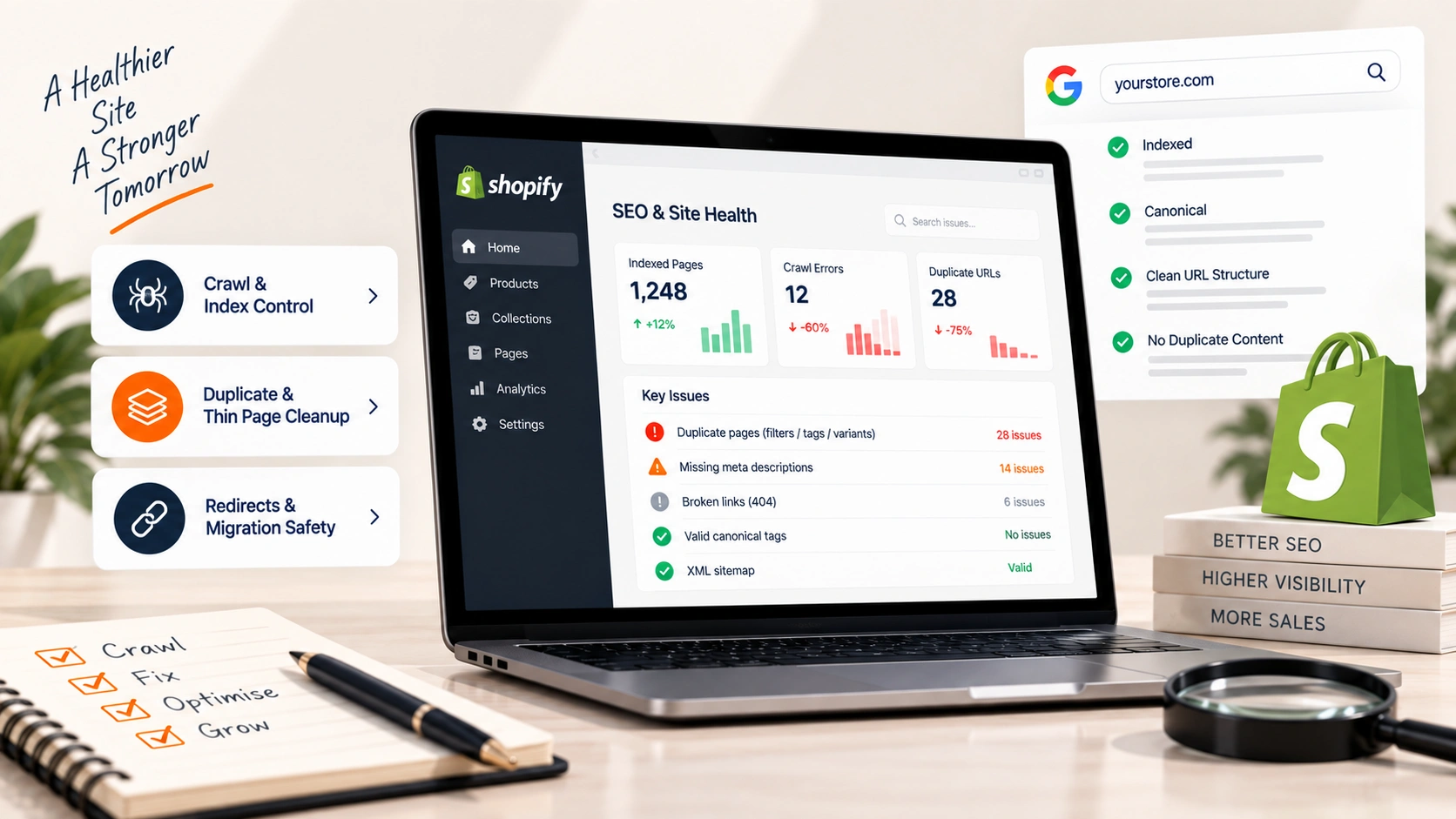
Technical SEO and site health
Crawl and index control, canonical rules, redirect hygiene, and the duplicate URLs Shopify creates on its own through tags, filters and variant parameters. The unglamorous half, and the half that decides whether anything else you do is visible.
- Crawl budget, indexation and canonical control
- Duplicate, thin and orphaned page cleanup
- Redirects, broken links and migration safety
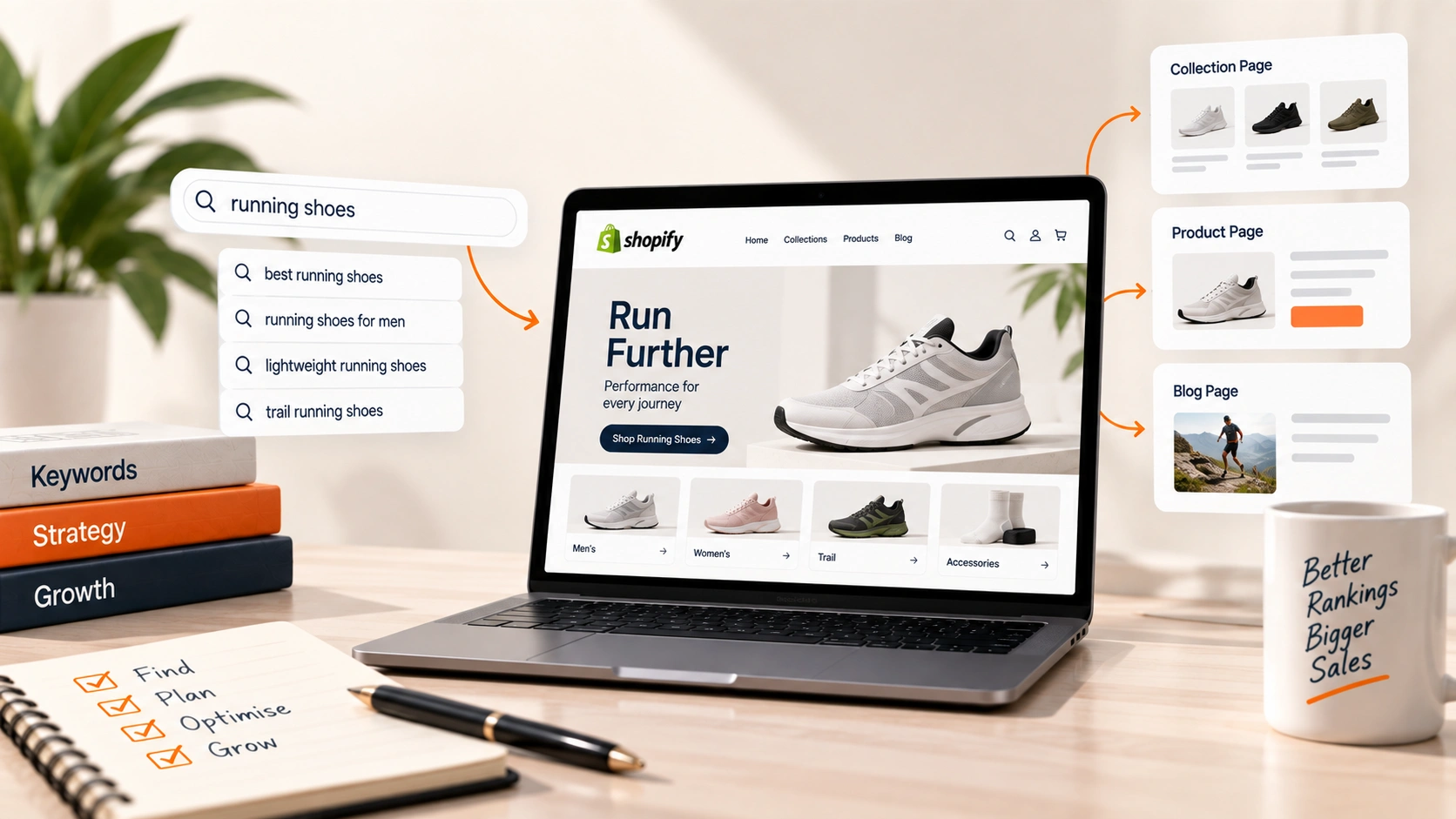
Keyword and category strategy
What the store should rank for, and which page should own each term. Most Shopify stores have collections competing with products and blog posts competing with both, which splits the authority for a term across three URLs that each rank badly.
- Keyword research by commercial intent, not volume alone
- One owning URL per intent, to stop pages competing
- Collection and product page targeting
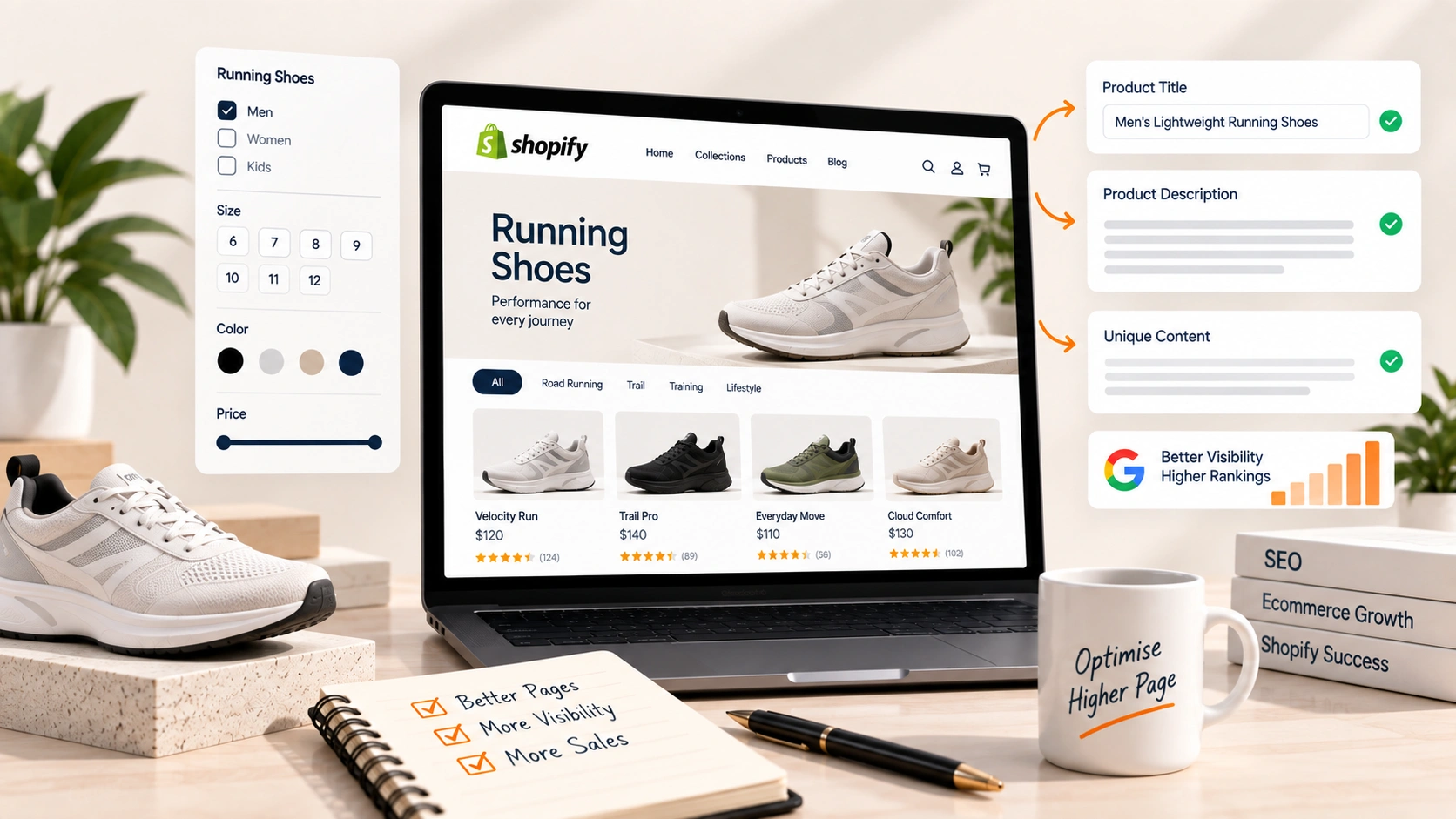
Collection and product page optimisation
Titles, headings, descriptions and on-page copy that gives Google a reason to rank the page and gives a shopper a reason to stay. Product descriptions copied from a supplier feed are the most common reason a catalogue does not rank.
- Collection page copy and internal structure
- Product titles, descriptions and unique content
- Filtering and faceted navigation that does not leak crawl budget
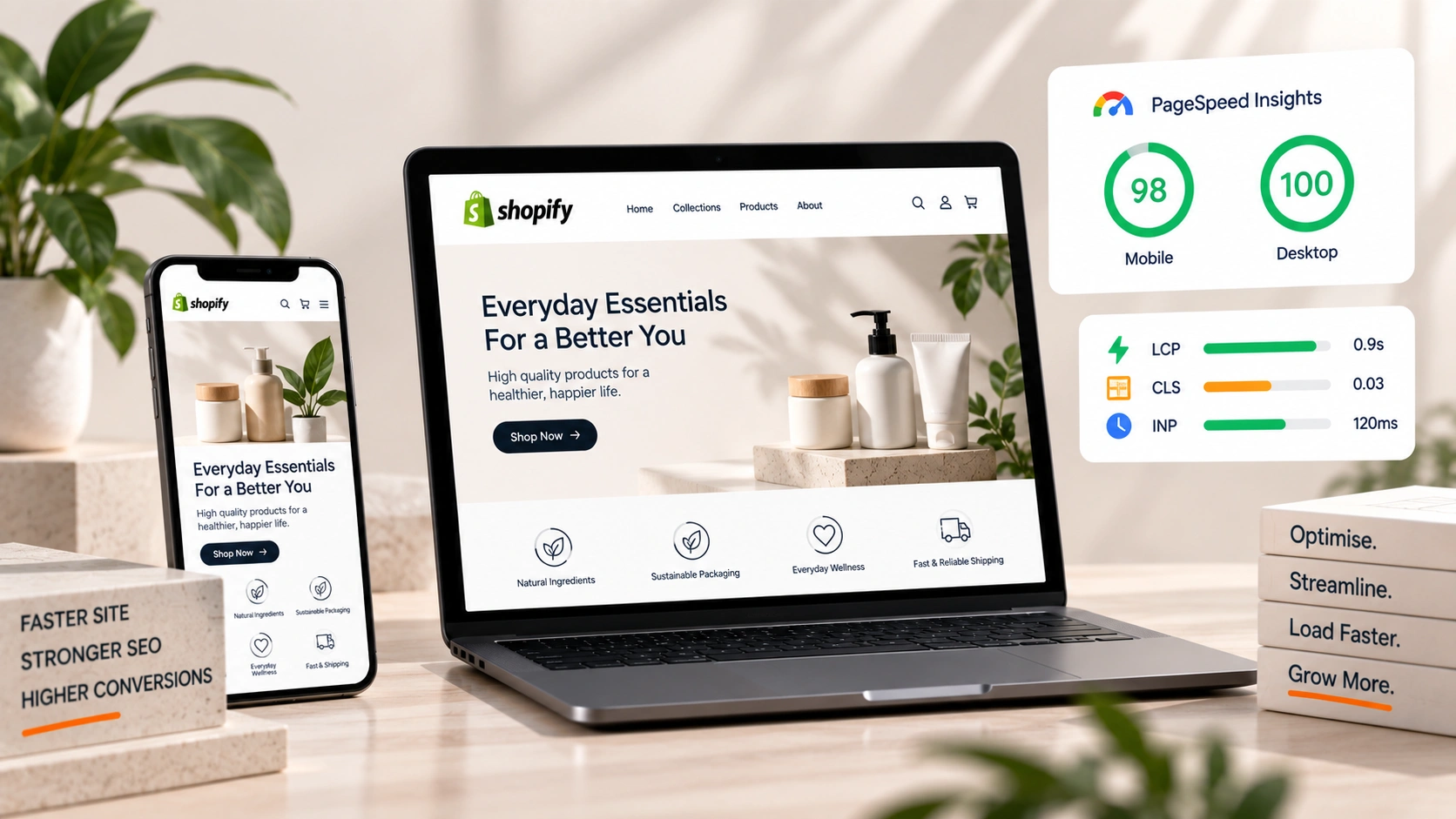
Site speed and Core Web Vitals
Theme weight, app scripts, image handling and render blocking. Shopify stores accumulate apps, and each one adds JavaScript to every page whether or not that page uses it. Speed is both a ranking input and the thing that decides whether mobile traffic converts.
- Largest Contentful Paint, layout shift and blocking time
- App script and theme audit
- Image formats, sizing and lazy loading
Structured data and rich results
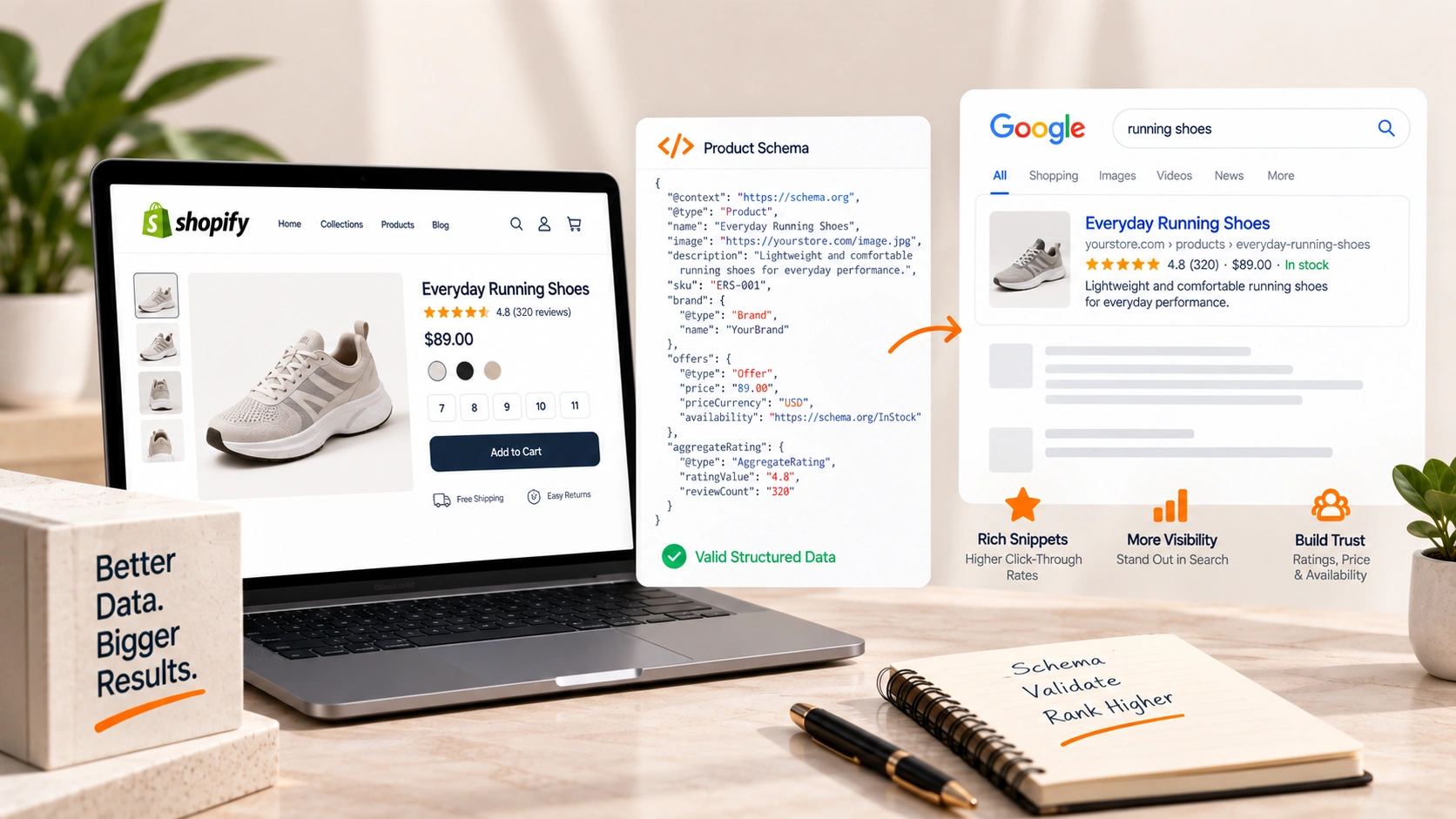
Product, review, breadcrumb, FAQ and organisation schema, correct and validating. This is what decides whether a listing in search carries a price, a rating and availability, or is a blue link next to competitors that have all three.
- Product, offer and review schema
- Breadcrumb and FAQ markup
- Validation and Search Console error resolution
Content and topical authority
Articles and guides that answer what buyers ask before they buy, built as clusters around the collections that matter rather than as a blog nobody planned. Each piece links to the page it supports, which is how a category earns depth.
- Content clusters mapped to commercial collections
- Buying guides, comparisons and question content
- Internal linking from content to the pages that convert

Conversion rate optimisation
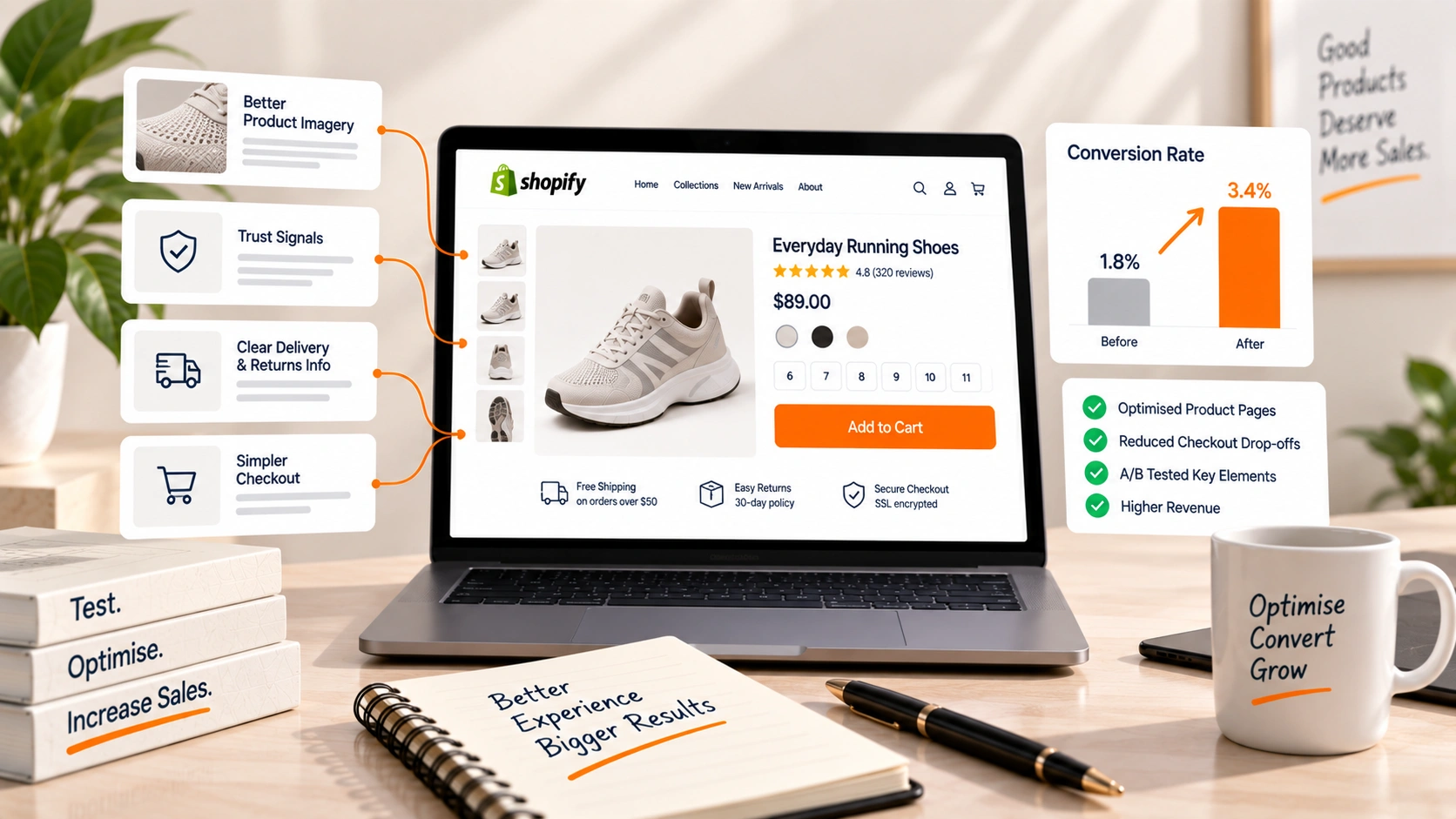
Traffic that does not convert is a cost. Product page layout, imagery, trust signals, delivery and returns messaging, and the checkout steps that lose people. Tested rather than guessed, because opinions about buttons are cheap.
- Product and collection page conversion work
- Cart and checkout drop-off analysis
- A/B testing where traffic supports it
Answer engine and AI search visibility
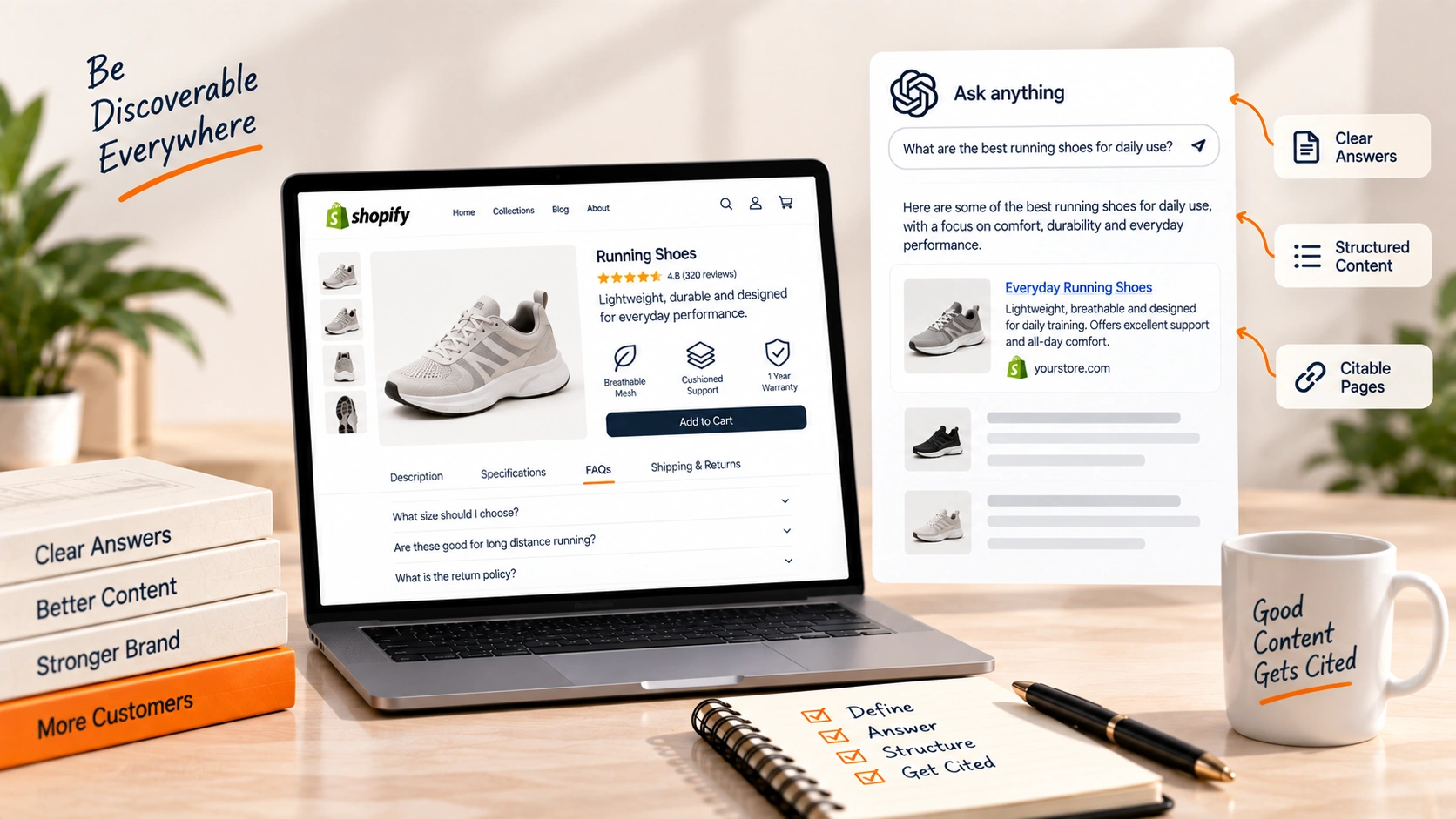
Assistants increasingly answer product research questions directly, and they quote pages that state things plainly. Clear definitions, real specifications, honest comparisons and structured FAQs are what make a store citable rather than merely crawlable.
- Content written to be quoted, not just ranked
- FAQ and definition coverage on commercial pages
- Entity and brand consistency across the site
Store management and merchandising
The operational layer around the SEO: catalogue structure, collections, promotions, and the day to day of keeping a growing store coherent. Optional, and taken on where a brand wants one team accountable for traffic and for the store itself.
- Catalogue and collection management
- Promotions, merchandising and seasonal setup
- App stack review and rationalisation

Shopify store development
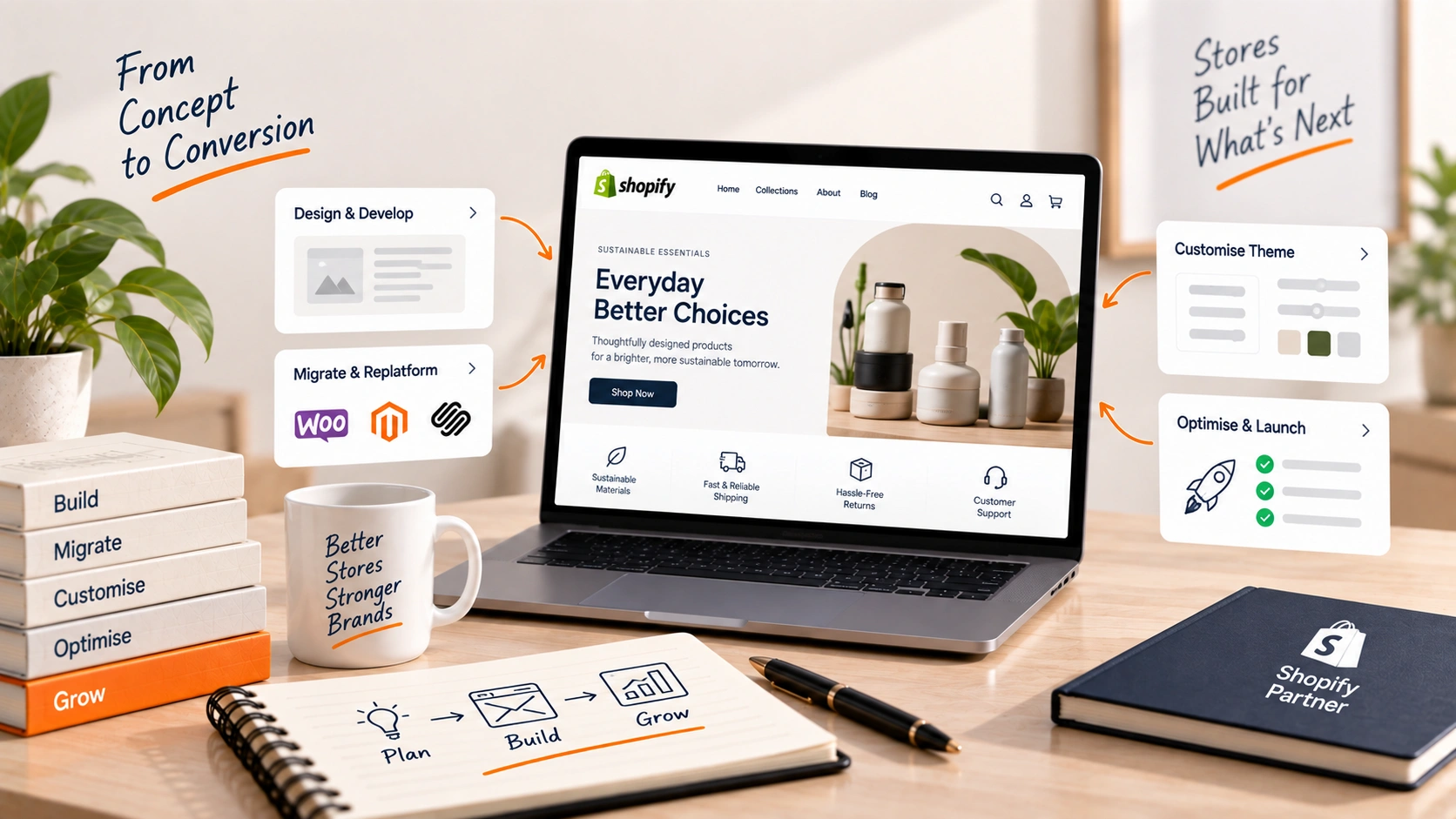
Building and rebuilding the store itself. New builds, replatform migrations, theme development and the front end work most SEO recommendations eventually require. As an official Shopify Partner we work inside the platform's own conventions rather than around them.
- New store builds and replatform migrations
- Theme development and customisation
- Front end work to implement technical SEO
Custom apps and integrations
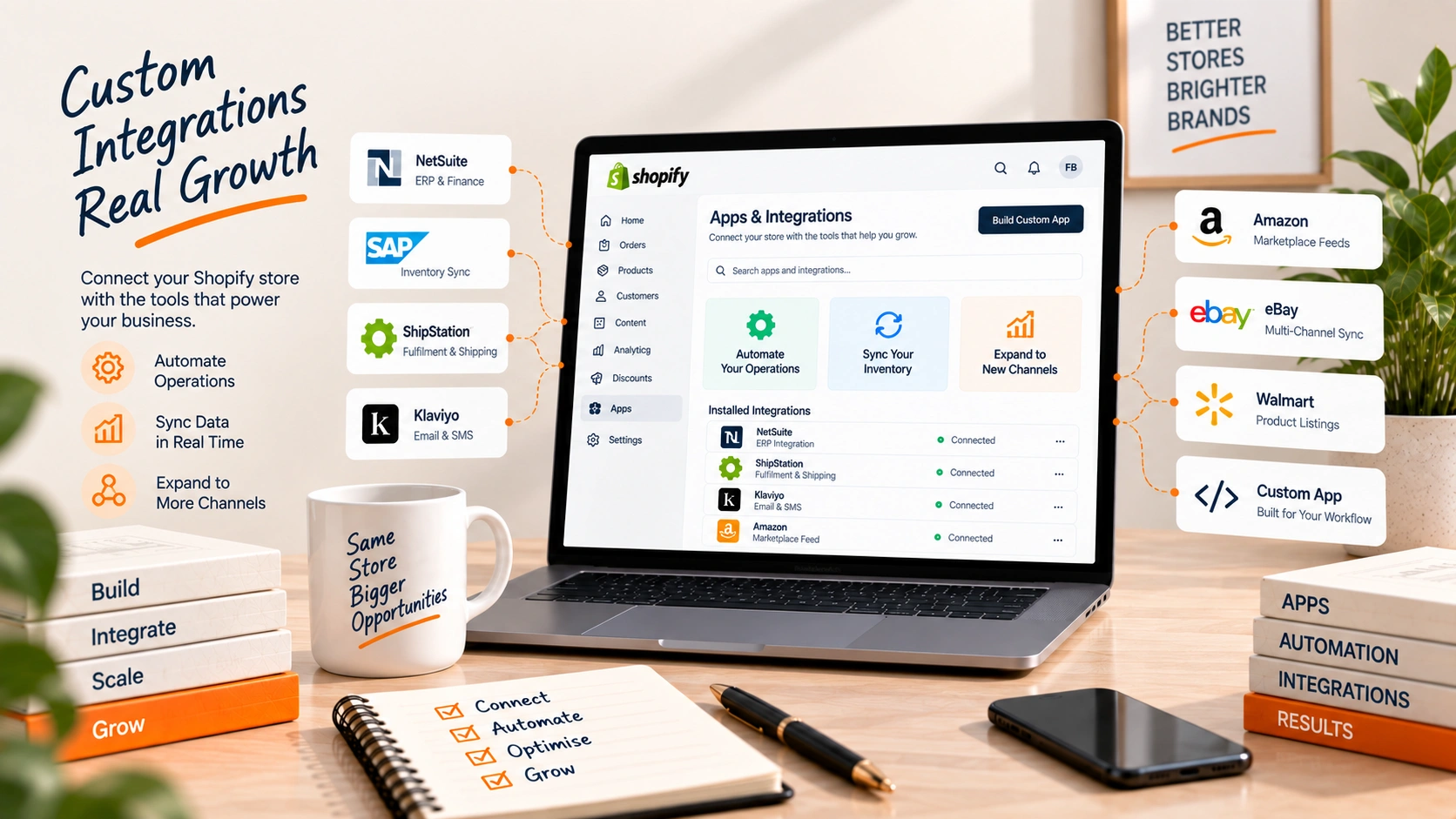
The connections a growing store needs and the platform does not ship: ERP and inventory sync, subscription and bundling logic, marketplace feeds, and private apps built for one brand's workflow rather than bought from the app store and bent to fit.
- Private and custom Shopify apps
- ERP, inventory and fulfilment integrations
- Marketplace and channel feed connections
Site design, UI and UX
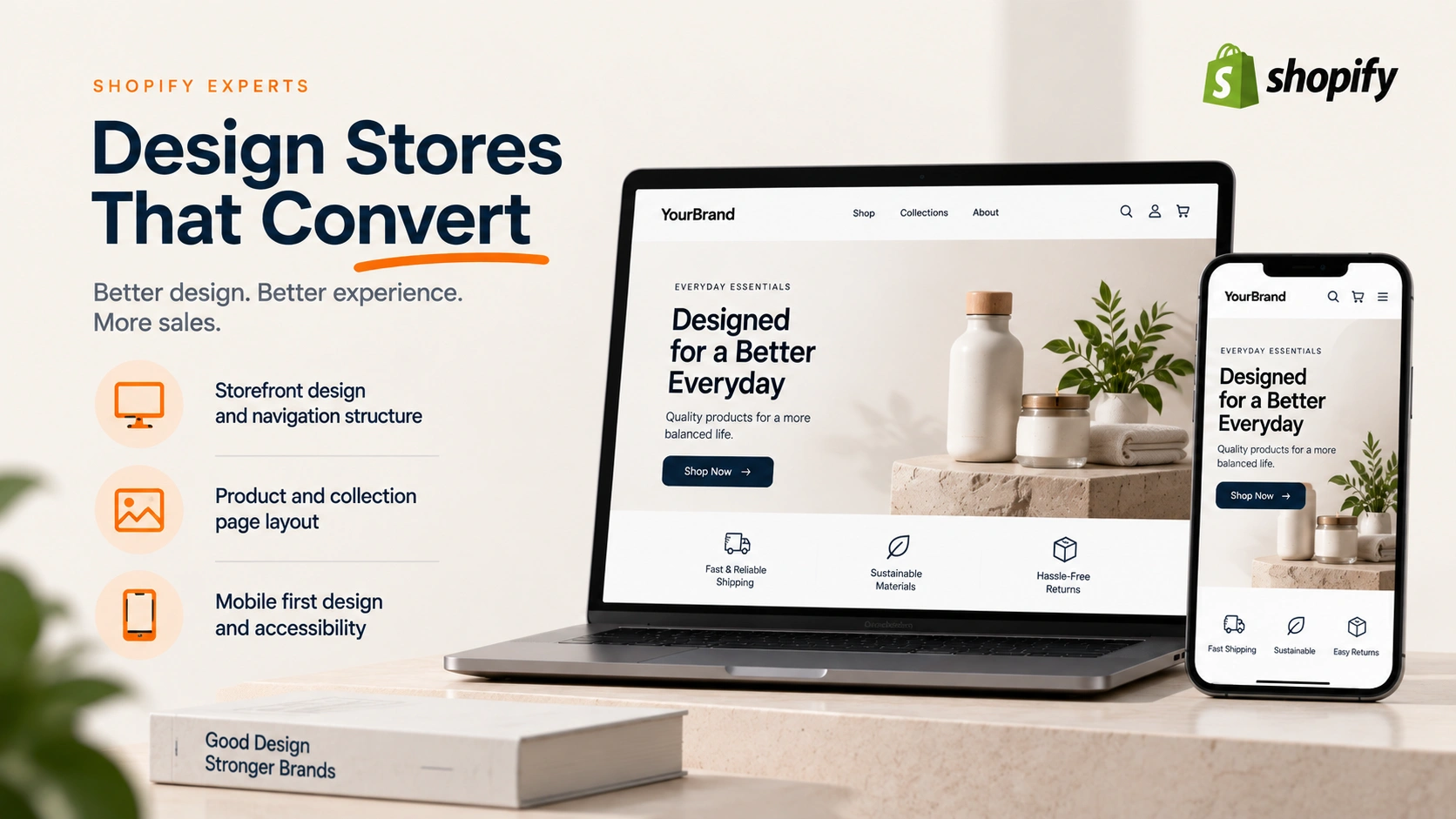
How the store looks and how it is used, which are the same problem. Navigation, collection layout, product page structure, and the mobile experience most of the traffic actually sees. Design decisions tested against conversion rather than settled by preference.
- Storefront design and navigation structure
- Product and collection page layout
- Mobile first design and accessibility
Reporting against revenue
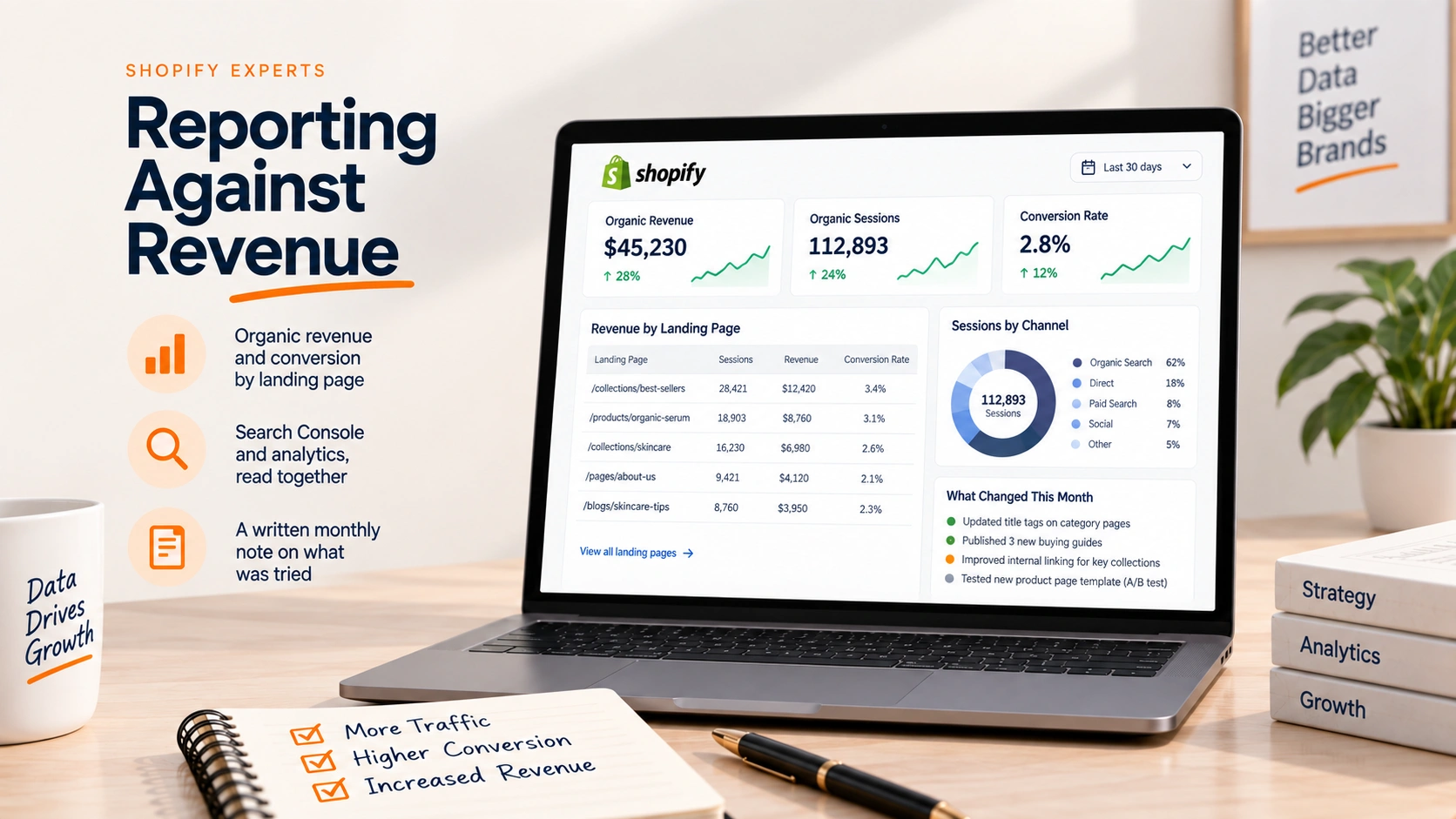
Rankings are an input and not a result. The reporting is organic sessions and revenue by landing page, conversion rate by template, and what changed since last month, with the ranking data underneath it for diagnosis rather than as the headline.
- Organic revenue and conversion by landing page
- Search Console and analytics, read together
- A written monthly note on what was tried
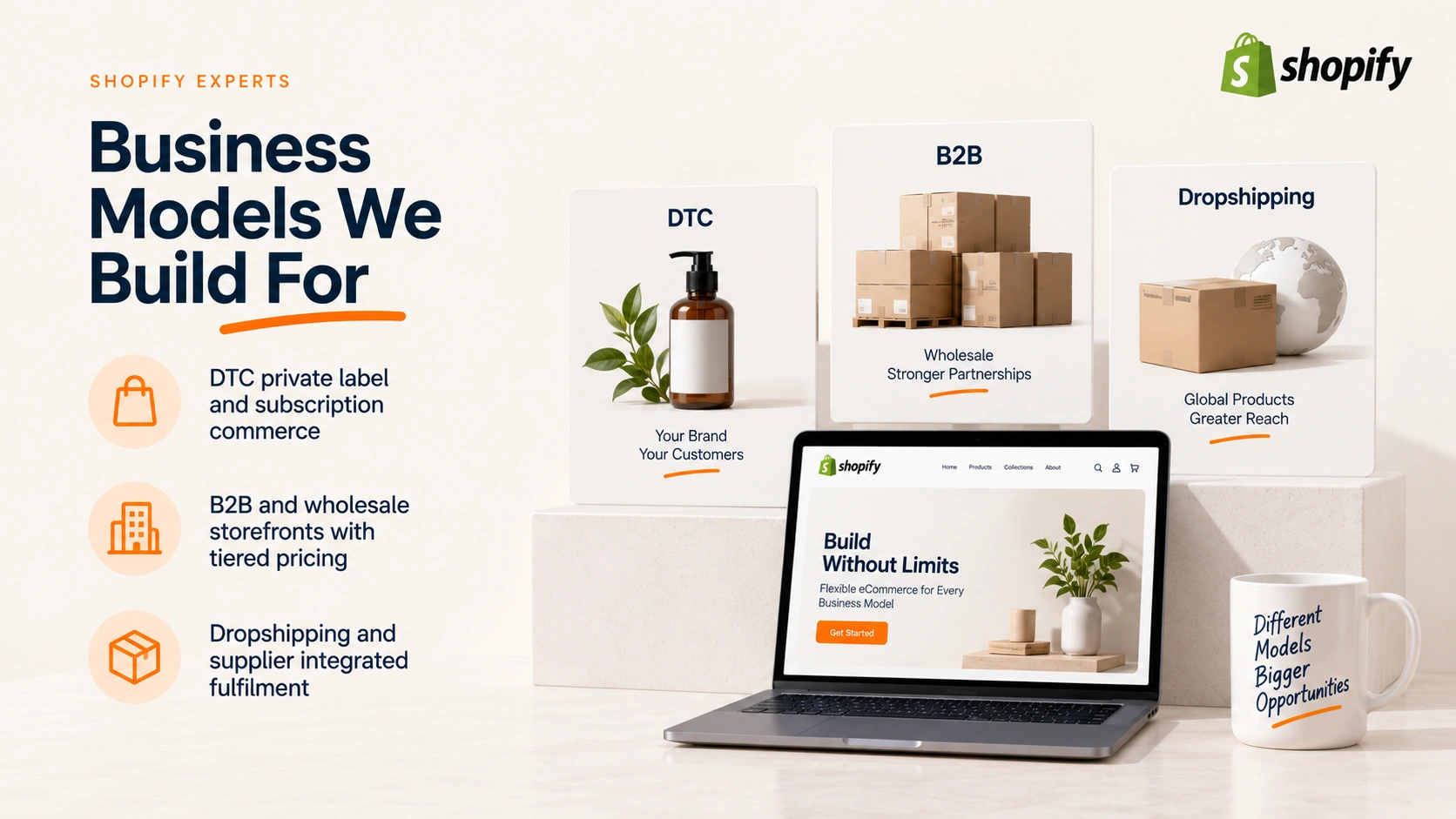
Business models we build for
Private label DTC, wholesale and B2B storefronts, subscription, and dropshipping where supply is reliable. Shopify imposes no marketplace gating, which makes it the natural home for models a marketplace restricts, and the one where you supply all the traffic yourself.
- DTC private label and subscription commerce
- B2B and wholesale storefronts with tiered pricing
- Dropshipping and supplier integrated fulfilment
How it works
- 01
Technical and content audit
A crawl of the whole store, Search Console history, Core Web Vitals, the app stack, and the current keyword footprint. The output is a list of what is stopping the site ranking, ordered by how much traffic it is costing and how quickly it can be fixed.
- 02
Fix the foundations
Indexation, duplicates, canonicals, redirects and speed. This is where the first movement usually comes from, because most Shopify stores are not under-optimised so much as competing with themselves across pages nobody meant to publish.
- 03
Build the structure
Keyword ownership per page, collection and product page work, schema, internal linking, and the first content cluster around whichever category has the most commercial upside. Done once and maintained rather than repeated monthly.
- 04
Grow and report
Ongoing content, continued technical hygiene, conversion work on the pages traffic is landing on, and monthly reporting on organic revenue by landing page rather than on rankings alone.
How the fee works
What you would pay
Drag the slider, use the arrows or type an exact figure.
Estimated monthly service fee
$3,150/month
- Base fee
- $1,100
- Performance fee
- $2,050
- 1
$1,500/month flat while monthly sales are up to $20K
- 2
Above $20K, $1,100/month base plus a performance fee on your topline sales
- 3
Performance fee capped at $50,000/month; the base fee continues on top
At $80,000 in monthly sales, the estimated fee is $3,150 a month: a $1,100 base fee plus a $2,050 performance fee.
Frequently asked questions
Other services we offer
- Google Ads
Google Ads
Google Ads management for eCommerce: Search, Shopping, Performance Max and feed optimisation, run against contribution margin rather than platform ROAS.
Learn More - Meta Ads
Meta Ads
Meta ads management for eCommerce: Facebook and Instagram campaigns, catalogue and dynamic ads, Conversions API and creative testing, run on margin.
Learn More - Brand Guidelines
Brand Guidelines
Brand guidelines for eCommerce brands: logo, colour palette, typography and the rules for applying them across listings, Stores and ads, in two levels.
Learn More
Guides on Shopify
What we have written about the work, for anybody weighing it up before they ask us.


Loading case studies