eCommerce Growth Strategy: Four Levers, One Constraint
Every growth plan is one of four levers. Working out which one is actually stuck is most of the strategy, and the part usually skipped.


Loading Article banner

Revenue is traffic times conversion times average order value, times how often somebody comes back. There are only four levers, and every tactic anybody sells is one of them wearing a different name.
That is not a simplification for its own sake. It is useful because at any moment one of the four is the constraint, and effort spent on the other three produces very little.
Finding the constraint
Take the last quarter and write down all four numbers. Then compare each against what the category can support, not against last year.
A store converting at half the category norm has a conversion problem, and buying more traffic into it is buying more of the same disappointment. A store converting well with flat sessions has a traffic problem. A store with strong first orders and no second ones has a retention problem, and no amount of acquisition fixes it.
The mistake that costs a quarter is deciding the constraint from the channel somebody is most comfortable in.
Traffic, when it is the constraint
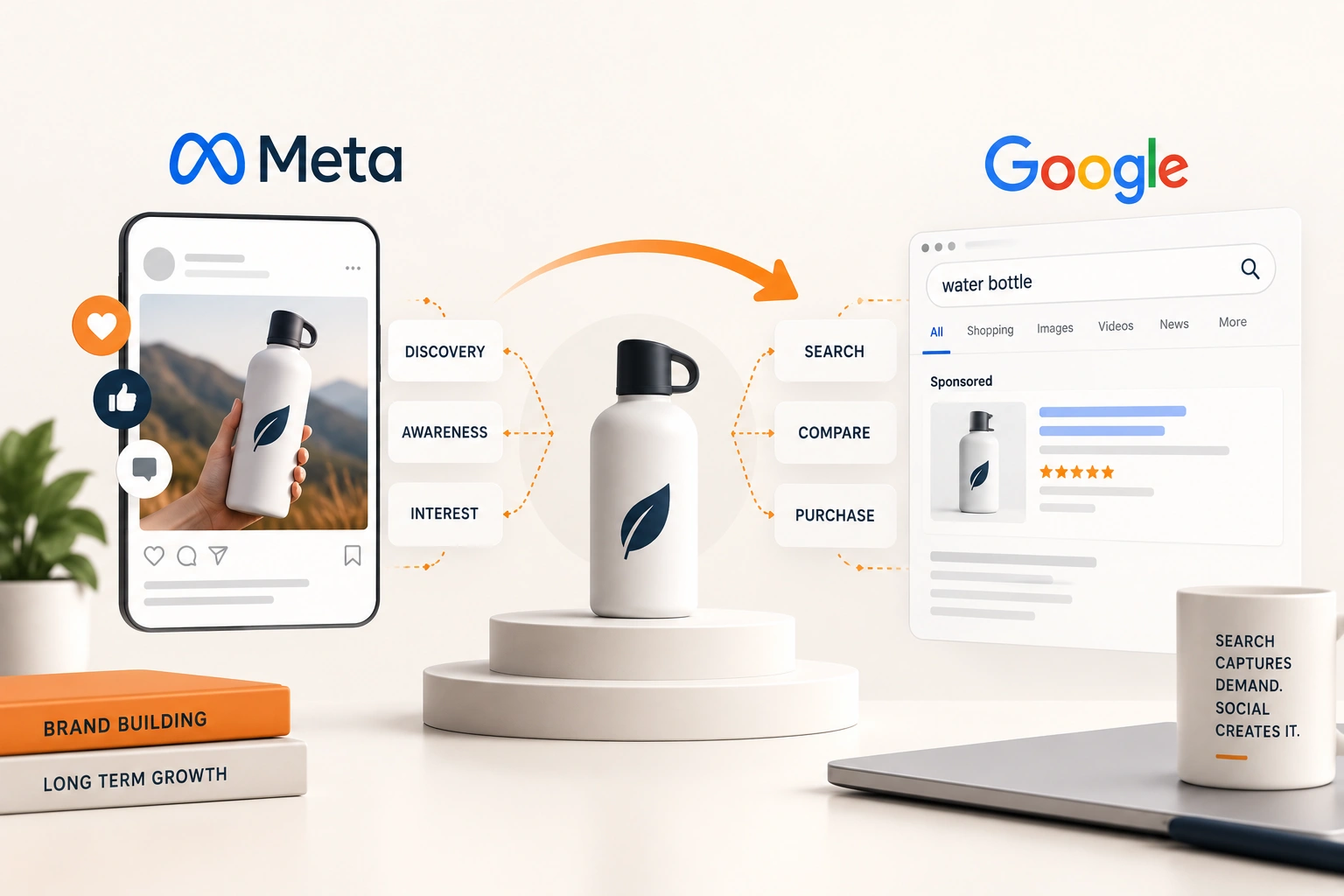
Three sources, and they behave differently. Marketplace demand exists already and costs a referral fee and advertising. Search compounds and is slow. Paid social creates demand and stops the day the spend does.
The right answer for most product businesses is not one of them. It is the marketplace first because the demand is there, then search because it compounds, then paid to accelerate what is already working.
Conversion, which is usually cheapest
A conversion problem is the cheapest of the four to fix, because the traffic is already paid for. It is also the one most often diagnosed wrongly: the page is blamed when the problem is the offer, the delivery promise or the price against the alternatives.
Look at the objection rather than the layout. Reviews, support tickets and the questions on marketplace listings say what stops the purchase, and almost none of them are solved by moving a button.
Order value, which is quietly the fastest
Bundles, multipacks, and the honest version of an upsell, which is offering the thing the customer would have bought anyway if they had thought of it.
This lever gets ignored because it feels less like growth than new customers. It is frequently the fastest of the four, because it requires no new traffic and no new trust.
Repeat purchase, which decides what you can afford
Repeat rate is what sets the acquisition cost the business can carry. A brand with genuine repeat purchase can outbid one without it for the same customer and still make more money.
It is also the lever a marketplace makes hardest, because the buyer belongs to the marketplace rather than to you. That is the real argument for a direct channel, and it is an argument about economics rather than about brand.
The plan that survives contact
One constraint, one quarter, one measurement that says whether it moved. Anything wider than that becomes a list of activities nobody can evaluate.
Write down what would make you stop. A plan with no stopping condition is a plan that runs until the budget does.
The channels are means rather than the plan. What we run and how it fits together is on the services overview, and the honest way to judge any of it is against margin rather than against platform metrics.
What we do with this
We are asked for a channel and we start with the constraint, because a brand whose conversion is the problem does not need more Google Ads or more Meta, it needs the pages fixed first.
Where the constraint is genuinely traffic, the marketplaces are usually the fastest route: Amazon, Walmart and TikTok Shop have the demand and charge for access to it.
If you want the four numbers read against your own quarter, that is where we start.
Frequently asked questions
The questions that come up most often on this subject.
A decision about which of four levers you are pulling this quarter: traffic, conversion, average order value or repeat purchase. Everything sold as a growth tactic is one of those four with a different name, and at any moment one of them is the constraint that decides what the others are worth.
Write down all four numbers for the last quarter and compare each against what the category supports rather than against your own last year. The one furthest below what is normal is the constraint. Deciding it from the channel you are most comfortable in is the mistake that costs a quarter.
Almost always, because the traffic is already paid for and a conversion fix improves every future visit as well. Buying traffic into a page converting at half the category norm is buying more of the same disappointment at the same price.
For most product businesses, the marketplace, because the demand already exists and you pay for access rather than for creating it. Then search, which compounds slowly. Then paid, to accelerate what is already working rather than to discover whether anything does.
It is frequently the fastest of the four and the most ignored, because it feels less like growth than winning new customers. It needs no new traffic and no new trust: bundles, multipacks and offering the thing somebody would have bought anyway if they had thought of it.
It sets it. A brand whose customers buy three times can pay more for the first order than one whose customers buy once, and still make more money. That is why repeat rate is a growth lever rather than a retention metric.
A quarter, with one constraint and one measurement. Shorter than that is reading noise, and wider than that becomes a list of activities nobody can evaluate. Write down in advance what would make you stop.
Both, honestly. They are the fastest access to demand and they keep the customer relationship, which caps the repeat purchase lever. Most brands use them to fund the direct channel rather than choosing between them.
Working every lever at once. Four half-funded initiatives produce four inconclusive results and no way to tell which of them was working, which is how a year passes with a lot of activity and no compounding.
Whatever the contribution margin and the repeat rate support, which is a number your own accounts answer and no benchmark can. Anybody quoting a target before seeing your margins is guessing at the most important input.