Why Your Amazon PPC Campaign Is Spending But Not Converting (And How to Fix It)
You set up your campaigns, turn them on, and start seeing clicks. At first, it feels like progress. Traffic is coming in, impressions are growing, and your ads are visible. Then you check your sales. They do not match the spend.


Loading Article banner
You set up your campaigns, turn them on, and start seeing clicks. At first, it feels like progress. Traffic is coming in, impressions are growing, and your ads are visible.
Then you check your sales.
They do not match the spend.
This is one of the most common challenges sellers face with amazon pay per click. Campaigns generate activity, but they do not generate revenue. Over time, this turns into frustration, wasted budget, and slow growth.
The truth isn’t complex. Amazon PPC drives performance, but only when your full setup is in sync. Traffic, listings, pricing, targeting, and campaign structure must work together.
After working with more than 100 brands and managing over $10M in revenue, one thing is clear. Campaigns that fail to convert always show the same patterns. When you fix those patterns, results improve quickly.
This guide breaks everything down in a clear and practical way so you can identify what is going wrong and fix it with confidence.
The Core Issue: You Are Paying for Clicks Instead of Conversions
Most sellers think more traffic leads to more sales. That is not always true.
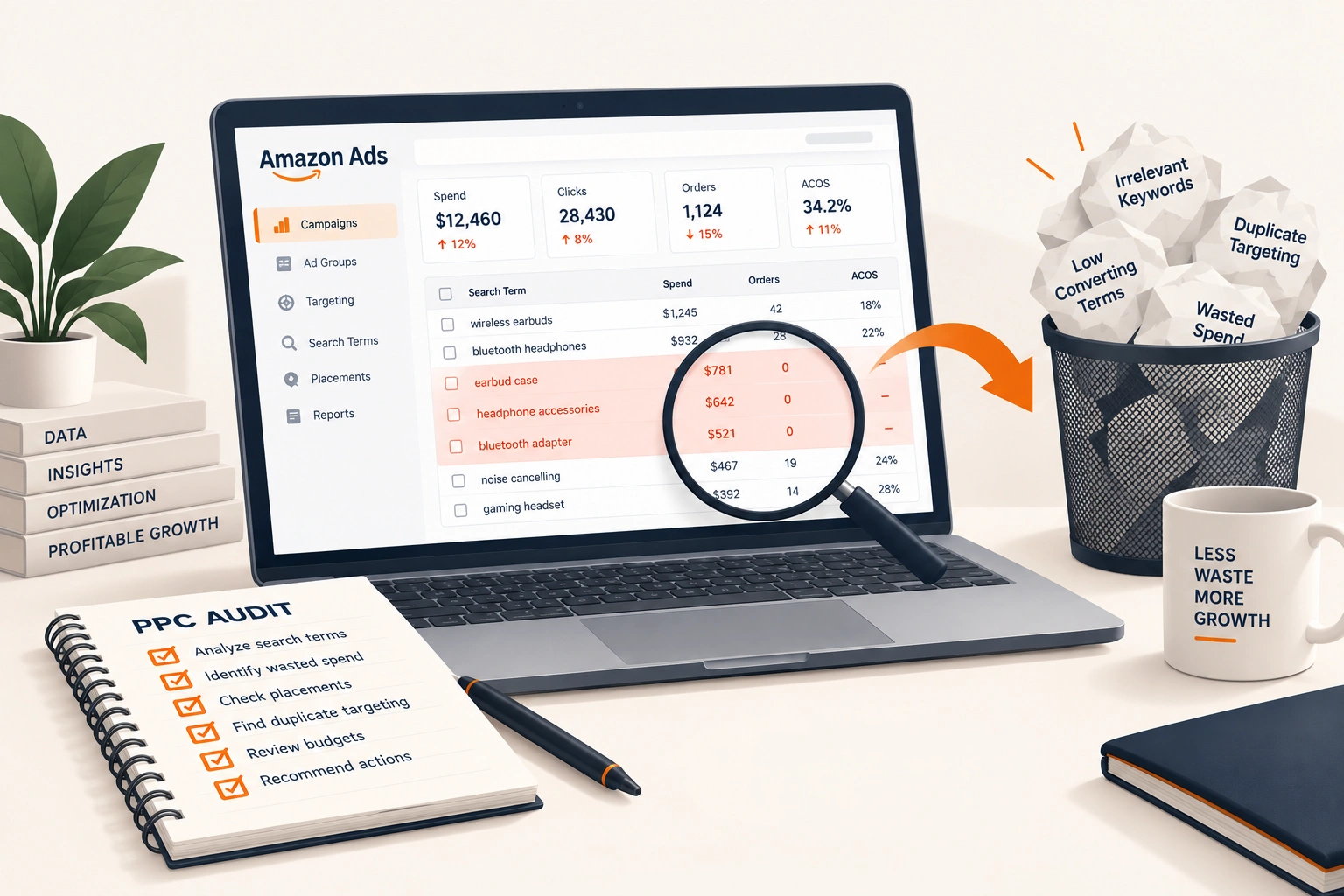
If your ads reach people who are not ready to buy, your budget will disappear without results. You will see clicks, but you will not see conversions.
A professional pay per click advertising agency focuses on buyer intent, not just visibility. That difference is what separates profitable campaigns from wasted spend.
1. Your Keywords Are Not Aligned With Buyer Intent
What Is Happening
When your keywords are too broad or not refined, Amazon shows your ads to users who are browsing or researching. These users click, but they do not buy.
This leads to high spend and low return.
Signs You Have This Problem
- Lots of clicks, yet an extremely low conversion rate
- Search terms that are not directly related to your product
- Increasing spend without growth in sales
How to Fix It
- Focus on high intent keywords that show purchase behavior
- Move strong performers into exact match campaigns
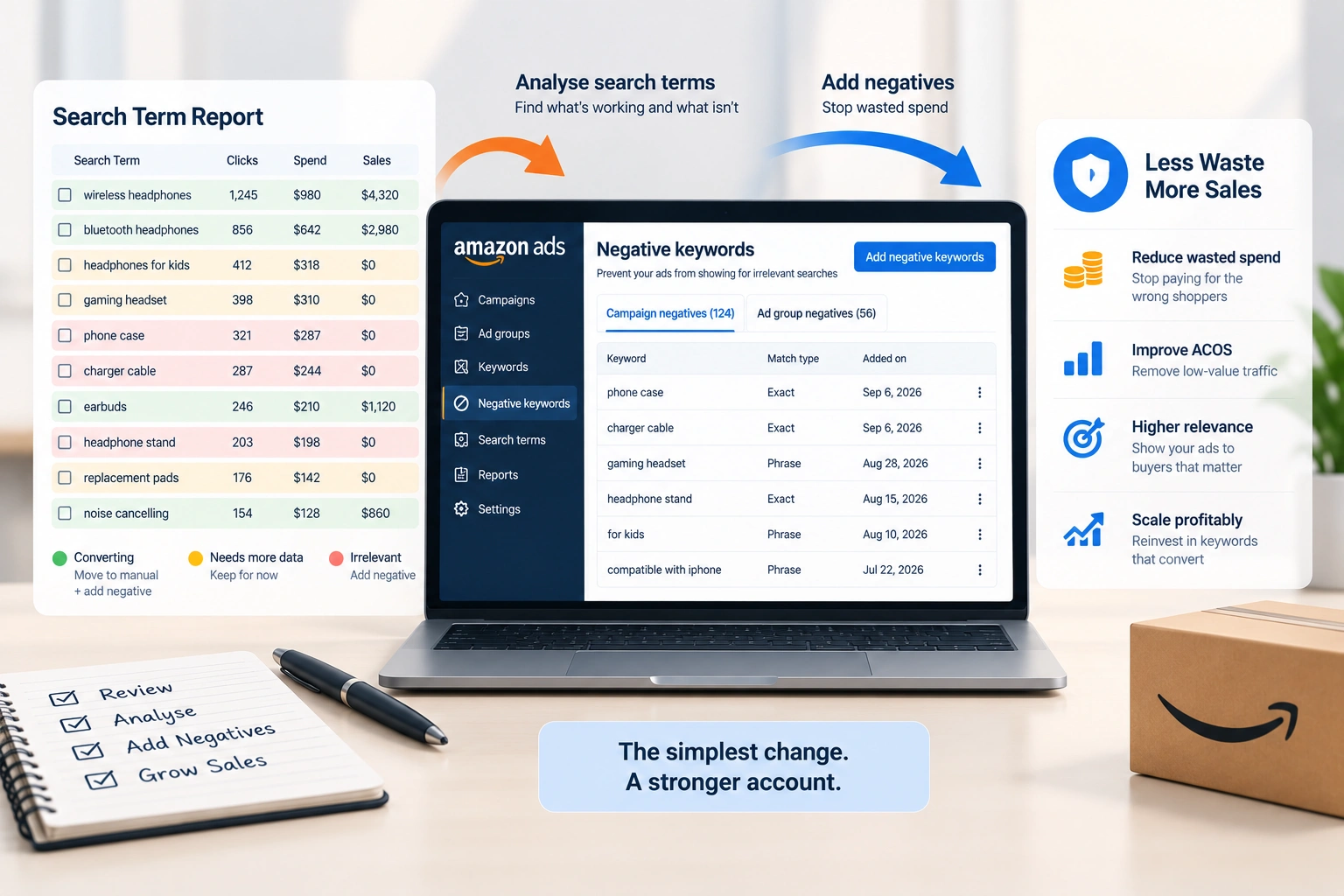
- Review search term reports weekly
- Add negative keywords to remove irrelevant traffic
A strong pay per click advertising company treats keyword targeting as a continuous process, not a one-time setup.
2. Your Listing Is Not Built to Convert Visitors Into Buyers
What Is Happening
Your ads are doing their job. They bring people to your listing. But your listing is not convincing them to buy.
This creates a disconnect. You pay for traffic, but you do not get sales.
Common Listing Issues
- Images do not clearly show the product value
- Bullet points focus on features instead of benefits
- Product description lacks clarity
- No strong reason to choose your product over competitors
How to Fix It
- Use high quality images that explain the product visually
- Write simple and benefit-focused bullet points
- Address common customer concerns directly
- Improve your pricing and offer if needed
Your listing is where conversions happen. Without a strong listing, even the best PPC strategy will struggle.
3. Your Bidding Strategy Is Not Data Driven
What Is Happening
Many sellers either overbid or underbid without a clear plan.
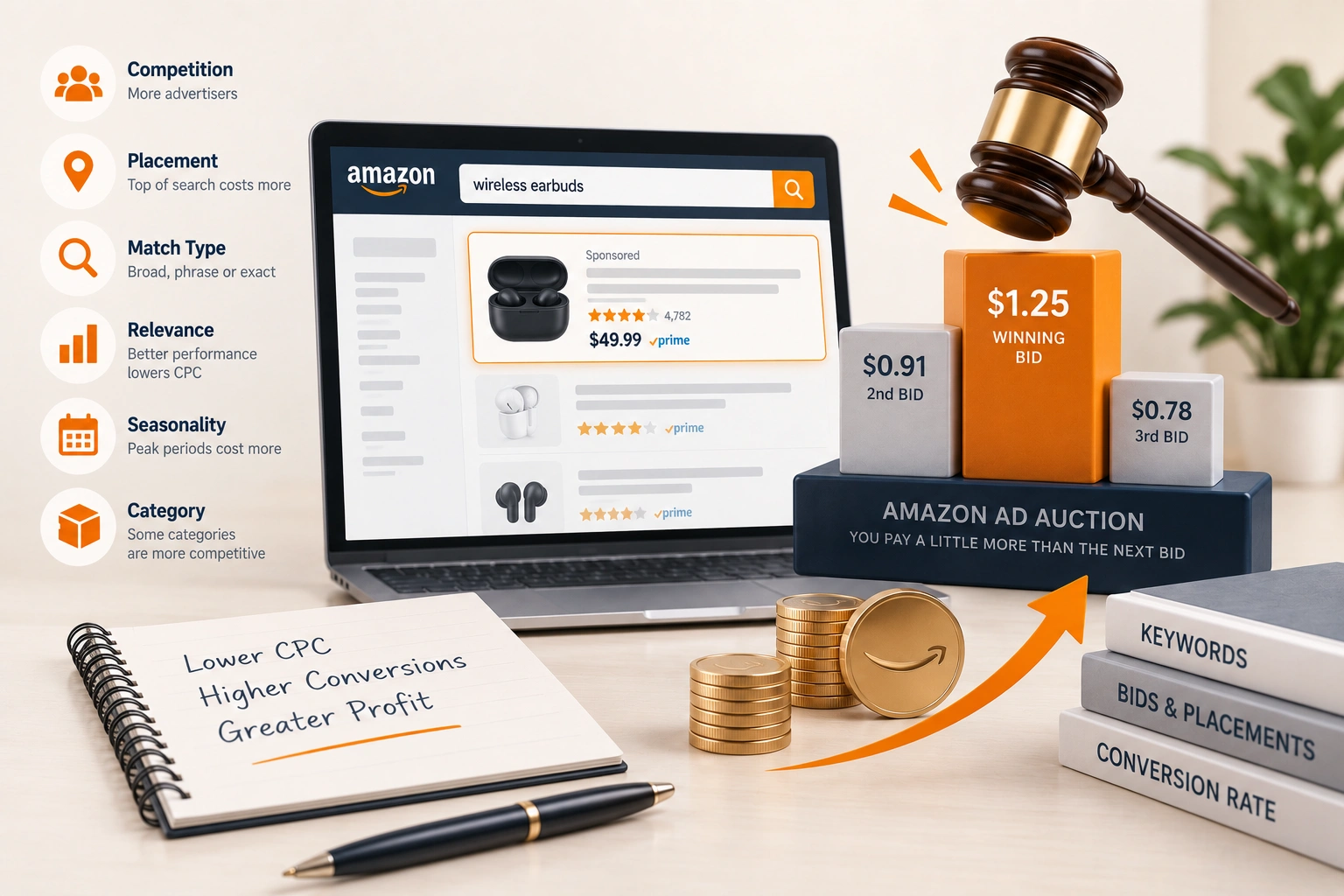
Overbidding increases costs quickly. Underbidding limits visibility. Both reduce efficiency.
How to Fix It
- Start with balanced bids based on market data
- Increase bids on keywords that convert
- Reduce bids on keywords that waste budget
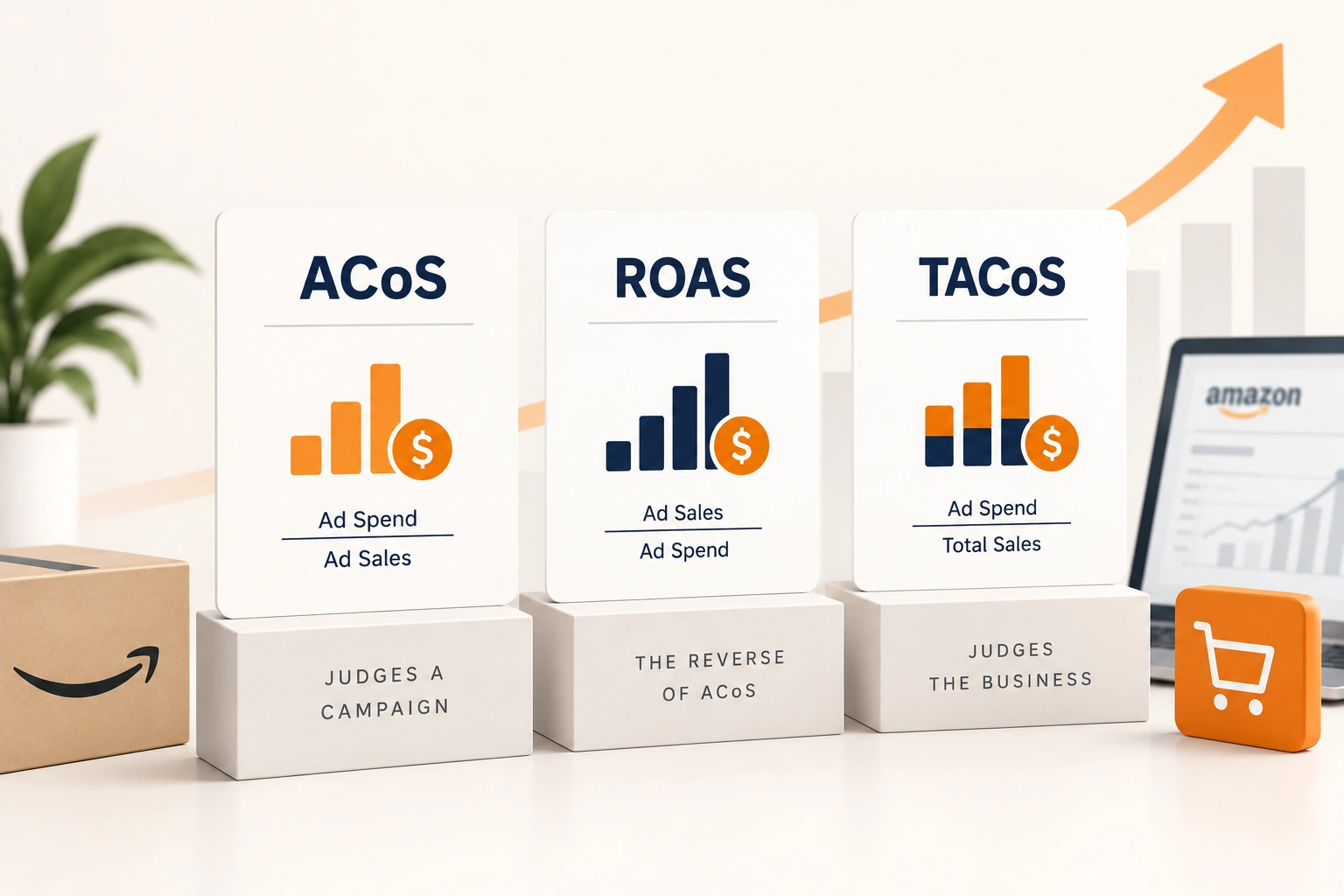
- Track ACOS and adjust accordingly
Seasoned pay per click agencies prioritize disciplined scaling. They don’t simply pursue clicks; they concentrate on sustainable, profitable growth.
4. Your Campaign Structure Is Holding You Back
What Is Happening
If your campaigns are not structured properly, you lose control over performance. Data becomes unclear, and optimization becomes difficult.
Common Mistakes
- Multiple products in one campaign
- No separation between match types
- No clear naming structure
How to Fix It
- Create separate campaigns for each product
- Use different campaigns for broad, phrase, and exact match
- Keep naming consistent and simple
A clean structure gives you clarity. With clarity, you make better decisions.
5. You Are Not Optimizing Your Campaigns Consistently
What Is Happening
Amazon PPC changes every day. Competition shifts, bids fluctuate, and customer behavior evolves.
If you aren’t consistently overseeing your campaigns, results tend to drop over time.
How to Fix It
- Review campaign performance weekly
- Pause underperforming keywords
- Scale keywords that drive conversions
- Adjust budgets based on results
Trustworthy PPC advertising services treat optimization as an always-on effort. This helps you deliver real, sustainable long-term growth.
6. You Are Ignoring Amazon Marketplace Changes
What Is Happening
Amazon regularly updates its platform. New ad formats, policy changes, and algorithm adjustments can affect campaign performance.
Ignoring amazon marketplace policy news can lead to missed opportunities or performance drops.
How to Fix It
- Stay updated with Amazon changes
- Adjust your campaigns based on new features
- Ensure your listings and ads follow current guidelines
Staying current ensures your strategy remains relevant and stays competitive.
7. You Are Missing a Full Funnel Strategy
What Is Happening
Many sellers only focus on bottom of funnel traffic. They target buyers who are ready to purchase but ignore the earlier stages.
This limits growth potential.
How to Fix It
- Use Sponsored Products for direct conversions
- Use Sponsored Brands to increase visibility
- Use Sponsored Display to retarget interested users
A full funnel approach helps you reach customers at every stage of their journey.
8. Your Pricing and Offer Are Not Competitive
What Is Happening
Even with strong ads and a good listing, customers compare options. If your pricing or offer is not competitive, they choose another product.
How to Fix It
- Analyze competitor pricing regularly
- Improve your offer with bundles or added value
- Use discounts strategically to increase conversions
PPC brings attention. Your offer closes the sale.
9. You Are Scaling Too Early or Too Late
What Is Happening
Scaling campaigns without proper data leads to wasted spend. Waiting too long to scale slows down growth.
How to Fix It
- Scale only when you see consistent conversions
- Increase budgets gradually
- Focus on proven campaigns first
Scaling should always be controlled and based on performance.
10. Your Expectations Do Not Match the Data
What Is Happening
Some sellers expect instant results. Amazon PPC requires testing, learning, and optimization.
How to Fix It
- Give campaigns enough time to gather data
- Make decisions based on trends, not daily changes
- Focus on long term performance
Patience paired with a clear strategy drives stronger results.
Why is my PPC not working? The four checks, in order
The question arrives in four forms, and they are four different faults. Check them in this order, because each one hides the next.
The ads are not showing. Open the campaign: is the daily budget spent, is the campaign or ad group paused, did a bid rule drop the bids below what the placement costs? Then open the listing as a customer: an ad cannot show for a listing that is suppressed, out of stock, or has lost the buy box to another offer, and none of those faults appear inside the campaign manager. The account health page and the listing's own status row say which it is.
The campaign suddenly lost visibility. Impressions that fall off a cliff on one day are almost never the bids. They are a listing change: a main image that failed a check, an attribute that moved the product out of its category, a variation that was split, a price that tripped a fair pricing alert. Find the day the impressions fell and read what changed on the listing that day; the change history in the account holds it. A slow decline over weeks is the auction, and that is the bids.
The ads are not converting like they used to. Same clicks, fewer orders, on a campaign nobody touched. The listing is being compared against something new: a competitor's deal, a price cut on the page's next offer, a run of poor reviews, a season that has passed. Read the search terms report for the terms that used to convert and now do not, then open the results page for each one as a customer and look at what sits beside your ad. The answer is usually on that page rather than in the campaign.
The campaign is not profitable. Orders are arriving and the advertising cost of sales is above the margin. That is the fault this article is about, and the fix is above: the terms that take clicks without orders removed with negative keywords, the terms that convert moved into exact match at bids set from their own cost per order, and the listing fixed so more of the clicks that remain become sales. A campaign that converts well and still loses money is a pricing or fee problem, not an advertising one.
How This Fits Into Your Bigger PPC Strategy
Tackling conversion challenges matters, but it represents only one component within the broader system.
To drive consistent, repeatable growth, you need a full framework. It should cover targeting, campaign setup, scaling methods, and continuous optimization. That’s how your Amazon PPC strategy ties everything together end to end.
Final Thoughts
If your campaigns are burning budget without conversions, don’t automatically assume something is failing.
Instead, focus your attention on the system.
Your keywords, your listing, your bids, your structure, and your strategy all play a role. When one part is weak, the entire system suffers.
When everything aligns, results improve quickly.
Clicks become meaningful. Spend becomes efficient. Sales become consistent.
With experience managing over 100 brands, I have helped drive over $10M in revenue.
The key difference is always strategy.
Execution matters just as much.
Ready to Turn Your PPC Into a Growth Engine
If you're looking for a performance-focused pay per click advertising company, we're here to help.
We know how to fix weak campaigns and grow profitable ones.
Review real client results here:
https://xceleratebrands.com/testimonials-reviews
A focused, data-driven approach can help you stop wasting budget and start building consistent growth on Amazon.
When the whole account drops at once: the September 2026 thread
A thread on the Seller Forums in September 2026 asked the question in its rawest form: a decade of advertising, a healthy account, prices held, the storefront and titles recently updated, and two months of the worst organic traffic, ad performance and conversion the seller had seen, with return on ad spend at about one to one. Had Amazon changed the algorithm, the placements, the attribution? Twenty replies followed and Amazon did not answer. What the sellers wrote is reported here as what they reported, because it is the most useful account of the pattern there is.
The reply with the most agreement said that almost everything has changed, in one respect: an advertisement now depends on the detail page more than it used to. A campaign could once push a mediocre page; several sellers said it no longer can, and that the first questions are whether the title carries context rather than a keyword list, whether the bullets, images, video, A+ content, brand story and backend attributes are complete, and whether the reviews are saying something the page does not. Others reported the drop as a placement matter: more advertising slots in the results, more of their spend landing on product page placements, which convert worse, and their own broad and automatic campaigns bidding on their brand terms and cannibalising the organic sale. One dated the change to the end of August. One reported invalid traffic on the account, confirmed by Amazon and still uncredited after five weeks.
The method the thread converged on is the one this article already asks for, with two additions. When organic and paid fall together, diagnose the page before the campaigns, because a campaign cannot lose conversion on its own while the listing keeps it. Split the fall: a cost per click that rose is the auction, a conversion rate that fell is the page or the placement, and they have different fixes. Then split it again, branded against generic, by reading the search term report for the thirty days before the titles were changed and the thirty days after, with the placement report beside it. And if somebody else runs the account, ask for the ninety day change log: the bid rules, the budgets, the negative lists and the placement modifiers, because a rule set two years ago can drift a long way in a market that has moved.
What we do with this
Six causes, one symptom, and the order you test them in is what decides how long the account bleeds. Testing them in that order on somebody else's account is part of Amazon advertising management.
Keep reading
Frequently asked questions
The questions that come up most often on this subject.