18 Amazon PPC Strategies to Boost Your Sales
Amazon pay-per-click (PPC) advertising is a highly cost-effective way to market your products or brand. With a pay-per-click model, you only incur costs when your audience clicks your ad.


Loading Article banner
Amazon pay-per-click (PPC) advertising is a highly cost-effective way to market your products or brand. With a pay-per-click model, you only incur costs when your audience clicks your ad. In simple terms, you only pay when you get results. This makes it a smart approach in any Amazon PPC management strategy.
One of the best ways to boost your brand’s presence is to build a full Amazon PPC strategy from start to finish. Launching a campaign and expecting results is not enough. You need to plan your execution and continuously monitor performance to improve return on investment. Many brands achieve better results by working with an experienced amazon ppc agency or using professional ppc advertising services.
You can then scale your campaigns and focus on Amazon PPC optimization. This allows you to enhance your ads, reach new audiences, and capture more attention. Use these 18 advanced strategies to build a strong system that increases your sales while keeping you aligned with the latest Amazon seller news.
Amazon’s Key PPC Metrics
Before entering the Amazon PPC ecosystem, you need to understand key performance metrics. These help you plan campaigns, control budgets, and measure success effectively.
- Impressions: Impressions represent how many times users see your ads. This helps you evaluate visibility and optimization levels.
- Clicks: Clicks show how many users clicked your ad. This shows how interesting and relevant your ad is.
- Attributed sales: Attributed sales refer to purchases made after users click your ad. This helps identify which ads drive conversions.
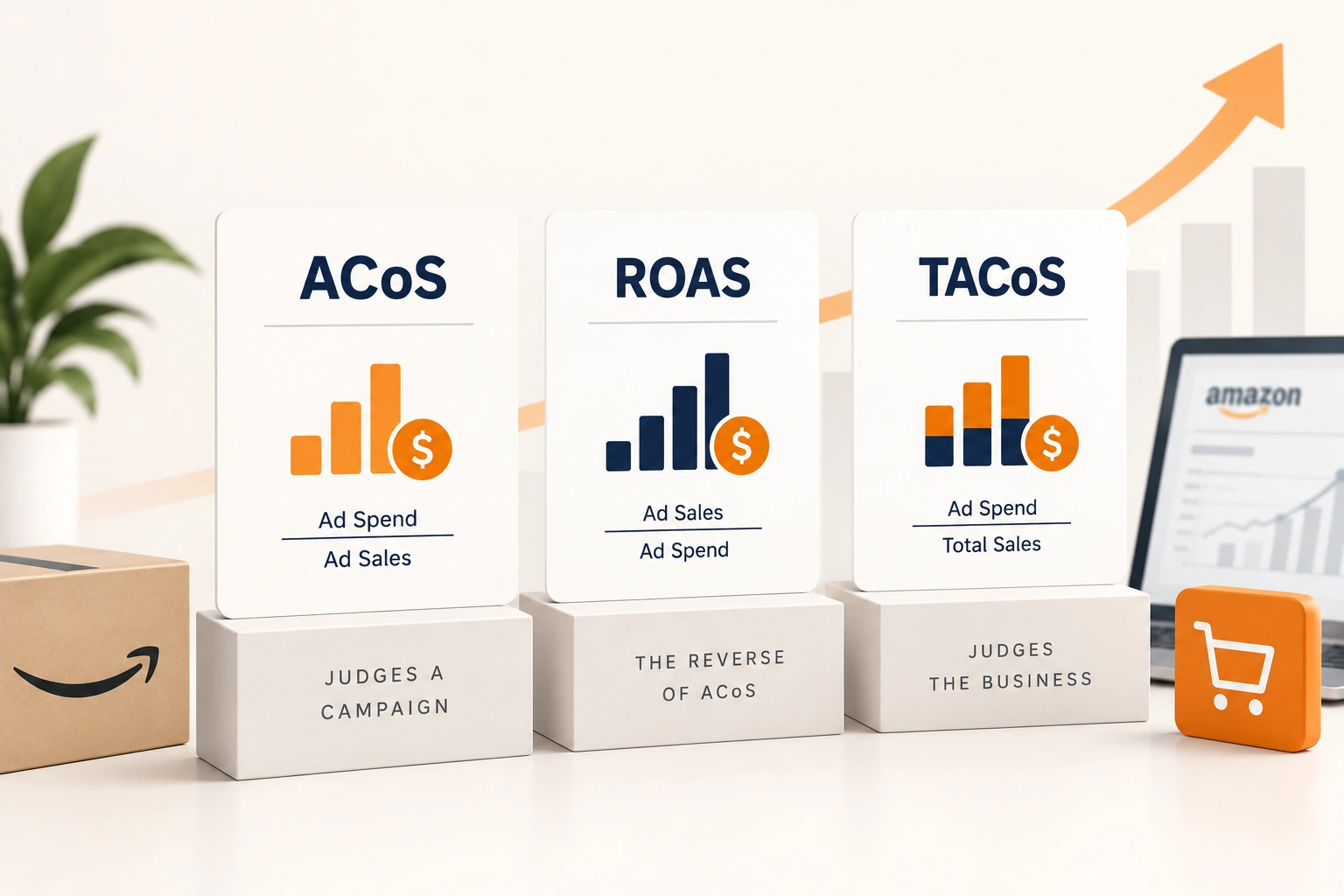
- Advertising Cost of Sales (ACoS): ACoS measures the ratio of ad spend to revenue. You calculate it by dividing ad spend by attributed sales and multiplying by 100. This metric helps evaluate campaign efficiency.
- Return on Ad Spend (RoAS): RoAS measures revenue generated per dollar spent on ads. A value above 1 indicates profitability, and higher values reflect better performance.
Top 18 Amazon PPC Strategies for Success
Since many sellers use Amazon PPC ads, you need smart, data-driven strategies to stay competitive. These strategies can also boost your visibility. A well-structured amazon ppc management approach ensures better budget control, stronger targeting, and consistent scaling. Brands that use expert insights or hire a results-driven Amazon PPC agency often grow faster and more steadily.
1. Use Keyword Research Tools
You may understand your product keywords, but data-driven tools deliver better accuracy. Tools like Helium 10 help you identify high-performing keywords, analyze search volume, and uncover gaps your competitors miss. This allows you to build a stronger keyword foundation and improve campaign efficiency.
2. Start With Long-Tail Keywords
Long-tail keywords target specific audiences and improve conversion rates. These keywords attract high-intent buyers who are close to buying and often face less competition. This makes them ideal for early traction and steady sales.
3. Target Keywords That Match Your Product Listings
Always align your keywords with your product listings. This creates a seamless user experience, improves ad relevance, and increases conversion rates. Consistency between ads and listings also builds trust with potential buyers.
4. Use Negative Keyword Targeting
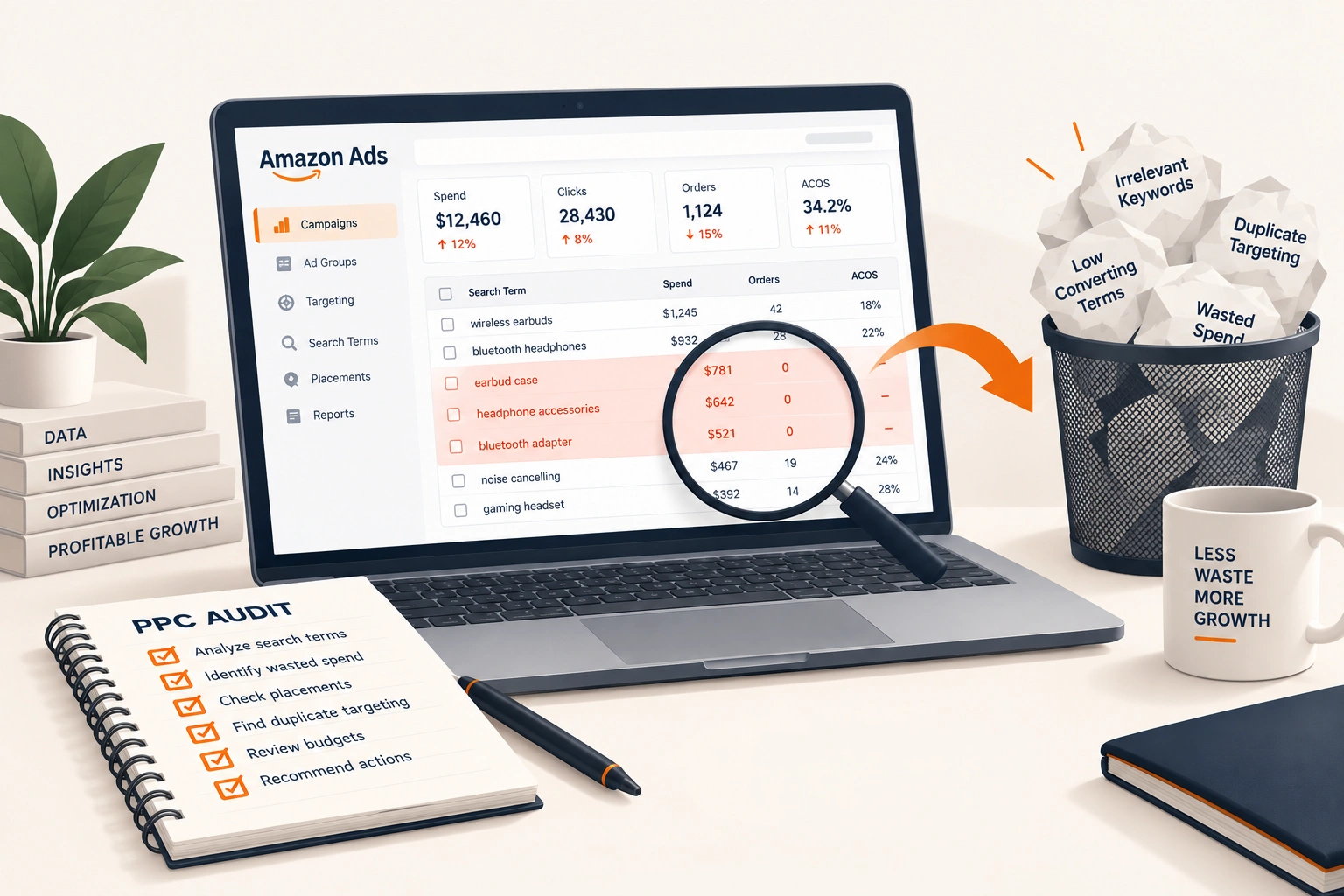
Negative keywords prevent your ads from appearing in irrelevant searches. This cuts wasted spend, improves targeting, and keeps your budget focused on high-quality traffic that is likely to convert.
5. Target Indirect Keywords
Indirect keywords expand your reach and help you attract a broader audience while maintaining relevance. This strategy helps you attract more visitors who may not search directly, but still want to buy.
6. Defend Your Brand Utilizing Branded Keywords And Self-Targeting
Branded keywords strengthen your market presence and protect your listings from competitors. A strong brand strategy improves visibility, builds trust, and reinforces customer loyalty over time.
7. Don’t Put All Your Keywords In One Campaign
Avoid overcrowding campaigns. Segment keywords based on intent, product category, or funnel stage. This improves targeting, simplifies performance measuring, and allows more strategic bidding decisions.
8. Learn Your Audience
Understanding customer behavior helps you create more relevant and high-converting ads. Use data insights, purchase trends, and search behavior to align your campaigns with what your audience actually wants.
9. Conduct A/B Tests
A/B testing allows you to compare different ad variations and identify what performs best. Testing headlines, creatives, and targeting helps improve click-through rates and conversion rates over time.
10. Adjust Bids By Ad Placement
Optimize bids based on placement to improve visibility and conversions. Increase bids for high-performing placements and reduce spend on low-performing areas to maximize efficiency.
11. Start With Automatic Campaigns
Automatic campaigns help you collect valuable data and discover new keyword opportunities. This step builds a strong foundation for your overall amazon ppc management strategy.
12. Then Move to Manual Campaigns
Manual campaigns provide full control over targeting, bidding, and optimization. This allows you to scale profitable keywords, refine targeting, and eliminate wasted spend.
13. Research and Optimize Frequently
Continuous optimization is essential for sustained success. Monitor performance regularly, adjust strategies, and stay aligned with trends and updates, including amazon seller news, to remain competitive.
14. Keep Your ACoS Low
Focus on efficiency by refining keywords, improving targeting, and optimizing bids. Maintaining a low ACoS ensures profitability while allowing you to scale campaigns effectively.
15. Spend Money To Make Money
Strategic investment during peak demand periods can significantly improve returns. Increase budgets when conversion potential is high and capitalize on seasonal trends.
16. Group Similar Products Together
Organize similar products into groups to improve campaign structure, keyword relevance, and targeting accuracy. This also simplifies management and optimization.
17. Try Sponsored Brand Video Ads
Video ads increase engagement and allow you to showcase your product more effectively. They help capture attention quickly and improve click-through rates in competitive search results.
18. Give It Time To Bake
Allow campaigns enough time to collect meaningful data before making major changes. Consistent monitoring and gradual optimization lead to stronger long-term performance, especially when supported by professional ppc advertising services.
The advanced tactics that earn their place, and the ones that do not
Once the eighteen above are running, the advice gets exotic quickly. Most of it is real, and most of it costs more attention than it returns, which is the part rarely mentioned. Attention is the scarce resource in an advertising account, not cleverness, so these are the few tactics that survive that test, and a short list of the ones that usually do not.
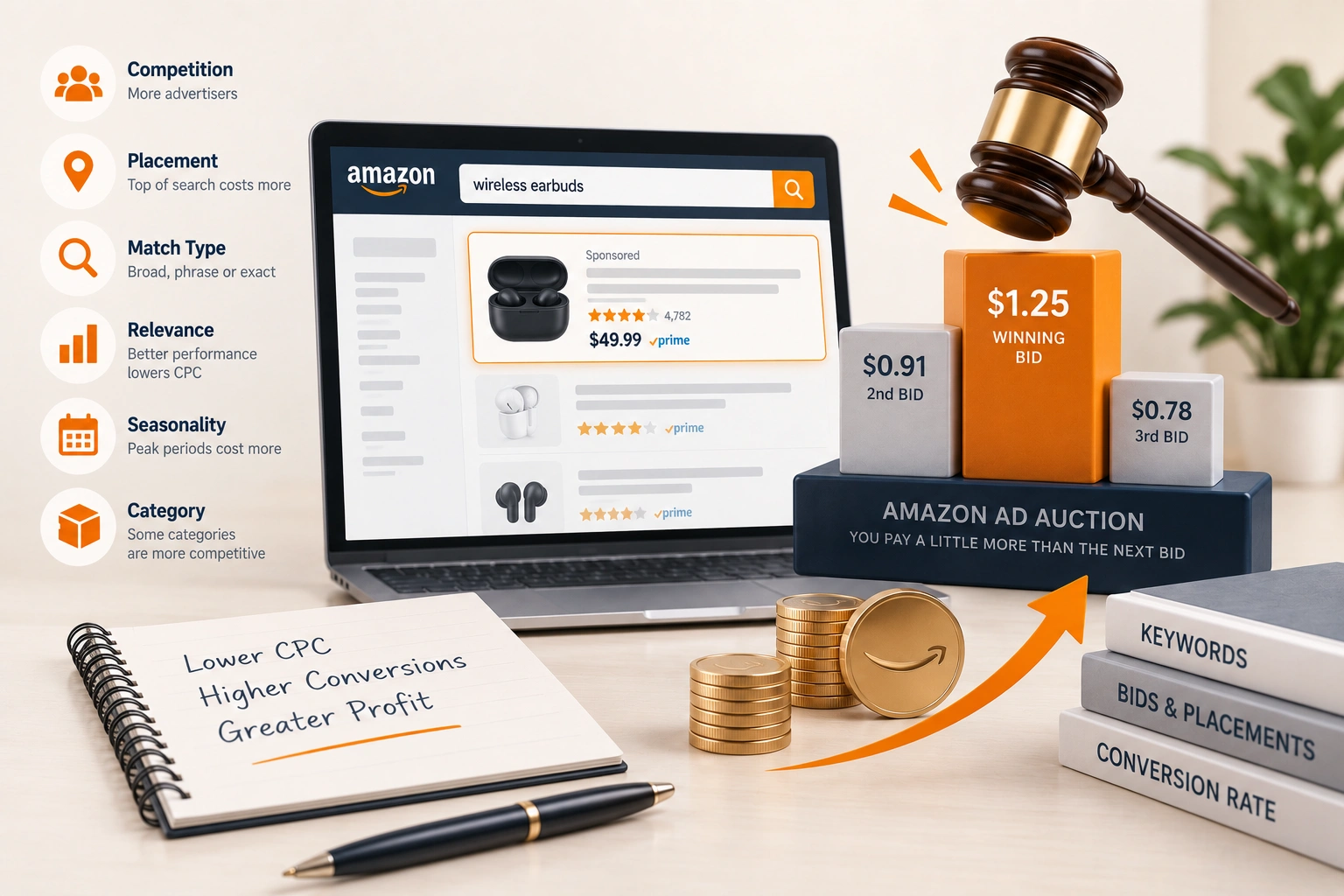
Placement adjustments, used narrowly. Top of search converts better than the rest of the page and costs more, and a placement adjustment lets you pay more for that position specifically rather than raising the bid everywhere. It is worth doing on a small number of keywords that convert well and rarely reach the top. Across the whole account a blanket adjustment is a bid increase with extra steps.
Single keyword campaigns, for a handful of terms. One keyword, one campaign, one budget: nothing can starve it, and its performance is unambiguous because nothing else shares the line. For the four or five terms that carry real volume the setup is worth it. Applied to everything it produces hundreds of campaigns nobody can review in a week, and an account nobody can review is an account nobody is managing.
Defending your own name, deliberately. Bidding on your own brand looks like paying for traffic you would have had, and sometimes it is. It is also the cheapest placement you will ever buy, because your relevance on your own name is unbeatable, and the alternative is a competitor buying the shopper who was looking for you. Judge it on its own target rather than the account average: it is insurance, and insurance does not carry the ACoS of a harvest campaign.
Conquesting, with an actual argument. Appearing on a competitor's product page works when you have something specific to say: better reviews, a better price, a feature they lack. Without one you are paying to advertise on their listing, which helps them more than you. Write the sentence before you set the bid, and if you cannot, the budget belongs somewhere else.
What is usually not worth it. Dayparting, because Amazon intent is spread through the day, the data thins out fast once split by hour, and the saving rarely covers the maintenance. Chasing tiny ACoS differences between match types on low volume keywords, because the differences are usually noise and treating noise as signal produces changes that average out to nothing. Rebuilding the account structure more than about once a quarter, because every rebuild resets the performance history that placement depends on, and the cost of that reset is invisible until placement drops.
The thing that beats all of it is the ordinary work done every week without fail: search terms read, negatives added, bids changed for stated reasons, results left alone long enough to be readable. Advanced tactics layered on that routine compound. Layered on a neglected account they are decoration.
How an Advanced Amazon PPC Strategy Can Accelerate Your Business
As an Amazon seller, using every available tool can drive better results. A strong Amazon PPC management strategy helps you get more from paid ads and build a scalable growth system.
By using different strategies and professional PPC services, you can work more efficiently.
You can also improve efficiency by working with a specialized Amazon PPC agency. You can increase visibility and achieve long-term success in a competitive marketplace.
Future-Proofing Your eCommerce Business: Insights for 2026 Growth
To stay competitive in 2026, eCommerce brands must focus on data-driven decisions, automation, and continuous optimization. Advanced Amazon PPC management, with insights from Amazon seller news, helps sellers adapt to changing algorithms and customer behavior. Businesses that invest in expert PPC advertising services can scale faster.
They can also improve profits and support steady growth in a competitive market.
What we do with this
Most of these are worth doing and none of them are worth doing all at once, so we take them in the order the account can absorb. Running the set of them against one target is part of Amazon advertising management.
Keep reading
Frequently asked questions
The questions that come up most often on this subject.