Amazon PPC Optimization: A Weekly Routine That Moves ACoS
Optimizing Amazon PPC is not a single clever change. It is a short list of decisions, made in the same order every week, on data old enough to mean something.


Loading Article banner
Most Amazon PPC accounts are not short of changes. They are short of a routine. Bids get raised on a Monday because sales looked slow, lowered on a Thursday because spend looked high, and by the end of the month nobody can say which change did what. The account is busy and the ACoS has not moved.
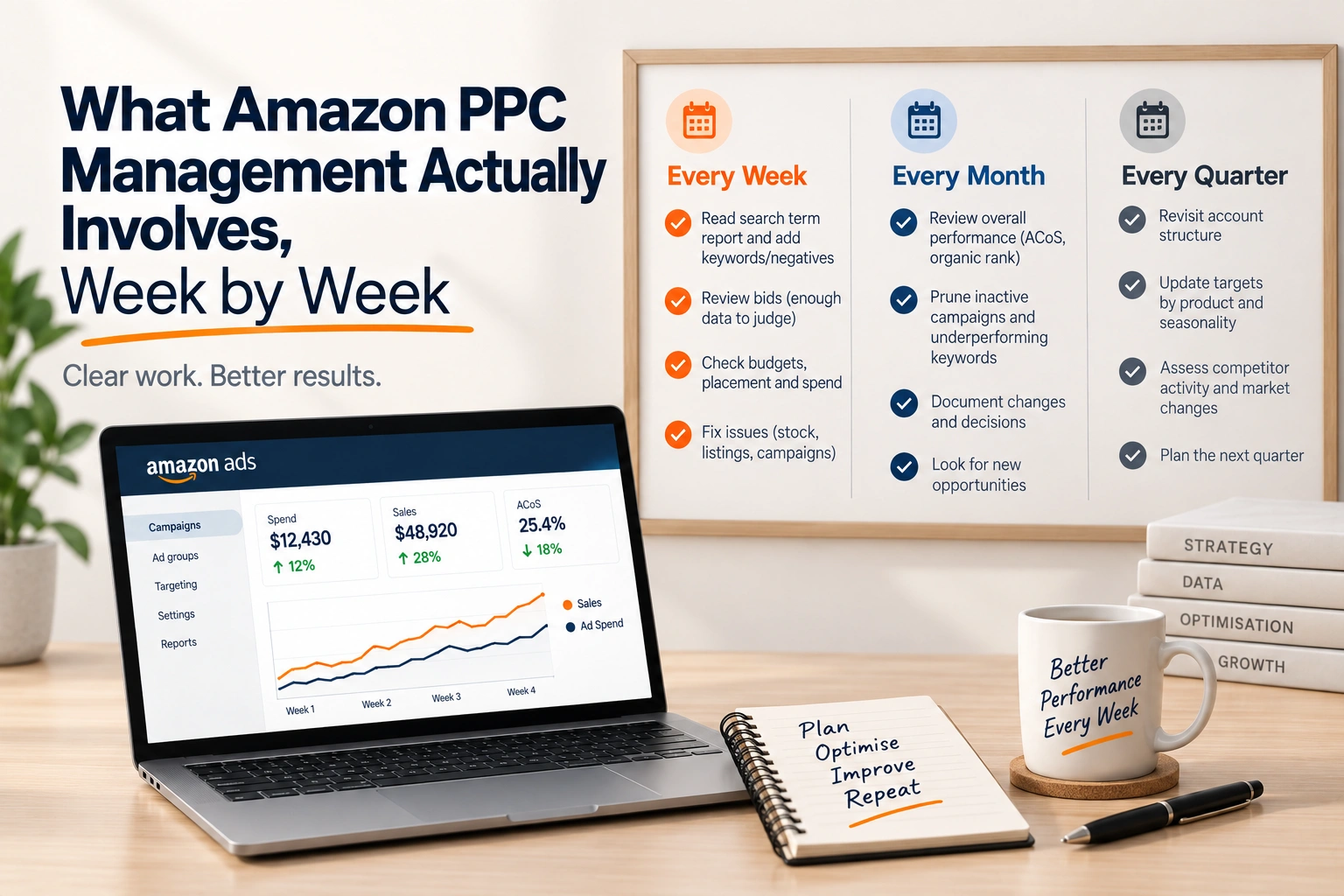
Optimization is not one clever adjustment. It is a small number of decisions made in the same order, on the same day, using data that is old enough to be worth acting on. Here is a routine that fits in about ninety minutes a week.
Start with the search terms, not the bids
The search term report is the only place that tells you what shoppers actually typed. Everything else in the account is your own guess about that, written down as keywords.
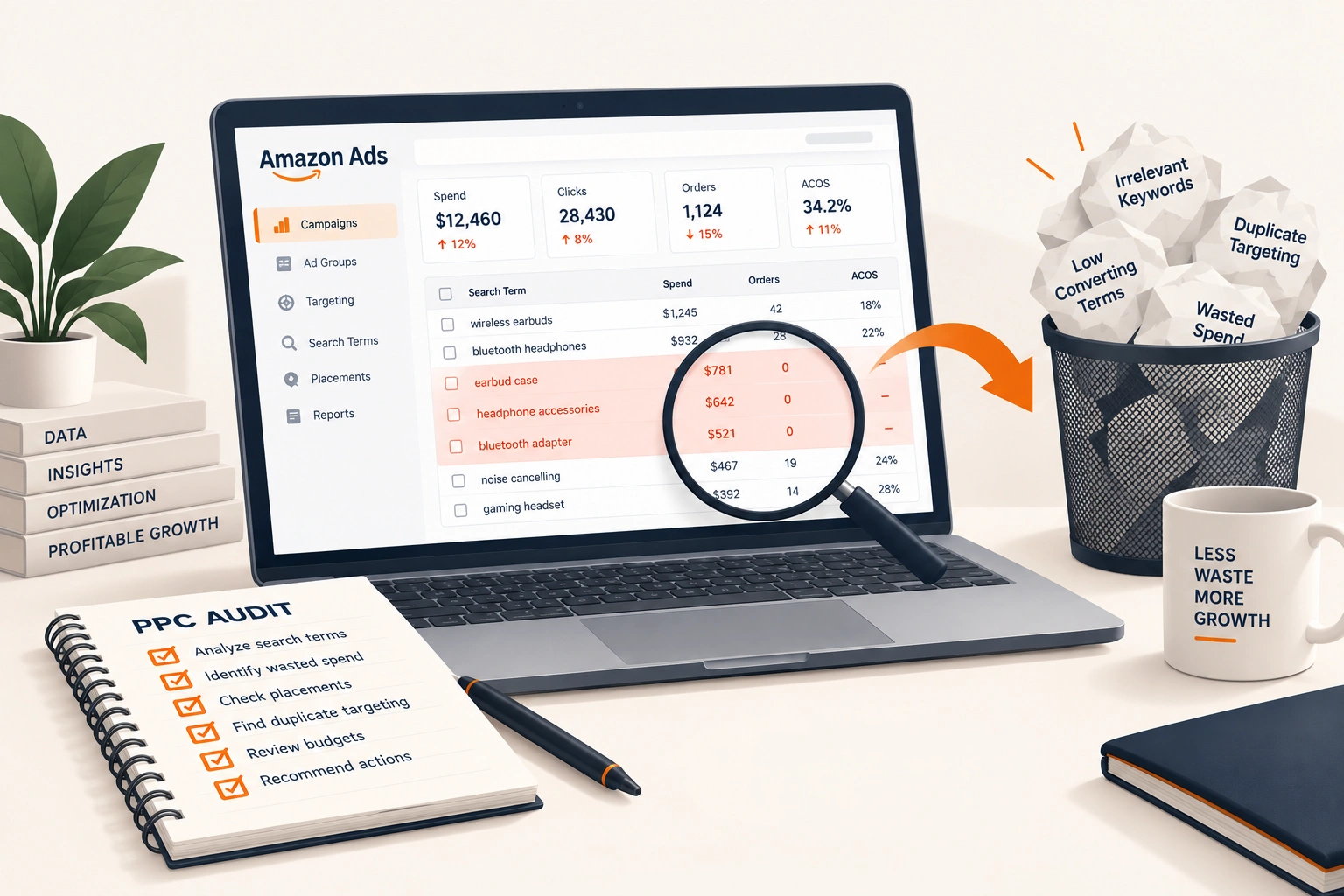
Open the last thirty days and sort by spend. Read the top fifty terms and put each into one of three piles. Terms that convert, which deserve their own keyword and a bid of their own. Terms that spend and never convert, which become negatives. Terms that are simply a different product, which become negatives immediately and without sentiment, because no bid is low enough to make the wrong shopper buy.
This single pass usually recovers more wasted spend than a month of bid changes, and it is the step most often skipped because it involves reading rather than adjusting.
Then judge keywords on clicks, not on days
A keyword with four clicks and no sales has told you nothing. If your listing converts at ten percent, you would expect the first sale somewhere around the tenth click, and a keyword that has not reached that point is not underperforming. It is unmeasured.
Work out how many clicks you need before a zero is meaningful, and leave everything below that line alone. Judging too early is the most common way to kill a keyword that was about to work, and it is invisible afterwards, because a paused keyword produces no data to regret.
Change bids by a reason, not by a percentage
Raising every bid by ten percent is not optimization. It is a mood. Every bid change should have a sentence behind it that names the thing you are trying to fix.
This keyword converts well and rarely shows in the top of search, so the bid goes up to buy placement. This keyword converts at three times target ACoS with plenty of clicks, so the bid comes down to the point where the maths works. This keyword sits at a good ACoS and is limited by budget rather than bid, so the bid does not change and the budget does.
If you cannot write the sentence, the change is a guess, and guesses average out to nothing over a quarter.
Separate the campaigns that are buying different things
A campaign defending your own brand name, a campaign chasing a competitor, and a campaign launching a new size are three different jobs with three different acceptable costs. Pooled into one campaign they share a budget and an ACoS target, and the cheapest one quietly eats the budget the expensive one needed.
This is the structural half of optimization, and it is worth doing before the bid half. We go through it in more detail in our guide to campaign structure for a product launch.
Leave the result alone long enough to read it
Amazon attributes a sale to the click that led to it, and shoppers do not always buy on the day they click. A change made on Monday is not fully visible on Tuesday, and reacting on Tuesday means reacting to an incomplete number.
Give a change at least seven days, and preferably fourteen on lower volume keywords. If that feels slow, that is the honest speed of the data. Everything faster is noise with a confident tone.
What this routine will not fix
Advertising cannot rescue a listing that does not convert. If your click through rate is healthy and your conversion rate is not, the problem is on the detail page and no bid will move it. We wrote about that failure specifically in why your Amazon PPC campaign is spending but not converting.
It also will not scale on its own. A routine that works across six campaigns starts to strain across sixty, which is the point where most brands start looking at automation. The tradeoffs there are set out in our comparison of in house, agency and software.
The short version
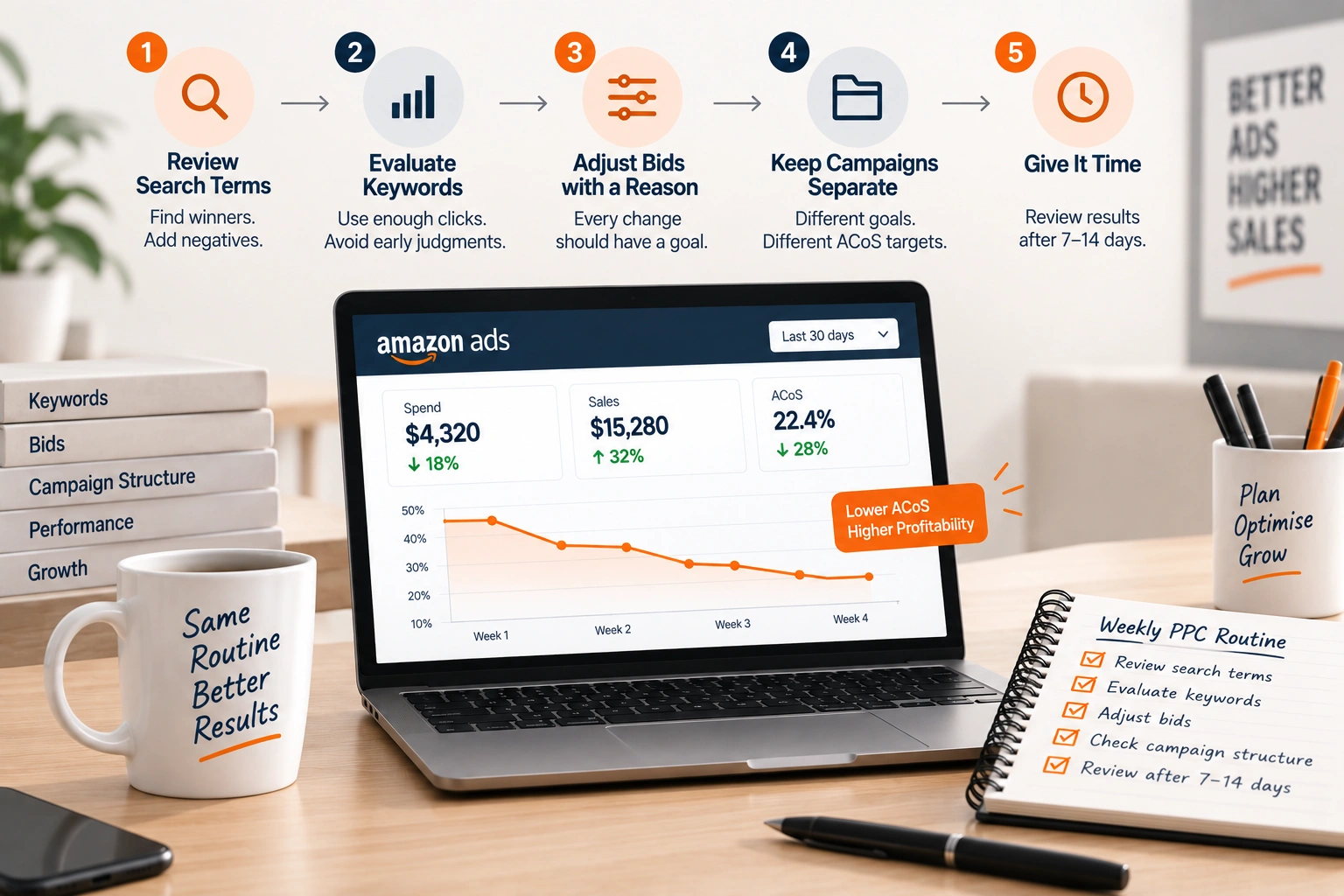
Read search terms before touching bids. Do not judge a keyword before it has had enough clicks to speak. Give every bid change a reason you could say out loud. Keep campaigns with different jobs apart. Then wait a week before deciding whether it worked.
Done consistently, that is what moves ACoS. If you want more tactics to layer on top, our list of 18 Amazon PPC strategies covers the ones worth the effort.
What we do with this
Keep reading
We run this on a fixed day, because a routine that moves is a routine that stops. The mechanics it assumes you already understand are in how Amazon pay per click works, and running it every week on somebody else's account is most of what Amazon advertising management is.
Frequently asked questions
The questions that come up most often on this subject.
Once a week for most accounts. Bids need enough clicks behind them to mean something, and daily changes usually react to noise rather than to performance.
It depends on your margin and on what the campaign is for. A launch campaign that is buying reviews and rank can run above break even on purpose. A profitability campaign cannot.
Not on click count alone. Judge a keyword once it has had enough clicks to have plausibly produced a sale at your conversion rate, and negate the search terms rather than the keyword where the intent is simply wrong.
At least seven days, and fourteen on lower volume keywords. Amazon attributes a sale to the click that led to it, and shoppers do not always buy on the day they click, so a change made on Monday is not fully visible on Tuesday. Reacting sooner means reacting to an incomplete number.