Amazon PPC Cost Per Click: What a Click Costs and What Moves It
There is no published average, and the ones quoted online are somebody's accounts, not yours. How the auction sets a click's price, the six things that move it, how to read your own from the reports, and the number that matters more than the click.


Loading Article banner
The question is asked as a number and answered, all over the internet, with a number: an average cost per click for Amazon, quoted to the cent, from somebody's set of accounts in some year. Amazon publishes no average. The figure a seller is quoted is the average of accounts that are not theirs, in categories that are not theirs, bidding on terms they will never bid on. It is not wrong so much as useless.
What can be said with confidence is how a click gets its price, what moves it, and how to read the only average that matters, which is the one in the seller's own reports. That is this article, and it ends with the reason the click is the wrong thing to be watching.
How a click gets its price
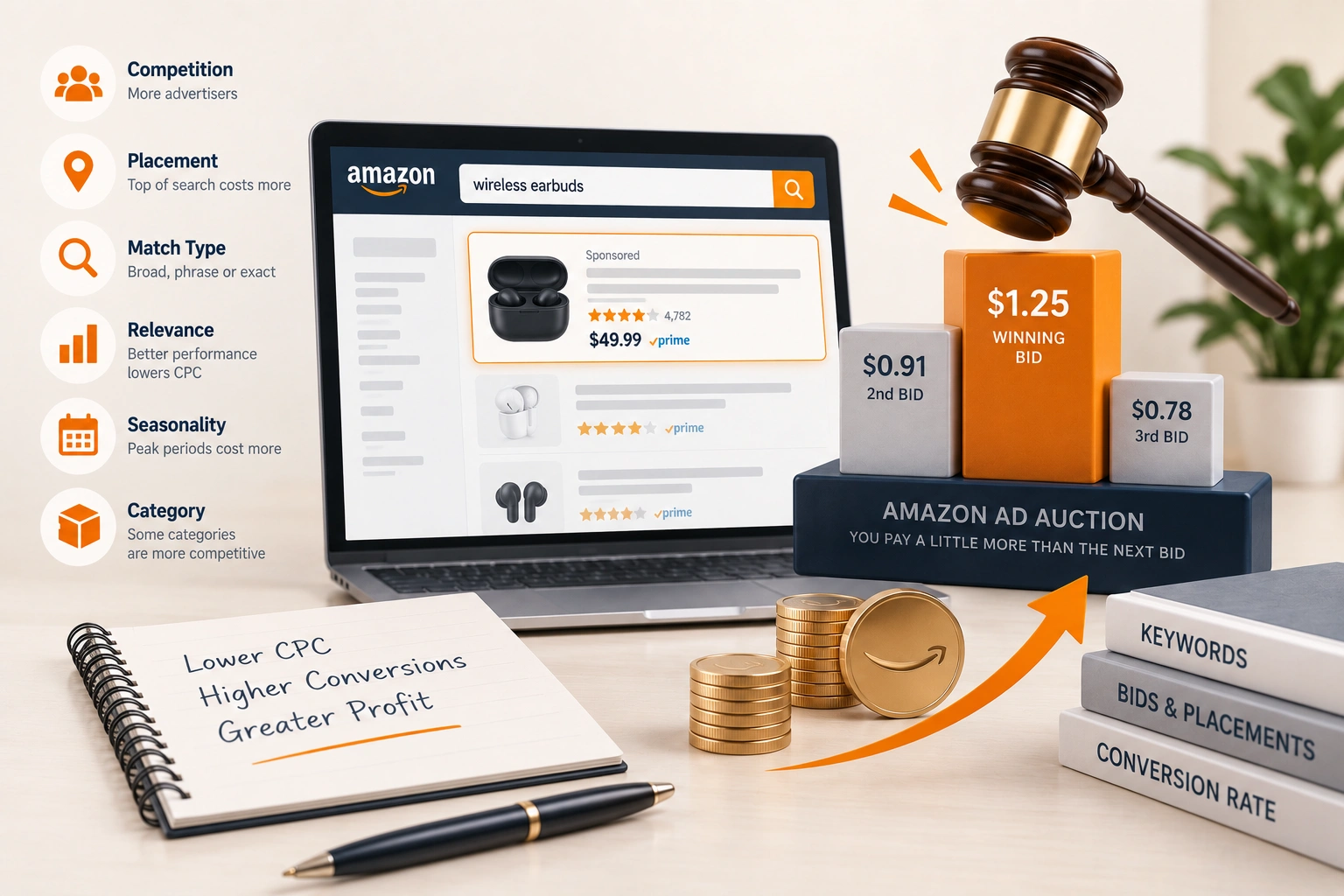
Sponsored ads on Amazon are sold in an auction that runs every time a shopper searches. Every advertiser with a bid on a term the search matches enters, and the ad shown in each placement is chosen from the bid and the ad's expected performance: an ad that shoppers click and buy from more often wins a placement over a higher bid that they do not. The price paid is not the bid. It is set by the next competing bid below the winner, plus a small increment, so a bid of two dollars against a next bid of ninety cents costs about ninety one cents.
That mechanism explains most of what sellers find puzzling. The bid is a ceiling, and the cost is usually below it. Raising a bid does not raise the cost by the same amount; it changes which auctions are won. And the cost of a click on the same term differs by hour, by placement, and by which competitors happened to be in the auction, which is why the report's average is an average of hundreds of different prices.
The six things that move it
Competition on the term, first. A term ten brands bid on costs what the tenth brand is prepared to pay, and a term two bid on costs what the second is. Brand terms are cheap because the brand's competitors usually do not bid them; the category's head term is dear because everyone does. Second, placement: top of search costs more than the rest of the page, and product page placements are cheaper again, and the placement adjustments in the campaign multiply the bid for each. Third, match type: broad match enters more auctions, some of them against stronger competition, and its average click reflects that; exact match enters only the auctions the seller chose.
Fourth, relevance and conversion history. An ad that converts well on a term wins its auctions at a lower price, because Amazon weights the expected performance; a new product with no history pays more for the same placement until it earns one. Fifth, the season: the fourth quarter's auctions have more bidders with bigger budgets, and every click costs more from October to December on the same terms. Sixth, the category: a click on a supplement or a kitchen appliance is priced by the margin those sellers can afford, and a click on a phone case by a thinner one. The ad types article covers how the placements differ across Sponsored Products, Brands and Display.
Reading your own cost per click
The campaign manager shows cost per click by campaign, ad group and target, and the search terms report shows it by the actual search that produced each click, which is the level at which it means something. Read it by term, sorted by spend: the ten terms that take most of the budget have a cost per click each, and the question for each is whether the sales the clicks produce justify it. A term with a high cost per click and a low advertising cost of sales is a bargain; a term with a cheap click and no orders is expensive at any price.
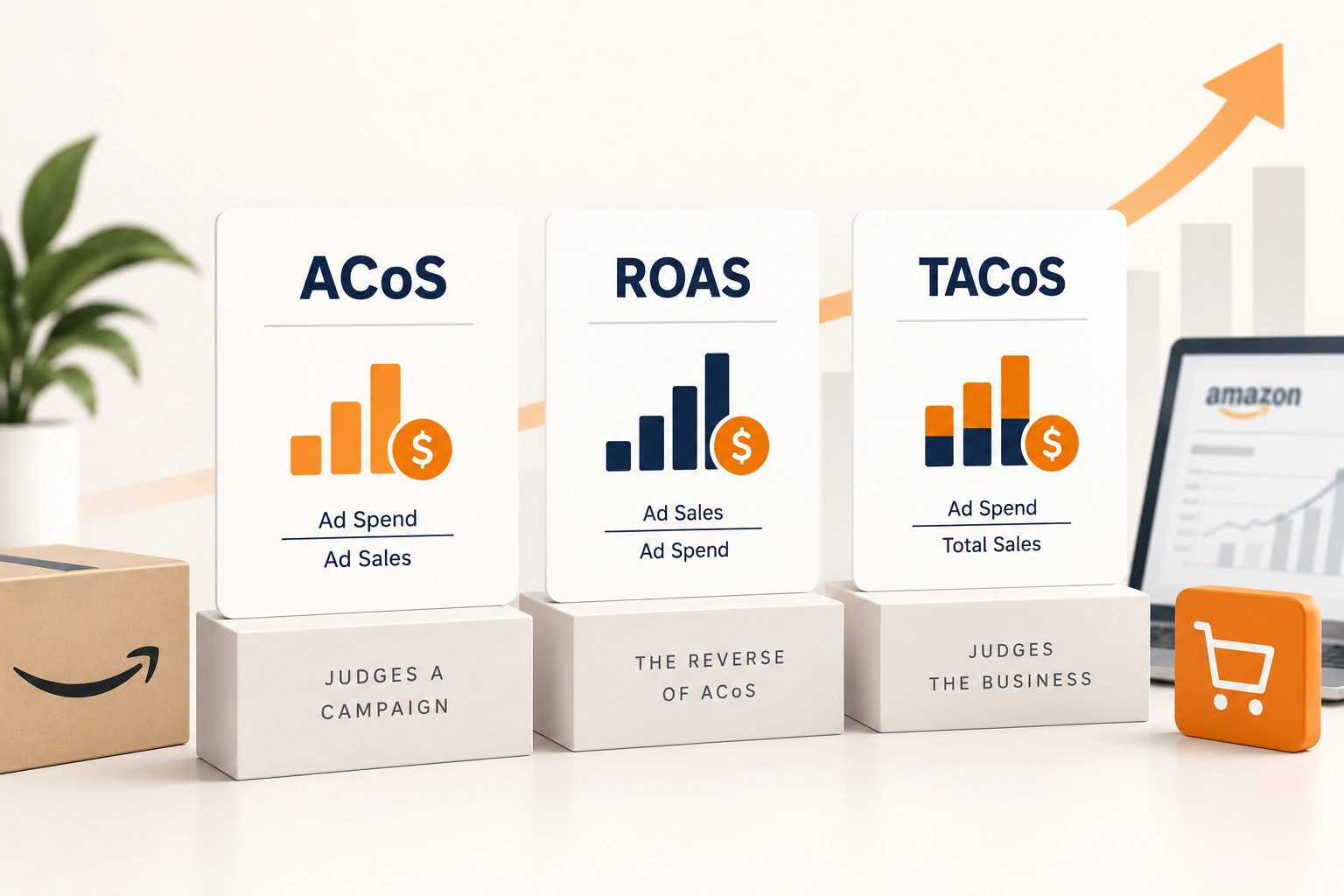
That is the reason the click is the wrong number to watch on its own. The number that decides whether a campaign works is the cost per order, which is the cost per click divided by the conversion rate, and it is read as the advertising cost of sales. A product that converts one click in five can pay four times the click price of one that converts one in twenty and still make the same margin. The article on campaigns that spend without converting is the diagnosis when the clicks are cheap and the orders are not there.
Bringing it down without losing the sales
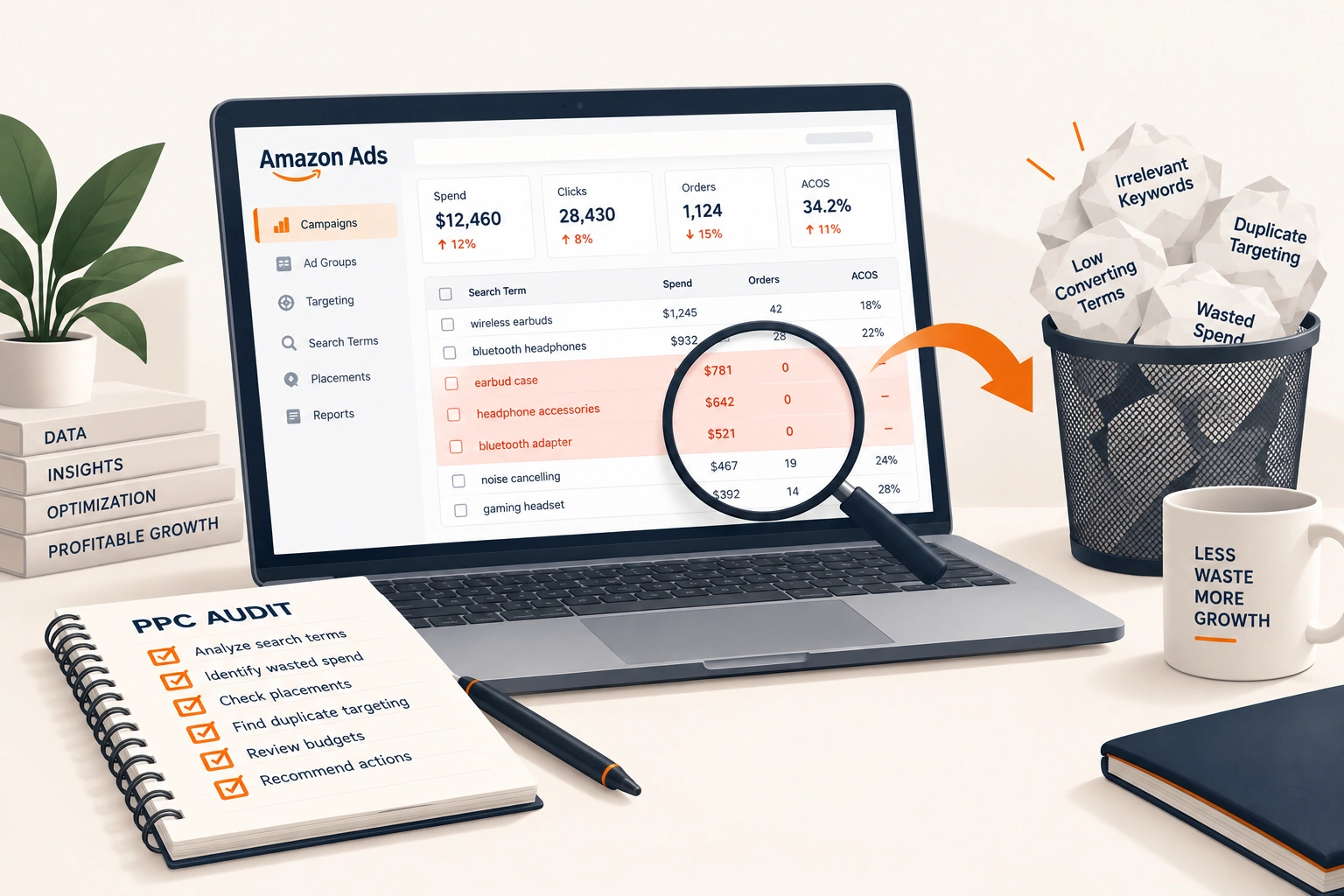
The clicks that cost most for least are the ones to remove, not the ones to bid lower on. The search terms report names the terms that took clicks and no orders, and negative keywords stop paying for them; the negative keywords article is the routine. Exact match campaigns on the terms that convert, with bids set from their own cost per order, take the auctions worth winning at the price they are worth; broad and automatic campaigns are for finding new terms, on a budget sized for research. Placement adjustments are lowered where the top of search does not convert better than the rest of the page, which for many products it does not.
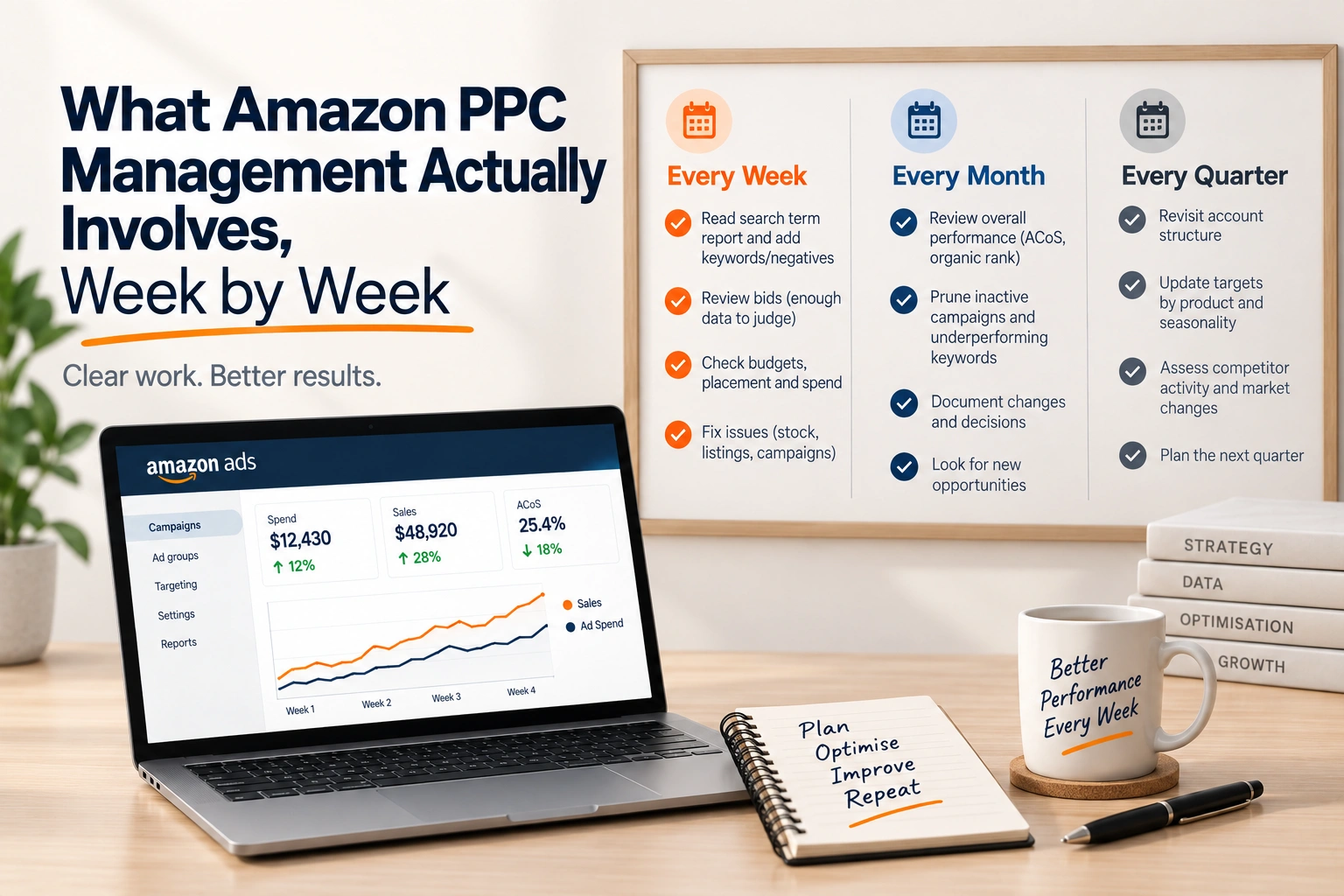
And the listing is the lever most sellers forget. A better conversion rate lowers the effective price of every click twice: once because the cost per order falls, and again because the auction rewards the ad's performance with cheaper placements. The routine that reads all of this weekly and changes one thing at a time is the weekly PPC optimisation article, and it is the work of Amazon advertising management for the brands we run: not a cheaper click, but a cheaper order.
Frequently asked questions
The questions that come up most often on this subject.
Amazon publishes none, and the averages quoted online are other sellers' accounts in other categories. Your own average is in the campaign manager and the search terms report, by term, and that is the only one that predicts what your next click costs.
The cost is set by the next competing bid plus an increment, up to your bid as a ceiling, and placement adjustments multiply the bid for top of search and product pages. A cost near the bid means the auctions are competitive; a cost well below it means they are not.
More bidders on the term, top of search placement, broad match entering stronger auctions, a new ad with no conversion history, the fourth quarter, and the category's margins. Brand terms are cheap because competitors rarely bid them; the category's head term is dear because everyone does.
Lower the bids on terms whose cost per order is too high, and remove with negative keywords the terms that take clicks without orders. A cheaper click on a term that does not convert is still wasted, and a dear click that converts is worth keeping.
No. Cost per order, read as advertising cost of sales, is: it is the click price divided by the conversion rate. A product converting one click in five can afford four times the click price of one converting one in twenty.