Amazon Ads' AI Creative Tools After unBoxed 2026: What They Make, and What a Brand Still Has to Supply
On 29 September 2026 Amazon Ads put its generative creative tools inside Amazon Ads Agent and quoted up to 71% more product coverage for the brands using them. What the four generators produce, what they read to produce it, and the creative work that has to exist before any of it is worth switching on.


Loading Article banner
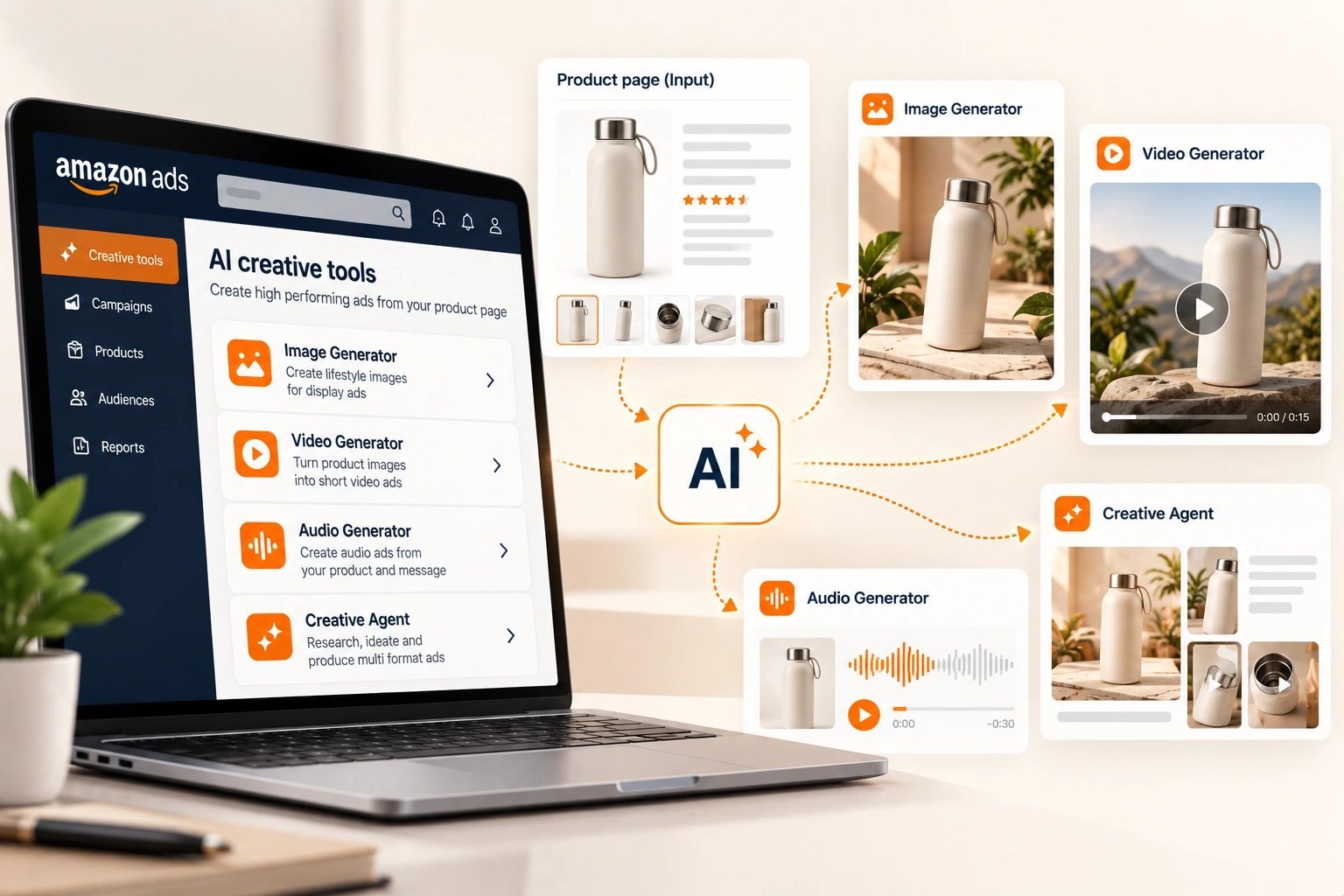
Most brands on Amazon have the same creative problem: a hundred products, a handful of good photographs, and an advertising console that now expects a video for every campaign. On 29 September 2026 Amazon Ads announced that its generative creative tools live inside the conversational experience of Amazon Ads Agent, the renamed platform that brings the former DSP and Ads Console together, and quoted results for the brands already using them.
This is what the tools make, what they read to make it, what the quoted figures do and do not mean, and the part of the creative job that still has to be done by somebody before the generators are worth switching on.
What Amazon announced on 29 September 2026
The sentence that matters from Amazon's announcement: "With built-in creative tools, advertisers can make TV-quality video and display images from existing product pages." The input is the product page. Not a brief, not a shoot, not a brand book: the listing as it stands, with whatever images, bullets and brand content it already carries.
Amazon's unBoxed page gives the result it wants brands to notice: advertisers using the suite drove "up to 71% more product coverage and up to 15% sales growth" against their results before adopting it. Read those two numbers carefully. Product coverage means more of the catalogue advertised with a video or a display image, which is a volume figure. Sales growth is the upper bound of a range Amazon chose to quote. Neither says what happened to the cost per order, and neither is a forecast for a catalogue that was already well covered.
The four generators, and what each one makes
Amazon Ads' own page on the suite lists four tools, and they do different jobs.
Image Generator makes lifestyle images from a product ASIN or an uploaded product image, for display ads. Amazon's figure for it is a 10.3% higher return on ad spend on Sponsored Brands campaigns using AI-generated images, measured on its own advertisers over a period it names on the page.
Video Generator turns product images into short video ads. Amazon describes it as free, with unlimited generation, built into the Sponsored Brands campaign workflow, and available in the United States, Canada, Mexico, the United Kingdom, Germany, France, Italy, Spain, India and Japan. The output is made for Sponsored Brands video and, in Amazon's words, "can also be used in other locations like Brand Stores".
Audio Generator turns a product into a ready-to-run audio ad from a chosen voice, music and message. Amazon lists it for the United States only.
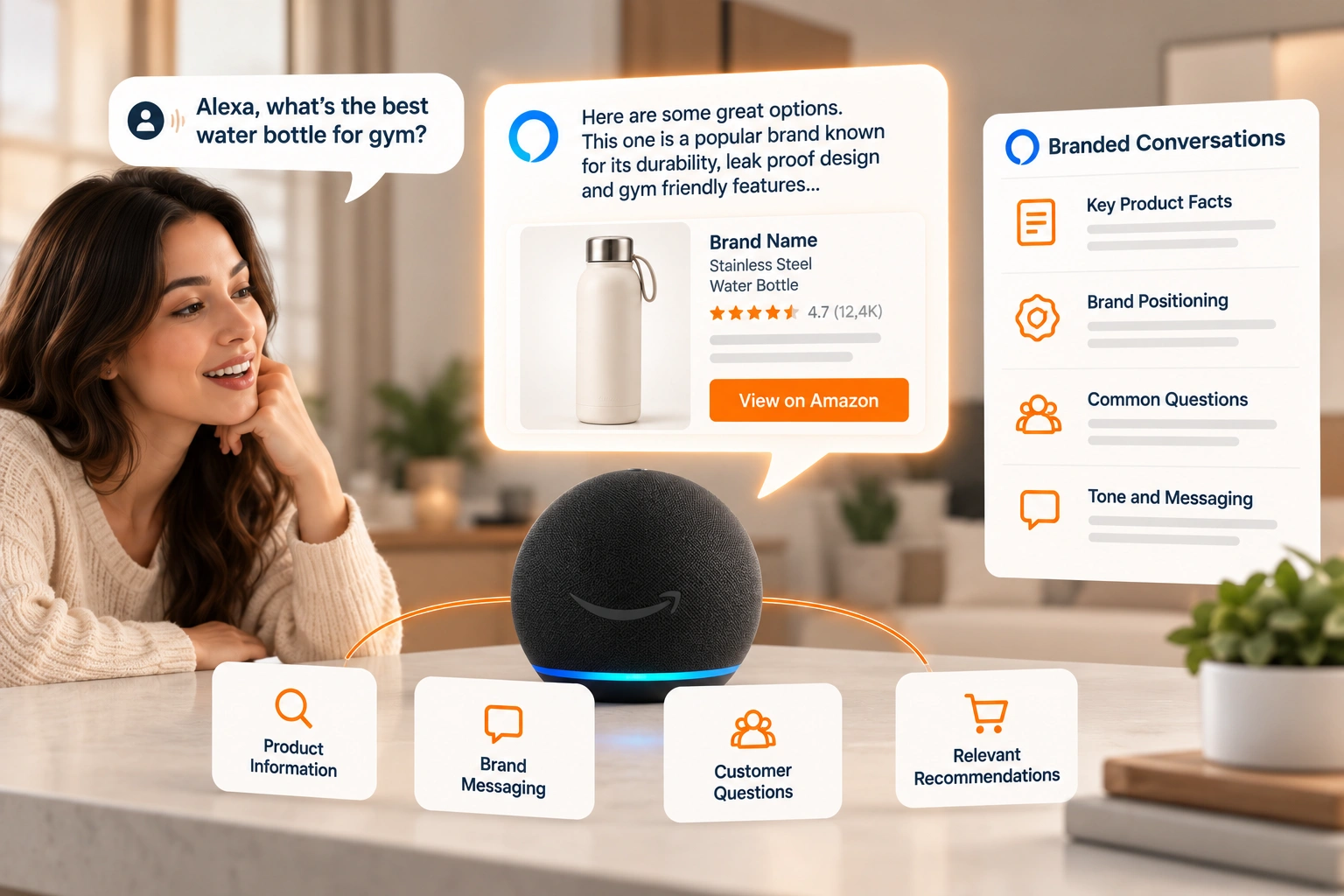
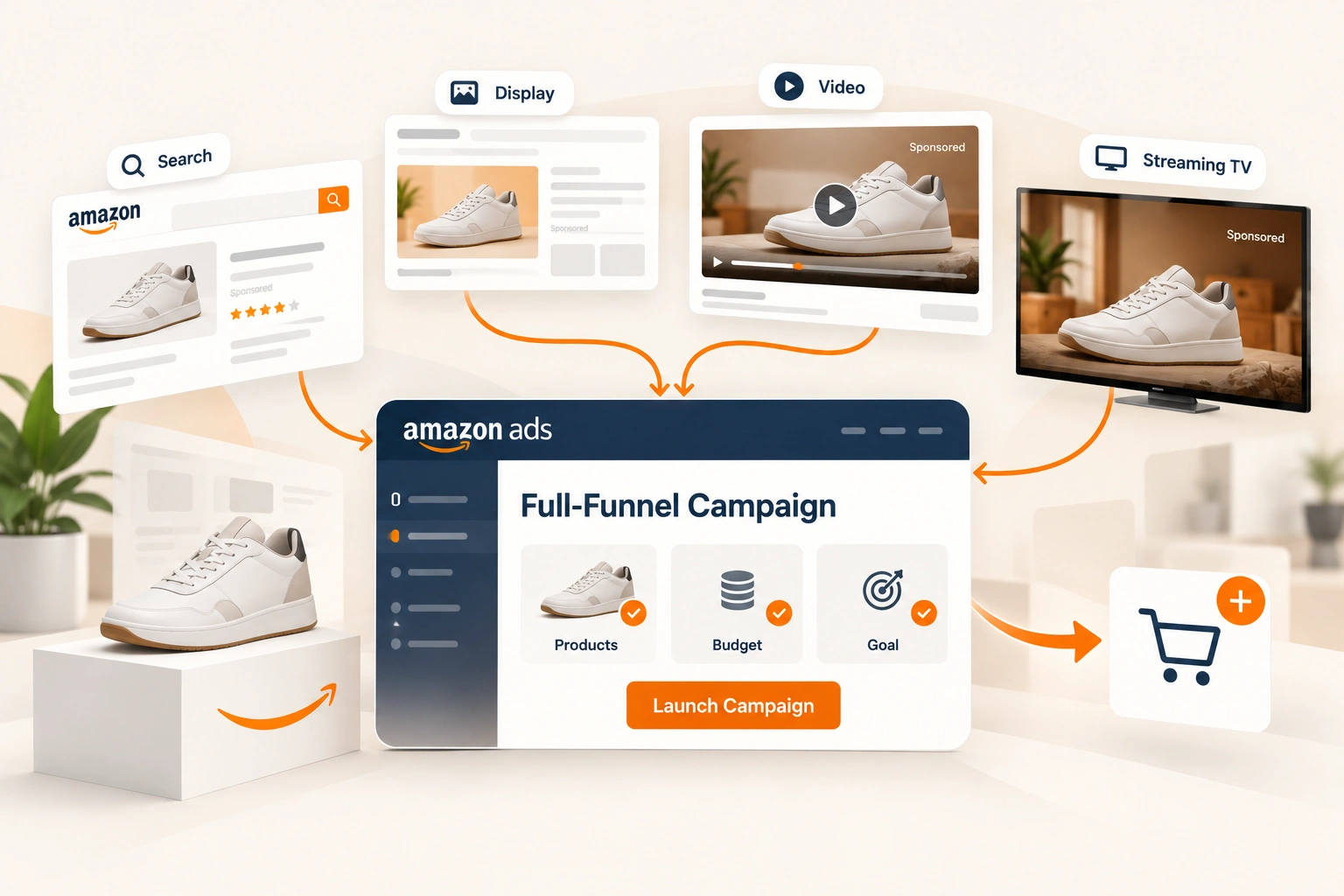
Creative Agent is the one that behaves like a junior creative team. It "conducts product and audience research, brainstorms ideas, develops creative concepts in a storyboard format" and then produces ads across display, Sponsored Brands video, online video, audio and streaming TV. When Amazon launched it in Europe on 24 February 2026, it said the agent examines "product pages, brand stores, websites, and customer shopping signals" to understand the brand first. Amazon lists it for Canada, China, France, Germany, Italy, Spain, the United Kingdom and the United States.
What the tools read, and why that decides the result
Every one of these generators starts from what the brand has already published. The product page supplies the images, the title, the bullets and the A+ content. The Brand Store supplies the brand's own framing of its range. The website supplies the tone. The shopping signals supply who buys and what they compare.
So the quality of the output is set before the first prompt. A listing with one supplier photograph on a white background produces a video of one supplier photograph on a white background, moving. A listing with a real product photographed in use, a comparison module that says who the product is for, and a Brand Store that groups the range by need gives the agent something to work with. The guide to product photography that sells describes the set of shots a listing needs; that set is also the raw material the generators draw on.
It also means the generators cannot be used to skip the main image work. The main image is governed by Amazon's own rules, the white background and the 85% frame among them, and a generated lifestyle scene does not belong there. Amazon's 2026 image requirements set out what gets a listing suppressed; the creative tools make advertising assets, not listing images.
What a brand still has to decide before switching them on
Which products get advertising creative at all. The 71% coverage figure is the point of the tools: a long tail of products that never had a video can now have one. That is useful only if the long tail should be advertised. A product with thin margin or no reviews does not become a better advertising candidate because its video now exists. The order in which ad formats earn their budget is unchanged, and which Amazon ad type earns its budget is still the first question.
What the brand looks like. The generators tailor output "to their brand", in Amazon's words, which means they infer the brand from what they can see. A brand with a written set of visual rules, the colours, the typeface, the photographic style, what the product is never shown doing, has something to check the output against. A brand without one will accept whatever looks good on the day and end up with a Store, an A+ page and twenty videos that do not match each other.
Which claims are allowed. A generated script will happily say the product is the fastest, the safest or clinically proven. The brand is responsible for every claim in the ad, exactly as it is on the listing, and a claim the listing cannot support does not become supportable because software wrote it.
Who reviews before it runs. Amazon's framing is that advertisers keep control of the final output. That control is only real if somebody uses it. The practical rule is the same one that applies to any agency: nothing goes live that the brand has not watched to the end.
Where the output is worth most
Sponsored Brands video, where a product without a video is simply not eligible for the placement, and the Video Generator is free. The Brand Store, where a generated video can fill a page that otherwise carries static tiles, and where what a Brand Store is actually for explains why the Store deserves the asset. Display and streaming TV through the DSP side of Ads Agent, where the alternative to a generated asset is often no asset and no campaign, and whether a brand is ready for DSP is the prior question.
Where the output is worth least: the hero product that carries the brand. That one product earns a real shoot, a real edit and a real script, because it is the asset every other piece of creative, generated or not, will be measured against.
How we use them
We treat the generators as a production step, not a creative strategy. The brand's photography, visual rules and claims list come first, because they are what the tools read. Then the generators extend that work across the catalogue, under review, with the hero products kept on a human production path. That is the creative and media work we do for brands: the photographs, the listing images, the A+ content and the Store that give Amazon's tools something true to build from. If you want to know whether your catalogue is ready for them, start with our creative and media services and we will tell you honestly which products are and which are not.
Frequently asked questions
The questions that come up most often on this subject.
On 29 September 2026 Amazon Ads said its generative creative tools now live inside the conversational experience of Amazon Ads Agent, so advertisers can make TV-quality video and display images from existing product pages. Its unBoxed page quotes up to 71% more product coverage and up to 15% sales growth for advertisers using the suite.
Yes. Amazon Ads describes Video Generator as a free tool with unlimited video generation, available in the Sponsored Brands campaign creation workflow in the United States, Canada, Mexico, the United Kingdom, Germany, France, Italy, Spain, India and Japan. The videos are made for Sponsored Brands and can also be used in Brand Stores.
Amazon says Creative Agent examines product pages, Brand Stores, websites and customer shopping signals to understand a brand, then researches, storyboards and produces ads across display, Sponsored Brands video, online video, audio and streaming TV. The better the listing and Store it reads, the better the ad it makes.
No. The creative tools make advertising assets. The main image is governed by Amazon's product image rules, which require a true photograph of the product on a pure white background filling most of the frame, and a listing that breaks them can be suppressed from search.
They replace production time on the long tail of a catalogue, not the creative decisions. The tools read what the brand has already published, so the photography, the visual rules and the claims still have to exist first, and the hero products still earn a human production path.