Amazon Review Requests: The New Ad That Asks Buyers for a Rating, and When It Is Worth Running
Amazon Ads announced Review Requests on 29 September 2026: an ad that asks people who recently bought your product for a star rating while they shop, in open beta in the US from late October. Who qualifies, what Amazon has not said yet, and where it sits beside Vine and the Request a Review button.


Loading Article banner
A listing with forty ratings competes against listings with four thousand, and most buyers never leave one. The routes to more ratings that Amazon allows have always been narrow: the Request a Review button, which sends one email per order, and Vine, which gives units to invited reviewers before launch. Everything else that promises reviews is somewhere between a policy risk and a suspension.
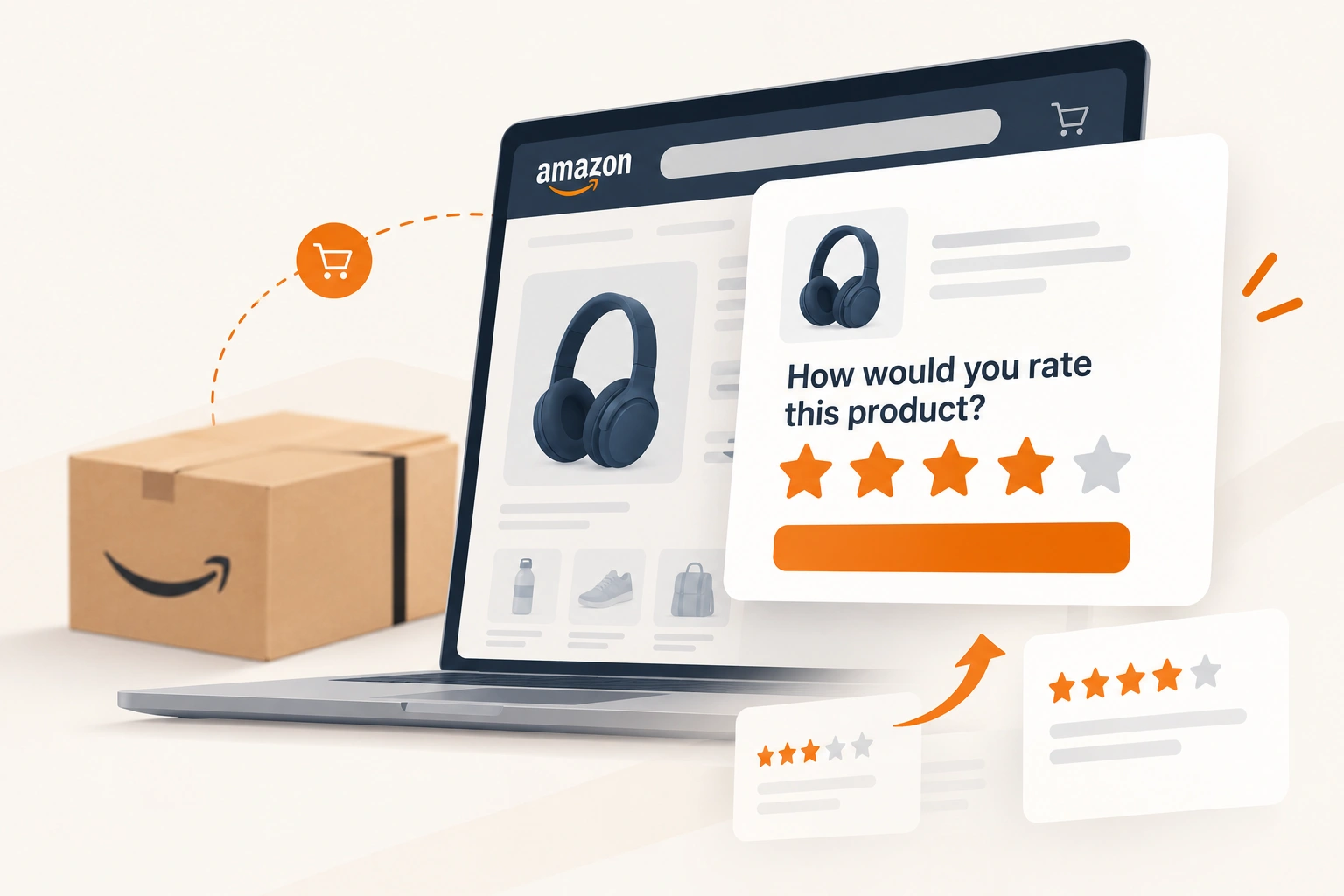
On 29 September 2026 Amazon Ads announced a third route, and it is an ad. Review Requests reaches people who recently bought a product and asks them for a rating while they are shopping on Amazon. This is what Amazon has said about it, what it has not said yet, and how to decide whether it belongs in a campaign plan when the beta opens.
What Amazon has announced
In Amazon's words: "Review Requests launches in open beta in the United States in late October 2026. This new advertising solution reaches customers who recently purchased your product and invites them to submit a star rating or written review while they are shopping on Amazon."
The shopper can submit a rating in one click, and can add a written review, a video or images if they want to. Amazon describes the result as "Same authentic reviews customers already leave. Just more, faster." The reviews come from verified purchasers, which is the point: these are the buyers who would have been asked by the button's email, reached instead at a moment when they are already on Amazon and looking at a screen.
The one result Amazon gives is from a closed beta run between 3 and 21 June 2026: products "received three times as many ratings and reviews per week compared to before the test." That is Amazon's internal data from its own test, on products it chose, and it is worth reading as the ceiling of what a good case looks like rather than as a forecast. Additional marketplaces and Amazon properties are planned for later releases; for now it is the United States only.
Who can use it, and on which products
Eligibility has two halves. In Amazon's words it is open to "Registered sellers and vendors with an advertising console account in good standing and no active policy violations", so both Seller Central and Vendor Central brands qualify, and an account with an open policy issue does not until it is resolved.
The product must have "fewer than 1,000 total ratings and reviews", and the campaign stops by itself when it gets there: "Review Requests for a product pause automatically once it reaches the ratings threshold of 1,000 reviews." That ceiling says what Amazon built it for. It is not a launch tool for a product with none, and it is not for the bestseller with twelve thousand. It is for the long middle, where a product has proven it sells and its rating count is still the thing a shopper notices first.
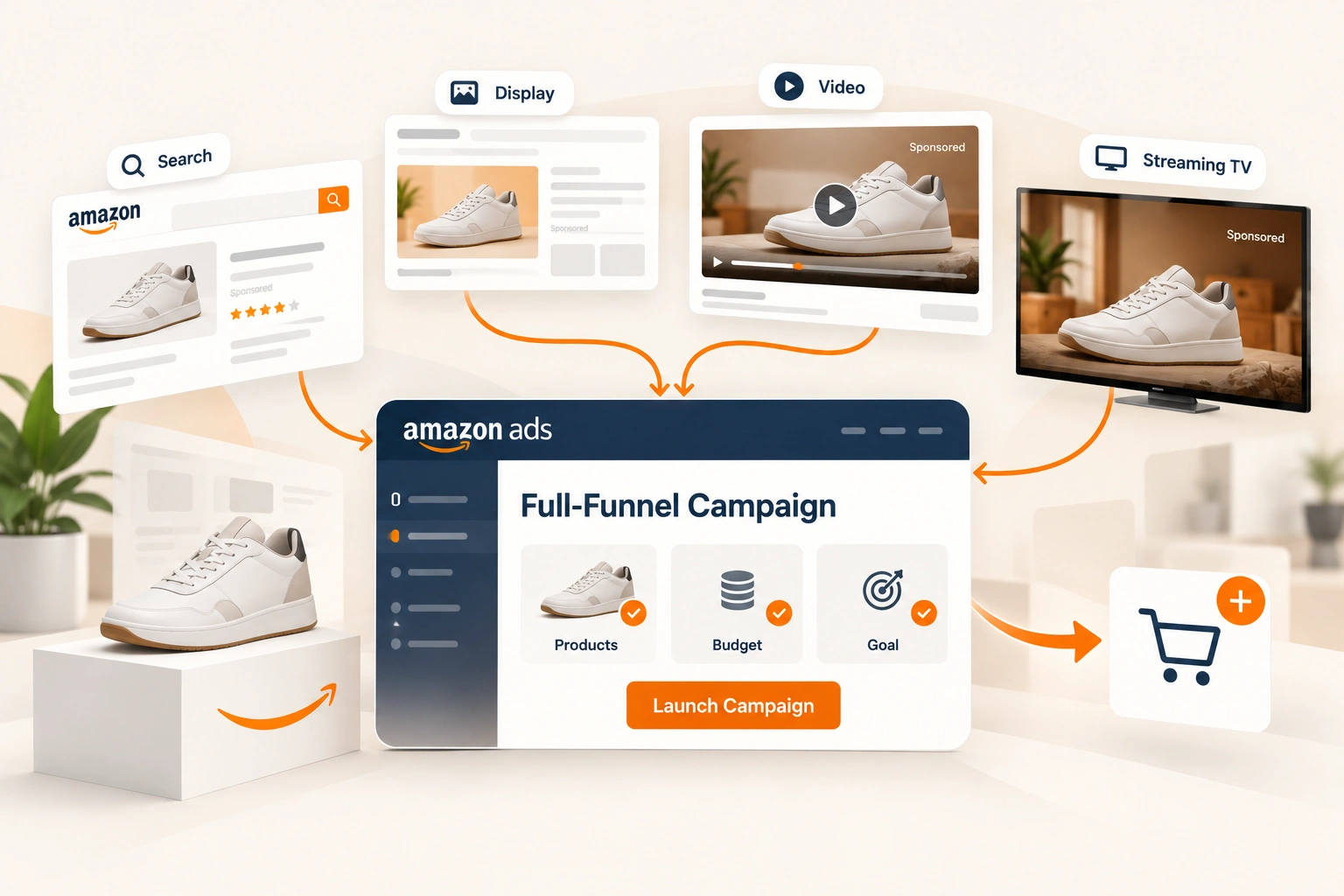
Campaigns are created and managed in Amazon Ads Agent, which Amazon describes as "the unified buying experience that brings together what was formerly the DSP and Ads Console", announced at unBoxed on the same day, and they use the existing bidding and budget controls. For agencies and tools working through the API, Review Requests campaigns are "an extension of the existing Unified Campaign Management API endpoints", so nothing separate has to be built to manage them.
What the announcement does not say yet
Three things a budget depends on are not on the page. How it is billed: per click, per impression or per rating submitted is not stated, and the difference matters more here than in a sponsored product campaign, because the action being bought is a rating rather than a sale. Where the ads appear: the page says only "Amazon's highest-traffic pages". And how recent "recently purchased" is: the window between delivery and the request is not given.
Until the console shows those, any cost per rating figure is a guess, and a plan built on one is a plan built on a guess. Amazon's own advice for questions is to contact the Amazon Ads account team, which is worth doing before the beta opens if the account has one.
How it sits beside Vine and the Request a Review button
The three routes are not competitors. They work at different stages of a listing's life, and a well run catalogue uses all three where each fits.
The Request a Review button is free and always available. It is on the Order details page in Seller Central and sends an automated request to the buyer, one per order, inside a window after delivery that Seller Central enforces (sellers report it opens about five days after delivery and closes at thirty). It is an email, so it reaches the buyers who open Amazon's emails, and most brands that use it well have automated it across every order.
Vine is the launch tool. A brand gives units to reviewers Amazon has invited, the product must have fewer than 30 reviews and be fulfilled by Amazon, and the reviews arrive before the first advertising money is spent. What it costs and how to plan it is in our Vine guide for 2026.
Review Requests sits after both. It reaches verified buyers of a product that already sells, on Amazon rather than in an inbox, until the product reaches 1,000 ratings. The natural sequence is Vine for the first reviews, the button on every order from the first sale onward, and Review Requests for the listings where the rating count is still holding conversion back.
When it is worth running
Start with the listings where the rating count, not the price or the content, is what is losing the comparison. Put each eligible product beside the three or four listings a shopper actually compares it with on the search page. A product with 300 ratings against competitors with 280 has no rating problem, and buying more ratings will not move its conversion. A product with 300 against 3,000 does, and that is where the beta budget belongs.
Fix what the reviews will say before asking for more of them. A product with a known fault collects that fault faster when more buyers are asked, because the same buyers who would have stayed silent now write it down. If the recent reviews mention the same problem, that is the work to do first, and what to do about a review that is already there is in the guide to answering a bad review.
Make sure the listing converts the traffic it already has. More ratings raise trust; they do not repair a listing whose images or copy lose the shopper. The same logic sits behind a campaign that spends without converting: the ad is rarely the problem when the page is. Where the content is the constraint, what actually moves rank on a listing is the earlier fix.
Then measure it the way Amazon measured it, and one step further. Ratings per week before and during the campaign is the direct measure. The commercial one is the conversion rate on the listing over the following weeks, read against what a good conversion rate looks like for the category, because ratings are only worth buying for the sales they help close.
What it does not change
Amazon's rule for sellers is unchanged, and Review Requests does not relax it: "do not attempt to influence customer ratings, feedback, and reviews, or make requests for customers to remove negative reviews or post positive reviews." The ad asks for a rating. It does not ask for a good one, and nothing a brand does around it may either. An insert promising a reward for a review, or a message steering buyers towards five stars, is as much a violation with Review Requests running as without it.
That is also what makes it worth having. A rating gathered this way is the same verified, unprompted rating the listing would have collected anyway, only more of them and sooner. A listing built on those is one that holds up when a shopper reads the reviews, which is the reason ratings move conversion in the first place.
How we would approach the beta
List every product under 1,000 ratings, keep the ones where the rating count is the visible gap against the competition, and leave out any with an open quality issue. Run Review Requests on those with a capped budget for the first weeks, beside sponsored products rather than instead of them, since each ad type earns its budget on a different job. Keep the Request a Review button running on every order. Read ratings per week and the listing's conversion rate weekly, and once the console shows how Review Requests is billed, turn that into a cost per additional rating that can be compared with everything else the budget could buy.
That is the kind of decision we make with the brands whose Amazon advertising we run: where the next dollar does the most work, with the ratings, the conversion and the margin read together rather than one at a time. If you are weighing the beta for your own catalogue, we are happy to look at which of your listings it would help and which it would not.
Frequently asked questions
The questions that come up most often on this subject.
An Amazon Ads product announced on 29 September 2026 that shows an ad to customers who recently bought a product, inviting them to leave a star rating or review while they shop on Amazon. A rating takes one click; a written review, video or images are optional. It opens as a beta in the United States in late October 2026.
Registered sellers and vendors with an Amazon Ads account in good standing and no active policy violations, on products with fewer than 1,000 total ratings and reviews. Campaigns pause automatically when a product reaches 1,000. At launch it is available in the United States only, with more marketplaces planned.
Vine gives free units to reviewers Amazon has invited, for products with fewer than 30 reviews, and is a launch tool. Review Requests is a paid ad that reaches people who bought the product themselves, for products under 1,000 ratings, so it works after launch on listings that already sell.
No. The button in Seller Central stays free and sends one automated email per order after delivery. Review Requests reaches recent buyers with an ad on Amazon instead of in their inbox. The two work together, and the button is worth keeping on every order whether or not the ad runs.
Amazon has not published how it is billed. Its announcement says campaigns use the existing bidding and budget controls in Amazon Ads Agent, and that questions go to the Amazon Ads account team. Until the console shows the pricing, any cost per rating figure is an estimate.