Amazon's Full-Funnel Campaigns Are Live in the US: What the AI Decides, What You Still Decide, and How to Test It
Since 29 September 2026 any US advertiser can hand Amazon Ads a product list, a budget and a goal and let one campaign run search, display, video and streaming TV together. What Amazon automates, what the beta figures leave out, the decisions that stay with the brand, and how to test it beside your sponsored campaigns.


Loading Article banner
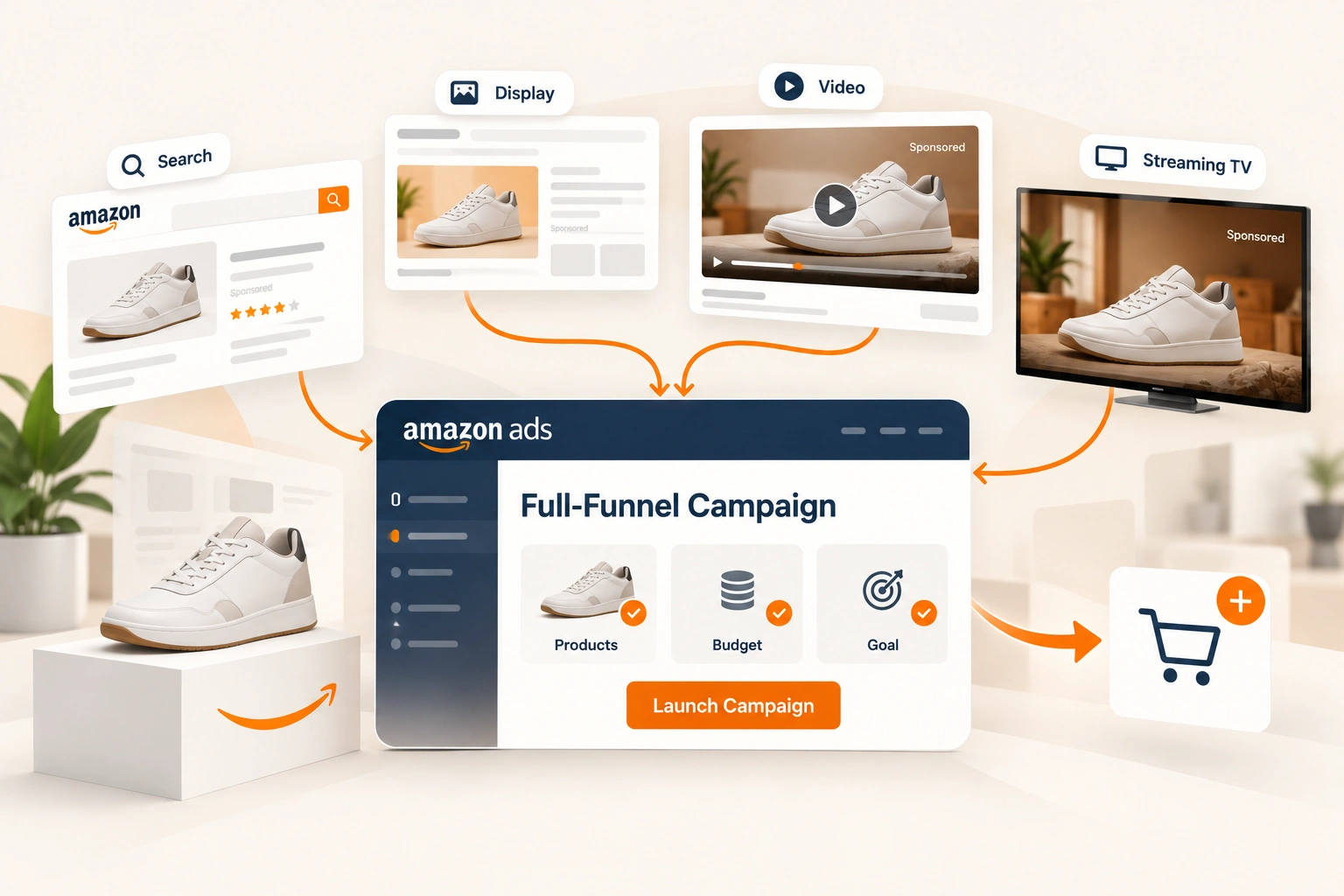
Until this autumn, running a full funnel on Amazon meant building it: Sponsored Products for the shoppers already searching, Sponsored Brands and Display for the ones comparing, and a DSP arrangement, usually managed and usually with a minimum, for the ones who had never heard of the brand. Each had its own campaign, its own budget and its own report, and the arguments about which one deserved the next dollar were the job.
On 29 September 2026 Amazon Ads announced that Full-Funnel Campaigns "is now available to all advertisers in the United States". One campaign, one budget, one goal, and Amazon's AI deciding the rest. For a brand that runs its own advertising this is the biggest change to the console in years, and it is worth being precise about what it does and does not take off your hands.
The three campaign types now
Amazon's announcement renames the unified platform Amazon Ads Agent and sorts everything an advertiser can buy into three types. Sponsored Ads are the cost-per-click campaigns most sellers already run. DVA+ combines Sponsored Display, Sponsored TV and programmatic buying into one display, video and audio experience, and rolls out from late October. Full-Funnel Campaigns are the third, and Amazon describes them as integrating "sponsored ads, display, video, and streaming TV together in a single campaign".
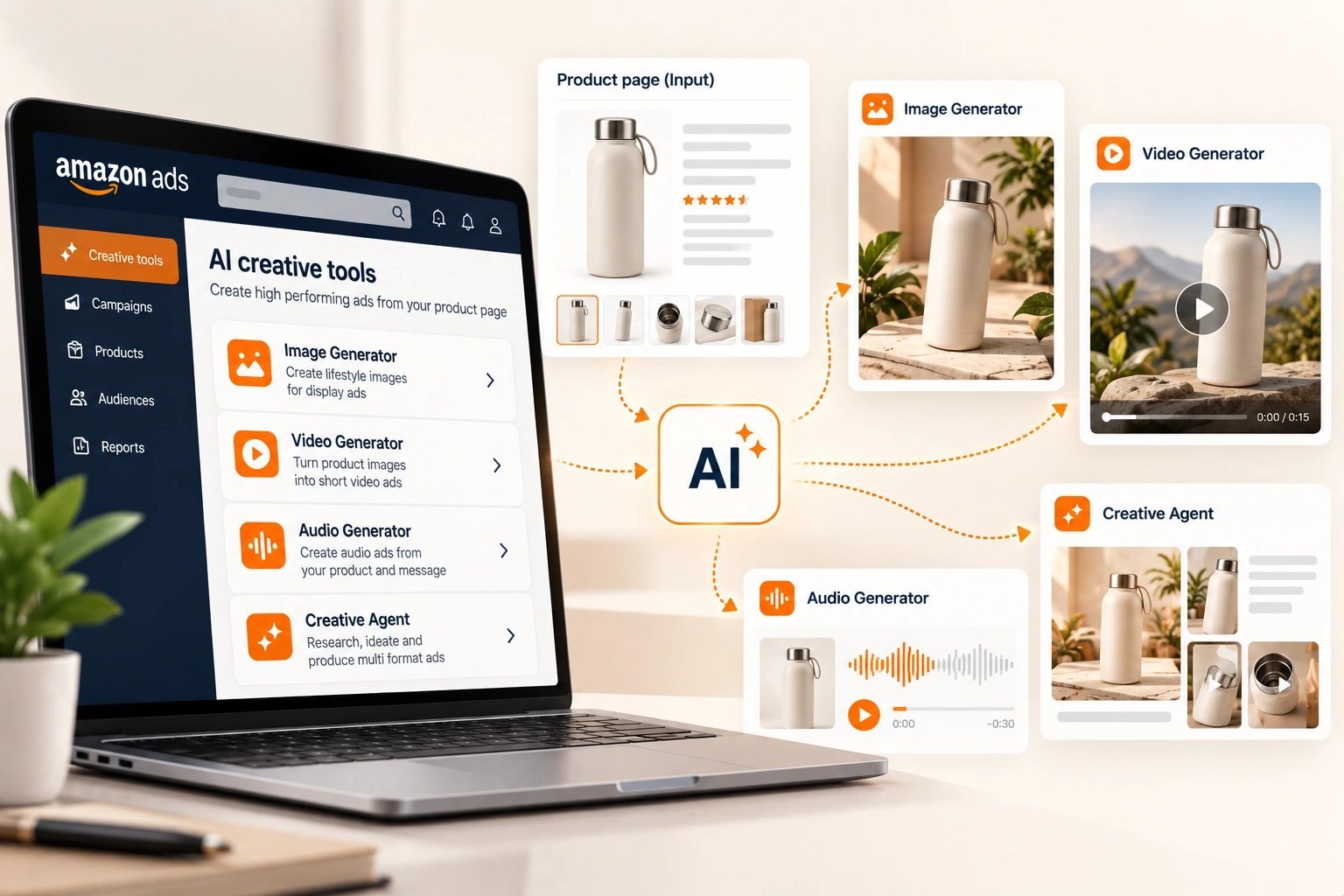
The product page puts the advertiser's side of it in one line: "Provide your products, budget, and a goal. One campaign coordinates across search, streaming, video, and display, finding new-to-brand customers and growing long-term sales by allocating spend where it drives the most growth." The unBoxed page states what the AI takes on: it "automatically handles channel mix, creative, audiences, and optimization".
So the division of labour is explicit. The brand supplies the products, the money and the objective. Amazon decides which formats run, what the creative is, who sees it and how the budget moves between them.
The figures, and what they do not say
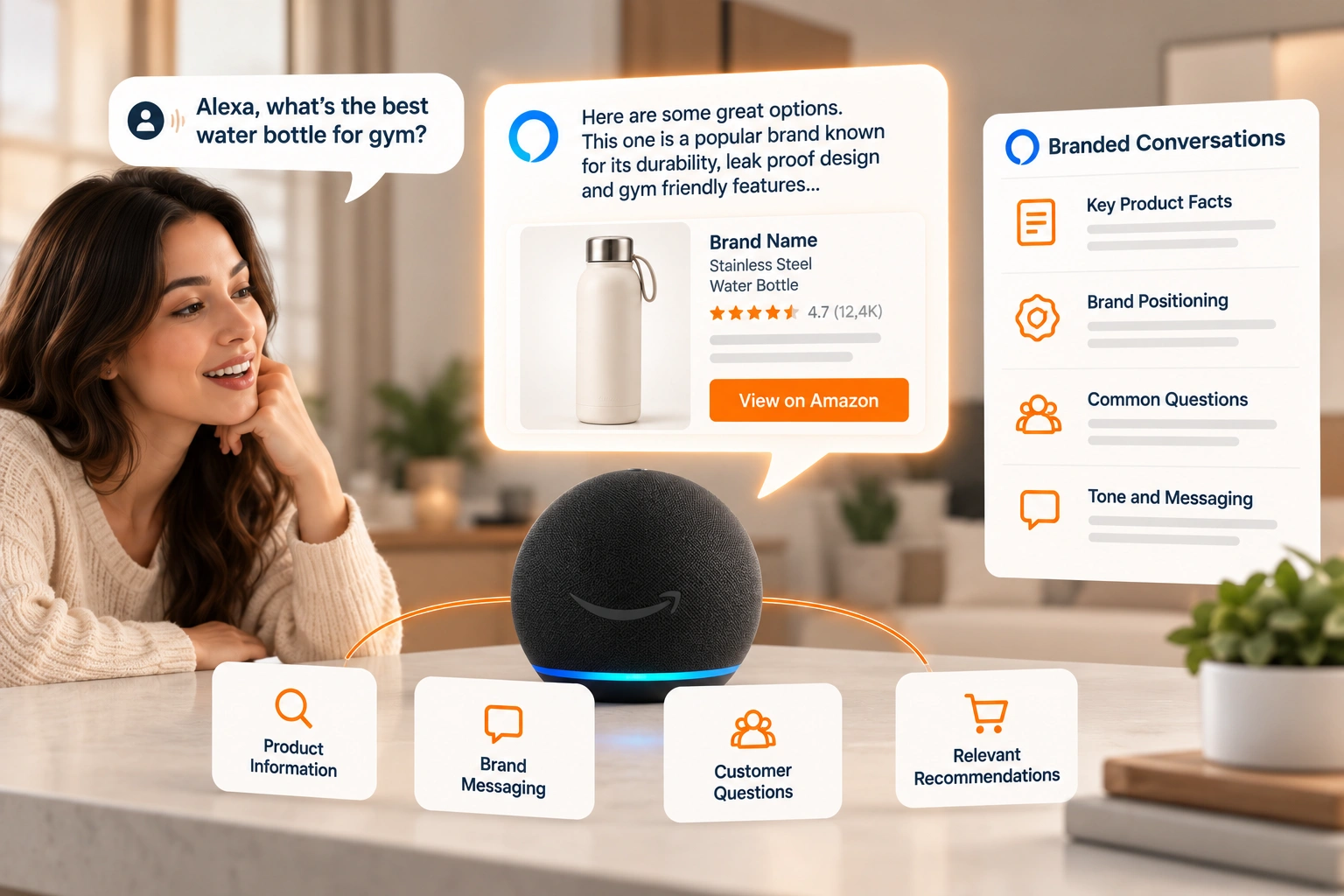
Amazon's beta result: advertisers saw "67% higher long-term return on ad spend and 29% lower cost to acquire new-to-brand customers". One early tester, a pet food brand, is quoted saying that 41% of sales from its Full-Funnel campaign were new to the brand. Amazon's separate figure for the conversational targeting in Ads Agent is that advertisers using it "saw more than 25% additional unique customers while lowering costs by more than 10%".
Three things to hold against those numbers. Long-term return on ad spend is a comparison over a window Amazon chose, against a baseline Amazon chose, on beta advertisers Amazon chose; it is not a figure a brand can expect in its first month. Cost to acquire a new-to-brand customer is a cost per customer, not a margin, and a cheaper new customer can still be an unprofitable one if the product's contribution is thin. And none of the figures says what share of a Full-Funnel budget ended up in each format, which is the number a brand needs to judge whether the campaign is doing something it could not have done itself. The vocabulary for reading all three is in what ACoS, TACoS and ROAS each answer.
What stays the brand's decision
Which products. A Full-Funnel campaign finds new customers for the products it is given. Give it the whole catalogue and it will spend on the products that are easiest to sell to strangers, which are not necessarily the ones with the margin to pay for a stranger. The product list is the first decision and the most consequential.
The goal, and what it costs. The campaign optimises to the goal it is set. Growing new-to-brand customers and growing long-term sales are different instructions, and each has a price the brand has to be able to afford at the unit level. The arithmetic belongs to the margin, not the console, and the unit economics Profit Analytics leaves out is the place to do it.
The listing. The AI handles creative, which means it generates ads from the product page. It does not fix the product page. A campaign that sends new customers to a listing that loses them is a campaign that measures the listing's problem at scale, exactly as a campaign that spends without converting describes.
The budget split with everything else. Full-Funnel Campaigns do not replace Sponsored Products; Amazon lists Sponsored Ads as a type of their own. A brand still decides how much of the total goes to the campaigns it controls directly and how much to the one it has delegated, and that split is the real test of trust in the tool.
How to test it without betting the quarter
Choose a small set of products with proven conversion, good reviews and a contribution margin that can absorb a new-customer acquisition cost. Leave the existing Sponsored Products campaigns on those products running unchanged; they are the control. Give the Full-Funnel campaign a budget that is meaningful but bounded, set the goal to new-to-brand customers, and read nothing for the first weeks except whether the ads are reaching the formats Amazon promised.
Then read three things monthly. New-to-brand orders as a share of total orders on those products, which is the campaign's own claim. Total advertising cost of sales across the products, which tells whether the Full-Funnel spend is adding sales or taking them from the control. And the organic rank of the products, because an upper-funnel campaign that works shows up as branded search and organic sales weeks later. If the fourth quarter is the test window, how Q4 advertising budgets are set across the marketplaces is the context for what a normal quarter's numbers look like.
Where this fits beside Google and Meta
A brand that advertises off Amazon already runs a funnel with the top of it elsewhere. Full-Funnel Campaigns compete for that upper-funnel budget with the Meta and Google campaigns a brand uses to introduce itself, and the right comparison is not Amazon against itself but Amazon's reach of its own customers against the reach the other platforms offer. Google Ads against Amazon Ads sets out where each is stronger, and that logic does not change because the Amazon side is now one campaign instead of four.
How we approach it
We run Full-Funnel Campaigns as a delegated budget with a control beside it, on products chosen for margin rather than for ease, with the listing fixed first and the new-to-brand share read against the total rather than on its own. That is the shape of the growth and advertising work we do for brands across Amazon, Google and Meta: the decision about where the next dollar goes, made with the margin in the room. If you want to know which of your products could carry a Full-Funnel test, that is a short review and we are glad to do it.
Frequently asked questions
The questions that come up most often on this subject.
A campaign type in Amazon Ads Agent, available to all US advertisers since 29 September 2026, that runs sponsored ads, display, video and streaming TV together in one campaign. The advertiser provides products, a budget and a goal; Amazon's AI handles the channel mix, the creative, the audiences and the optimisation, and allocates spend where it drives the most growth.
Amazon says beta testers saw 67% higher long-term return on ad spend and 29% lower cost to acquire new-to-brand customers, and quotes one early tester for whom 41% of the campaign's sales were new to the brand. These are Amazon's figures from its own beta advertisers over a window it chose, not a forecast for a new account.
No. Amazon lists Sponsored Ads as a separate campaign type alongside Full-Funnel Campaigns and DVA+. A brand still runs its own cost-per-click campaigns and decides how much of its budget to delegate to the Full-Funnel campaign.
DVA+ is a display, video and audio buying experience that combines Sponsored Display, Sponsored TV and programmatic campaigns, rolling out from late October 2026. Full-Funnel Campaigns go further and include sponsored search ads in the same campaign, with the AI choosing the mix across all of them.
On a small set of products with proven conversion and a margin that can pay for a new customer, with the existing Sponsored Products campaigns on those products left running as a control, a bounded budget, and a monthly read of new-to-brand share, total advertising cost of sales and organic rank.