What You Can Do About a Bad Review
Almost nothing, and that is the useful answer. Here is the short list of what is allowed, what works, and what costs accounts.


Loading Article banner
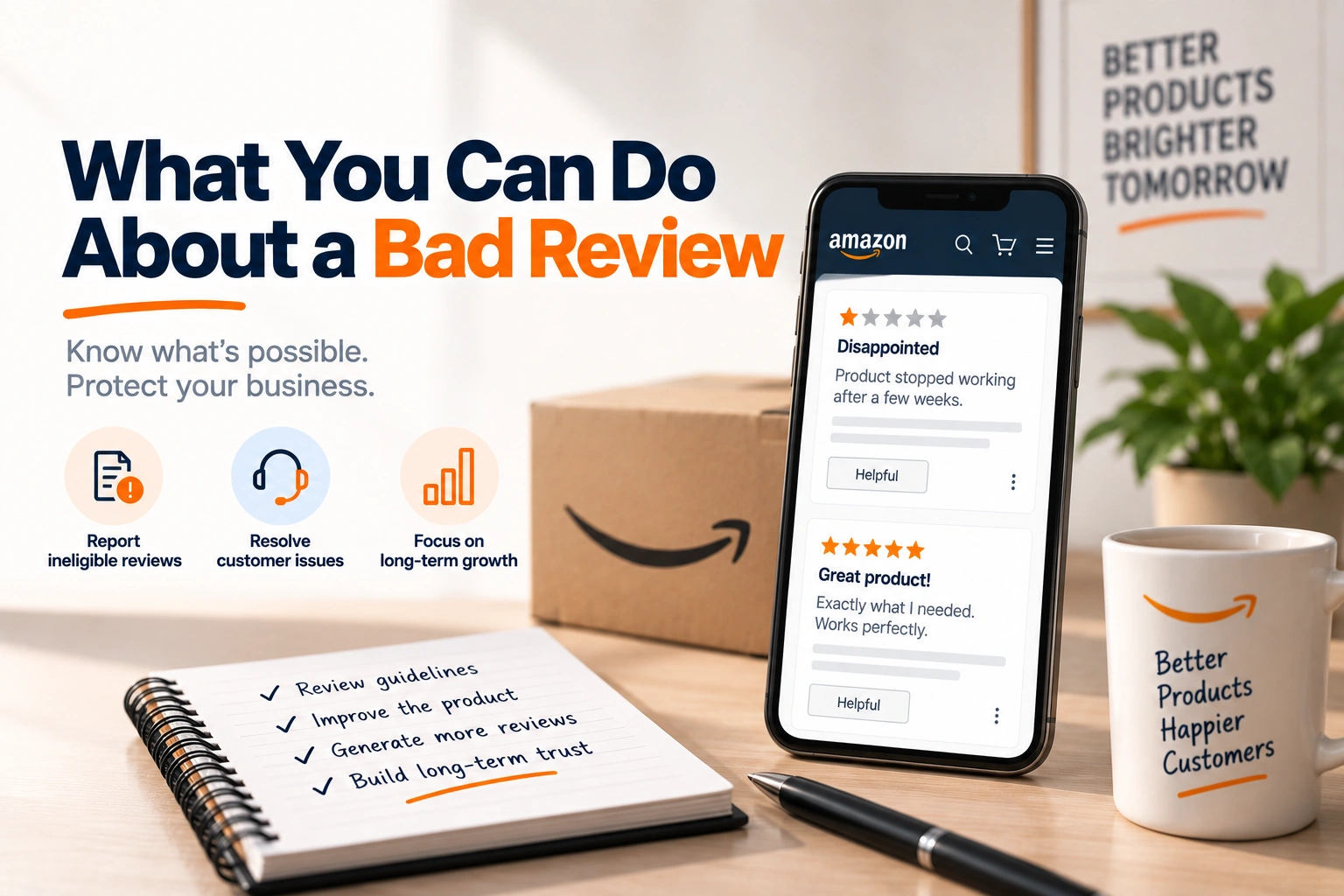
The honest answer to how to remove a review is: usually you cannot, and the ways people try are the ways accounts get suspended.
There is a real list of things that work, it is short, and knowing where its edges are is worth more than any tactic.
Two different things, often confused
A product review is about the product and sits on the detail page, shared by every seller offering it. Nobody owns it and no seller can remove it.
Seller feedback is about you: dispatch, packaging, service. It sits on your seller profile and it feeds your metrics.
The distinction matters because the routes are different. Feedback about a fulfilment failure on an FBA order is Amazon's responsibility rather than yours, and that kind is removable. A one star review saying the product broke is not.
When Amazon does remove a review
When it breaks the community guidelines: profanity, personal information, a review that is really about the delivery rather than the product, promotional content, or an obvious conflict of interest.
Reporting one is a form, and the answer is a judgement rather than a negotiation. Reporting a review you simply disagree with wastes the route and, done repeatedly, does not help how your account is seen.
Seller feedback has more grounds: an FBA fulfilment issue, a product review left in the feedback field by mistake, obscenity, or personal data. Those are worth checking every month, because a removable one left in place is dragging a metric for no reason.
What you may say to the customer
You may contact a buyer about their order and you may solve their problem. What you may not do is offer anything in exchange for changing or removing a review, and that includes a refund conditional on it.
You can refund unconditionally, and you can say so, and many people update a review afterwards on their own. That is allowed precisely because it is not a trade.
Public replies to reviews were withdrawn for most sellers, so the useful reply is the one nobody sees: fix it, and let the next fifty reviews say something different.
What actually moves a rating
Volume. A 3.9 average with sixty reviews moves with the next twenty; the same average on six hundred does not, which is why acting early matters far more than acting cleverly.
So the work is compliant review generation through the request a review button and, for a registered brand, Vine on new products, plus fixing whatever the negative reviews keep saying.
That last one is the part people skip. If four reviews complain about the same thing, it is a product or a listing problem, and no amount of new reviews will outrun it.
The review that is really a delivery complaint
A large share of one star product reviews are about something that happened after the product was made: it arrived late, it arrived damaged, the box was open, the wrong item came.
On an FBA order that is Amazon's fulfilment and those reviews frequently qualify for removal, because the guidelines say a product review should be about the product. It is the single most productive thing to check on a page with a rating that does not match its returns data.
On a merchant-fulfilled order the same review is about you, and the fix is upstream: packaging that survives a courier, a dispatch promise you can meet, and a delivery service whose failures you hear about before the customer writes them down.
What costs accounts
Paid reviews, review exchange groups, inserts offering a gift card or a free product for a review, asking customers to contact you before leaving a negative one, and using another account to leave or remove reviews.
All of it is against policy, all of it is detectable, and the consequence is the account rather than the review. It is worth being blunt about this because it is sold to sellers constantly and priced as though it were a service.
What we do with this
Monthly feedback review, removals where there are genuine grounds, and a compliant review flow are part of running an Amazon account, because ratings decide conversion long before anybody reads the words. Where a rating problem has already become a policy problem, account health and getting reinstated is the thing to read next.
The same shape applies elsewhere. eBay has its own feedback rules and its own removal grounds, and Walmart another set again, so a seller on three marketplaces has three of these to keep tidy.
If a product is stuck below four stars and you are not sure why, the reviews usually say why in the first ten of them.
Related reading: Seller Support Cases That Actually Get Resolved.
Related reading: Amazon Policy Warnings: What Each One Means and What "Approval Needed" Means on an Amazon Order.
Keep reading
Frequently asked questions
The questions that come up most often on this subject.
Only if it breaks the community guidelines: profanity, personal information, promotional content, an obvious conflict of interest, or a review that is really about delivery rather than the product. A negative opinion about the product is not removable by anyone.
A product review sits on the detail page and belongs to the product, shared by every seller offering it. Seller feedback sits on your profile and is about your dispatch and service. The removal grounds are different, and feedback has more of them.
More often than a review. Feedback about an FBA fulfilment failure, a product review left in the feedback field, obscenity or personal data can all be removed. It is worth checking monthly, because a removable one left in place drags a metric for nothing.
No. Anything offered in exchange for changing or removing a review is against policy, including a conditional refund. You can refund unconditionally and say so, and many customers update the review themselves, which is allowed because it is not a trade.
Public replies were withdrawn for most sellers, so the practical reply is private: contact the buyer about their order, solve the problem, and let the next set of reviews say something different.
The request a review button on each order, or an approved tool that presses it for you. What is not allowed is your own wording asking for a positive review, or an insert that offers anything in return.
Inserts that offer anything in exchange, or that steer unhappy customers to contact you instead of reviewing, are against policy and are detectable. A plain insert with care instructions and no request is fine.
It depends entirely on volume. A 3.9 with sixty reviews moves with the next twenty; the same average on six hundred barely moves at all. That is the argument for acting early rather than cleverly.
Only if it repeats. One is noise. Four saying the same thing is a product or listing problem, and no amount of new reviews will outrun a fault the reviews keep naming.
Not the ones selling reviews, which are against policy, detectable, and cost the account rather than the review. Tools that automate the compliant request are legitimate and cheap.