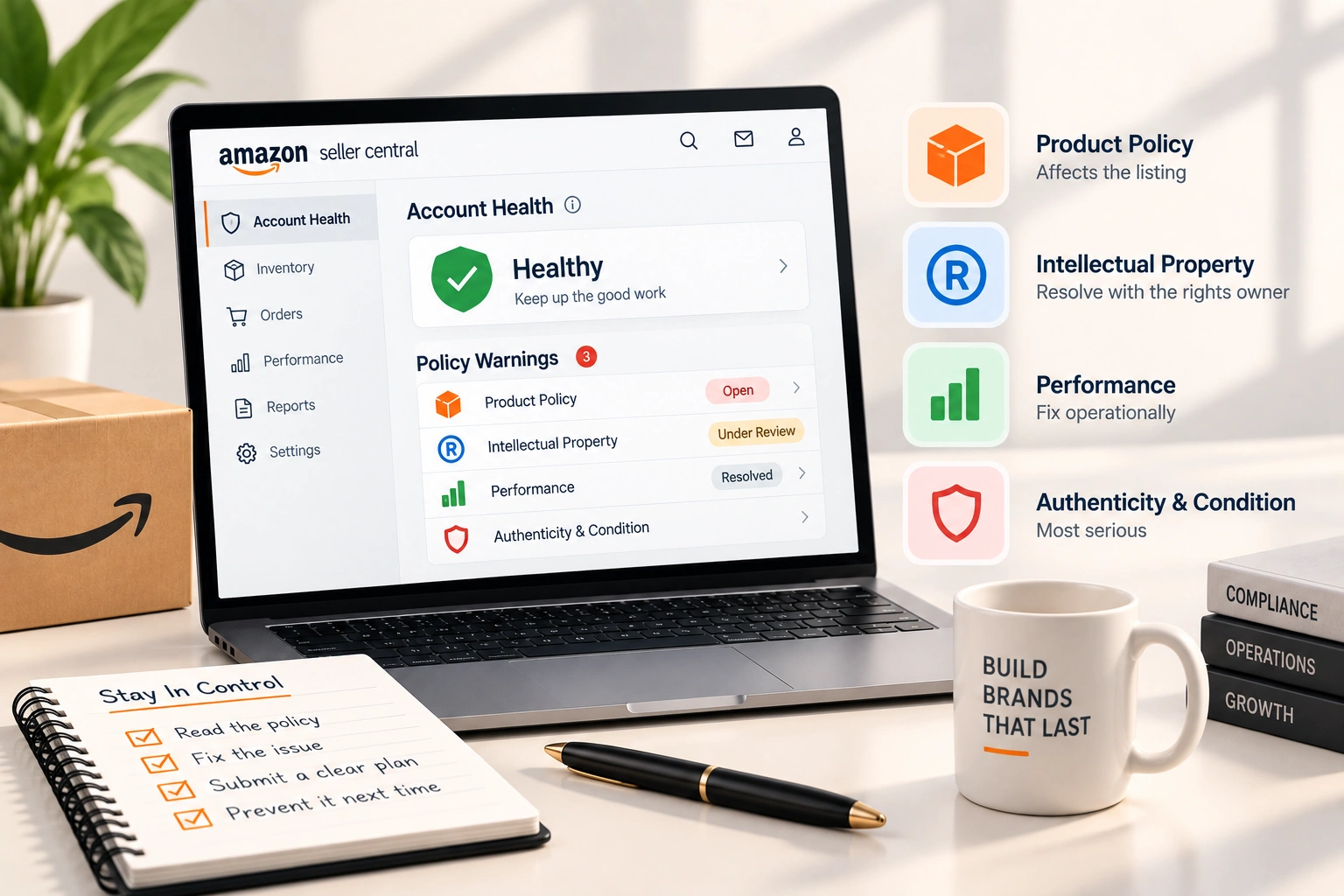
Closing or Pausing a Seller Account
Most people asking how to delete an account want to stop selling for a while. Those are different things, and one of them is reversible.


Loading Article banner
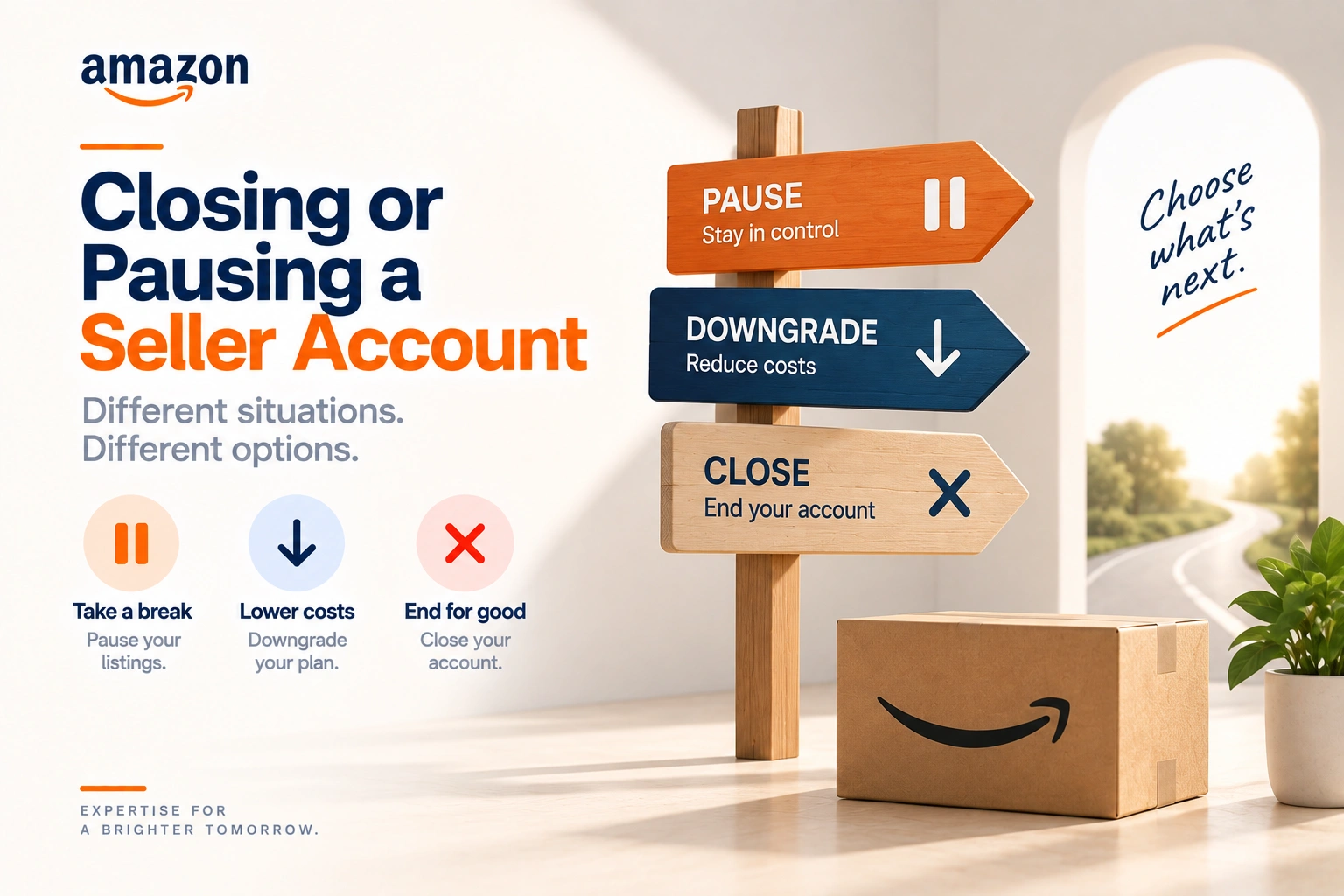
The question is usually asked in one of three situations: the subscription is costing more than the account earns, something has gone wrong and stopping feels safest, or the business has genuinely ended.
Only the third one wants a closure. The other two want something smaller and reversible, and closing is the option that cannot be undone in a hurry.
The three smaller options first
Holiday settings. Sets your listings to unavailable while the account stays open. Right for a break, a stock gap or a period nobody can service orders. Merchant-fulfilled listings go inactive; anything already in FBA carries on selling, which surprises people.
Downgrade the plan. Moving from the professional plan to the individual one stops the monthly subscription and keeps the account. If the reason is cost rather than the business ending, this is usually the answer, at the price of per-item fees and losing some tools.
Close the listings, keep the account. Removing offers without closing the account keeps the history, the reviews and the verification, which are the expensive things to rebuild.
Before closing anything
Get your stock out. A removal order takes days and it cannot be raised on a closed account. Stock left in the network when an account closes is a problem that is much harder to solve afterwards.
Let the money settle. Disbursements run on a cycle and there is a reserve behind them. Closing while funds are held means chasing a balance on an account you can no longer sign into normally.
Finish the returns window. Orders placed before you stop can still be returned after, and somebody has to be there to handle them.
Download what you will want later. Reports, invoices and tax documents are easier to have than to request.
What closing actually does
It ends the selling relationship. The listings go, the history goes with them, and the reviews attached to your offers are not something you can take anywhere.
It is not the same as a deactivation. A closure is your decision and is recorded as such; a deactivation is Amazon's and is a performance or policy matter, which is a different problem with a different route out.
Can you come back?
Reopening a closed account is possible in some cases and it is not a formality. What is not allowed is opening a second account to get around a closure of the first, and Amazon links accounts by details you would not think to change.
So if there is any chance of returning, the smaller options are worth taking seriously. An account on the individual plan with no listings costs nothing per month and keeps everything that is slow to rebuild.
If somebody else runs the account
Closing an account somebody else set up is harder than it sounds, and the obstacle is access rather than intent. The primary email, the phone number holding two factor authentication, the bank details and the tax registration all have to be under your control before anything can be changed.
Getting those back after a relationship has ended is slow, so the time to check is while everybody is still speaking. An account whose recovery details point at a former agency or a former employee is an account you do not fully own, whatever the contract says.
If you are stopping because it stopped working
That is worth separating from the mechanics. An account that is losing money usually has a diagnosable reason: fees on the wrong products, a category with click costs the margin cannot carry, or stock decisions made a year ago.
Selling elsewhere is the other option people skip. Walmart and eBay have thinner competition on many categories, and a catalogue that cannot make money on Amazon sometimes makes it comfortably on one of them.
What we do with this
Before anybody closes an Amazon account we would rather look at what it costs and what it earns per product, because the answer is frequently four products rather than the account.
If it really is over, the order matters: stock out, funds settled, returns window closed, documents downloaded, then close.
Keep reading
If you are weighing it up, an hour on the numbers is worth having first.
Frequently asked questions
The questions that come up most often on this subject.
Through the account settings, after the account is genuinely finished with: stock removed, funds disbursed, the returns window closed and your reports downloaded. Closing cannot be undone in a hurry, so most people asking this actually want holiday settings or a plan downgrade.
Holiday settings make listings unavailable while the account, its history and its verification stay intact. Closing ends the selling relationship and takes the listings and history with it. One is a break, the other is a decision.
No, and this surprises people. Holiday settings take merchant-fulfilled listings inactive; anything already in Amazon's warehouses keeps selling, because Amazon is doing the fulfilling.
Downgrade from the professional plan to the individual one. The subscription stops, the account stays, and you pay per item instead and lose some tools. If cost is the reason, this is usually the right answer.
Nothing good, unless you remove it first. A removal order takes days and cannot be raised on a closed account, so stock left behind at closure becomes much harder to recover.
Disbursements run on a cycle with a reserve behind them, so closing while funds are held means chasing a balance on an account you can no longer use normally. Let the money settle first.
Sometimes, and it is not a formality. What is not allowed is opening a second account to sidestep the first, and Amazon links accounts on details most people would not think to change.
No. A closure is your decision. A deactivation is Amazon's, for a performance or policy reason, and it has its own appeal route. Closing an account to escape a problem does not resolve the problem.
Look at what it costs and earns per product first. Accounts that lose money usually lose it on a handful of lines, in a category whose click costs the margin cannot carry, or on stock decisions made a year earlier.
Payment and settlement reports, tax documents, order history and anything your accountant will ask for later. All of it is easier to have than to request from a closed account.