Brand Registry: What It Actually Protects
Registry is not a copyright service. It is control of your own detail pages, and the tools it unlocks are worth more than the enforcement.


Loading Article banner
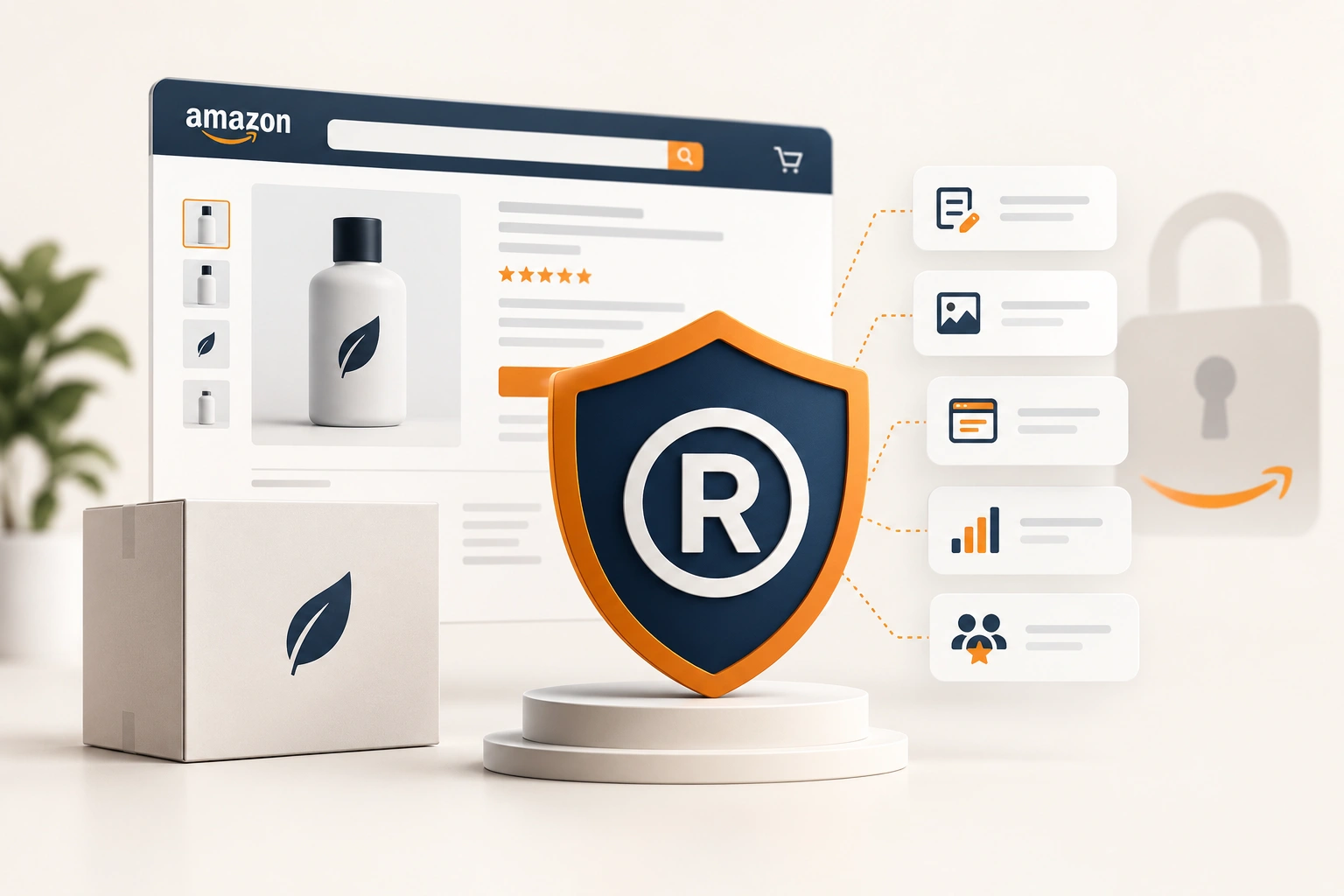
Brand Registry gets sold as protection, and sellers who enrol expecting a legal shield are usually disappointed. What it actually buys is control of your own detail pages and a set of tools that are not available without it.
Both halves matter, and the second is the one that pays for itself.
What it takes to enrol
A registered trademark in the marketplace you are enrolling for, an account that can prove it is the brand, and images of the product with the brand visible.
The trademark is the gate. Pending applications are accepted in some jurisdictions through the accelerator programmes, and a brand with no mark at all cannot enrol, which is the honest answer to most enquiries.
What it protects
Your own listing content, mostly. A registered brand's title, bullets and images are far harder for another seller to overwrite, which is the single most common complaint from unregistered brands: somebody changes a title and nobody can change it back.
It gives you a reporting route for genuine infringement, and it makes that report carry weight. It does not stop other sellers offering your product, which is a different question covered in what reselling actually allows.
The tools, which are the real value
A+ content and Brand Story. The comparison surface below the buy box, and the module that runs across your catalogue. Both are Registry only.
Brand Stores. A destination of your own inside Amazon, which is where Sponsored Brands traffic should land and where a brand's range can be browsed rather than searched.
Vine. Reviews on a new product from Amazon's own reviewer programme, which solves the problem every launch has: nothing sells without reviews and reviews come from sales.
Brand analytics. Search term share, repeat purchase behaviour, and what shoppers bought instead of you. It is the only view of the market Amazon gives a seller, and most registered brands never open it.
What it does not do
It does not stop other sellers listing on your ASINs, does not decide the buy box, does not remove a competitor for being annoying, and does not resolve a dispute between two parties who both have a claim.
And it does not make an infringement report true. Reports that are not well founded damage the account making them, which is worth saying because the tools make reporting easy.
Transparency and Project Zero, if counterfeits are real
Registry is the channel by which a brand reports a counterfeit. It is not the thing that stops one arriving, and a brand with a genuine counterfeit problem needs more than a reporting form.
Transparency puts a unique code on every unit, which Amazon scans on the way in, so a unit without a valid code does not reach a customer. It costs per unit and it changes your packing line, which is the reason most brands look at it and decide the problem is not yet big enough.
Project Zero adds the ability to remove an infringing listing yourself rather than waiting on a review, and it is offered to brands with a record of accurate reports. Both sit on top of Registry, and neither is worth the effort until the counterfeits are costing more than the programme does.
What to do first once enrolled
Lock down the listings: correct the titles and images on every ASIN, because Registry makes those changes stick in a way they did not before.
Then A+ content on the products carrying most of the revenue, then the Store, then Vine on anything launching. Brand analytics last, when there is enough of your own data in it to be worth reading.
That order is deliberate. The listing corrections protect what already sells, A+ improves the conversion rate on the traffic you are already paying for, and the Store gives Sponsored Brands somewhere better to land than a search results page. Vine only matters for products with no reviews yet, which is a smaller list than most brands assume.
What we do with this
Enrolment, catalogue lock-down and the tools that follow are part of Amazon account management, and the creative behind A+ and the Store is design work planned from the same evidence as the listings.
Other marketplaces have their own versions with their own gates: Walmart and eBay both treat a brand differently from a reseller, and neither transfers what Amazon granted.
Keep reading
If you have a trademark and have not enrolled, that is the cheapest thing on this list.
Frequently asked questions
The questions that come up most often on this subject.
A programme that ties a registered trademark to a selling account and, in exchange, gives the brand control of its own detail pages plus a set of tools: A+ content, Brand Story, Brand Stores, Vine and brand analytics. It is control and tooling rather than a legal shield.
Yes. A registered mark in the marketplace you are enrolling for is the gate, though pending applications are accepted in some jurisdictions through the accelerator programmes. A brand with no mark at all cannot enrol, and that is the honest answer to most enquiries.
No. Anyone holding genuine stock can offer the same product, and the buy box is decided separately. What Registry stops is other sellers overwriting your title, bullets and images, which is the complaint unregistered brands raise most often.
For most brands, the tools rather than the protection. A+ content and a Brand Store change conversion, and Vine solves the launch problem where nothing sells without reviews and reviews come from sales. The enforcement route matters when it matters and is used far less often.
Days once the trademark is in order, and the delays are almost always about proving the brand rather than the review itself: the account name not matching the mark, or images that do not show the brand on the product.
A programme that puts a new product in front of Amazon's own reviewers in exchange for units. It is the sanctioned way to get early reviews, it is available to registered brands, and the reviews are honest, which means a weak product gets honestly reviewed as one.
Yes, and it is the most ignored thing Registry unlocks. Search term share says what shoppers typed and which listings they clicked and bought, which is market data Amazon gives to nobody else, and repeat purchase behaviour is the only view of loyalty a marketplace seller gets.
You can report genuine intellectual property infringement, and the report carries weight because the brand is verified. Reports that are not well founded damage the account making them, so the tool being easy to use is not a reason to use it loosely.
It is the route by which a brand reports them and gives Amazon what it needs to act, and it works better with Transparency or Project Zero on top for a brand with a real counterfeit problem. Registry alone is the reporting channel rather than the prevention.
Correct the titles and images on every ASIN, because those changes stick now in a way they did not before. Then A+ content on the products carrying most of the revenue, the Store, and Vine on anything launching.