Amazon Product Image Requirements 2026: Main Image Rules and What Gets Suppressed
The main image is the one rule Amazon enforces by machine. The white background, the 85% fill, the pixel range and the formats, the new disclosure for AI generated people, what the other images may show, and how a listing is suppressed for an image and brought back.


Loading Article banner
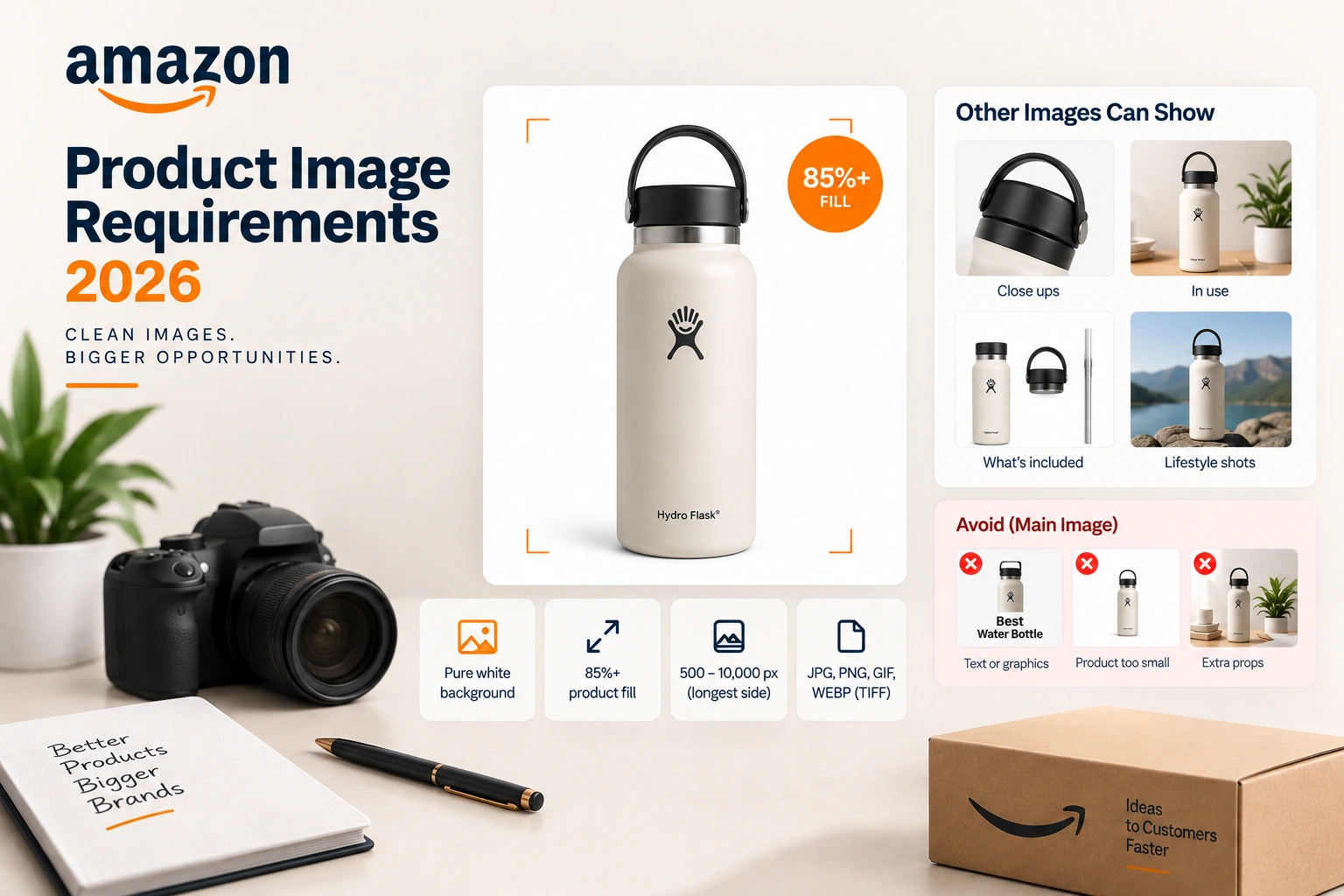
Most of Amazon's listing rules are enforced by people, slowly. The main image rule is enforced by software, on upload, and a listing that breaks it is suppressed from search before anybody has read the title. That makes the image requirements the one part of a listing worth getting exactly right the first time, and the one where the rules are short enough to learn.
This is the rule set as Amazon states it, from its own moderators' posts on the Seller Forums, with the 2026 change on AI generated images, what the secondary images may do that the main one may not, and how a suppression is found and cleared.
The main image
The main image is the product on a pure white background, RGB 255, 255, 255, and nothing else. The product fills at least 85% of the frame on its longest side. There is no text, no logo, no graphic, no watermark, no border and no prop that is not sold with the item. The image shows the product as sold, so a set shows the set and a single unit shows one; packaging is shown only where the packaging is the product. The photograph is of the actual item, in focus, lit so the colour is true.
Technically: between 500 and 10,000 pixels on the longest side, with 1,600 or more recommended, because zoom on the product page needs the larger file and zoom is where a buyer decides. JPEG, PNG, GIF and WEBP are accepted, TIFF for upload. The file's colour is sRGB. A square or near square image uses the frame best on the search results grid, which crops to a square thumbnail.
The 85% rule is the one most often broken by accident. A product photographed with generous white space, as a designer would, fails it; a tall thin product photographed upright fails it on width and passes on height, which is the dimension that counts, so it passes. Measure the longest side of the product against the longest side of the frame; the answer has to be 85% or more.
The 2026 change: AI generated images
Amazon's moderators set out the current position this year. Simple AI retouching, such as background removal, colour correction and lighting adjustment, is treated the same as traditional photo editing and needs nothing. Photorealistic AI generated people, whether full bodies, faces or hands, must be disclosed: when content is uploaded through A+ Content there are checkboxes for AI generated and AI generated people, and the disclosure is required for new uploads going forward. It is not required retroactively for content already published.
The rule sits on top of the older one, which is accuracy. An image, generated or photographed, must show the product a buyer will receive. An AI rendering that shows a texture, a colour or a proportion the product does not have is a misrepresentation whatever the checkbox says, and it comes back as returns and as the reviews in the bad review article.
What the other images may do
Everything the main image may not. Different angles, the product in use, close ups of a feature, a scale reference, a lifestyle setting, text that names a benefit, a comparison chart, the contents of the box. Amazon's guidance permits lifestyle shots and close ups and asks that they represent the product accurately; it forbids sexually suggestive content and the reproduction of customer reviews in an image. The slot after the main image is the most viewed image on the page after the first, and it is where the product's one argument goes.
The category style guides add rules on top. Clothing, shoes and jewellery have their own on models, mannequins, backgrounds and angles, and books, media and some others have their own on covers. Amazon's moderators point to the Product Page Style Guide for the category; a seller in apparel who reads only the general rule will meet a suppression the general rule did not mention. The whole set of images is one part of the listing, and the listing optimisation article covers how the images, the title and the bullets move rank together.
How a listing is suppressed for an image, and how it comes back
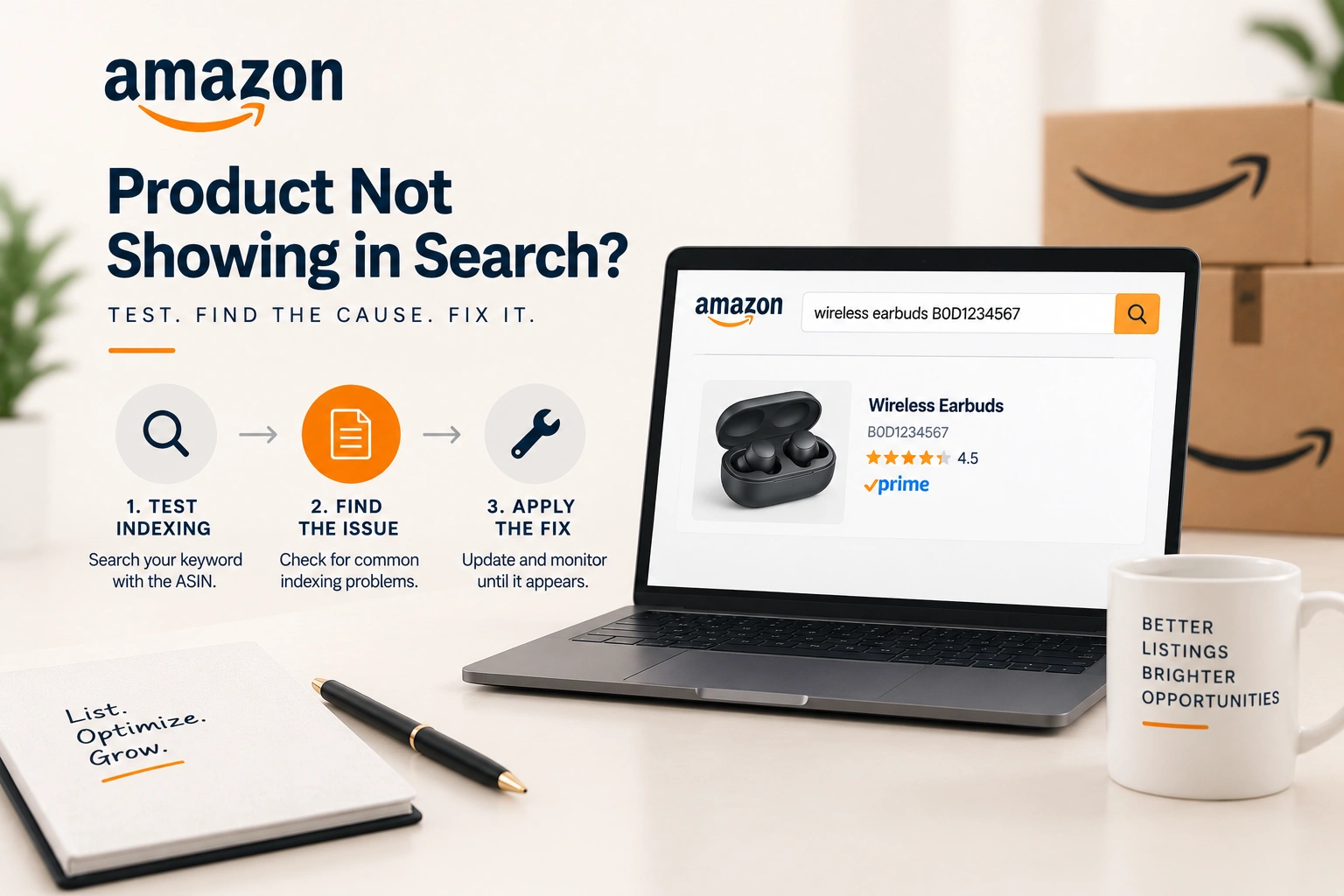
A listing whose main image fails a check is suppressed: it stays in the catalogue and disappears from search and browse. The condition shows in the account as a suppressed or search suppressed listing, with the image named as the reason, and in the new interface as a critical or medium card in the Action Center. Amazon's moderators point to the Submission Status page and the Image Troubleshooting resource for the specific failure.
The fix is a compliant image uploaded to the main slot, and the listing returns within hours of the check passing. What does not work is uploading the same image again, or a cropped version of a picture that fails on background or props. What is worth doing at the same time is reading the whole listing against the rules, because a listing suppressed for one image usually has a second image that will fail the next sweep. The routine we run on every account under product listing optimisation checks the image set quarterly against the current rules, since the rules moved twice in two years and the listings did not.
Two things sellers ask that the rules answer. Can the main image show the product in its packaging: only where the packaging is what is sold, or in categories whose style guide allows it. Can a bundle's main image show the items together: yes, all of them, and only them, on white. And one thing the rules do not answer, which is what makes a main image sell: that is in the A+ content article and the work of a photographer, and the rule set above is only the floor it stands on.
Keep reading
Frequently asked questions
The questions that come up most often on this subject.
A pure white background (RGB 255, 255, 255), the product filling at least 85% of the frame on its longest side, no text, logos, graphics, watermarks, borders or props, the actual product as sold, between 500 and 10,000 pixels on the longest side with 1,600 or more recommended for zoom, in JPEG, PNG, GIF, WEBP or TIFF.
Between 500 and 10,000 pixels on the longest side. Amazon recommends 1,600 pixels or more so the product page's zoom works, and a square or near square frame fills the search results thumbnail best.
Retouching such as background removal and colour correction is treated as ordinary editing. Photorealistic AI generated people must be disclosed through the AI generated and AI generated people checkboxes when uploading A+ Content, for new uploads going forward. Every image must still show the product accurately.
The main image failed a check: a background that is not pure white, the product under 85% of the frame, text or a prop, or a file outside the pixel range. The account names the reason on the suppressed listing; upload a compliant main image and the listing returns once the check passes.
No. Text, logos, badges, graphics and watermarks are not allowed on the main image. They are allowed on the other images, which is where a benefit callout or a comparison chart belongs.