Amazon Keyword Research: The Phrases, the Questions, and Where Each Belongs on the Listing
Amazon keyword research now has three outputs: the phrases shoppers type and their demand, the questions they ask Amazon's assistant, and a map that gives each one a single home on the listing. The method, from Amazon's own data first, and where the detail of each field lives.


Loading Article banner
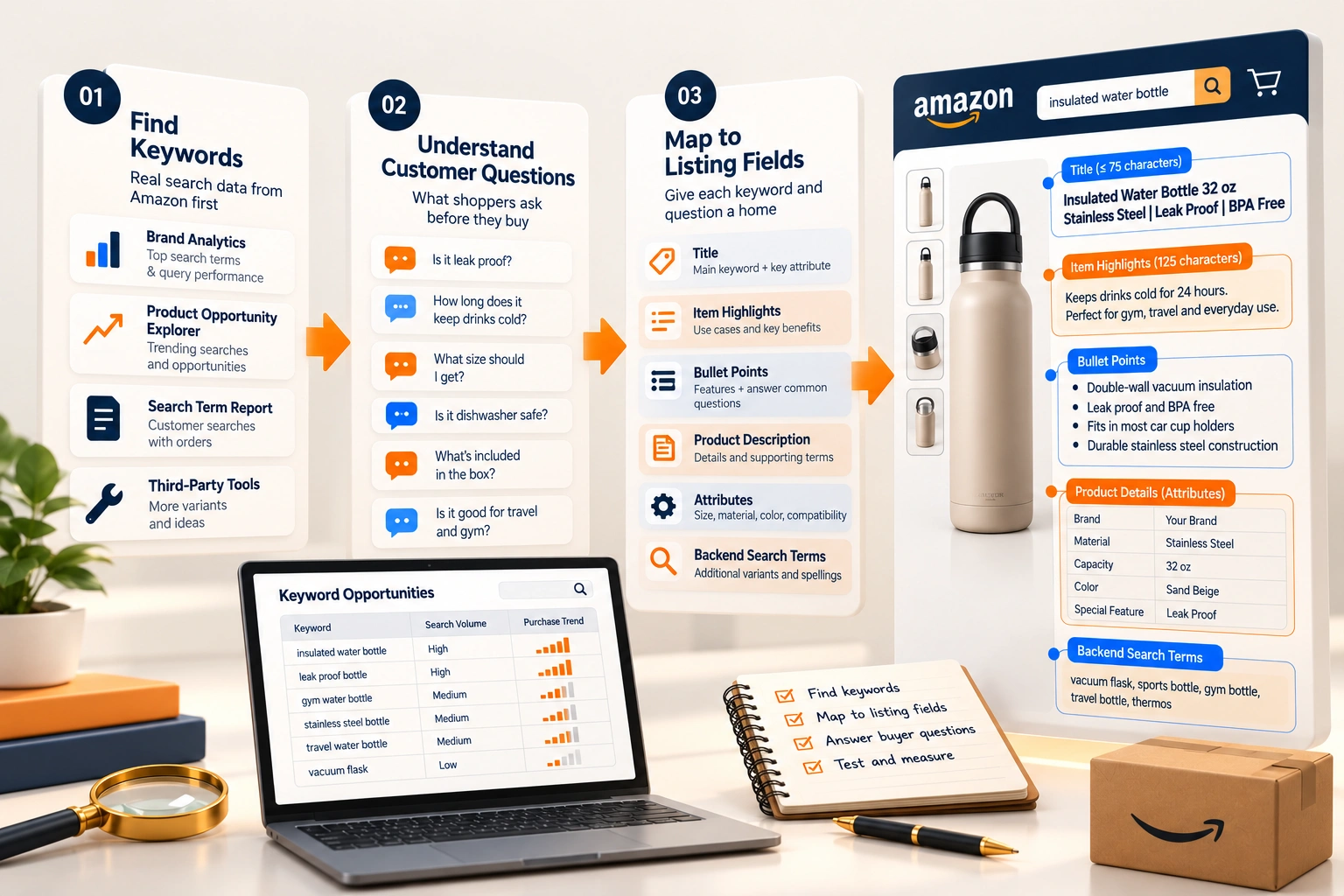
Amazon defines keyword research as "discovering the search terms customers look for when shopping in the Amazon store." For years that produced one deliverable: a list of phrases with a volume beside each, and a listing written to carry as many as would fit.
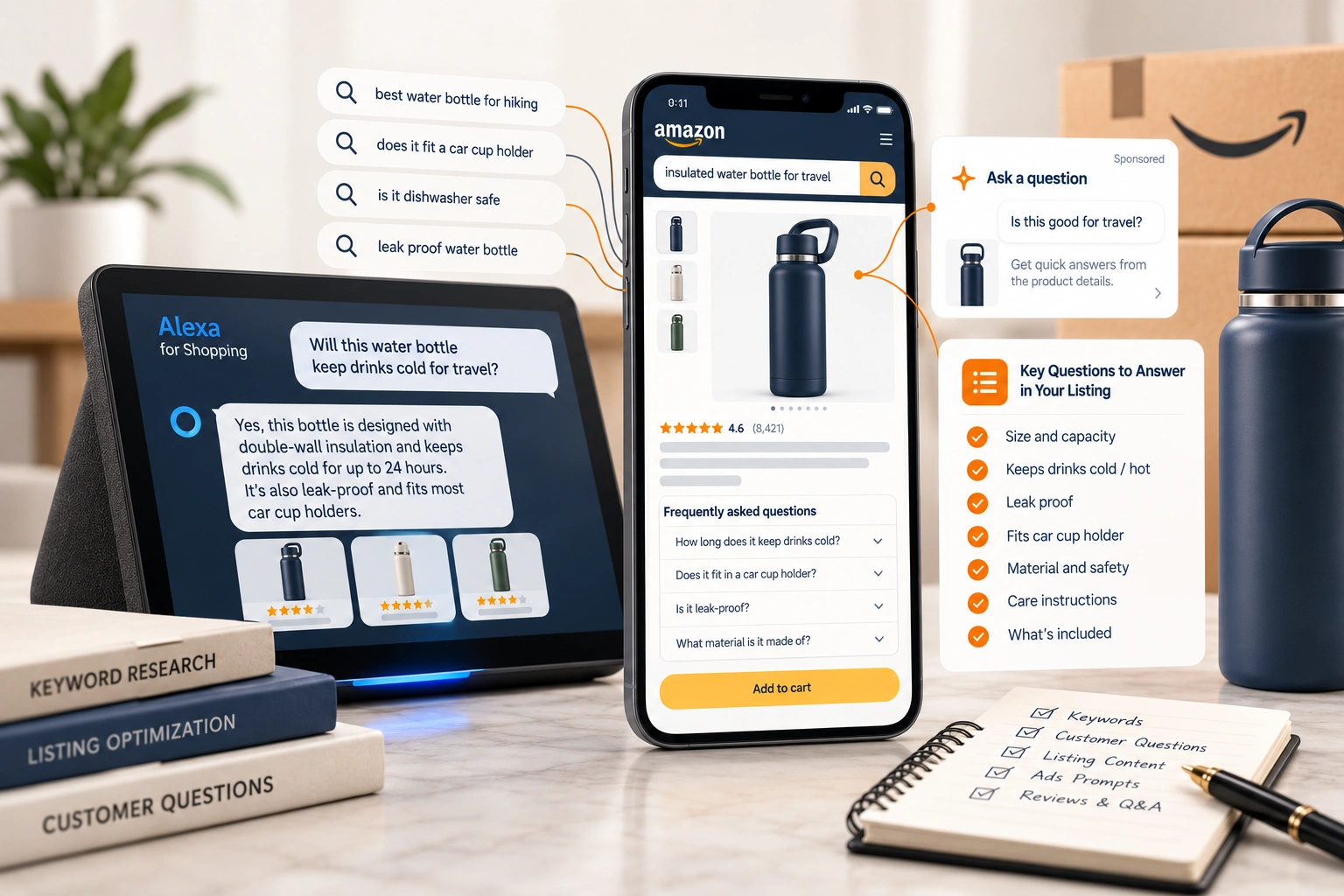
Two things have changed what the list is for. Shoppers now ask as well as type, and Amazon's assistant, renamed Alexa for Shopping on 13 May 2026, answers them from the listing, its reviews and its questions and answers. And the title, the field that carried most of the list, was capped at 75 characters in July. So the research now has three outputs. This is the method for each, with each field's detail left to the article that covers it.
What the research has to produce
The phrases. What shoppers type, how often, and which searches end in a purchase.
The questions. What shoppers ask before they buy, grouped by what they really ask about.
The map. For every phrase group and every answer, the one field of the listing where it belongs. Without the map the first two are a spreadsheet. With it, they are a brief a listing writer can follow.
The phrases, from Amazon's own data first
Amazon's own search data is the only kind drawn from its shoppers rather than estimated from outside, and four sources come first.
Top Search Terms. In Amazon's words, it "lists what keywords customers use to find products, along with the top three products, categories, and brands". It shows the market's demand and who is winning it.
Search Query Performance. The same question from the brand's side: it "lists keywords customers use to find your brand", with "query volume, impressions, clicks, cart adds, and purchases". Both sit in Brand Analytics, which needs a Professional selling account and a brand enrolled in Brand Registry, and what Brand Analytics tells you takes the dashboards one at a time.
Product Opportunity Explorer. Amazon says it "provides up-to-date data on trends in customer searches for product categories", which makes it the place to see whether a phrase is growing or fading.
The search term report. For a product with advertising history, it "shows search terms entered by shoppers searching on Amazon that resulted in at least one click", with the orders beside them. It is the narrowest source and the most valuable, because it is this product and these buyers.
Third-party tools come after these. On our reading they are good at finding variants and spellings, but their volumes are estimates and they say least about what converts for one product.
Sorting the phrases
We sort the raw list in three passes, in this order.
Relevance. Does the phrase describe this product as a buyer would mean it? Volume with the wrong intent buys clicks that do not convert. Other brands' names come out here.
Meaning. Group what survives by what the shopper wants, not by spelling. For example, "insulated water bottle", "vacuum flask" and "stainless steel drinks bottle" may be one group with three ways in. Each group gets one head phrase, the one most of its shoppers use.
Evidence. Rank the groups by demand, then by proof of purchase from the search term report or Search Query Performance where it exists. Amazon notes that long-tail keywords "could enjoy higher sales conversion rates because their search intent is more specific", which is why a small, exact group can sit above a large, vague one.
The questions shoppers ask the assistant
Amazon says its assistant "will generate answers based on listing details, customer reviews, and community Q&As", and its own examples are the questions buyers have always had: "are these durable?", "is this pickleball paddle good for beginners?" A phrase list does not capture them, and a listing that does not answer them leaves the answer to its reviews.
So the research collects the questions too: from the product's questions and answers, its reviews and its competitors' reviews, and the messages customer service answers every week. They are grouped like the phrases, by what they ask about: fit, compatibility, durability, what is in the box, who it suits. Each group becomes a fact the listing has to state in words. Keyword research for Alexa for Shopping and Rufus questions sets out that half of the method in full.
The map, one home for each phrase and each answer
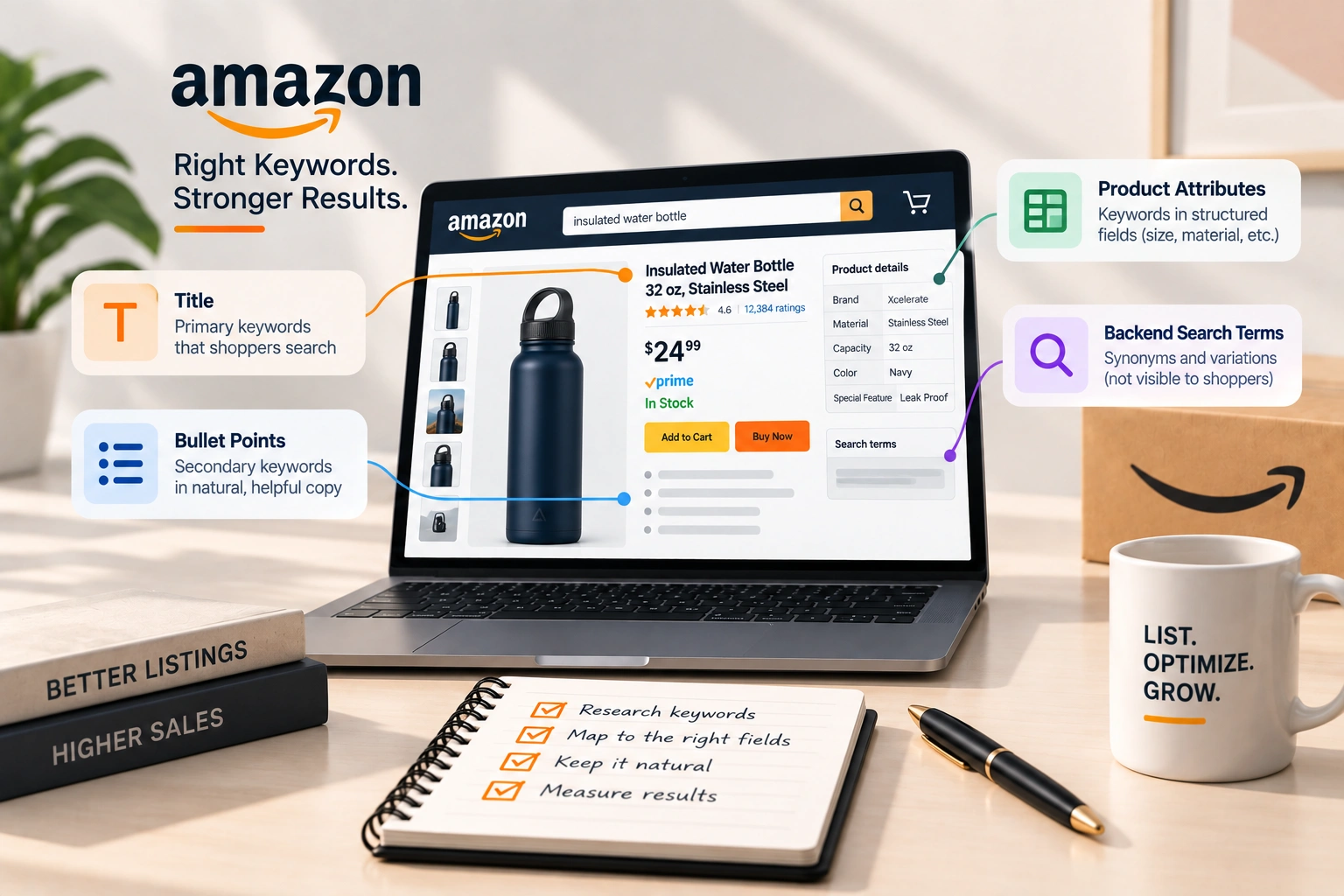
Amazon's guidance spreads keywords across the title, the bullets, the description and the backend, and asks that the backend not repeat the rest: "Avoid duplicating keywords already present in the listing title, bullet points, or description." On our reading a phrase said twice buys nothing, so the map gives each group one home, chosen by what the field is for. Adding keywords to Amazon listings without ruining them covers the reasoning field by field.
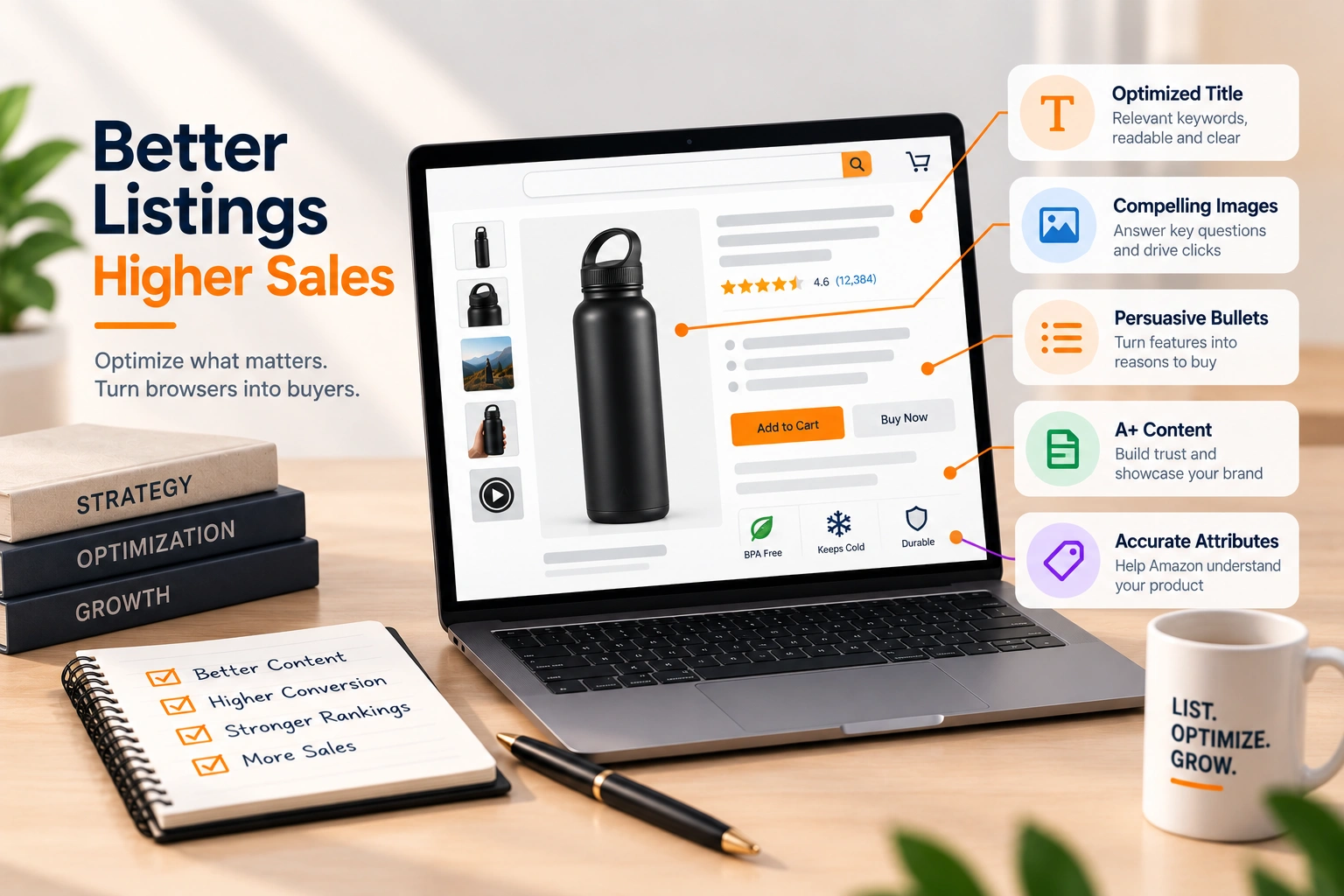
The title. Since 27 July 2026, titles in all categories except media "need to be 75 characters or less including spaces". That leaves room for the brand, the head phrase as shoppers name the product, and the one attribute the purchase turns on. The 75 character title limit explains what Amazon does to a title still over it.
Item Highlights. The new field "provides an additional 125 characters for sharing materials or recommended use cases", and Amazon says "This content is searchable and visible with titles in search results". It is the natural home for the second phrase group and the use the product is bought for.
The bullets and the description. The secondary groups, carried in sentences that answer the commonest questions. This is where the two lists meet: a bullet that answers the durability question contains the durability vocabulary without being written for it.
The attributes. Size, material, colour, compatibility, intended use. On our reading these structured fields do two jobs prose cannot: they decide the filters a listing appears under, and they state the facts an assistant is asked about in a form that cannot be misread.
The backend search terms. What no visible field can carry: alternative names, abbreviations, spellings and regional words. Amazon suggests "abbreviations, alternate names" there, in lowercase, and the field is limited in bytes rather than words. Backend search terms and platinum keywords covers the limit, what wastes it and why the platinum field can be left empty.
The same research under another platform's rules
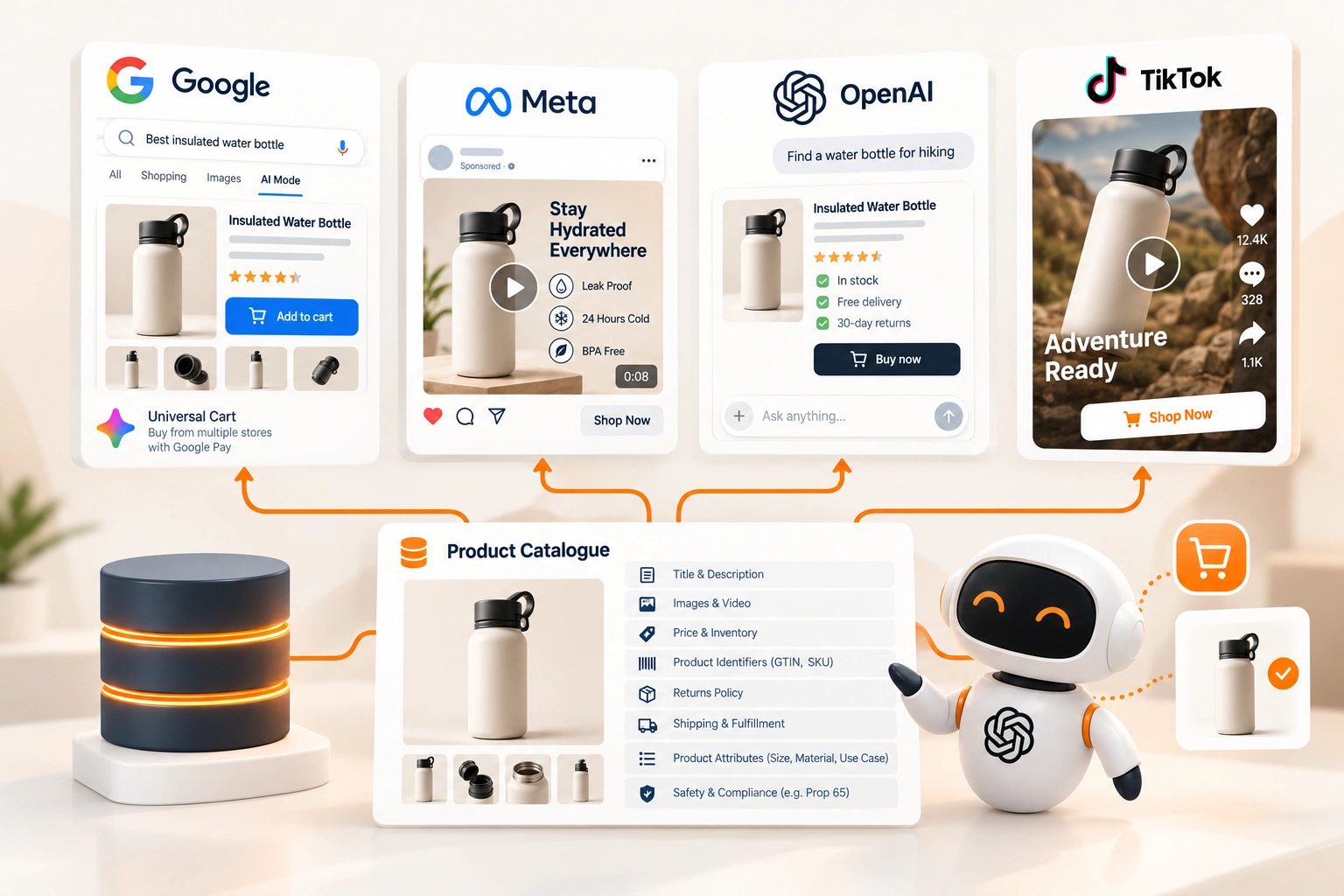
The phrases a buyer uses travel between channels. The rules for where they go do not. TikTok Shop grades a title on repetition, variants and clickbait, and a listing written from the Amazon map is marked down for it. TikTok Shop keyword research under its 2026 rules draws the map again for that platform.
Testing what the research found
A keyword list is a set of guesses until shoppers confirm it. Advertising is the quickest test: a phrase that converts in an exact match campaign has earned a place on the listing, and one that spends without converting has not, whatever its volume. How Amazon SEO and PPC feed each other sets out that loop.
Then measure on the listing. Amazon names increased sales as "One key performance indicator for effective keyword research and implementation", and Search Query Performance shows each query's impressions, clicks, cart adds and purchases. A phrase that gains impressions and no purchases points at the page or the price, not at the keyword. Our practice is to change one field at a time, so the result can be read, and to run the research again each quarter and whenever Amazon changes a field's rules.
Where we fit
Building the phrase list and the question list together, and mapping both to the field that should carry them, is the keyword research we do for brands building or rebuilding a listing. If a listing was written from a keyword export alone, the questions are where we would begin.
Frequently asked questions
The questions that come up most often on this subject.
In three steps. Collect the phrases shoppers type, from Amazon's own data first: Top Search Terms, Search Query Performance, Product Opportunity Explorer and, if the product advertises, the search term report. Collect the questions shoppers ask, from the product's questions and answers, its reviews and customer messages. Then map each phrase group and each answer to one field: the title, Item Highlights, the bullets, the attributes or the backend search terms.
Amazon's own. Top Search Terms and Search Query Performance sit in Brand Analytics, which needs a Professional selling account and a brand enrolled in Brand Registry. Product Opportunity Explorer shows trends in customer searches by category. And the search term report in advertising shows the searches that led to at least one click on an ad. Third-party tools estimate the same demand from outside Amazon.
Not to start. Amazon's own data shows real searches by real shoppers, and the search term report shows the ones that led to your product. A paid tool helps find variants, spellings and the phrases competitors rank for, and its volumes are estimates. We use one for discovery and make the decisions with Amazon's data.
Only if it is the phrase that names this product as buyers mean it. With 75 characters, the title carries the brand, the head phrase of the most relevant group and the attribute the purchase turns on. A high volume phrase with the wrong intent brings clicks that do not buy, and the listing's conversion rate pays for them.
Give each one a single home elsewhere. Item Highlights adds 125 searchable characters for materials and uses; the bullets and the description carry secondary phrases inside sentences that answer buyers' questions; the attributes hold size, material and compatibility; and the backend search terms take the alternative names and spellings no visible field can carry, without repeating words already on the listing.