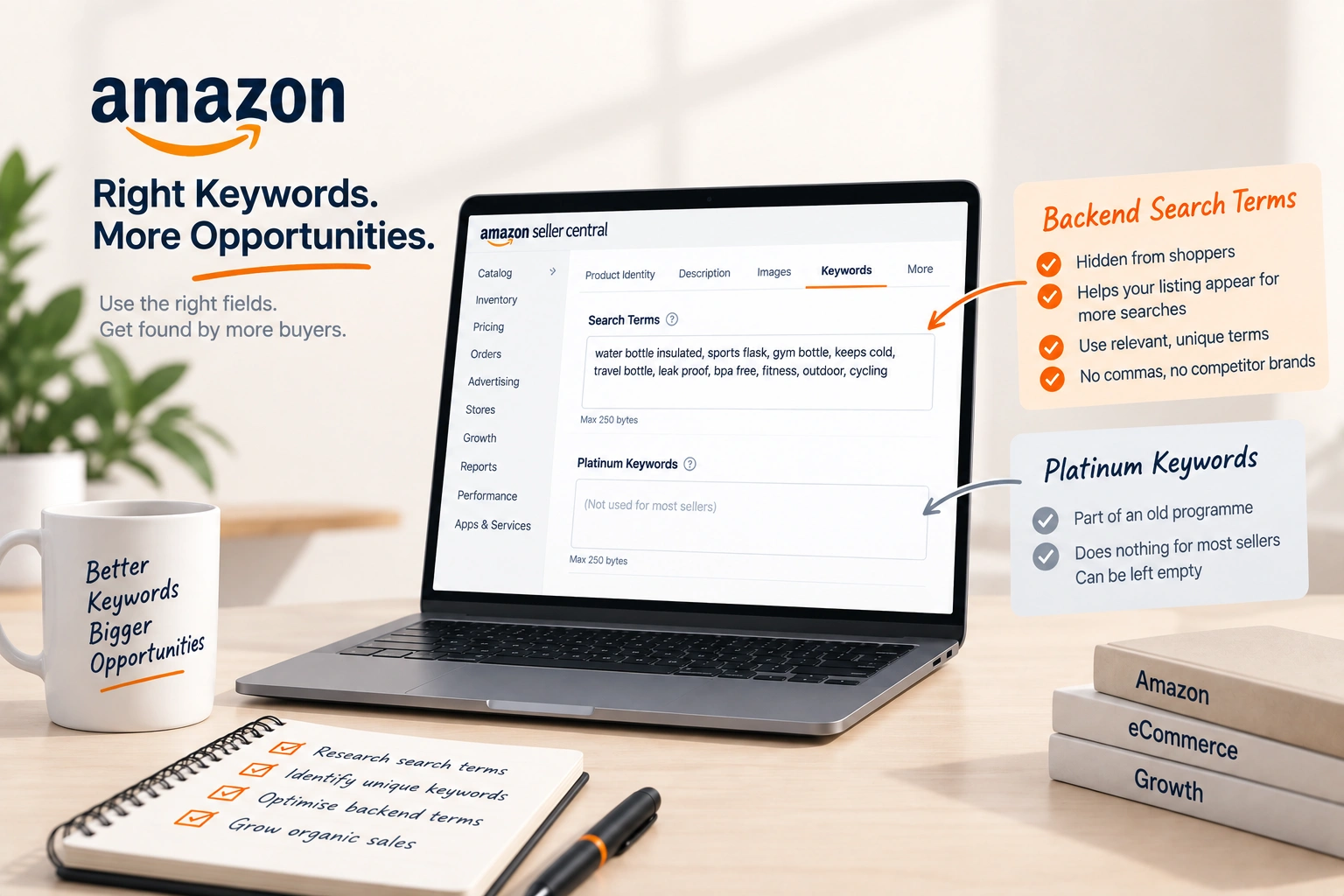
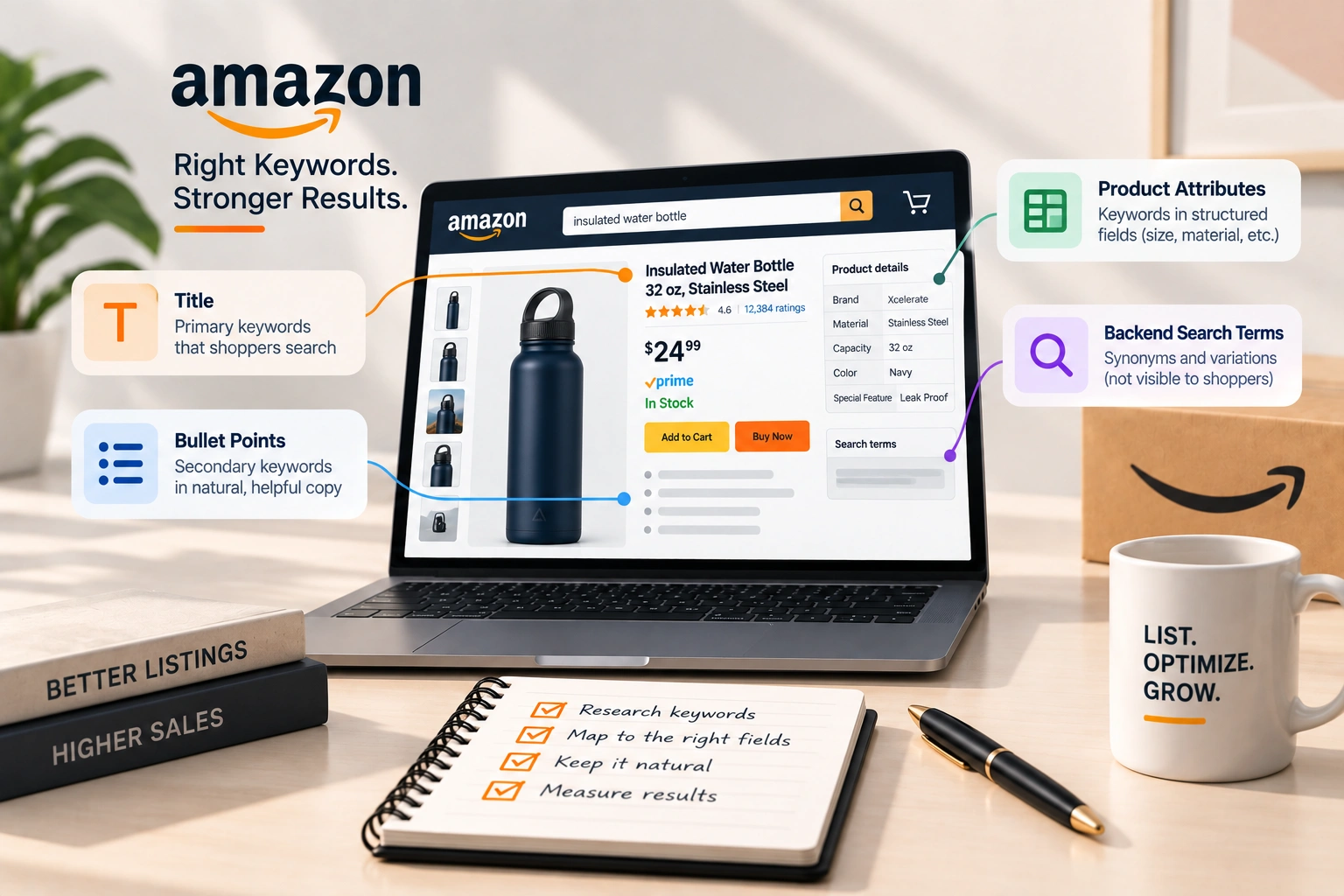
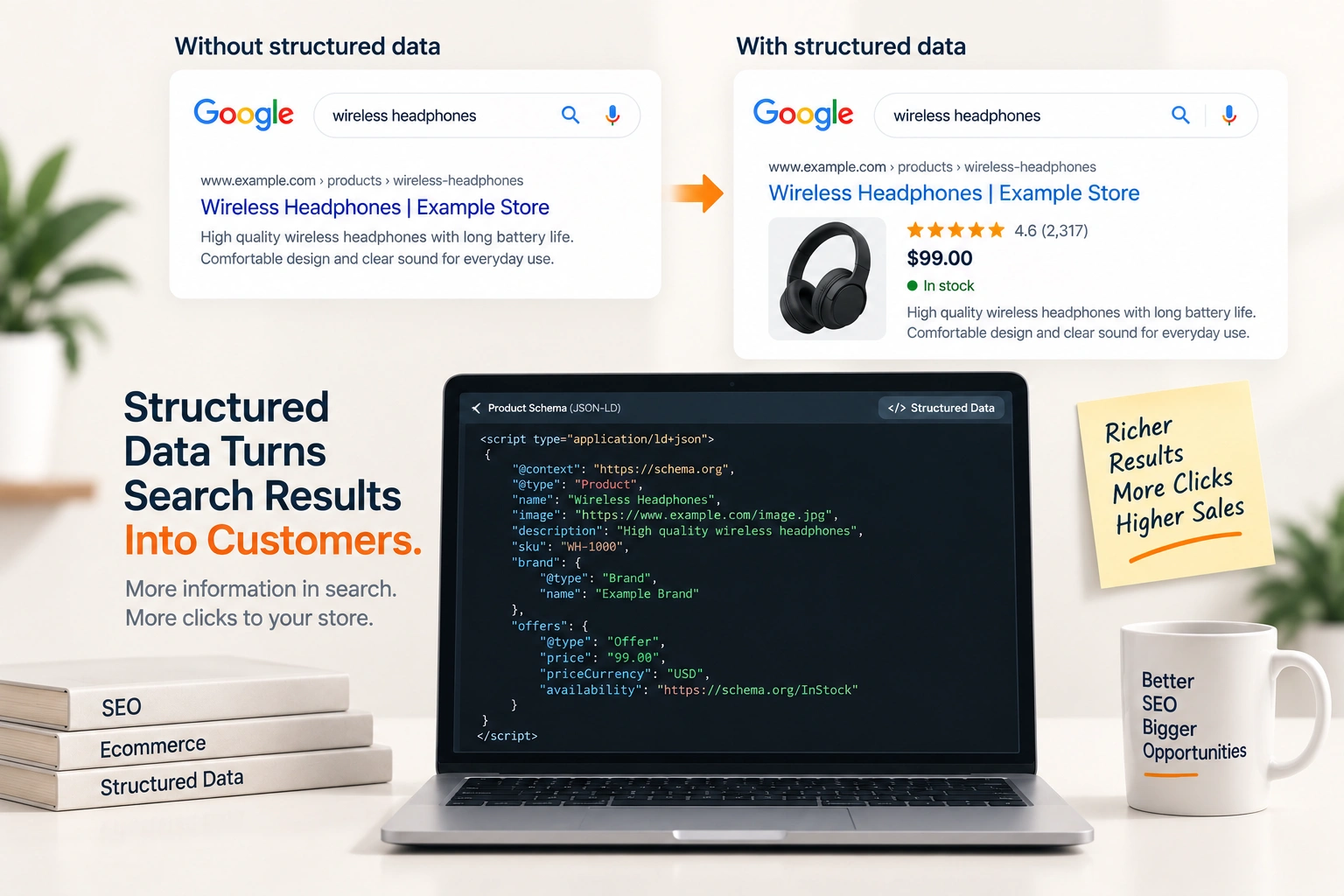
eCommerce SEO and Marketplace Optimisation Are Not the Same Job
They share a vocabulary and almost nothing else. Applying one to the other is why so much marketplace advice fails on a store.


Loading Article banner
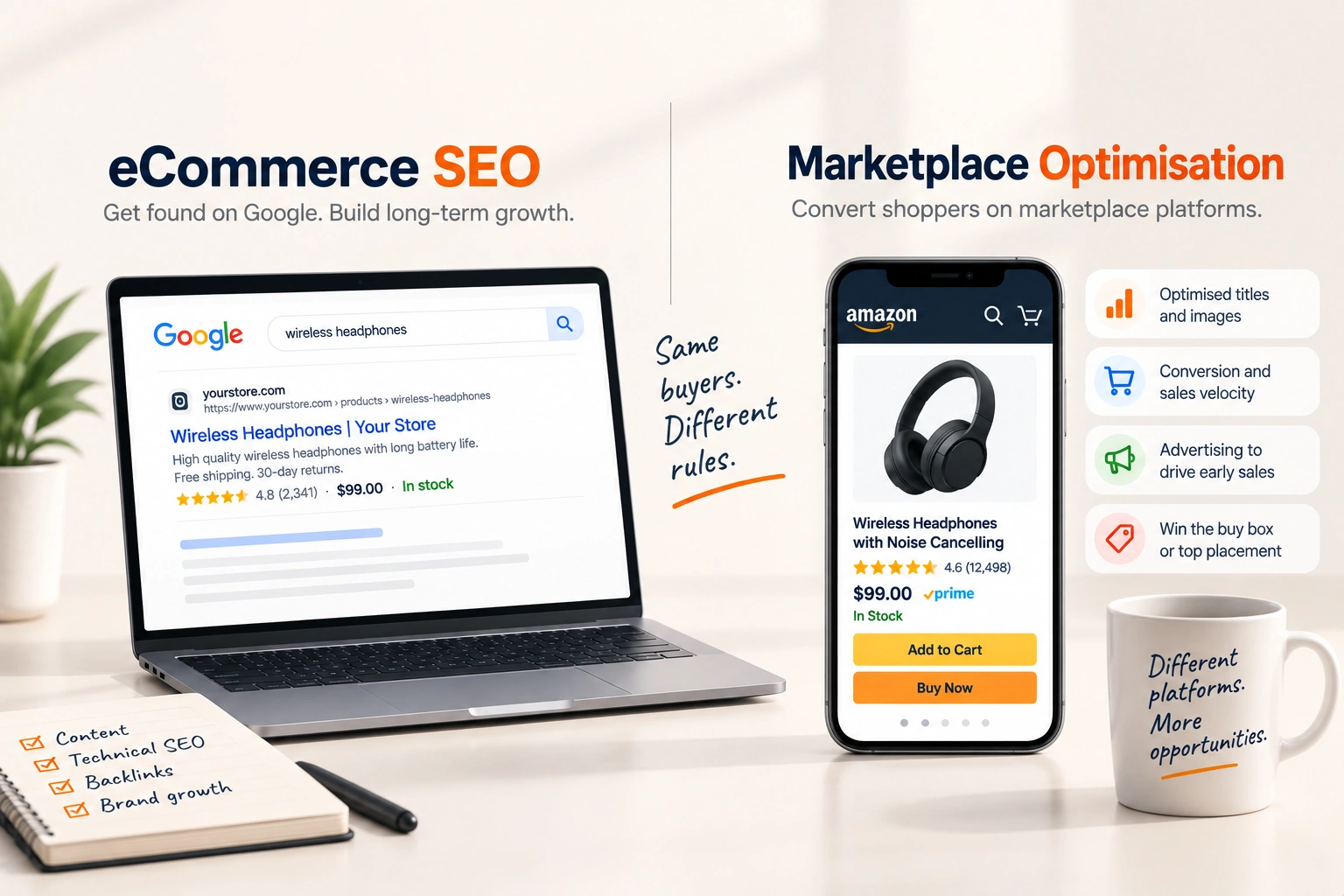
Both are called SEO. Both involve keywords, titles and rankings. They are different disciplines with different mechanics, and treating them as one is why advice from a marketplace expert often fails on a store, and vice versa.
What each engine is actually for
Google is an information engine that also handles commercial queries. It ranks pages it can crawl, understand and trust, using signals that extend well beyond the page itself: links, authority, site quality, freshness and hundreds of others.
Amazon's A9 and eBay's Cassini are purchase engines. They rank what sells. Conversion rate and sales velocity for a specific keyword are the dominant inputs, and there is no equivalent of a backlink.
That single difference explains most of the rest.
What follows from it
New pages behave differently. A new page in Google can rank on relevance and authority alone. A new listing on a marketplace has no sales history and therefore no ranking, which is why advertising is used to buy that history rather than only to buy traffic.
Content length is opposite. Google frequently rewards depth. A marketplace listing rewards scannability, because the shopper is comparing rather than reading, and a long description is not a ranking factor there.
Technical work barely exists on a marketplace. No crawl budget, no canonicals, no page speed to manage, no structured data to add. The platform handles all of it, and the trade is that you control almost nothing.
Off-page has no marketplace equivalent. Links, digital PR and authority building matter for a store and do nothing for a listing.
What genuinely transfers
Keyword research transfers in method, though not in sources. Understanding what buyers type and why is the same skill in both places.
Conversion work transfers almost completely. What makes somebody buy, images, clarity, objection handling, trust signals, is the same regardless of which engine sent them.
And the discipline transfers: measure, change one thing, wait long enough to read the result. That is rarer than either skill.
Why this matters when hiring
An agency that has only done marketplaces will treat your store like a listing: keyword-stuffed titles, no technical work, no content strategy, and confusion about why nothing moves.
An agency that has only done Google will treat your listings like pages: long descriptions nobody reads, backlink outreach that changes nothing, and frustration that authority is not transferring.
Brands selling in both places need both disciplines and, more importantly, need somebody who knows which one applies where. That is why our store SEO and our marketplace work are described separately rather than sold as one thing.
Where brands lose money on the confusion
The expensive version of this mistake is budget rather than tactics. A brand that has done well on Amazon assumes its own store will behave the same way, invests as if traffic will arrive because the products are good, and finds after six months that nothing has, because Google had no reason to prefer a new domain with supplier copy on it.
The reverse costs money differently. A brand with a strong website assumes its authority will transfer to a marketplace listing, launches without advertising, and watches the listing sit unranked because it has no sales history and there is no other route to getting one.
Both are avoidable by knowing which engine you are dealing with, which is why it is worth the paragraph rather than being a matter of terminology. In practice most brands need both jobs done: a Shopify store that ranks in Google and listings on Amazon, Walmart and eBay that rank where they are.
Related reading: Amazon Listing Optimization: What Actually Moves Rank, Why Shopify Collection Pages Do Not Rank and Shopify Site Speed: What Actually Slows a Store Down.
Keep reading
Frequently asked questions
The questions that come up most often on this subject.
The method transfers and the sources do not. Google keyword tools describe how people search Google. A marketplace search term report describes what buyers typed inside that marketplace before buying your product, which is better evidence for that channel and useless for the other.
Indirectly, and less than people hope. It can bring traffic to a listing, and traffic that converts becomes sales history, which is a ranking input. But an article cannot pass authority into a marketplace the way a link passes authority in Google, so the mechanism is weaker and slower.
Marketplace work, currently, because the pool is smaller and the feedback loop is faster, which hides weak practitioners for less time. Google SEO has more practitioners and a longer feedback loop, which means poor work can look plausible for a quarter before the absence of results becomes undeniable.
Yes. eBay's Cassini weighs listing quality, price, sales history, postage speed and seller performance together, and seller account standing feeds placement in a way neither Google nor Amazon does. A good listing on a poor account is held back by something unrelated to the listing.
Barely, in the sense the other platforms mean. Demand there is created in the feed by content rather than captured from a search box, so creators and video do the work keywords and bids do elsewhere. Product content still matters, but for conversion rather than for discovery.
Marketplaces usually show results faster because the audience is already there and ready to buy, and a listing can be moved with advertising. Google takes longer and the position is more durable once earned, because it is not resettable by a competitor outbidding you.
eCommerce SEO is ranking a storefront in Google, which ranks pages it can crawl, understand and trust using signals well beyond the page. Amazon SEO is ranking a listing inside Amazon, which ranks what sells for a keyword. Conversion and sales velocity are dominant there and there is no equivalent of a backlink.
Not directly. They are separate systems with separate indexes. Amazon listings can themselves rank in Google, which is a reason to write them well, but work done inside Amazon does not transfer authority to your own domain.
Almost not at all for ranking inside the marketplace, which has no equivalent signal. External traffic to a listing can help indirectly by producing sales, and sales are a ranking input, but that is a different mechanism from the one links serve in Google.
No. Marketplace shoppers compare rather than read, and length is not a ranking factor there. Scannable bullets that answer objections work better. On your own store, depth frequently helps because Google rewards pages that cover a topic properly.
Yes, and the thing to check is whether they treat them as the same job. An agency applying marketplace tactics to a store produces keyword-stuffed titles and no technical work; one applying Google tactics to a listing produces long copy nobody reads. Knowing which discipline applies where is the actual skill.
Whichever channel is already producing revenue, usually. Marketplace work compounds faster because the audience is already there and ready to buy. Store SEO compounds more durably because you own the asset. Most brands should do both eventually and rarely have the capacity to start both at once.