Q4 Pricing for Marketplace Sellers: Deal Windows, Lookbacks and Margin
Every price a product carries in the fourth quarter sets the price it can carry next. The lookback windows, the surcharges that move the floor, the rule on Walmart that suspends a listing beaten elsewhere, and a sequence of prices from October to January that keeps the margin.


Loading Article banner
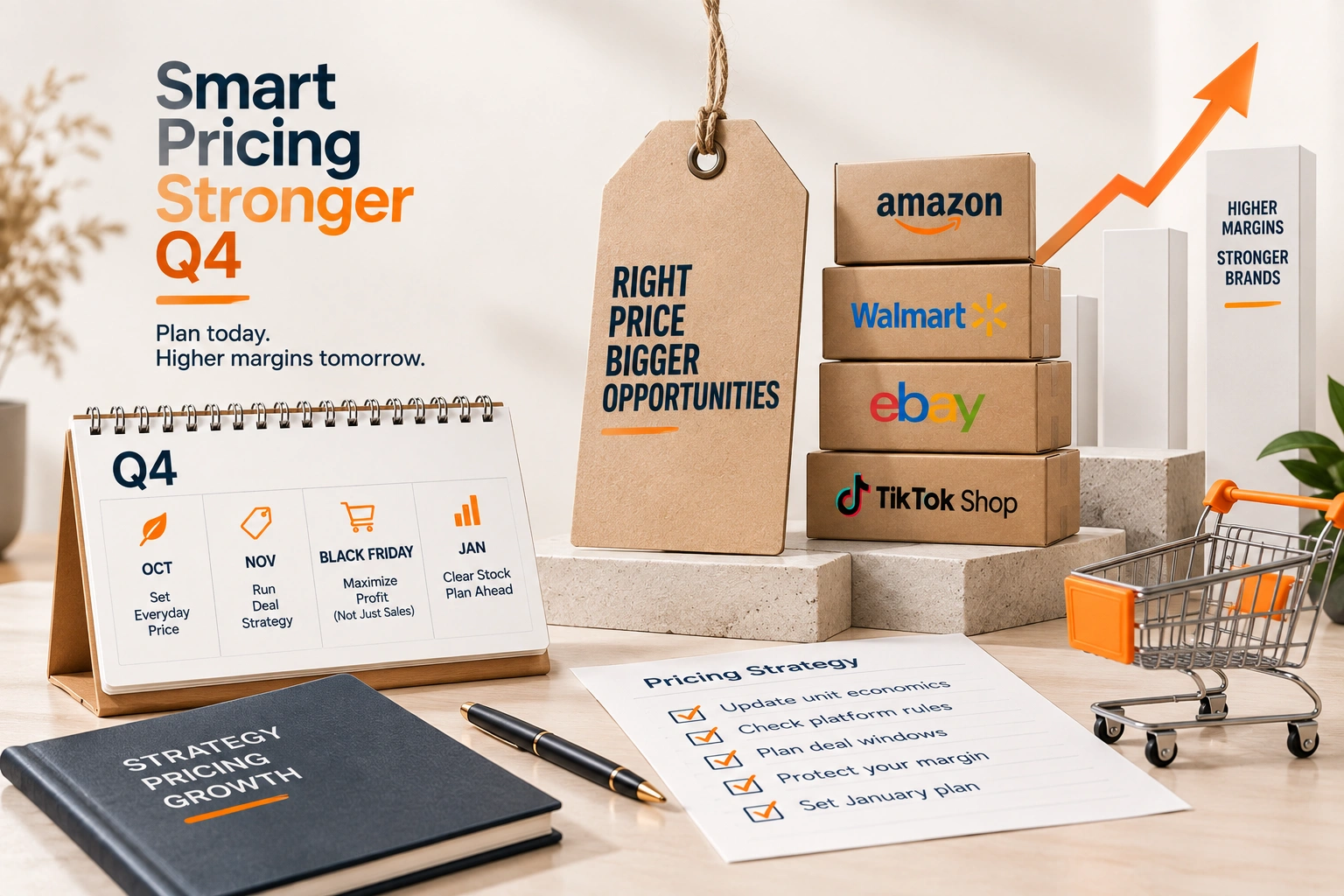
The price a product carries in October decides what its Black Friday price is allowed to be. The Black Friday price decides what January looks like. And the fees underneath both move in the middle of the quarter. Pricing in Q4 is a sequence, not a number, and a seller who sets each price on its own day is setting each one against a reference they did not choose.
This is the sequence for a seller on more than one marketplace, with the rules each platform applies to a deal price, the fee changes that move the floor, and the order the prices should go in. The figures below are Amazon's announced ones for holiday 2026; the method applies everywhere.
The floor moves on 15 October
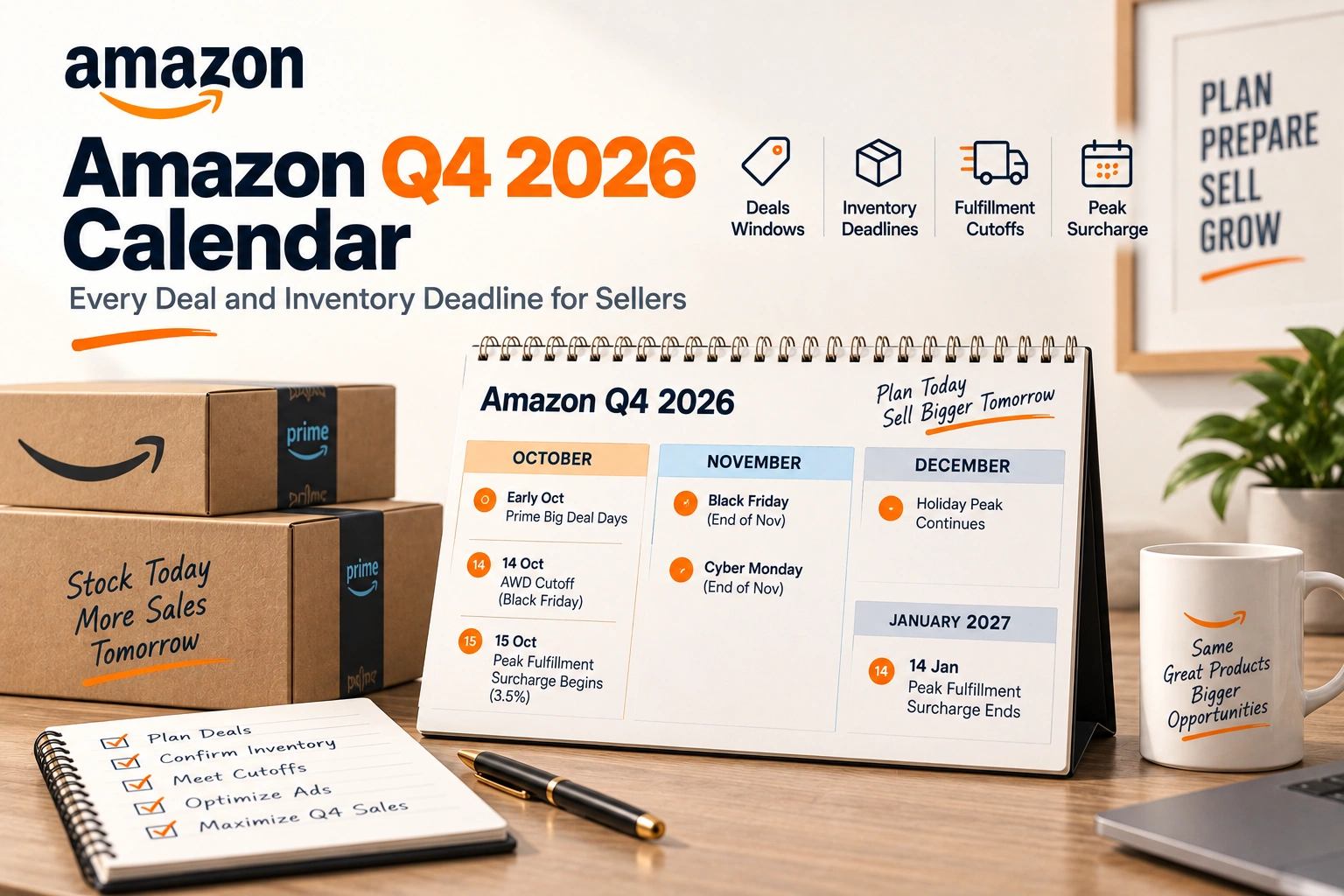
Amazon's peak fulfilment surcharge applies from 15 October 2026 to 14 January 2027: 3.5% on FBA fulfilment, an average of $0.32 per unit. On a product with a $6 fulfilment fee it is about twenty cents; on a bulky one it is more. Carrier peak surcharges do the same to merchant fulfilled orders on eBay and Shopify, on the carriers' own windows. The floor under every price in the quarter is higher than the summer spreadsheet says, and the first job is to rebuild the unit economics with the surcharge in. What it costs to sell on Amazon is the fee stack; the surcharge goes on top of it.
A deal is then priced from the new floor. A 20% deal on a product with 30% margin in August is a product with under 10% margin in November after the surcharge and the deal's own fees, and the advertising that runs beside it is paid from the same ten points. The deal is still worth running when it buys rank or clears stock; it is not worth running because it is November.
The lookback rules, platform by platform
Amazon judges a deal price against the product's recent price history, so that a discount is a discount from a price the product actually sold at. Two things follow. A price raised in October to make a November cut look deeper does not work, because the reference is the price over the window, not the price on the day. And a price cut in October, if it counts, becomes the reference the November deal has to beat.
Amazon's rule for 2026 is the one that decides the sequence: Prime Big Deal Days promotional prices are excluded from the 30 day and 60 day lookback windows. The October deal does not set the reference for the November one; both are judged against the everyday price. A plain discount run alongside the deal should be assumed to count until Amazon says otherwise, which is why the October offer should be the deal itself and not a coupon stacked beside it.
Walmart has no deal fee and a stricter price rule: a listing whose price is beaten on another marketplace, including Amazon, can be suppressed, so a Black Friday price on Amazon has to be matched or beaten on Walmart on the same days or the Walmart listing goes dark in the week it was stocked for. Walmart pricing strategy sets out the rule. TikTok Shop's campaigns require a discount depth against the product's listed price and check it; eBay has no lookback, only the sale price tools and the buyer's own memory.
The sequence, October to January
October, before the first event: the everyday price, held. This is the reference every deal is judged against and the month to establish it, which means no coupon, no stacked discount, no price test. A product whose everyday price has drifted down through the year has a small deal available to it in November; the fix is to let the price sit at its real level through the lookback window before the event.
The first event: the deal price, as the deal and nothing beside it. Then back to the everyday price the day after, on every marketplace, because the everyday price is what the second event is judged against and what Walmart is comparing.
Black Friday to Cyber Monday: the deal price again, matched across marketplaces on the same days so Walmart's rule is not tripped, and back up the day after Cyber Monday. The gift weeks: the everyday price, with the delivery promise doing the selling. The tail, after the last shipping date: the price that clears what January should not start with, which is a decision by product and the subject of the post holiday planning article in this set.
Repricers, and what to tell them
An automated repricer that is chasing the buy box on Black Friday is a repricer that will follow a competitor's deal price down and set a new reference on the way. The rule for the quarter is a floor per product that includes the surcharge and the deal fee, set in October and not overridden on the day, and a pause on rules that match competitors during the event weeks, because the competitor's price is a deal price with a fee behind it and a date it ends. The repricing strategy article covers the rules for the rest of the year.
Keep reading
For the brands we run, this sequence is the quarter's unit economics work: the floor rebuilt for the surcharge, the everyday price held through the lookback, the deals priced from the floor and matched across marketplaces, and the repricer told what it may not do.
Frequently asked questions
The questions that come up most often on this subject.
Not on Amazon in 2026: Prime Big Deal Days promotional prices are excluded from the 30 and 60 day lookback windows, so the October deal does not become the reference for the November one. A plain discount run beside the deal should be treated as inside the lookback.
No. Amazon judges a deal against the price over the lookback window, not the price on the day, so a price raised for a few weeks does not move the reference. Hold the real everyday price through October instead, with no coupons stacked on it.
Most often because its price was beaten on another marketplace, usually the seller's own Amazon deal. Walmart can suppress a listing priced above the same item elsewhere, so deal prices have to be matched on Walmart on the same days.
It raises the floor: 3.5% on FBA fulfilment from 15 October to 14 January, about $0.32 a unit on average. Rebuild the unit economics with it in before pricing any deal, because a deal priced from the summer's margin is priced from a margin that no longer exists.
Pause the rules that match competitors during the event weeks and keep a per product floor that includes the surcharge and the deal fee. A competitor's Black Friday price is a deal with a fee behind it and an end date, and a repricer that follows it sets a new reference on the way down.