Amazon FBA Capacity Limits in Q4: What to Do When Yours Is Cut
The capacity limit arrives in the same month as the inbound deadline, and for many sellers this year it is smaller than last year's sales. What the limit is, why it moves when it does, and the five things that change it.


Loading Article banner
A seller of fifteen years posted on the Amazon Seller Forums this month that they sold about 9,000 cubic feet of inventory through FBA last fourth quarter and have been given 6,320 cubic feet for this one, with the option to buy at most 2,500 more. Another replied that they had been allotted half of last year's storage against sales that run four times higher in December. A third reported a single high volume ASIN refusing a shipment of 700 units because of a maximum inventory limit, with 300 already in stock.
These are sellers' own reports, not Amazon's figures, and they are quoted here because the pattern behind them is the one every FBA seller meets in September: the capacity limit and the inbound deadline arrive in the same month, and the limit decides what the deadline is worth.
What the capacity limit is
FBA capacity is the volume, in cubic feet, that Amazon will accept from a seller across the storage types. It is set monthly, with an estimate for the following two months, and it is driven by the Inventory Performance Index, the forecast Amazon holds for the seller's products, and the space Amazon has. A seller can request more capacity by naming a reservation fee they are willing to pay per cubic foot, which is refunded as performance credits against sales generated from that space.
The part that matters in Q4 is the timing. Sellers report that capacity rises for October, November and December, which is when Amazon expects the sales, and that stock shipped in those months cannot arrive in time to make them. The capacity a seller needs in September is for stock that sells in November, and September is when the limit is at its tightest.
Why September is the squeeze
Amazon's own holiday announcement says that fulfilment centres focus on receiving holiday shipments in September and October and that sellers may see lower capacity limits during this time. The two facts sit together on purpose: Amazon is receiving everybody's holiday stock in the same eight weeks, and the limit is how it rations the space.
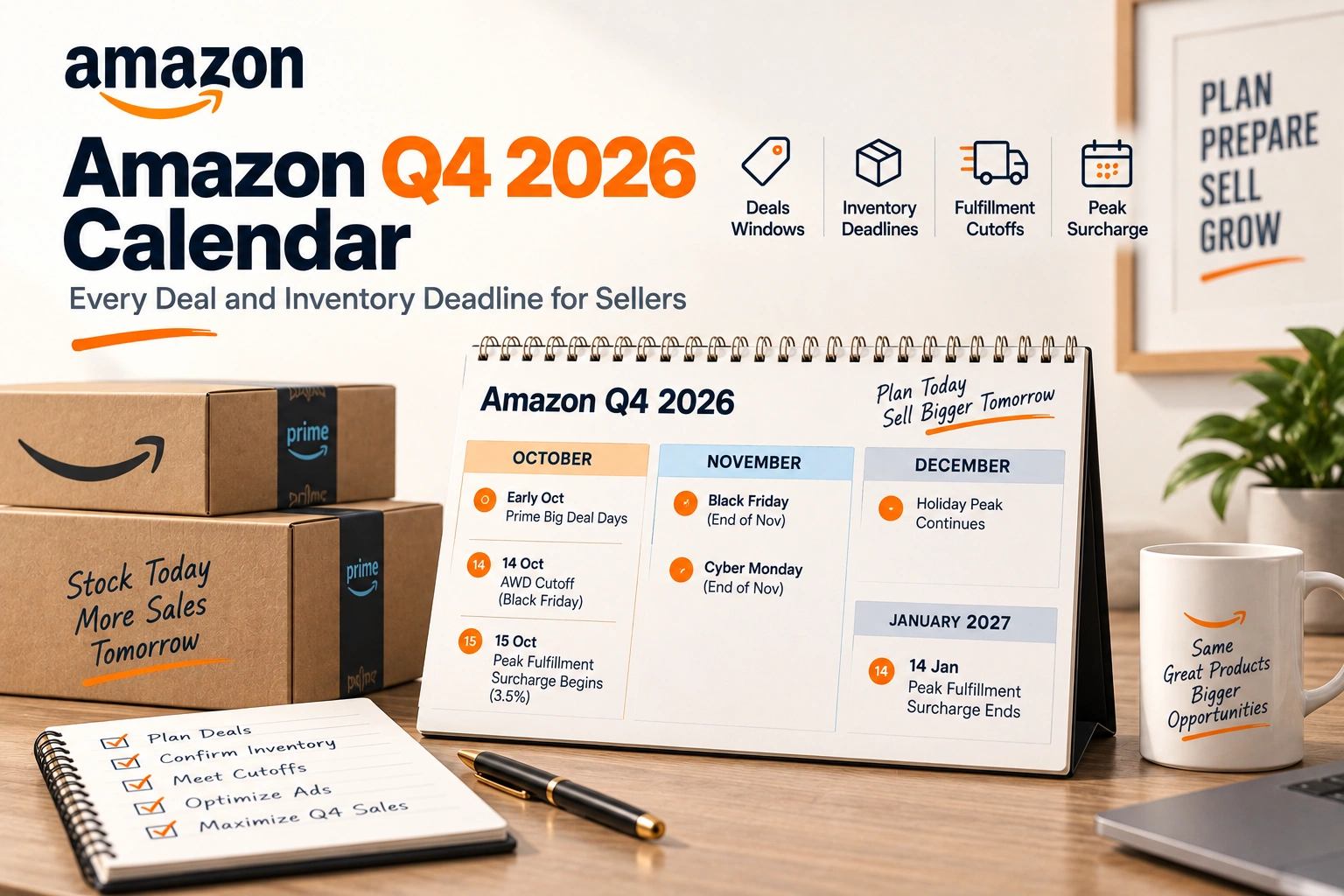
The consequence sellers describe is a queue. Without September capacity the volume has to move in the first days of October, and a container booked for the first of the month can wait more than a fortnight for a pickup. Amazon's 21 October FBA cutoff for Black Friday is a receiving date, and a shipment stuck at a carrier on the 18th has not made it.
The five things that change a limit
The Inventory Performance Index is the first. It scores excess inventory, sell through, stranded inventory and in stock rate, and the threshold below which limits apply is announced by Amazon each quarter. Sell through and stranded stock are the two a seller can move inside a month: clearing stranded listings and pricing slow units down improves the score before the next capacity is set.
The capacity request is the second. A request names a fee per cubic foot, is granted or not against Amazon's space, and the fee is earned back as sales are made from the space. Sellers report caps on what can be requested, as the 2,500 cubic feet above shows, so a request is a lever rather than a solution. The fee sits beside the storage fees the same index already drives, set out in Amazon seller fees explained.
Amazon Warehousing and Distribution is the third. Stock held in AWD and auto replenished into FBA is not subject to FBA capacity limits during peak, which is why Amazon points sellers to it. Sellers with bulky products or a warehouse of their own report that it does not fit them, and the AWD cutoff for the event is earlier than the FBA one: 14 October for Black Friday against 21 and 28 October for FBA.
Shipment shape is the fourth. Sellers report that small parcel shipments split across regions are received faster than a single full truckload, because small parcel receiving is a different queue. Splitting a container into parcel shipments costs more per unit and buys receiving time, which in October is the scarcer thing.
Sell through of what is already there is the fifth. Capacity is the limit on the total, so every unit that sells in September is a unit of space for October. A coupon on slow stock in September is cheaper than a capacity fee, and the price mechanics are in the repricing article.
When the limit will not take the stock
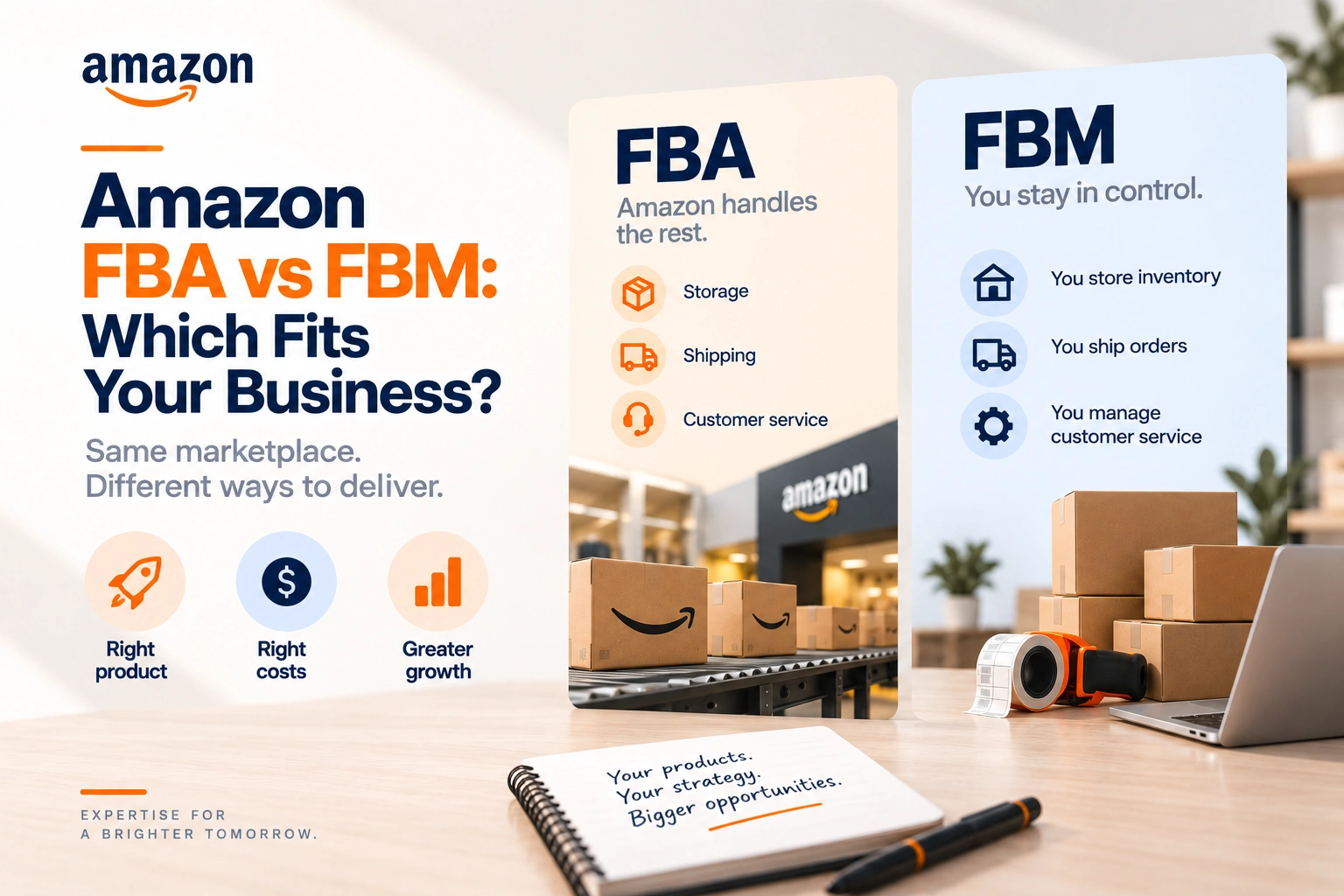
Three options remain, in order of cost. The first is a third party warehouse near the fulfilment network, with stock moved into FBA in the shipments the limit allows through the quarter; the stock is in the country and the limit is met week by week. The second is Seller Fulfilled Prime or merchant fulfilment for the overflow, which keeps the listing live at the cost of the fulfilment work. The third is the request fee, paid for the space the quarter needs and earned back if the stock sells.
What does not work is shipping against the limit and hoping. Amazon's shipment creation refuses units over the limit, as the seller with 700 units found, and a shipment that is refused in October is not a shipment that can be rebooked in November for the same sales.
The plan, in one line per product
For each product the plan is a forecast for the quarter, the stock already in FBA, the difference as cubic feet, and where those cubic feet are going to be held in September: in FBA inside the limit, in AWD, in a third party warehouse, or nowhere because the product is not worth the space. The forecast is the harder half, and it is the subject of Amazon inventory management.
Keep reading
This is the work our Amazon marketplace management team does in the last two weeks of August for the brands we run: the limit read, the request placed, the overflow homed, before the calendar turns to September and the space is gone.
Frequently asked questions
The questions that come up most often on this subject.
Capacity is set monthly from the Inventory Performance Index, Amazon's forecast for your products and the space Amazon has, and Amazon has said limits may be lower while its centres focus on receiving holiday stock in September and October. Sellers report limits well below last year's fourth quarter volume this year.
You can request more by naming a reservation fee per cubic foot, refunded as performance credits against sales from that space. Sellers report the amount that can be requested is capped, so treat it as one lever among five rather than the answer.
Amazon states that AWD auto replenished inventory is not subject to FBA capacity limits during peak. The AWD inbound cutoff for Black Friday is 14 October 2026, a week ahead of the first FBA cutoff.
Amazon announces the threshold each quarter and applies limits to sellers below it. The score is built from excess inventory, sell through, stranded inventory and in stock rate; clearing stranded stock and pricing slow units to sell are the two you can move inside a month.
Amazon says inventory arriving after the cutoff dates is not guaranteed to be processed in time for the event, and that receiving is no longer the priority in November and December. It is received, but not necessarily before the sales it was shipped for.