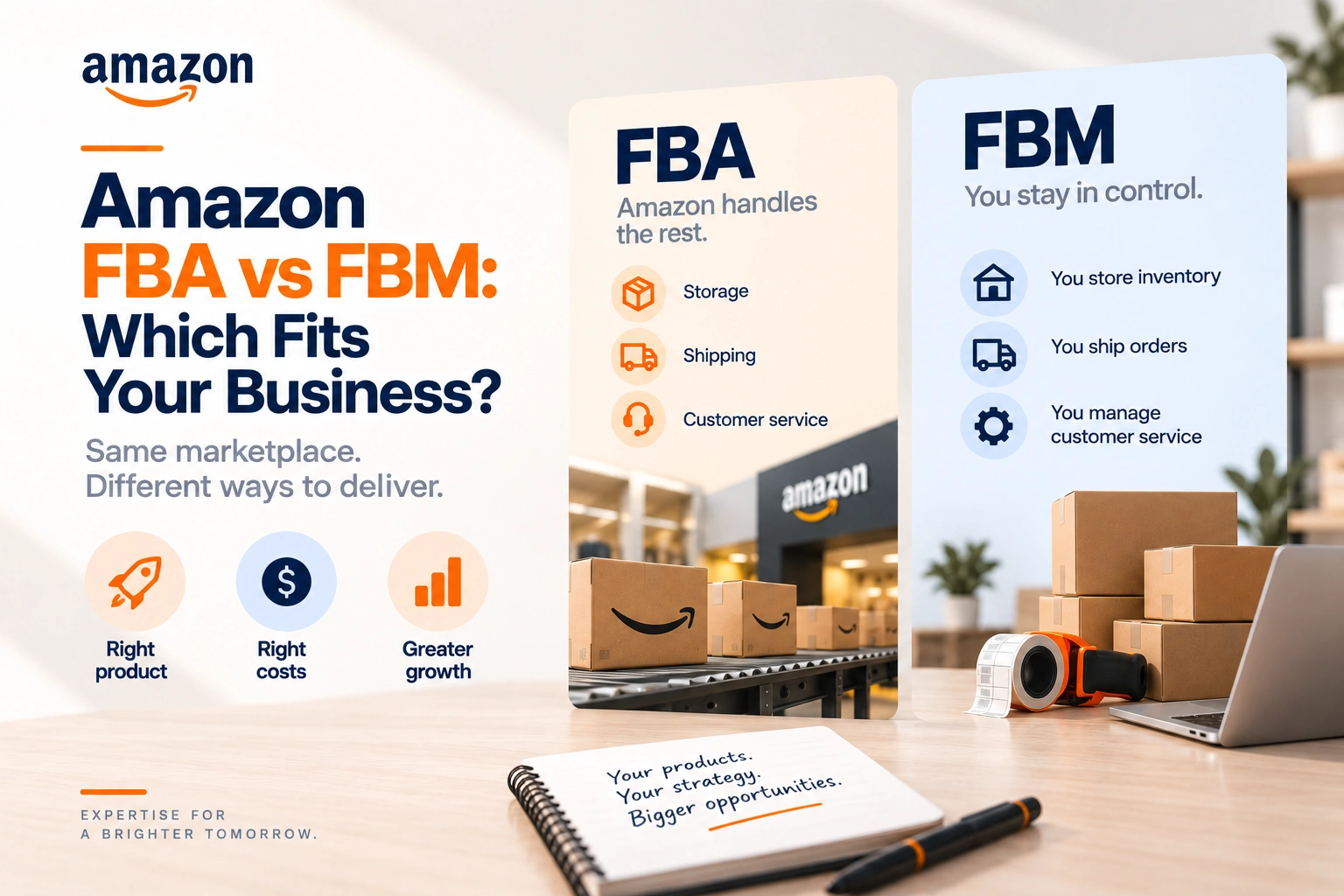
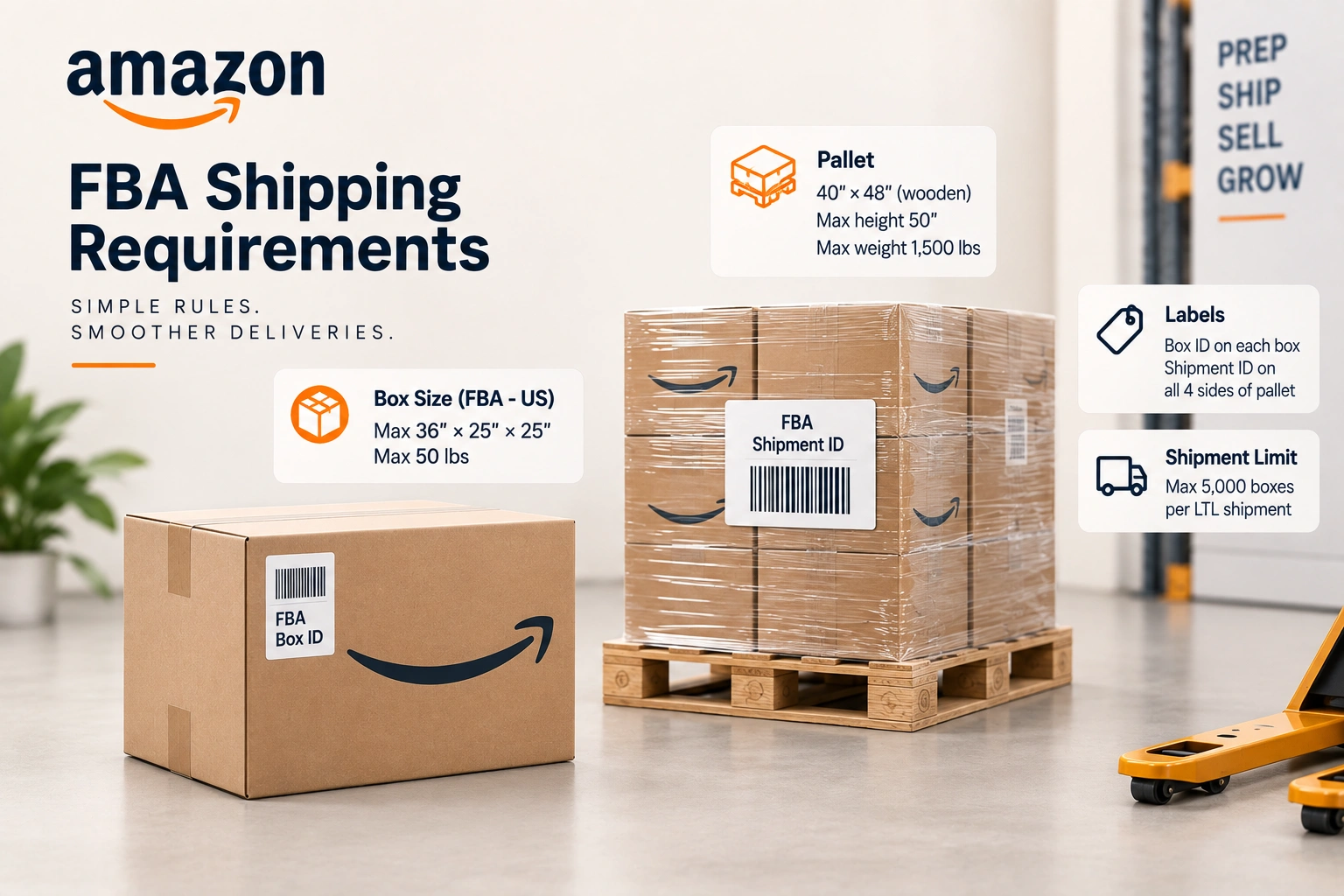
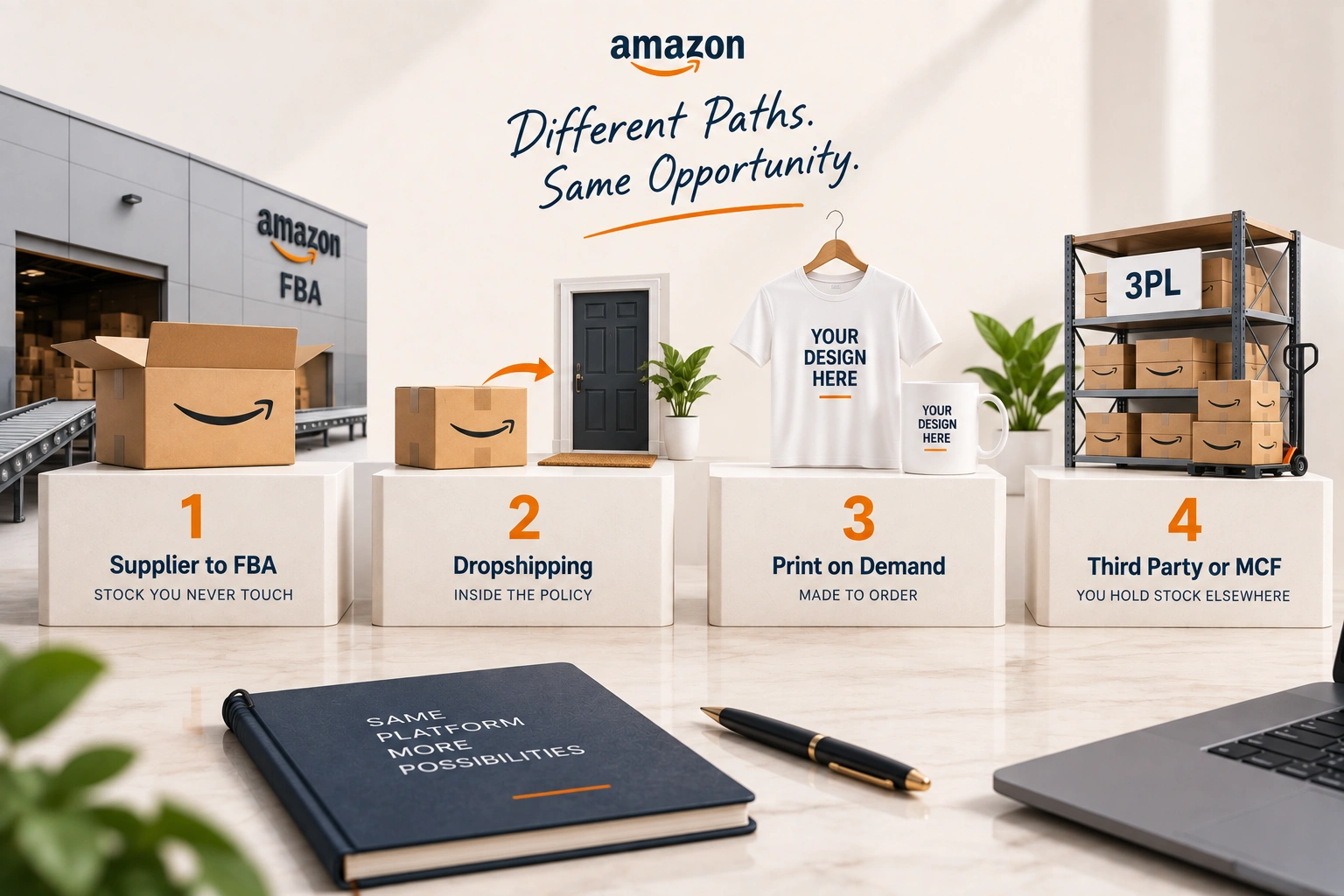
Seller Fulfilled Prime, and When a 3PL Makes Sense
FBA is the default because it is the easy answer. It stops being the cheap one at a particular size, and the alternative carries a performance bar most sellers underestimate.


Loading Article banner
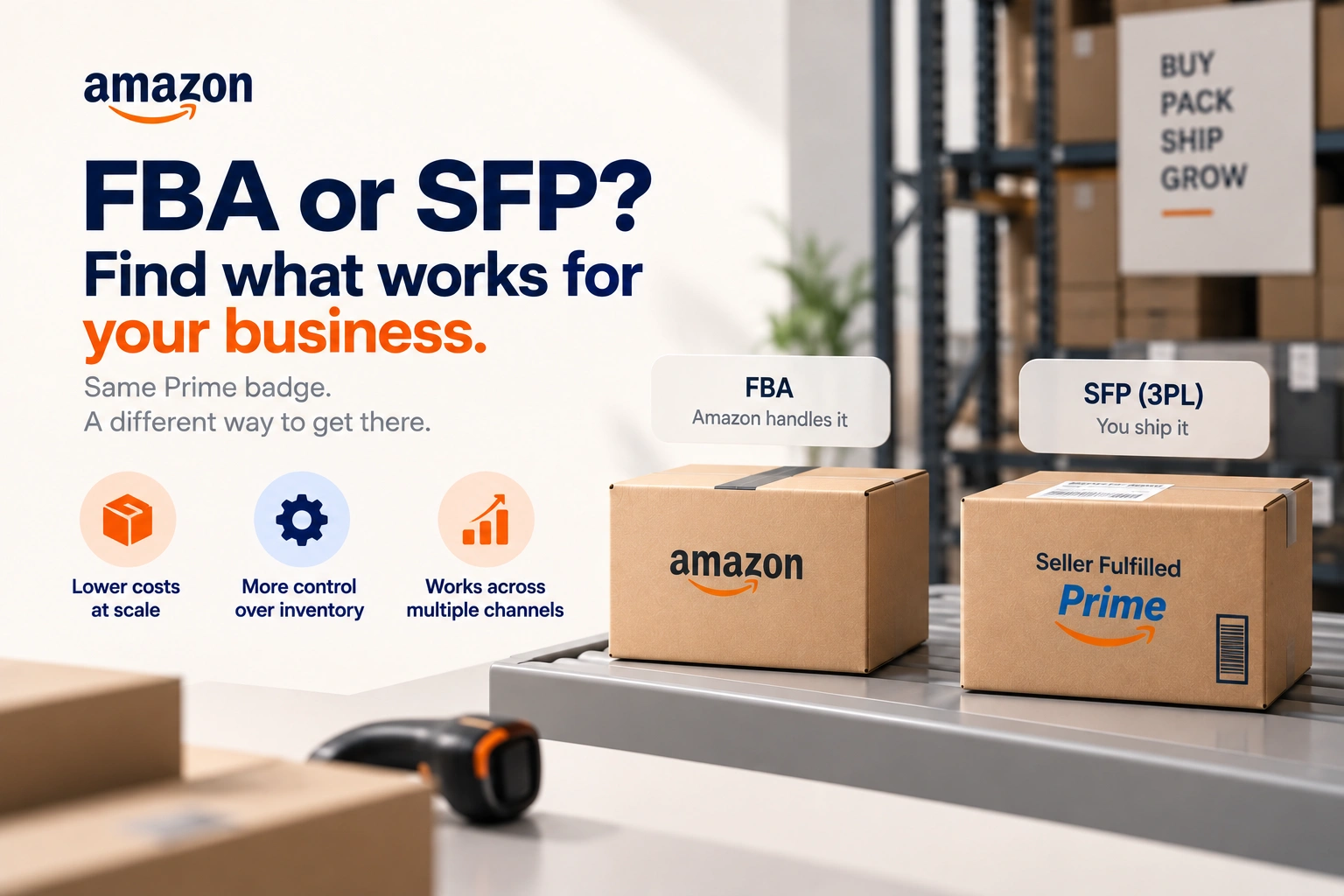
Most brands start on FBA and stay there, and for most of them that is correct. Amazon holds the stock, picks it, ships it, handles the returns and puts the Prime badge on the listing, and the badge is the part that matters: it is a conversion difference large enough that competing without it is a different business.
What changes with size is the arithmetic underneath it. FBA charges per unit for fulfilment and per cubic foot per month for storage, so a light expensive item is cheap to keep there and a heavy bulky one is not. At small volumes the difference is noise. At a few thousand units a month it is a line somebody notices.
What Seller Fulfilled Prime actually asks
It is the arrangement where a seller ships their own orders and keeps the Prime badge, and it is not a setting. It is a performance bar with a trial period attached, and the bar is what catches people.
The commitments are the ones a warehouse either meets or does not: shipping on time, at Prime speeds, with tracking that scans, at a cancellation rate close to zero, using approved carriers, including at weekends. A brand that ships four days a week does not qualify by trying harder. Losing the badge afterwards is worse than never having applied, because the listing has been converting at Prime rates and stops.
So the honest test is whether the fulfilment operation is already running at that standard for its own reasons. If it is, SFP formalises something true. If the plan is to raise the standard in order to qualify, the plan has the order wrong.
Where a third party warehouse wins
Three situations, and they are all about the shape of the product or the shape of the catalogue rather than about volume alone.
Bulky or heavy items, where FBA storage and the size band surcharges make the unit economics worse than a warehouse charging by pallet. This is the clearest case and the arithmetic is usually not close.
Slow moving range, where long term storage charges accumulate on stock that was ordered optimistically. A 3PL charging for space does not escalate the way marketplace storage does the longer a unit sits, and the escalation is what turns a bad forecast into a compounding cost.
Selling in more than one place, which is the one people underestimate. Stock committed to FBA is stock that cannot fill an eBay order or a Shopify order without being removed first. One pool of inventory serving every channel is worth real money in avoided stockouts, and it is invisible in any single channel's numbers. Running a catalogue across several marketplaces has its own problems, which we cover in repricing across marketplaces.
Where it does not
Small light products with steady velocity are the case FBA was designed for, and a 3PL rarely beats it. The per unit fulfilment fee is competitive, the storage is trivial because the cube is small, and the returns handling is included rather than being a line item somebody has to negotiate.
New products are the second case. A launch needs the badge, the ranking benefit and the delivery promise from day one, and it does not need an operational experiment running underneath it. Launch on FBA and reconsider once the demand is real, which is also the sequence campaign structure for a launch assumes.
And any seller whose current fulfilment is a person in a unit doing their best. That is not a criticism, it is a scale observation: Prime speeds at weekends with near zero cancellations is an operation rather than an effort.
The hybrid that most brands actually land on
Not one answer, which is the thing nobody tells you at the start. The common arrangement is fast moving small items in FBA, bulky and slow lines in a 3PL, and the 3PL serving every other channel from the same pool.
That is more complex to run and it is the arrangement the numbers usually point at, because the products genuinely differ. The mistake is deciding fulfilment once, as a policy, rather than per product line as a cost question.
The reporting has to follow it. A brand running two arrangements needs contribution margin per product after the actual fulfilment cost of that product, not a blended figure, because the blend hides exactly the lines that are losing money. That is the same discipline as reading what it costs to sell on Amazon rather than reading revenue.
What to work out before changing anything
Fulfilment cost per unit per product, including storage over the time that unit actually sits, rather than the headline fee. Return rate per product, because a 3PL quote that excludes returns handling is not a comparable quote. And the delivery promise each option produces in each region, because that is a conversion input rather than a service detail.
Then the switching cost, which is real and is usually left out: removal orders, freight to the new warehouse, the integration work, and a period where both are running.
Keep reading
None of this is a reason not to move. It is a reason to move a product line at a time, measure it, and let the second one be an easier decision than the first. Getting that sequencing right across a catalogue is a large part of what Amazon account management is for.
Frequently asked questions
The questions that come up most often on this subject.
Shipping your own orders at Prime speeds with tracking that scans, a cancellation rate close to zero, approved carriers and weekend shipping, proven through a trial period. It is a performance bar rather than a setting, and losing the badge later is worse than never applying, because the listing has been converting at Prime rates and stops.
For bulky or heavy items and for slow moving stock, usually yes, and the gap is not close. For small light products with steady velocity, usually no: FBA's per unit fee is competitive, the storage is trivial and returns handling is included rather than negotiated.
Yes, and it is what most brands of any size end up doing: fast moving small lines in FBA, bulky and slow ones in a third party warehouse, with that warehouse also serving every other sales channel from one pool of stock.
That it can only serve one channel. Units in an Amazon warehouse cannot fill an eBay, Walmart or Shopify order without being removed first, so a brand selling in several places carries duplicate safety stock. It never appears in any single channel's numbers.