Removal Orders and Stock That Will Not Sell
Stock that is not selling costs money every month it sits. Getting it out has four routes and the cheapest one is rarely the obvious one.


Loading Article banner
Stock in a fulfilment centre is not free to keep. It pays monthly storage, it pays more per unit once it has been there long enough to hit the long term bands, and it occupies capacity you may need for something that sells.
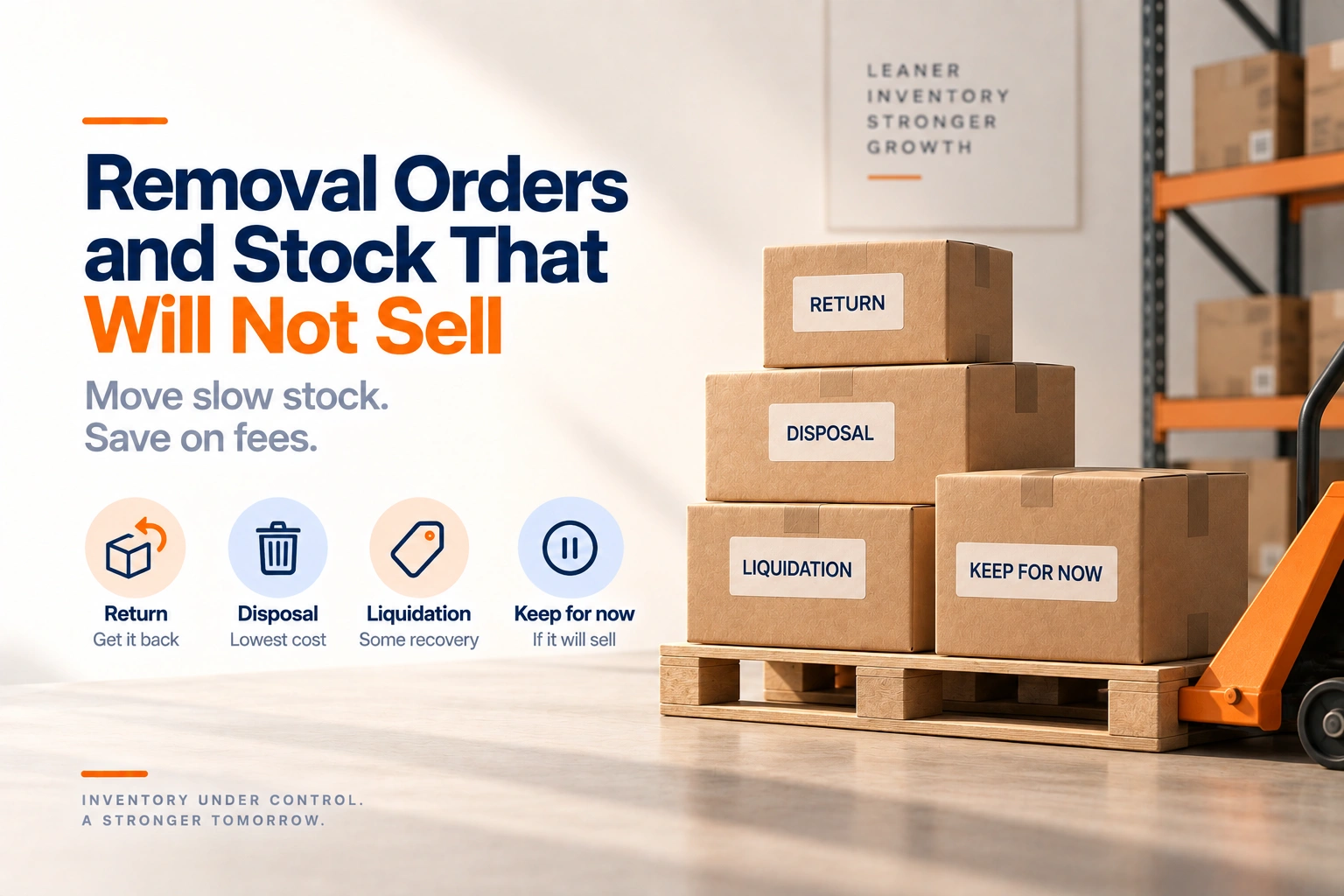
A removal order is how you get it out. There are four things you can ask for and choosing between them is an arithmetic problem most sellers do late.
The four routes
Return. Amazon ships it back to an address you give. You pay per unit, and you get stock you can inspect, repack, sell elsewhere or send back in properly.
Disposal. Amazon destroys it. Cheaper per unit than a return, and the right answer only when the goods are genuinely worth less than the cost of getting them back.
Liquidation. Amazon sells it to a wholesale liquidator and pays you a fraction of the value. No shipping to arrange, a small recovery, and no control over where it ends up.
Do nothing. A real option, briefly, for stock that is close to selling through. It is only a decision if you have worked out what the storage will cost between now and then.
The two kinds of stock this applies to
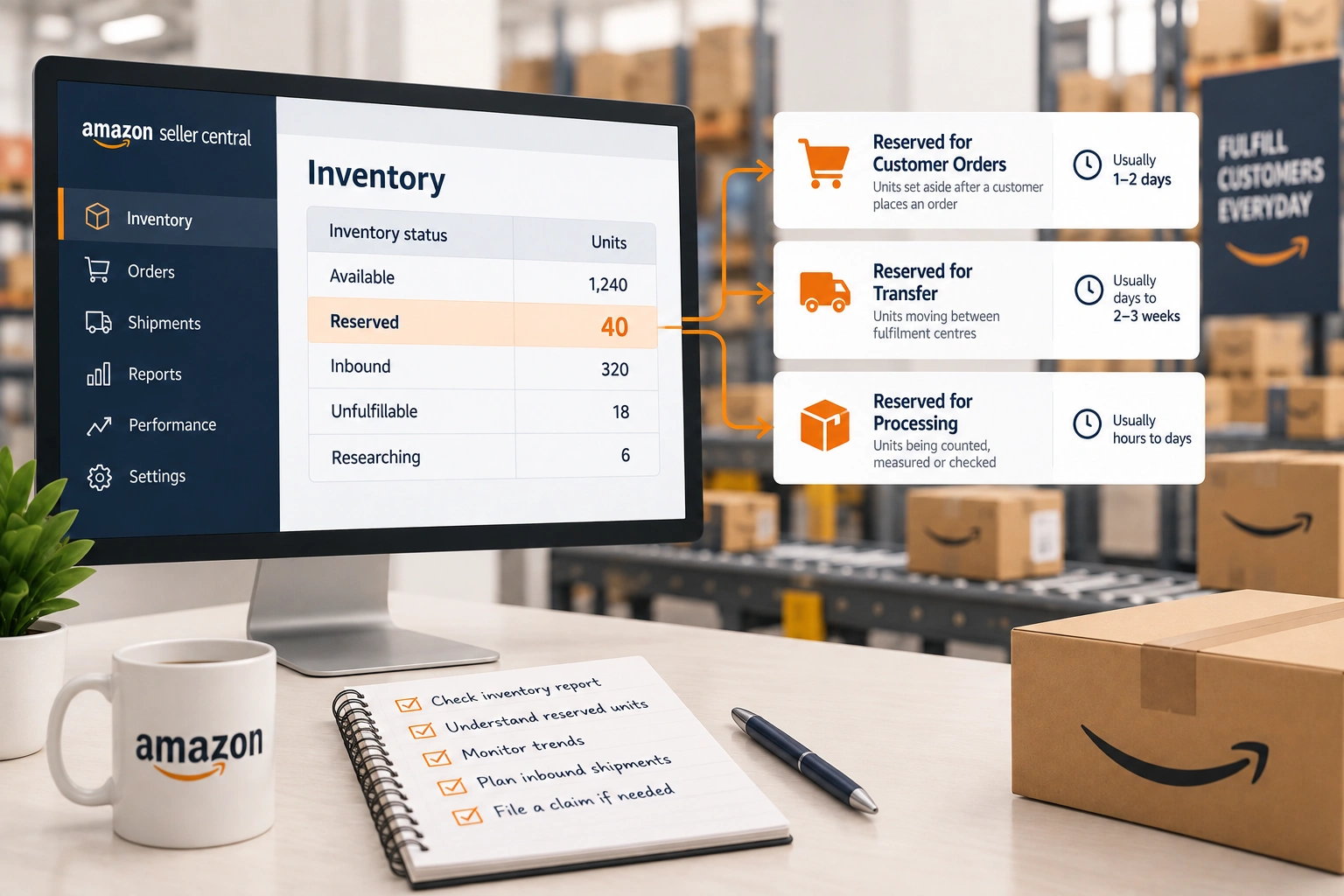
Unfulfillable units are customer returns Amazon has graded as not sellable, plus anything damaged in the network. They sit in your account waiting for an instruction, and they still cost storage while they wait. Standing removal settings can deal with these automatically, which is the single most useful setting most sellers have never opened.
Sellable units that are not selling are the harder case: nothing is wrong with them, they are just aged, seasonal or overordered. Those are the ones the arithmetic below is for.
The arithmetic
For each unit: what will storage cost between now and the point it would realistically sell, against what you would recover by removing it. Removal costs a fee per unit, and liquidation returns a fraction of the price, so the comparison is rarely close once a product has crossed into the long term bands.
The decision people get wrong is holding aged stock through another peak in the hope it moves. If it did not sell in the last year, storage on it for another one is a payment for optimism.
The other one is disposing of something that would have sold at a discount elsewhere. A return to your own address plus a clearance listing on eBay often beats disposal for anything with a real second-hand market.
Timing
Removals are processed over days rather than hours, and the queue is longest exactly when everybody wants one: before the storage assessment dates, and around peak when the network is busy.
Which means the removal that saves you the fee has to be placed well before the date it was meant to beat. Put the assessment dates in a calendar and decide a fortnight ahead of each, not the week of.
What to do so it happens less
Removal orders are a symptom. The causes are ordering too deep on an unproven product, seasonal stock sent in without a plan for the tail, and returns nobody has looked at.
Ordering shallower and reordering more often is the structural fix, and it is the same discipline as keeping stock cover honest: the first replenishment tells you more than any forecast.
It is also worth checking what you are owed before removing anything. Units lost or damaged in the network are reimbursable, and a removal is not the moment to discover you never claimed for them, which the reimbursements piece covers.
What we do with this
Standing removal settings, an aged inventory review on a schedule and a reimbursement check before anything leaves are part of running an Amazon account properly, and they are three of the easiest wins on an account nobody has been watching.
Stock removed and not thrown away has somewhere to go: a clearance channel on Walmart or your own store will often recover more than a liquidator, with the trade-off that you handle it.
Keep reading
If your storage bill is rising faster than your sales, that is worth an hour of somebody's time.
Frequently asked questions
The questions that come up most often on this subject.
An instruction to Amazon to take stock out of its fulfilment network. You can ask for it to be returned to an address, disposed of, or liquidated, and each has a different per unit cost and a different recovery.
Return when the goods are worth more than the shipping and you have somewhere to sell them. Disposal when they are genuinely worth less than getting them back. Liquidation when you want a small recovery with no handling and do not mind where they end up.
Units Amazon has graded as not sellable, mostly customer returns plus anything damaged in the network. They sit in your account waiting for an instruction and pay storage while they wait, which is why standing removal settings are worth turning on.
Days rather than hours, and longer when everybody wants one at once: before the storage assessment dates and around peak. Place it a fortnight before the date you are trying to beat rather than in the same week.
Usually, unless you can show it will sell through soon. Compare the storage between now and a realistic sell-through date against what removal costs and recovers. Holding aged stock through another peak in hope is a payment for optimism.
Yes, once it has been returned to you, inspected and repacked to the requirements. Sending it straight back without inspecting it is how the same units become unfulfillable a second time.
No. It is an inventory instruction, not a performance event. What does affect you is leaving unfulfillable stock and stranded listings sitting there, because both are visible signs of an account nobody is running.
Yes. Units lost or damaged in the network are reimbursable, and a removal is a bad moment to discover you never claimed. Check what is owed first, then remove what is left.
It recovers a fraction of the value with no handling, which beats disposal and loses to a return where a real second-hand market exists. For anything with resale value, a return plus a clearance listing elsewhere usually recovers more.
Order shallower and reorder more often, plan the tail of seasonal stock before it ships, and review returns rather than letting them accumulate. Removal orders are a symptom of purchasing decisions made months earlier.