Prime Big Deal Days and Black Friday 2026: Amazon Deals, Fees and Price Rules
What a deal in either event costs, what Amazon requires of the price, how the lookback works, and how to decide whether a product belongs in a deal at all, with the advertising that has to run beside it.


Loading Article banner
A deal is the most expensive thing a seller can do in a quarter and the easiest to submit. The form takes ten minutes. The fee, the discount, the advertising to make the discount visible and the stock to survive it are the cost, and they are paid in November against a decision made in September.
This is the deals half of the Q4 plan: what Amazon charges in 2026, what it requires of the price, the rule that decides whether an October deal poisons a November one, and the question that should be asked before any of it, which is whether the product belongs in a deal at all. The stock behind the deal is a separate discipline, covered in Amazon inventory management.
The two events and their windows
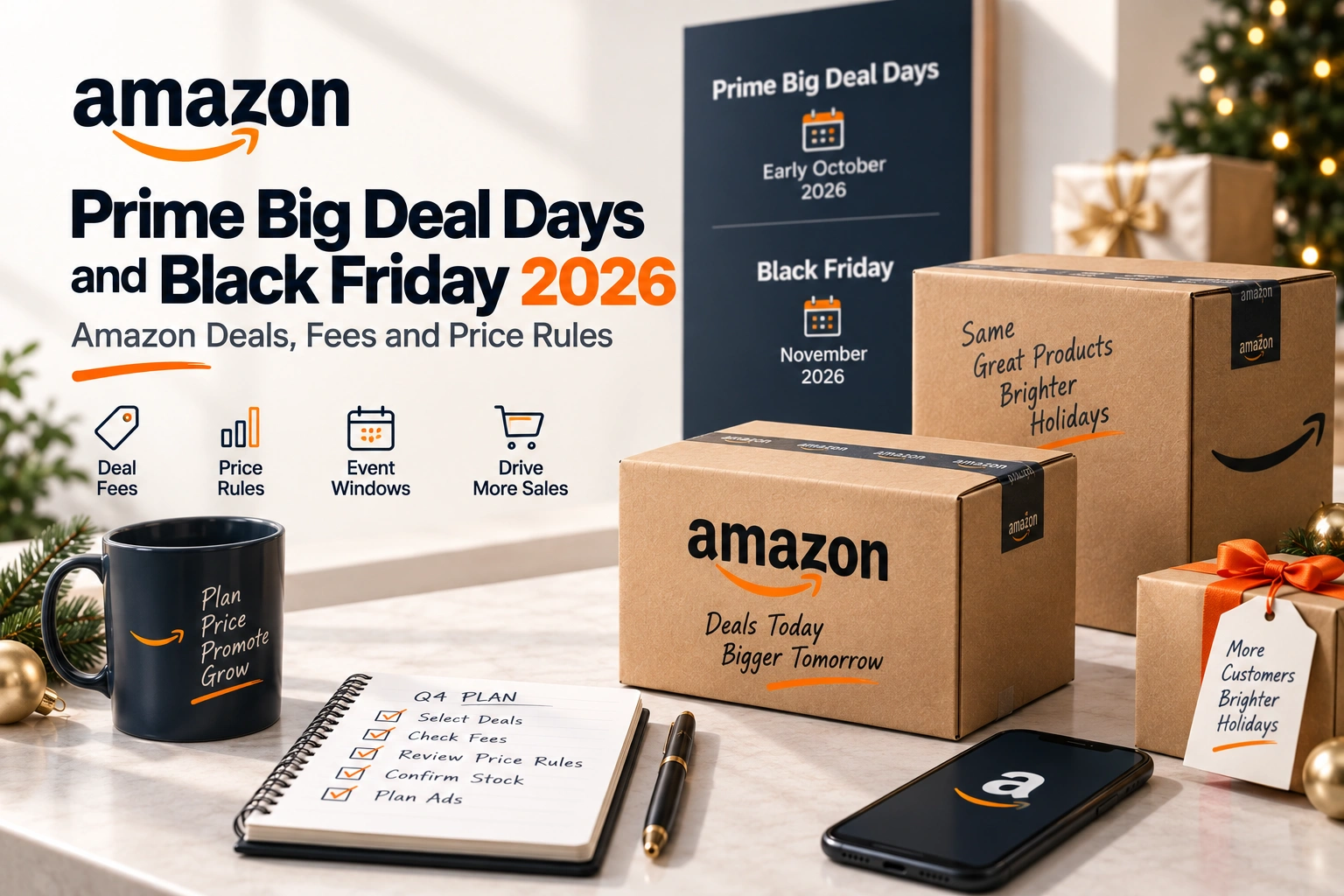
Prime Big Deal Days falls in early October, on the same timing as 2025. Its deal submission window ran from 8 July to 8 September. Black Friday week and Cyber Monday take submissions from 8 July to 20 October, with an early submission discount deadline of 5 September. Both windows were announced together in July, which is Amazon's way of saying the deal decision is a summer decision.
Missing a window does not remove a product from the event; it removes the deal badge and the deal placement. A plain price discount still runs and still counts as a promotion in the customer's eyes, without the fee and without the visibility the badge buys.
What a deal costs in 2026
Amazon's announcement is titled same fees, same eligibility, earlier deadlines, and the fees are Prime Day 2026's: an upfront promotion fee of $100 per promotion and a variable fee of 1.5% of promotional sales, capped at $5,000. Submitting before the early deadline saved $50 on the upfront fee. There are no new eligibility requirements.
On top of the deal fee sits the peak fulfilment surcharge, 3.5% of fulfilment fees from 15 October to 14 January, an average of $0.32 per unit. A deal at 20% off on a product whose fulfilment fee has just risen is a different margin from the one the summer spreadsheet showed. Amazon seller fees explained sets out the stack the deal sits on.
The lookback rule, and why it decides the sequence
Amazon judges a deal price against the product's recent price history, the lookback, so that a deal is a real reduction and not a price that was raised in order to be cut. The rule that matters this year is the exclusion: Prime Big Deal Days promotional prices are excluded from the 30 day and 60 day lookback windows. The October deal price does not become the reference the November deal has to beat.
That exclusion is what makes two events in eight weeks workable. Without it, a 20% deal in October would set a reference that a Black Friday deal had to undercut, and the second event would be priced off the first. With it, both deals are judged against the everyday price. The everyday price, and the discipline of holding it between events, is the subject of the repricing strategy article.
One question from the forum thread is worth carrying: whether the exclusion applies to all sales in the event window or only to the paid deal. Amazon's wording names Prime Big Deal Day promotional prices. A seller running a plain discount alongside a deal should treat the discount price as inside the lookback until Amazon says otherwise.
Which products belong in a deal
Three tests, in order. The first is margin after the deal, the variable fee, the surcharge and the advertising: if the unit loses money at the deal price, the deal is a launch tactic or nothing, and a launch in October is a decision about January. The second is stock: a deal that sells out on day one is a deal that paid its fee for one day of sales and then handed the badge to a competitor; the calendar's inbound cutoffs decide what stock a deal can have. The third is rank: a product on page two that a deal can lift onto page one, and hold there with reviews and sales velocity, is the product the fee is for.
A product that passes all three is a deal. A product that passes only the first is a coupon. A product that passes none is priced right where it is, and the event is a week of higher traffic at the everyday price, which is worth more than most sellers expect.
The advertising beside the deal
A deal without advertising relies on the deal page, and the deal page in November is the busiest page on the site. The campaign that runs beside a deal is a budget decision for the week, not the month: bids raised on the product's own terms before the event so the ad is already in position, budget released on the day so the campaign does not run out at noon, and bids brought back down the day after so the post event traffic is not bought at event prices.
The structure that makes that possible without rebuilding campaigns is in the Amazon PPC strategies article, and the routine for the week itself is the one in the weekly PPC optimisation routine, run daily for the fortnight. For the brands we run, this is the quarter's core work in Amazon advertising: the deal chosen in September, the campaign shaped for the week, the budget released and withdrawn on the day.
Frequently asked questions
The questions that come up most often on this subject.
In 2026 the fees are unchanged from Prime Day: $100 upfront per promotion and 1.5% of promotional sales, capped at $5,000. Submitting before 5 August saved $50 on the upfront fee. The peak fulfilment surcharge of 3.5% applies separately to every FBA unit from 15 October.
The Black Friday week and Cyber Monday window runs from 8 July to 20 October 2026, with an early submission discount deadline of 5 September. Prime Big Deal Days submissions closed on 8 September.
Amazon excludes Prime Big Deal Days promotional prices from the 30 day and 60 day lookback windows, so the October deal price does not become the reference a November deal is judged against. A plain discount run alongside should be treated as inside the lookback.
No. A product belongs in a deal when it still holds margin after the deal, the fees and the surcharge, when it has the stock to last the event, and when a deal can move it onto page one and keep it there. A product that fails those tests sells better at its everyday price on a busier day.
Yes, for the week rather than the month: bids in position before the event, budget released on the day so campaigns do not run out early, and bids brought back down the day after. A deal without advertising depends on the deal page, which in November is the busiest page on Amazon.