How to Sell Your Product to Walmart: Supplier or Marketplace, and Which to Ask For
There are two doors and most brands knock on the wrong one. The supplier programme puts a product on the shelf through a merchant's decision; the marketplace puts it on Walmart.com through the brand's own account. What each takes, what each pays, the Open Call that opens the first door once a year, and how to choose.


Loading Article banner
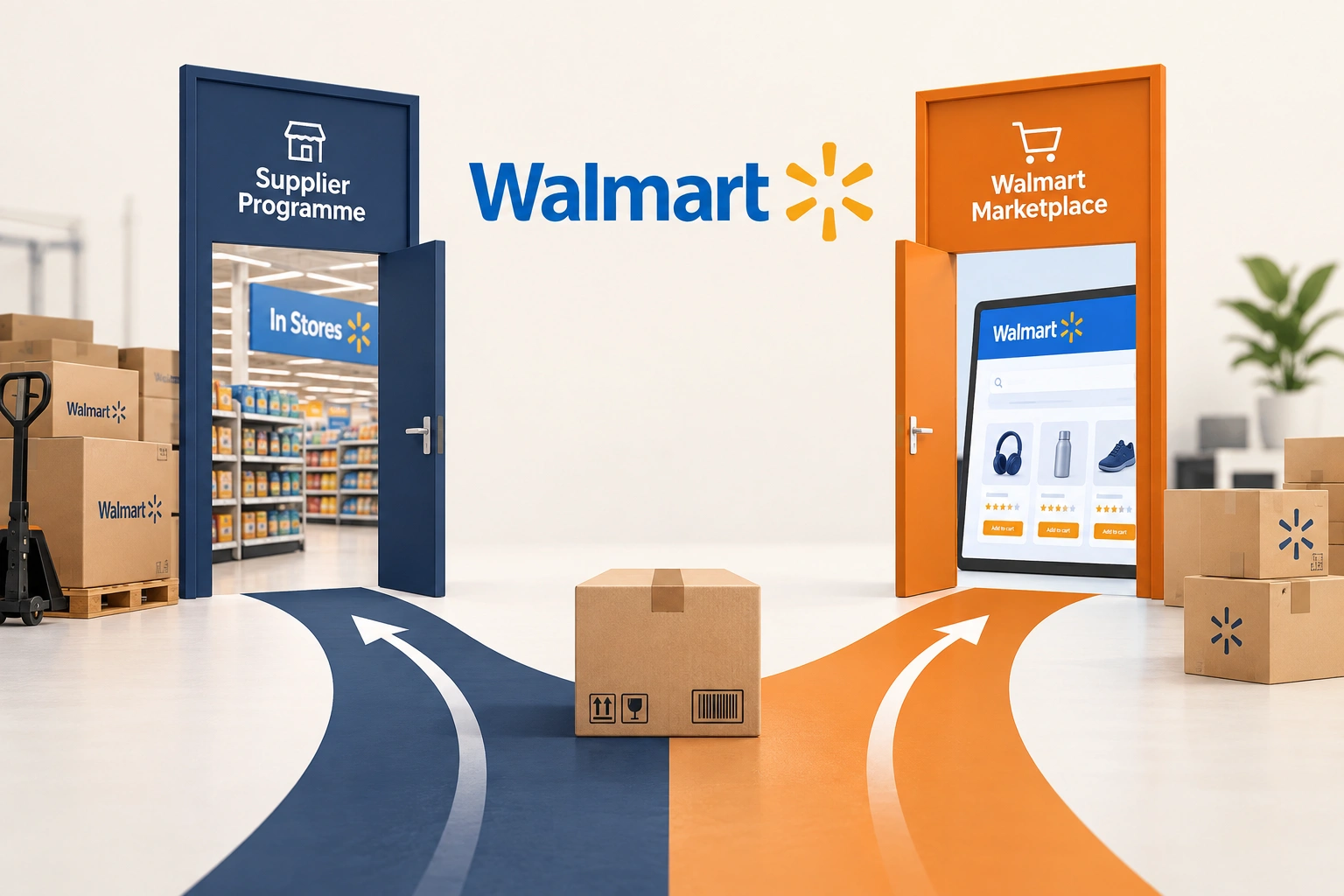
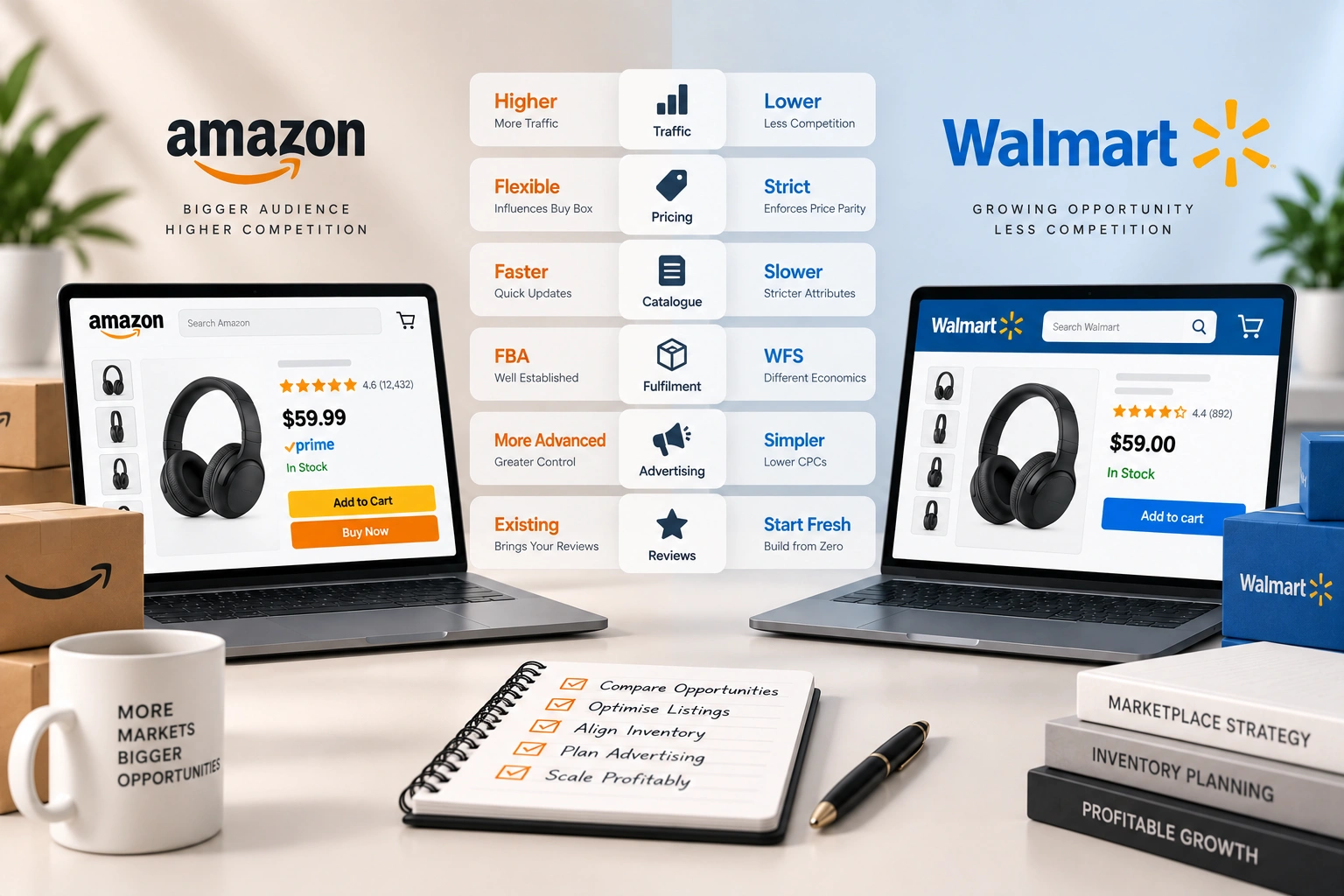
A brand that wants to sell to Walmart usually means the shelf: the product in stores, bought by Walmart, paid for by Walmart. That is the supplier programme, and it is one door. The other is Walmart Marketplace, where the brand sells on Walmart.com under its own account, holds its own stock, sets its own price and pays a referral fee, the way it would on Amazon. The two have different applications, different economics and different odds, and the first decision is which one to ask for.
This is both doors as Walmart describes them, the annual event that opens the first one to small brands, and the way we advise a brand to choose.
Door one: the supplier programme
A supplier sells to Walmart. A merchant decides to stock the product, Walmart issues purchase orders, the supplier ships to Walmart's distribution centres or stores against them, and Walmart pays on its terms. The product appears on shelves in the stores the merchant chooses and on Walmart.com as a Walmart sold item. The brand does not set the retail price, does not hold the customer relationship, and does not control which stores; it supplies a retailer.
Getting in is a merchant's decision, and the route to a merchant is the supplier application through Walmart's supplier centre, a category review, or the annual Open Call. The requirements are a retailer's: product liability insurance at retail levels, compliance testing for the category, GS1 barcodes, EDI capability for orders and invoices, the ability to fill a purchase order for hundreds of stores, and pricing that leaves Walmart its margin at a shelf price it wants to show. A brand that cannot produce the volume a regional test needs is a brand a merchant will not test.
Open Call: the day the first door opens
Once a year Walmart holds Open Call, its largest sourcing event, for products made, grown or assembled in the United States. The 2026 event runs on 6 and 7 October at Walmart's headquarters in Bentonville, Arkansas; applications closed on 3 August; submitting a product for consideration is free; products have to be shelf ready rather than prototypes. Selected applicants get a thirty minute meeting with a Walmart or Sam's Club merchant, and the outcomes range from a store test in a few locations, to Walmart.com, to an invitation onto the marketplace instead.
That last outcome is the point most brands miss. A merchant who likes the product and cannot yet justify a shelf will often say marketplace, which is a real answer and the beginning of a supplier relationship rather than a refusal of one. The brands that convert a marketplace listing into a shelf are the ones whose marketplace sales give the merchant a number to look at.
Door two: the marketplace
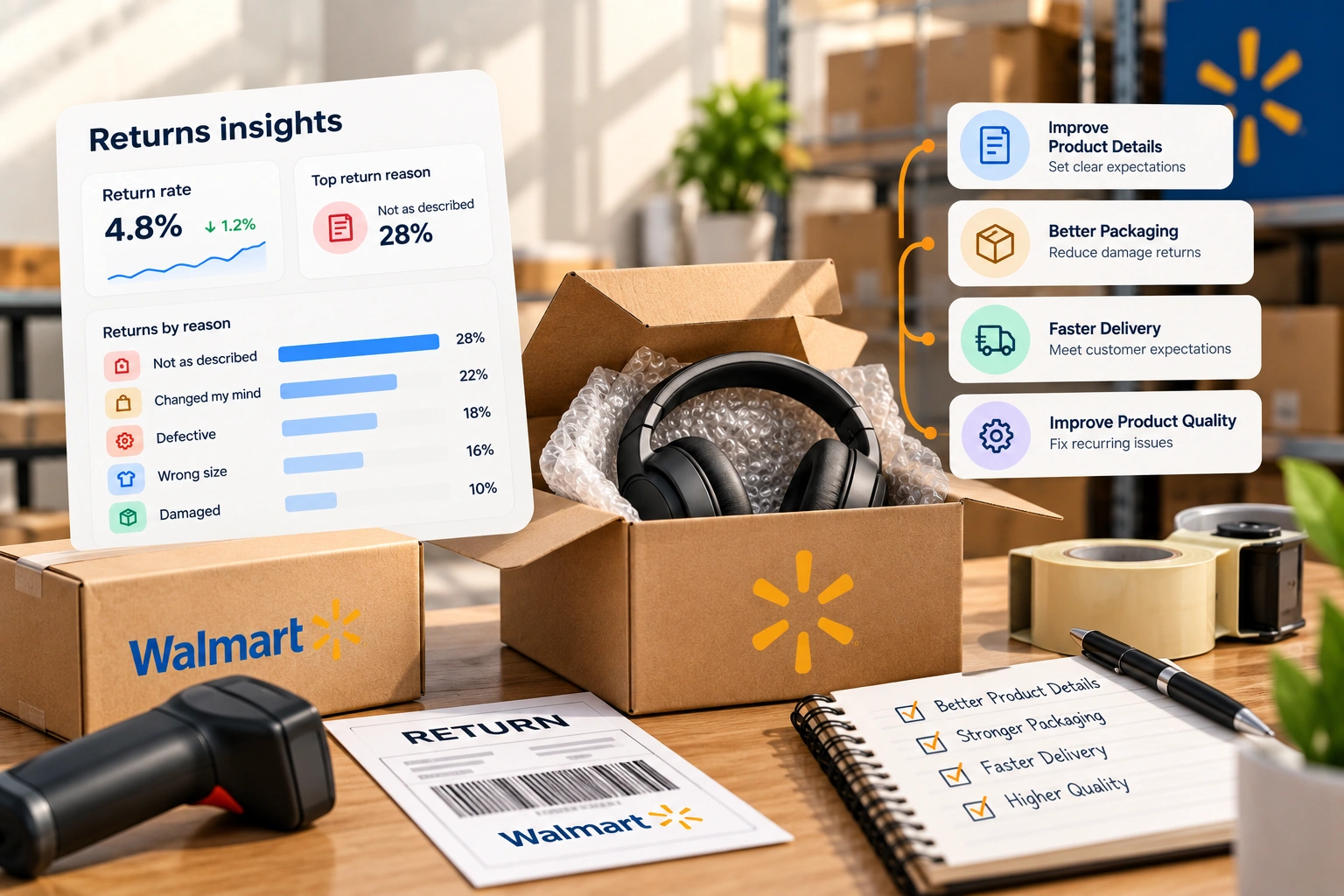
A marketplace seller sells on Walmart.com under its own name. Walmart does not buy the stock; the seller lists the product, sets the price, ships the order or uses Walmart Fulfillment Services, handles the returns, and pays a referral fee on each sale. The application asks for a verifiable business with a tax identity, a history of eCommerce sales, products with GTINs, and a fulfilment and returns plan that meets Walmart's delivery promise. Approval is Walmart's, on the business rather than on a merchant's taste for the product.
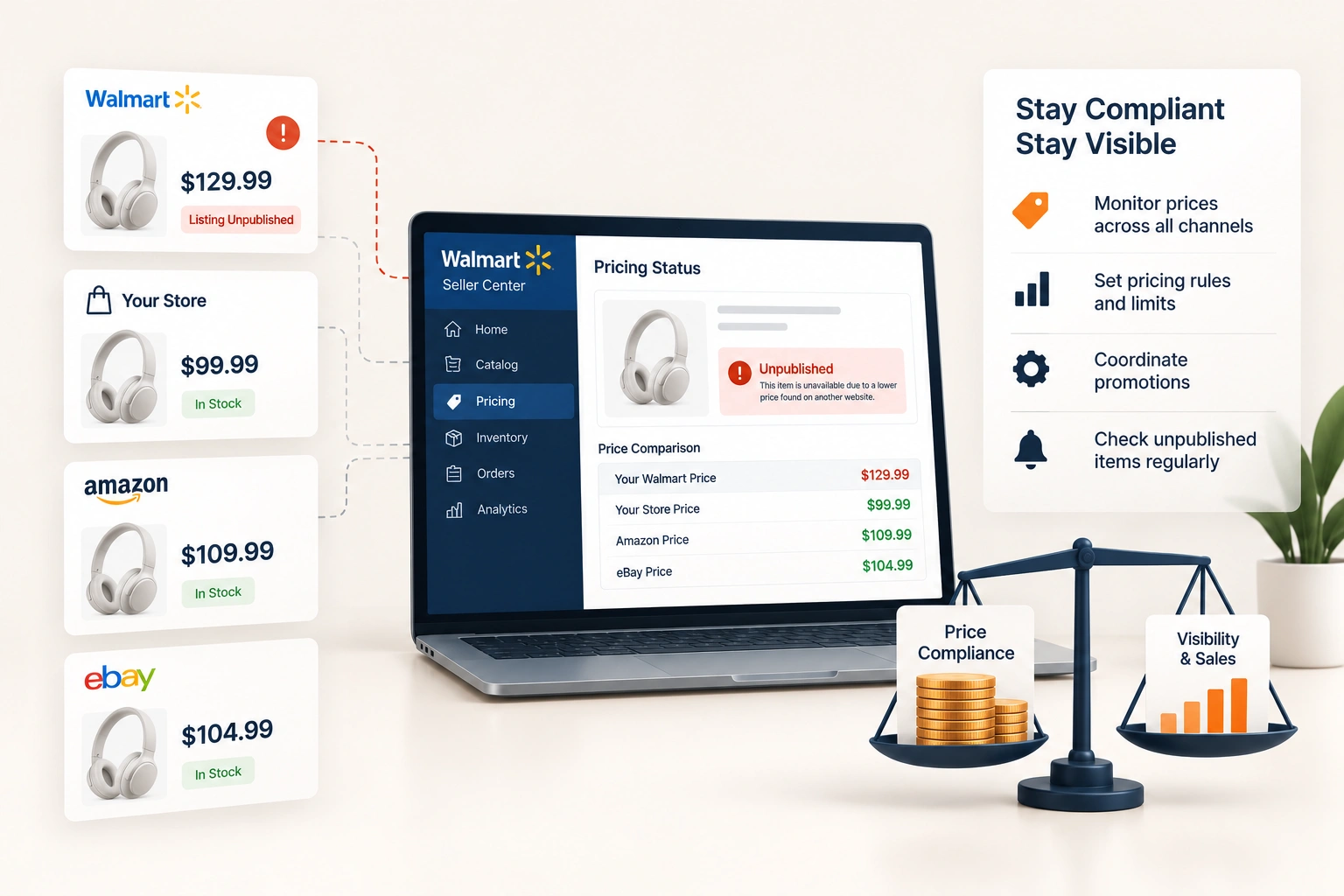
The economics are a seller's: the retail price less the referral fee, less fulfilment, less advertising, against the product's cost. The customer relationship is the seller's, the price is the seller's, and the scale is whatever the seller can sell. Walmart Fulfillment Services explained covers the fulfilment side, Walmart pricing strategy the price rules, and Walmart listing optimisation the listing itself.
Which door to knock on
The supplier door pays in volume and costs in control: a purchase order for eight hundred stores is the largest order most small brands will ever see, and it comes with Walmart's price, Walmart's terms, Walmart's compliance and the risk of a delisting that empties the warehouse. The marketplace door pays in margin and control and costs in scale: every sale is the brand's to earn, at the brand's price, with no merchant and no purchase order.
The advice we give is to start with the marketplace unless the brand already supplies national retail. The marketplace application is open all year, approval is on the business, and the sales it produces are the evidence a merchant asks for at Open Call or in a category review. A brand that arrives at the supplier conversation with a year of Walmart.com sales, reviews and a share of search has something a merchant can put in a spreadsheet; a brand that arrives with a product and a hope does not. The marketplace is also where the brand learns what Walmart's customer buys, at what price, which is knowledge the supplier door demands before it opens.
Keep reading
For the brands we run under Walmart marketplace management, the marketplace account is built to produce that evidence: the listings, the fulfilment through WFS, the advertising, and the monthly figures a merchant reads. The account's inventory discipline, covered in Walmart inventory management, is the same discipline a purchase order will later demand at ten times the volume, which is why the marketplace year is the apprenticeship for the shelf.
Frequently asked questions
The questions that come up most often on this subject.
A supplier sells to Walmart: a merchant decides to stock the product, Walmart buys it on purchase orders and sets the retail price, and it appears on shelves and as a Walmart sold item online. A marketplace seller sells on Walmart.com under its own name, holds its own stock, sets its own price and pays a referral fee per sale.
Walmart's annual sourcing event for products made, grown or assembled in the United States. In 2026 it runs on 6 and 7 October in Bentonville; applications closed on 3 August; submitting is free; selected applicants get a thirty minute meeting with a merchant, with outcomes from a store test to Walmart.com to an invitation onto the marketplace.
A verifiable business with a tax identity, a history of eCommerce sales, products with GTINs, and a fulfilment and returns plan that meets Walmart's delivery promise, through Walmart Fulfillment Services or the seller's own operation. Approval is on the business rather than on a merchant's view of the product.
Marketplace first, unless the brand already supplies national retail. The marketplace is open all year, approved on the business, and produces the sales figures a merchant asks for at Open Call or a category review. A year of Walmart.com sales is the evidence that opens the supplier door.
Yes, and it is the usual route. A merchant who sees a product selling on Walmart.com with reviews and a share of search has a number to test on the shelf, and Open Call meetings often end with a marketplace invitation as the first step toward a supplier relationship.