Walmart Fulfillment Services: What WFS Changes
WFS buys the delivery tag that decides the buy box. Whether it also buys margin depends on the size band, the return rate and how fast the item moves.


Loading Article banner
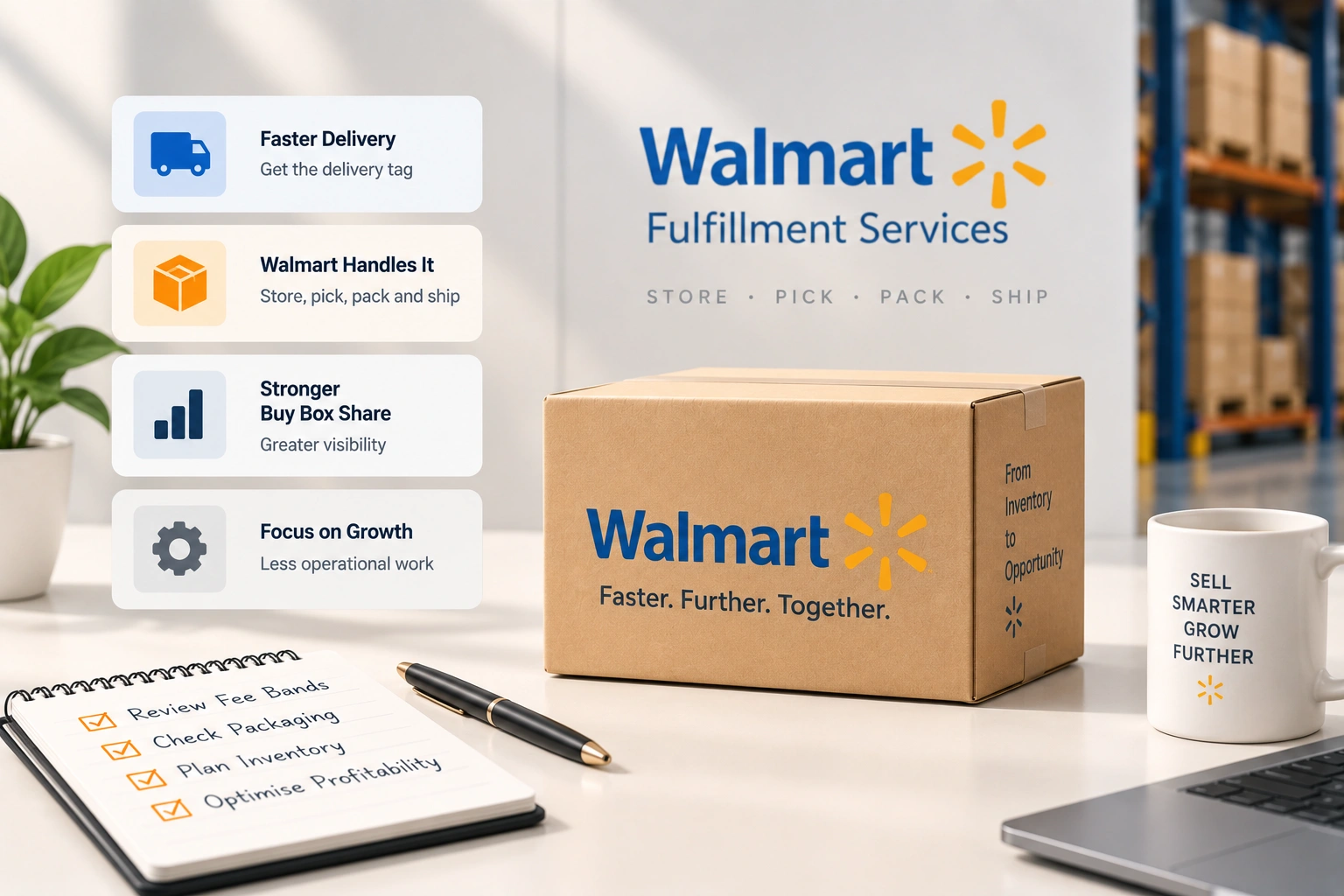
Walmart Fulfillment Services is the marketplace's answer to FBA: stock sits in Walmart's network, Walmart picks, packs, ships and handles the return, and the listing gets the delivery tag that shoppers filter on.
The mechanics will be familiar to anybody who has used FBA. The economics are not the same, and neither is the competitive picture, which is what makes copying an Amazon fulfilment decision across a mistake.
What the tag is worth
The delivery promise is an input into the buy box, and on Walmart it is a larger input than most sellers expect, because fewer offers carry it.
That is the honest case for WFS. On a listing with several sellers, the offer with the faster promise wins more of the buy box at the same price, and buy box share is what decides whether a listing sells at all.
The corollary is that the tag is worth less on a listing you already win. A brand with a unique product and no competing offers is buying convenience rather than placement.
What it costs
A fulfilment fee per unit, set by weight and size band, and a monthly storage charge on the space the inventory occupies, with a higher rate in the peak quarter.
The band boundaries are where the money is. A product a few ounces over a threshold pays the next band's fee on every unit, and packaging changes that pull it back are the cheapest margin available on the whole account.
Returns are handled and graded, and a category with a high return rate pays for that convenience in units that come back unsellable rather than in a line on a statement.
Where seller fulfilment still wins
Large and heavy items, where you probably have freight rates that beat the band. Slow movers, where storage eats the margin while the stock sits. High value goods where you want control of the handling.
And anything with erratic demand, because your own warehouse has no inbound lead time. When a listing suddenly moves, seller fulfilled stock can serve it today.
Most mature accounts run both, splitting the catalogue by size and velocity rather than choosing one for everything.
Getting the inbound right
Prep and labelling requirements are specific, and stock that arrives wrong is handled at a cost or refused. It is worth reading the requirements properly once rather than discovering them a shipment at a time.
Lead times matter for the same reason they do anywhere: the time between deciding to reorder and a unit being sellable includes production, freight, receiving and check-in, and check-in is slowest exactly when everybody is sending stock in.
Fulfilment and advertising are one decision
Advertising a listing that is losing the buy box spends the budget on traffic that lands on somebody else's offer. On Walmart specifically, sponsored placements and buy box share are tied closely enough that fulfilment changes show up in campaign performance within days.
The mechanics of that are in Walmart PPC and sponsored products, and the short version is that fixing fulfilment on a contested listing is often cheaper than raising bids on it.
What we do with this
Fulfilment strategy is part of Walmart marketplace management, decided per product against margin rather than adopted wholesale.
For brands running both marketplaces, the plan has to be one plan: stock committed to Walmart is stock unavailable to Amazon, and the channel that should get a constrained unit is the one where it earns most after fees.
If the operational work is the constraint, our outsourced marketplace teams run the inbound and the daily checks. Otherwise start with the numbers.
Related reading: Walmart Inventory Management: The Numbers That Decide Visibility.
Related reading: Walmart Marketplace SEO: What the Search Actually Reads and Walmart Pricing Strategy: Why Your Listing Went Unpublished.
Keep reading
Related reading: Selling on Walmart vs Amazon: What Really Differs.
Frequently asked questions
The questions that come up most often on this subject.
Walmart's own fulfilment network. You send stock in, Walmart picks, packs, ships and handles customer service and returns, and the listing carries the fast delivery tag shoppers filter on. It is Walmart's equivalent of FBA, with its own fee schedule and its own prep requirements.
A per unit fulfilment fee set by weight and size band, plus monthly storage on the space the stock occupies, charged at a higher rate in the peak quarter. The band boundaries matter more than the headline rate: a product a few ounces over a threshold pays the next band on every unit it sells.
On contested listings, usually, because the delivery promise is an input into the buy box and fewer Walmart offers carry it than on Amazon. On a listing you already win with no competing offers, you are buying convenience rather than placement, and the arithmetic is different.
The mechanics are similar and the economics are not. Fee bands, storage rates and the competitive picture all differ, so a product that is clearly better in FBA can be clearly better seller fulfilled on Walmart. Copying the Amazon decision across is the commonest mistake.
Yes, and most established accounts do. The split usually falls out by size and velocity: small, fast moving items into WFS, large or slow moving items fulfilled yourself where your own freight rates and storage costs are better.
Walmart handles the customer and grades the unit for resale where it can. In a high return category that convenience is paid for in units that come back unsellable rather than in a fee, which is why measuring your own return rate per product matters more than the schedule.
Longer than the freight, and variable. The clock runs from production through freight, receiving and check-in, and check-in slows down when everybody is sending stock in at once. Plan the reorder point against the slow end of your own measured range rather than the average.
Not directly. It improves the delivery promise and buy box share, and those improve conversion and sales velocity, which is what ranking follows. The effect is real and it arrives through conversion rather than through any preference for the fulfilment method itself.
Specific, and enforced. Labelling, packaging and unit preparation all have requirements, and stock arriving wrong is either handled at a cost or refused. Reading them once properly is faster than discovering them one shipment at a time.
It depends on the cash more than the strategy. WFS commits money to inventory earlier and gives a competitive listing sooner; seller fulfilment keeps the cash closer to the sale while demand is unproven. For a first product with no history, the cash argument is usually the stronger one.