Brands usually arrive at Walmart from Amazon, with an Amazon playbook, and the first quarter goes badly for reasons that have nothing to do with the product.
The two marketplaces sell the same goods to overlapping customers and behave differently in almost every way a seller has to operate.
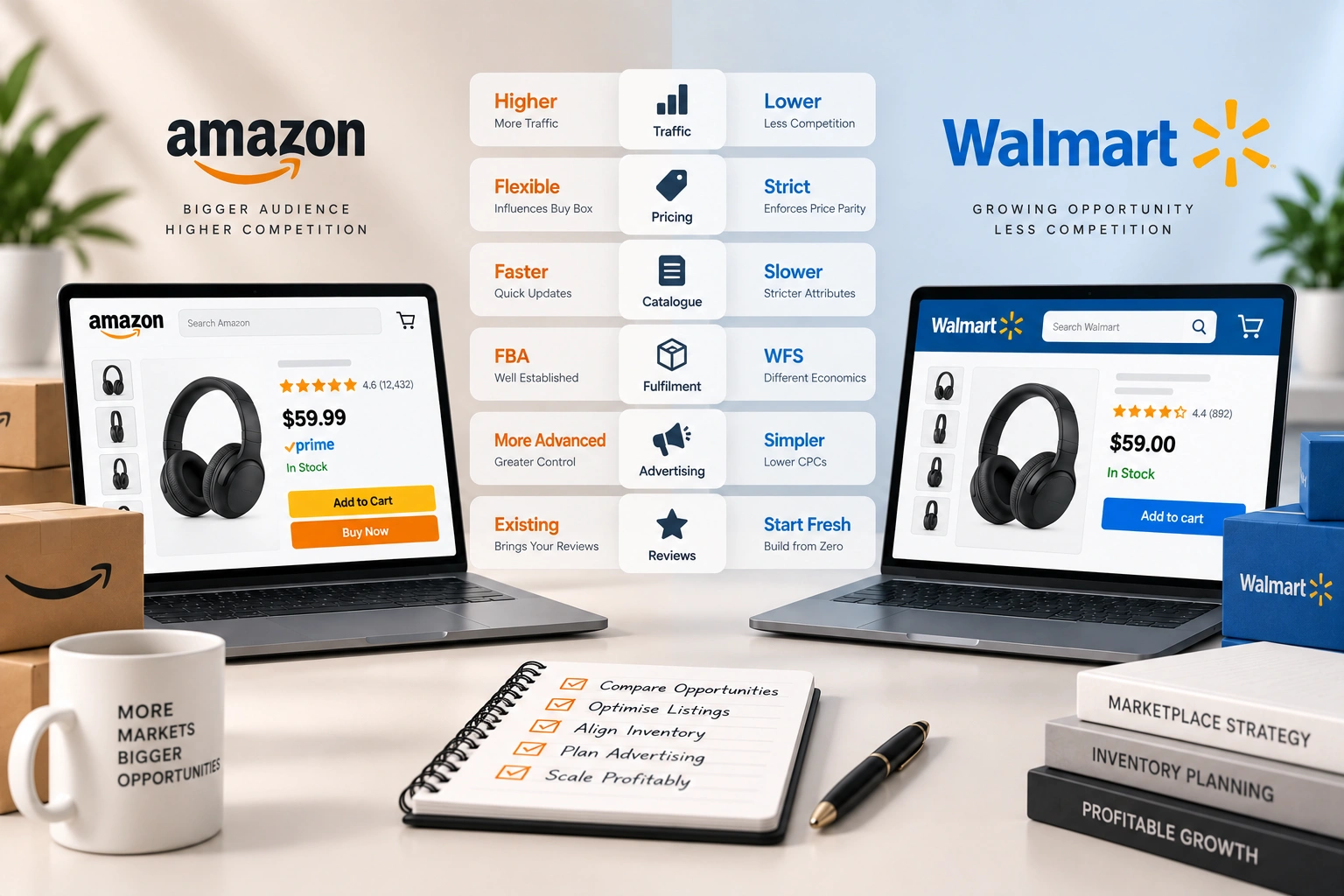
Amazon has more traffic and far more competition. Walmart has less of both, and the ratio is the point: a listing that would be invisible on Amazon can hold a first page on Walmart.
That is the entire commercial case for the expansion, and it is a real one. It is also why the categories worth entering are the ones where your competitors have not bothered yet.
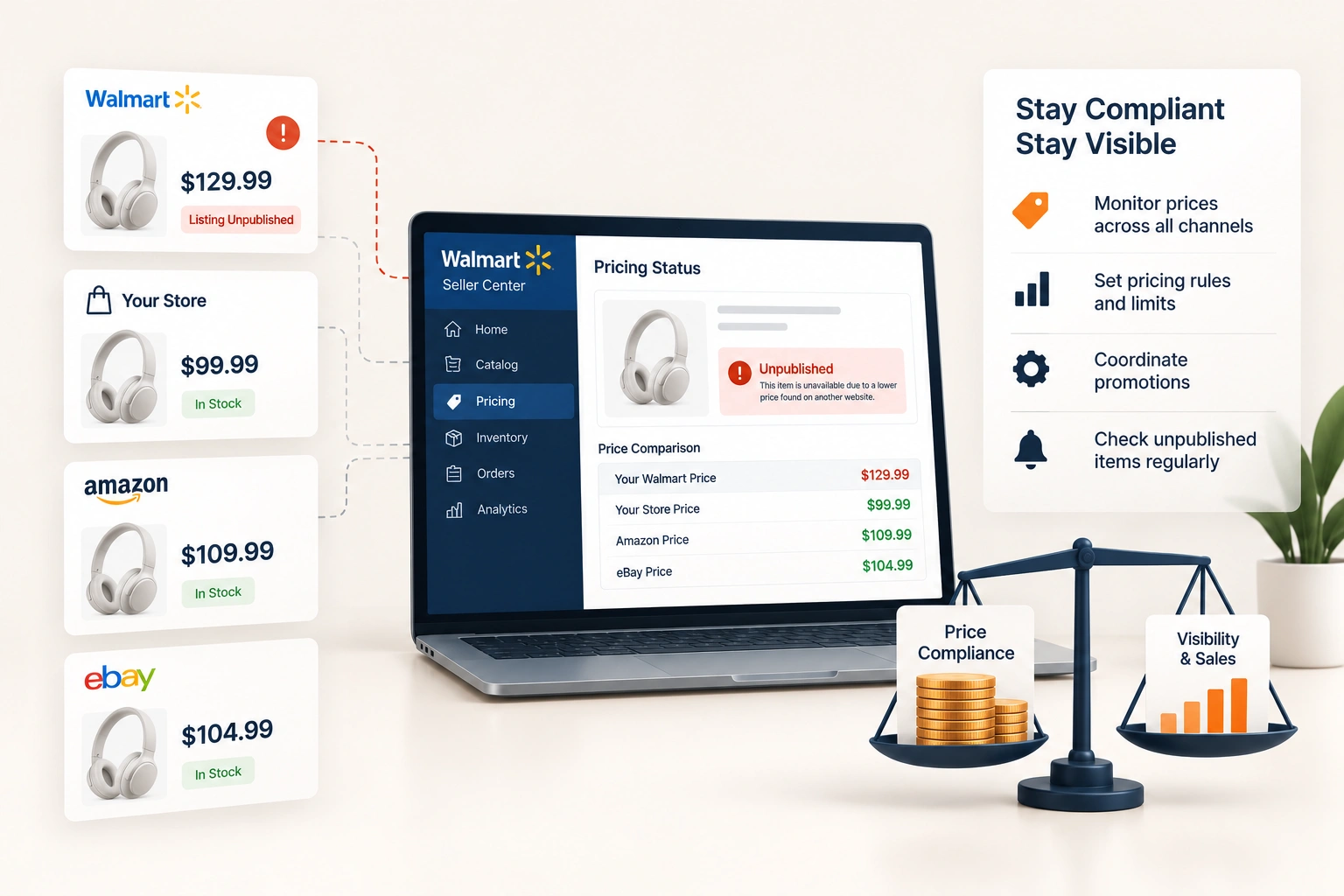
This is the difference that catches every new seller. Walmart compares your price against the same item elsewhere on the open web, your own website included, and a listing priced higher can be unpublished rather than simply ranked lower.
Amazon influences price through the buy box. Walmart enforces it through visibility. Running a promotion on your own store can take your Walmart listing off the site, which is not a sentence any Amazon playbook prepares somebody for.
The mechanics are in
the advertising article only obliquely, and in practice this is the first thing to check when a listing stops selling.
Walmart's catalogue is stricter about attributes and slower to reflect changes, so setup errors persist longer and are more painful to correct.
Variations, categorisation and item setup all reward getting it right the first time to a degree Amazon does not, because the fix cycle is measured in days rather than minutes.
Referral fees are broadly comparable by category, and the fulfilment economics are not: WFS bands, storage rates and return handling all differ from FBA, and a product that belongs in FBA does not automatically belong in WFS.
The delivery tag carries more weight on Walmart because fewer offers have it, which is the one place where the smaller marketplace gives the seller more leverage rather than less.
Walmart Connect is younger, cheaper per click in most categories, and less sophisticated in what it lets you control. Both of those are advantages if you are early and a constraint once you need precision.
The reporting is thinner, which changes how decisions get made: with less granularity available, structure carries more of the load than optimisation does.
Amazon reviews do not come with you. A product with four hundred reviews on one marketplace arrives on the other with none, competing against listings that have some, and review velocity is slower because the traffic is lower.
That is worth planning for rather than discovering. Syndicated review programmes exist where the brand qualifies, and where they do not, the first quarter is a conversion problem rather than a visibility one: the listing gets seen and does not convert, and the fix is the imagery and the copy rather than the bid.
It also means the early advertising is buying reviews as much as revenue, which changes what an acceptable return looks like for the first few months.
The product research, the supply chain, the customer service standards and the discipline. Those are worth everything and they move across intact.
The listing copy, the keyword set, the fulfilment decision and the advertising structure do not, and copying them is what produces a Walmart account that looks busy and sells nothing.
Inventory planning has to be one plan across both, because a unit committed to one marketplace is a unit the other cannot sell.
For brands also selling direct, the same question extends to a
Shopify store, where the margin is best and the traffic has to be bought.
If you are deciding whether Walmart is worth the quarter it will cost,
talk to us first.