Walmart Marketplace Returns: The Returns Insights Dashboard and What a Return Rate Costs
Walmart enhanced its Returns insights dashboard in September 2026. What it shows, how to read a return reason, what a point of return rate does to the margin, and the four fixes that move it.


Loading Article banner
A return on Walmart Marketplace is a sale that went backwards with the costs left in: the referral fee is refunded, the shipping out is not, the shipping back is somebody's, and the unit comes home in whatever state the customer left it. Most sellers know their return rate as one number on a dashboard. Fewer know which products, which reasons and which fixes are behind it, and that is the part Walmart has just made easier to see.
On 11 September 2026 Walmart's Marketplace Learn release notes announced that "the Returns insights dashboard in Seller Center has been enhanced to give you more details about your return performance." This article is what the dashboard shows, how to read it, what a return rate actually costs, and where the fixes are. The figures are Walmart's where Walmart published them and arithmetic where they are ours, and the article says which.
What the dashboard now shows
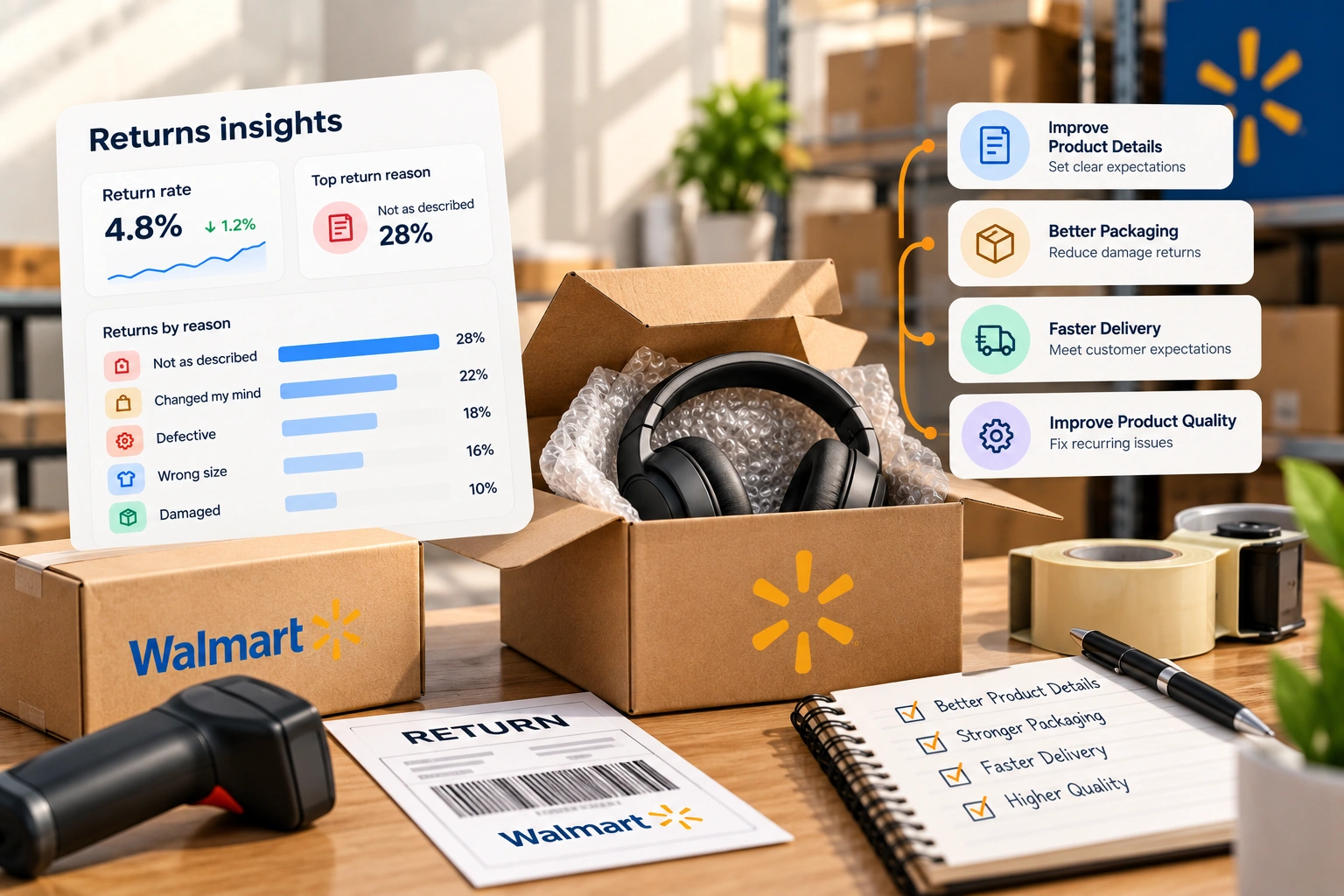
Walmart's note lists four things. Sellers can review their return metrics; track trends and the reasons behind returns; examine item level details, including ratings; and receive personalised recommendations by category. The dashboard sits under Orders in Seller Center, with a View returns insights button on the Returns page, as Walmart's guides describe it.
The item level detail with ratings is the change worth the visit. A return rate for the whole account tells a seller they have a problem; a return rate by item, beside that item's rating and its stated reasons, tells them which product and roughly why. Where the reason is sizing, the fix is on the listing. Where it is damage, the fix is in the box. Where it is "not as described" on a product whose rating is fine, the fix is usually an image that promised something the product does not do.
How to read a return reason
Return reasons are chosen by the customer from a list and they are approximate. A customer who ordered the wrong size will sometimes pick "changed my mind"; a customer whose parcel arrived crushed will sometimes pick "defective". Read the reasons in groups rather than one at a time, and read them against the item's reviews, which say the same things in the customer's own words.
Three groups do most of the work. Fit and expectation (wrong size, not as described, not what I expected) point at the listing: the images, the size guidance, the first line of the description. Condition (damaged, defective, missing parts) points at the product or its packaging, and the split between the two is usually visible in whether the damage is to the item or to the box. Preference (changed my mind, found it cheaper) points at price and at the buying moment, and is the group a seller can least move.
The group that is not there is the one to watch: a rising rate with no dominant reason is often a product whose quality has drifted between batches, and the inventory record is where the batch dates are.
What a return rate costs
The arithmetic, on a worked example that is ours rather than Walmart's. A product sells at $40 with a $6 contribution after the referral fee, the unit cost, the outbound shipping and the advertising that won the order. A return refunds the $40 and the referral fee comes back, but the outbound shipping is spent, the return shipping is spent by whoever the policy assigns it to, and the unit is either resold as new, resold at a markdown, or written off. Call the average loss on a return $14: the two shipments and a unit that resells at a discount two times in three.
At a 5% return rate, that is $0.70 taken off every unit sold, or $5.30 of contribution left. At 10%, $1.40 off and $4.60 left. At 15%, $2.10 off and $3.90 left. This is why a point of return rate on a thin-margin product is worth more than a point of conversion rate, and why the dashboard's item level view is a margin tool as much as a service one. The fee and reimbursement rules decide which of those costs come back to the seller; the return rate decides how often the question is asked.
The four fixes, in order
The listing first, because it is the cheapest and it moves the largest group. Every fit and expectation return is a promise the page made that the product did not keep, and the fix is to make the page promise the product: a size guide with a measurement the customer can take, a first image that shows scale, a description whose first line says what the product is not for. Walmart listing optimisation is usually written about for rank; the same work is the first return reducer.
The box second. Damage returns on a product that is not fragile are packaging returns, and packaging is a one time change per SKU. Where the seller ships through Walmart Fulfillment Services, the prep requirements are the packaging standard and a damage rate above the category's is a conversation with WFS about how the item is being handled.
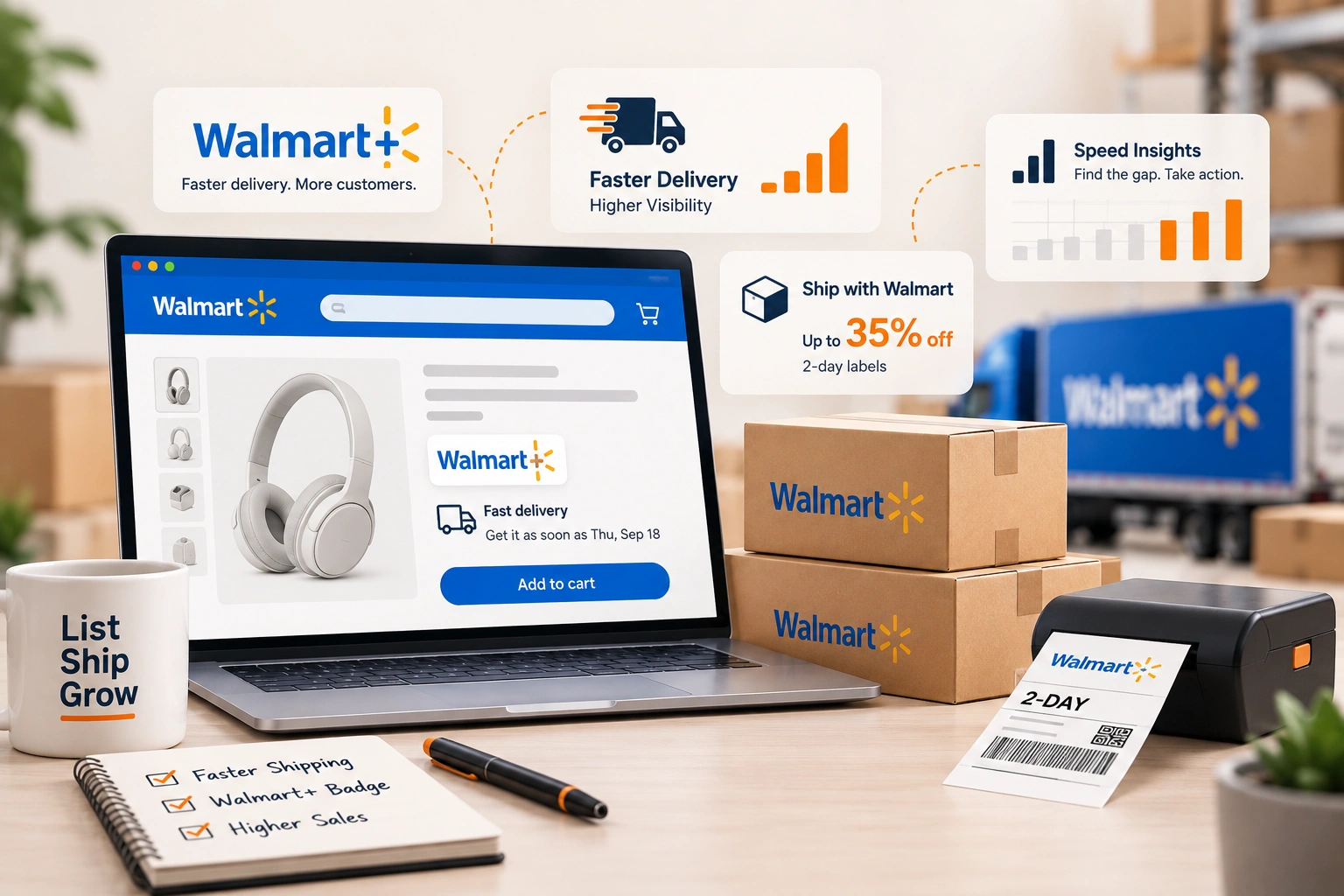
Delivery third. A late parcel is returned more often than an on time one, because the customer has bought it elsewhere by the time it arrives. Walmart's September notes touch this twice: the Walmart+ badge now qualifies on a 14 day lookback at over 90% on time delivery and under a 2.5% cancellation rate, and Ship with Walmart labels are discounted by up to 15% on 3 day and up to 35% on 2 day service when the delivery promise matches the speed. Both are covered in what Walmart now pays for on delivery speed; the return rate is the third reason to do them.
The product last, because it is the slowest. A product whose condition returns persist after the packaging is right has a quality problem, and the choice is a supplier conversation, a specification change, or the decision to let the SKU go. The dashboard's trend view is the evidence for that conversation, and a trend that starts on a batch date is the whole of it.
The rules, and where they are
Walmart sets the return rules for the marketplace, and a seller sets a return policy per item within them: the window, who pays return shipping, and how a return is received. Those rules live in the Returns and refunds guides in Marketplace Learn and in Walmart's customer return policy, and they are not quoted here because Walmart's help pages answer from behind a verification wall to anything that is not a signed in browser; read them in Seller Center rather than from a summary, including this one. What is safe to say is that the policy a seller chooses is part of the offer the customer compares, and a stricter policy than the category's norm is paid for in conversion before it is saved in returns.
What we do with it
On the Walmart accounts we run, the returns dashboard is read weekly by item, beside the ratings and the reviews, and every product above the account's median gets one of the four fixes assigned with a date. The listing changes ship the same week; the packaging changes ship with the next inbound; the delivery changes are a settings review; the product changes go to the brand with the trend chart attached. That is how our Walmart management treats a return: as a margin line with a cause, not as a cost of doing business.
Related reading: Selling on Walmart vs Amazon: What Really Differs.
Frequently asked questions
The questions that come up most often on this subject.
Under Orders, on the Returns page, through the View returns insights button, as Walmart's Marketplace Learn guides describe it. Walmart's release note of 11 September 2026 says the dashboard now shows return metrics, trends and reasons, item level details including ratings, and personalised recommendations by category.
Walmart does not publish a target in the release note, and the right number depends on the category: apparel and footwear return at multiples of what hard goods do. The useful comparison is the dashboard's category recommendation and your own items against each other. A product well above the account's median is the one to fix first, whatever the absolute number.
It depends on the return policy the seller set for the item within Walmart's rules and on the reason for the return. The rules are in the Returns and refunds guides in Marketplace Learn and in Walmart's customer return policy, which are the pages to read in Seller Center; this article does not quote figures from them because Walmart's help pages are not readable from outside a signed in browser.
Directly it affects margin, which is the arithmetic in this article. Indirectly a product that is returned often is usually rated lower and converts less, and both feed the offer's position. Walmart's dashboard now puts the return data beside the ratings for exactly that reason.
The listing, for fit and expectation returns: a size guide the customer can measure against, a first image that shows scale, and a description that says what the product is not for. It is the cheapest change and it moves the largest group of reasons. Packaging is second, delivery speed third and the product itself last, because it is the slowest to change.