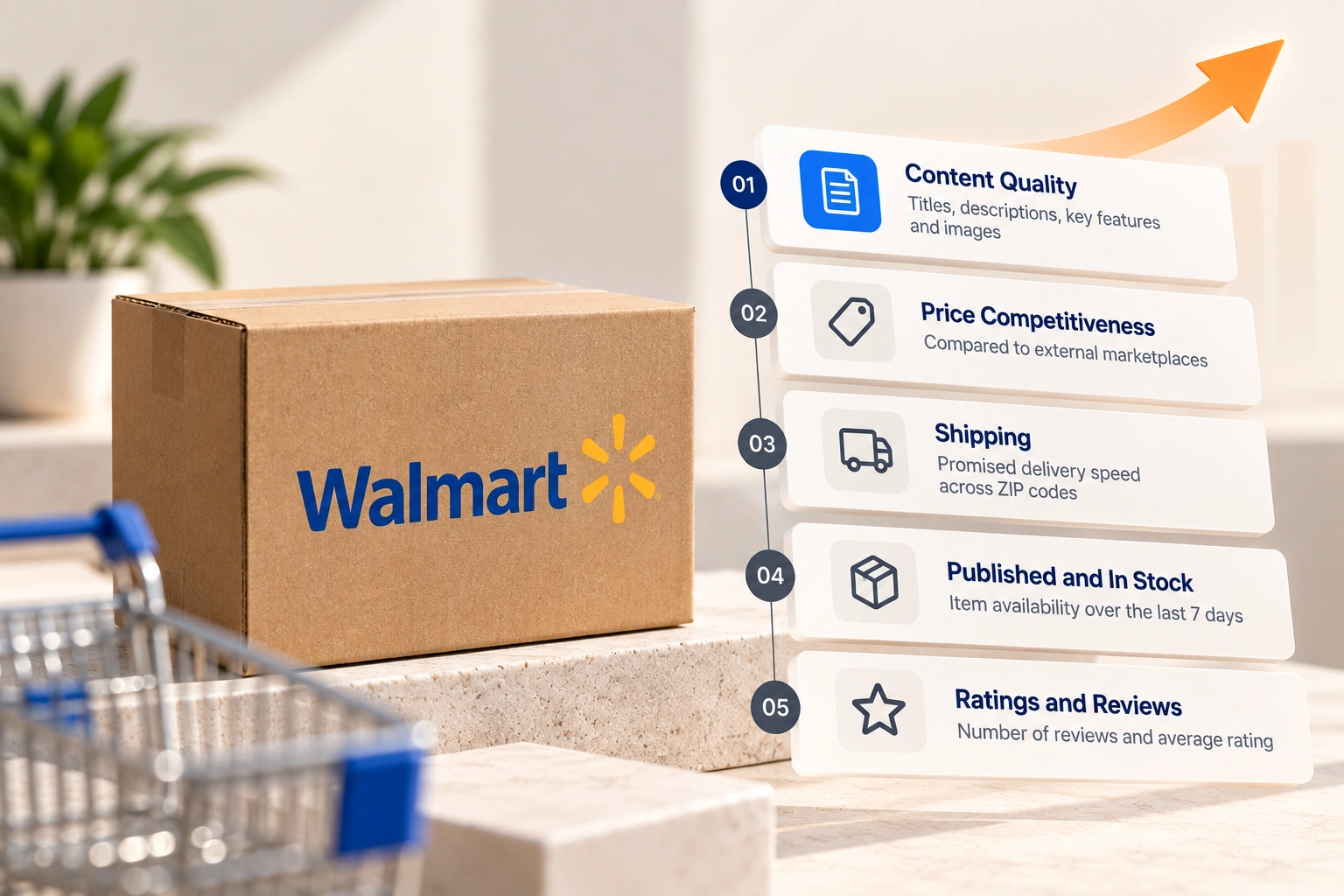
Walmart Marketplace SEO: What the Search Actually Reads
Walmart search is not Amazon search with a different logo. It leans harder on structured attributes, and that is where most imported listings are empty.


Loading Article banner
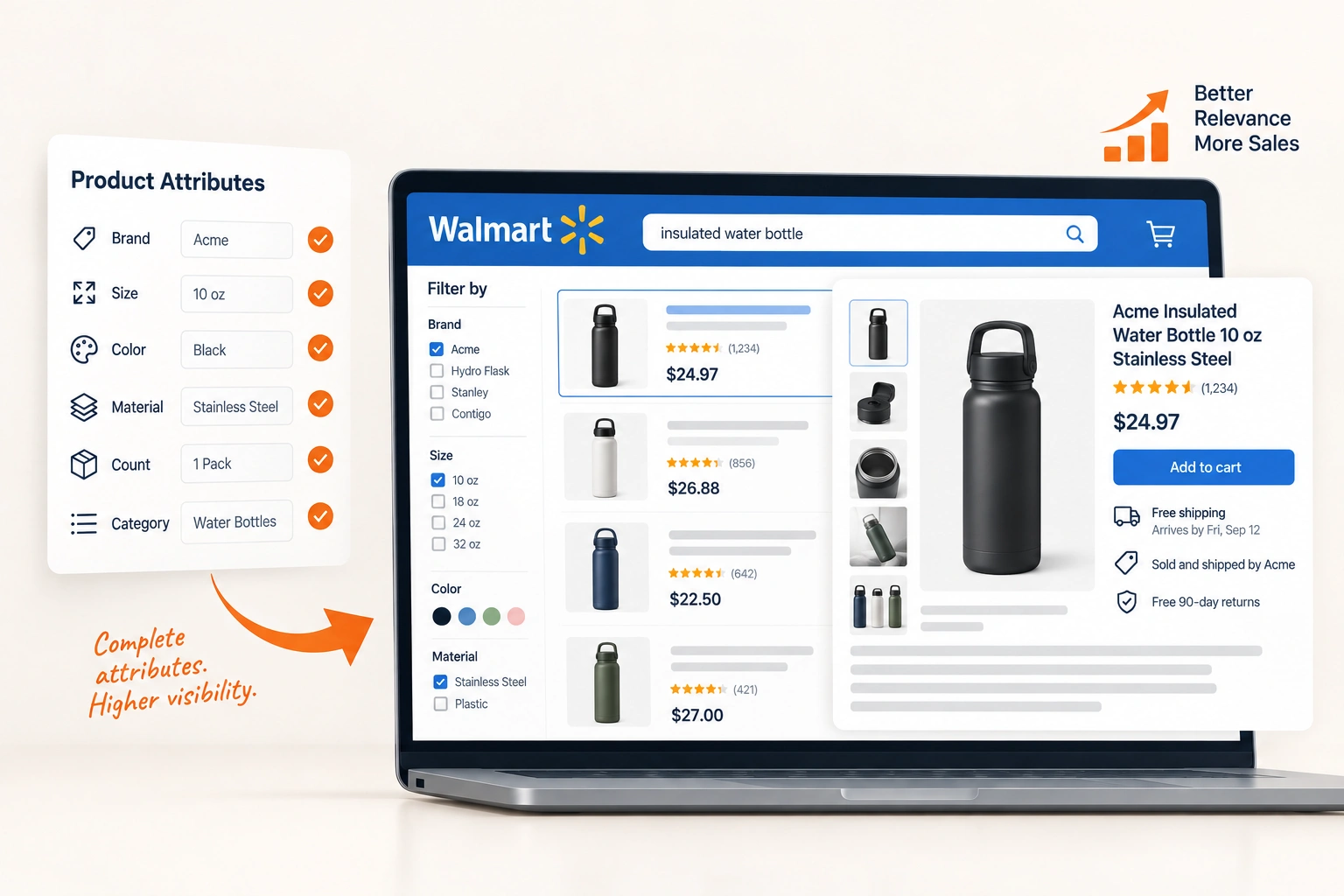
Most Walmart catalogues were imported from Amazon, and it shows. The titles are Amazon titles, the bullets are Amazon bullets, and the attribute fields are largely empty because the import had nothing to put in them.
That is a workable way to launch and a poor way to rank, because attributes are exactly where Walmart's search does work that Amazon's does elsewhere.
Content quality is scored, and the score is visible
Walmart publishes a listing quality score in the seller centre, broken into components: content and discoverability, offer, ratings and reviews, and post-purchase quality.
This is unusual and useful. Amazon leaves sellers inferring what a good listing is; Walmart tells you, per item, which part is weak. Most sellers never open it.
The score is not the ranking, and treating it as one is a mistake. It is a checklist of things the platform can measure about a listing, and a listing that scores well is one that has not left anything obvious undone.
Attributes are the part that is actually missing
Every category has a set of structured fields: material, size, colour, count, compatibility, whatever the category needs. They populate filters on the left of a search results page, and a shopper who filters to a size you did not fill in has removed you from consideration entirely.
This is different in kind from keyword placement. A missing attribute does not rank you lower; it excludes you from a result set. No amount of title optimisation compensates for being filtered out.
It is also the least glamorous work on the channel, which is why it is usually undone. Filling several hundred attribute values across a catalogue is tedious, mechanical and among the highest-return work available on Walmart.
Titles follow a format rather than a strategy
Walmart publishes a title format per category, generally something close to brand, then defining feature, then item name, then model or size. Following it reads naturally and matches how shoppers scan results.
Keyword stuffing works less well here than the habits imported from Amazon suggest. A title crammed with terms reads as a worse product to a shopper on a retailer's site, and shopper behaviour is a large ranking input.
Write for somebody scanning a page of similar items, then check the keywords are present rather than writing for the keywords and checking it reads.
Description and features do different jobs
The key features are scanned; the description is read by the minority who want detail. Both are indexed, and both are places where terms that did not fit the title belong.
Rich media, where the category supports it, affects conversion more than ranking, and conversion feeds ranking. The order of operations is: be findable, then be chosen.
The general principle, and why it differs from optimising a page for Google, is covered in a marketplace ranks an offer and a search engine ranks a page, which is why a Shopify habit carried across tends to underperform.
Images are a compliance problem before they are a marketing one
Walmart specifies image requirements per category: a white background on the main image, minimum dimensions, the product filling the frame. A listing failing them can be suppressed rather than merely looking worse.
Beyond compliance, the sequence that works is the same everywhere: the main image sells the click, the following images answer the questions a shopper would otherwise ask in a review, and the last one handles scale or contents.
Imported Amazon imagery usually passes. Imported lifestyle imagery as the main image usually does not.
What ranking actually weighs
Relevance, which is what the content above establishes. Then performance: whether people click the listing, buy it, and keep it. Then price and fulfilment, which is why pricing and stock reliability belong in this conversation rather than beside it.
There is no keyword field to fill that shortcuts any of it. A listing that is complete, priced sensibly, in stock and shipping quickly is doing everything the algorithm can see. The same is true on eBay, where the search weighs different things and rewards the same completeness.
The order to fix an imported catalogue in
Attributes first, on the items that sell. It is the biggest gap, it excludes rather than demotes, and it is mechanical enough to delegate.
Then main images, for compliance, because a suppressed listing is worth nothing however good the copy is.
Then titles, to the category format, on the same items.
Then features and description, which is the slowest work and the smallest single gain.
Running that sequence across a catalogue is most of what our Walmart marketplace management does in the first month, and the same discipline applies to an Amazon catalogue with the fields renamed.
Where this goes next
What the search reads is one of three things Walmart weighs, and the other two have their own articles. The price rules that unpublish a listing take a well written item off the site altogether, and the inventory numbers Walmart's search watches decide whether an in stock item is shown at all. A listing that ranks still needs Sponsored Products on Walmart to prove it converts, and the fulfilment promise that Walmart Fulfillment Services brings is a ranking input of its own. For a catalogue that also lives on Amazon, what moves rank on Amazon is the sibling article, and the two searches read differently.
Related reading: Selling on Walmart vs Amazon: What Really Differs.
Frequently asked questions
The questions that come up most often on this subject.