Walmart PPC: What Changes When You Come From Amazon
Walmart Connect looks familiar to an Amazon advertiser and behaves differently in ways that cost money quietly. Less competition, less data, and item relevance decided elsewhere.


Loading Article banner
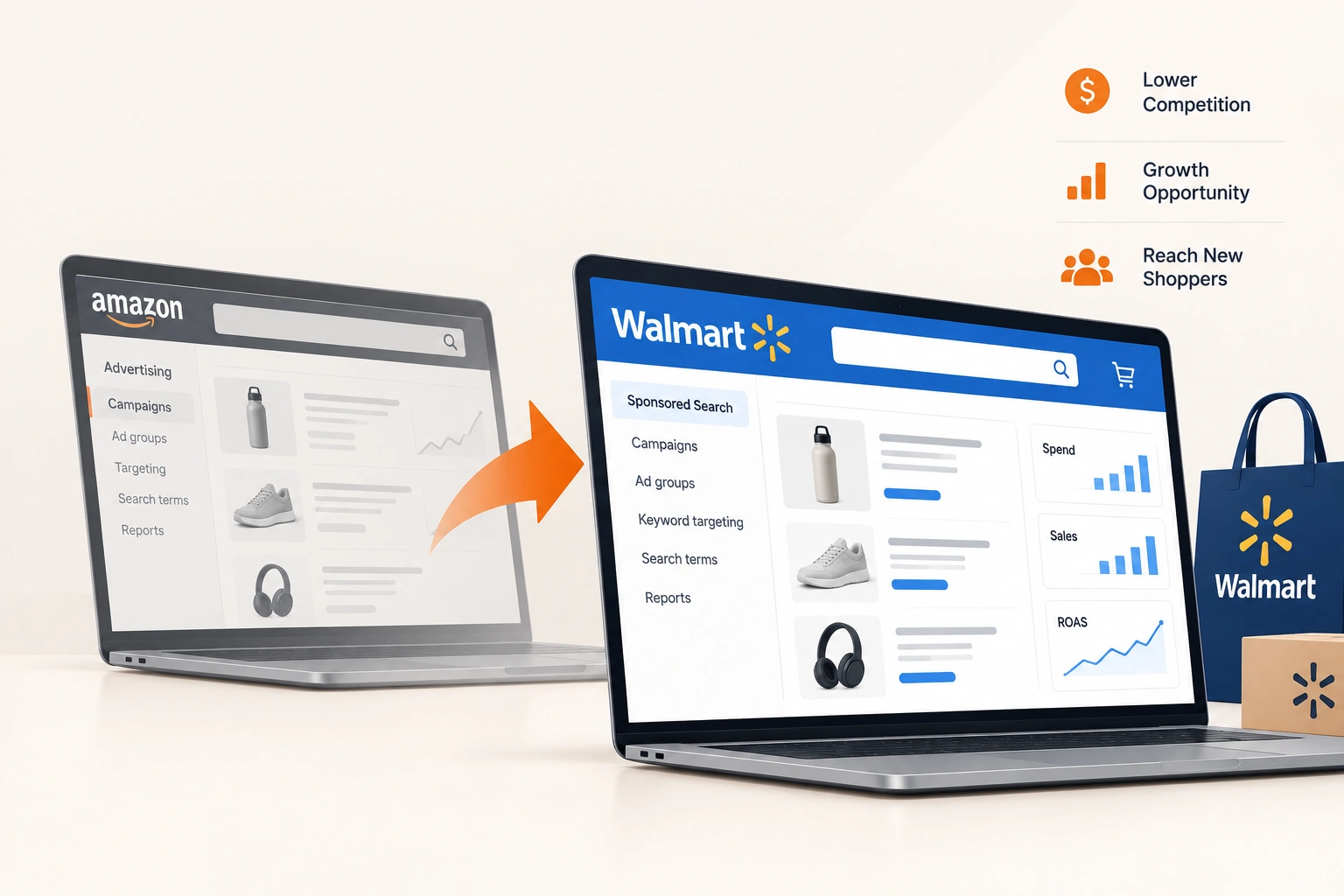
Advertising on Walmart is the closest thing on the channel to familiar ground for an Amazon seller. There are sponsored placements, automatic and manual campaigns, keyword targeting and bids, and the vocabulary transfers almost intact.
The differences are underneath, and they are the kind that cost money quietly rather than obviously.
Less competition, and what that is worth
Fewer sellers advertise on Walmart than on Amazon, which generally means lower costs per click for comparable placements. That is the headline reason people try it.
It also means less traffic, so the same budget buys more clicks against a smaller pool of shoppers. A campaign that would be starved on Amazon can saturate its available inventory here and then spend on progressively worse placements.
The practical consequence is that budget ceilings matter more than budget floors. On Amazon the question is usually whether you can afford enough. Here it is often whether you are buying more than is worth having.
Item relevance is decided by the listing, not the campaign
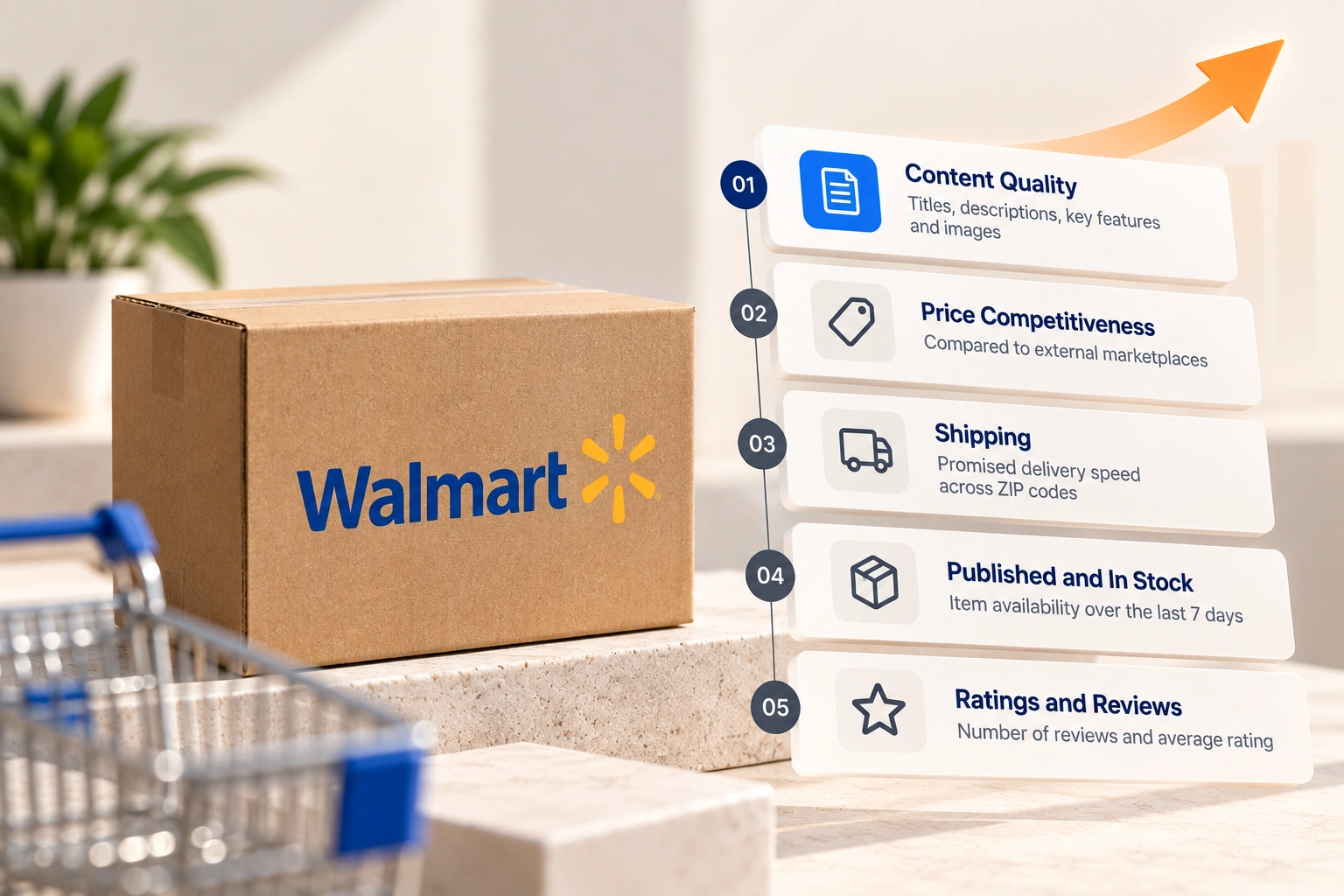
An advertised item still has to be considered relevant to the search, and relevance comes from the listing content. A poorly completed listing cannot be advertised into relevance for terms it does not support.
This catches people who arrive expecting advertising to solve a visibility problem. It solves a placement problem. If the item is missing attributes and has an imported title, the campaign is bidding on searches the listing was never eligible for.
So the sequence is: fix the listing, then advertise it. Completing the attributes and writing a title to the category format is not optional groundwork, it is what makes the advertising eligible in the first place.
Automatic and manual do the same jobs as on Amazon
Automatic campaigns find terms you would not have thought of and waste money on terms you would have excluded. Manual campaigns exploit what automatic found and control what you pay for it.
Running only automatic means never controlling anything. Running only manual means never discovering anything. Almost every account that works well runs both, with the search term report as the conveyor between them.
The mechanism is the same one described for Amazon in Amazon paid search, and the harvesting loop transfers directly.
The data is thinner, and that changes the routine
Lower traffic means fewer impressions per term, which means it takes longer for a term to accumulate enough data to judge. A keyword with four clicks and no sales is not evidence of anything.
Optimising on the same weekly cadence as an Amazon account therefore produces decisions made on noise. The honest answer is a longer window: judge terms over a period that contains enough clicks to mean something, and resist acting on the first bad week.
This is the most common way Amazon advertisers lose money on Walmart. They apply a routine tuned for volume to an account that does not have it, and prune terms that were working.
What to measure, and against what
The same measures as anywhere: spend, sales attributed to advertising, the ratio between them, and what share of total sales advertising accounts for.
The benchmark is the part that does not transfer. A return that would be poor on Amazon can be acceptable here if the cost per click is lower and the item's margin is the same, and the reverse is true for competitive categories.
Published expectations per channel are collected in ROAS standards for Amazon PPC, TikTok Shop and Walmart Connect, which is a better starting point than carrying an Amazon target across unchanged.
Advertising across business models
Private label. Advertising is how a new item accumulates the sales history that ranking needs, and the early spend is buying data as much as revenue.
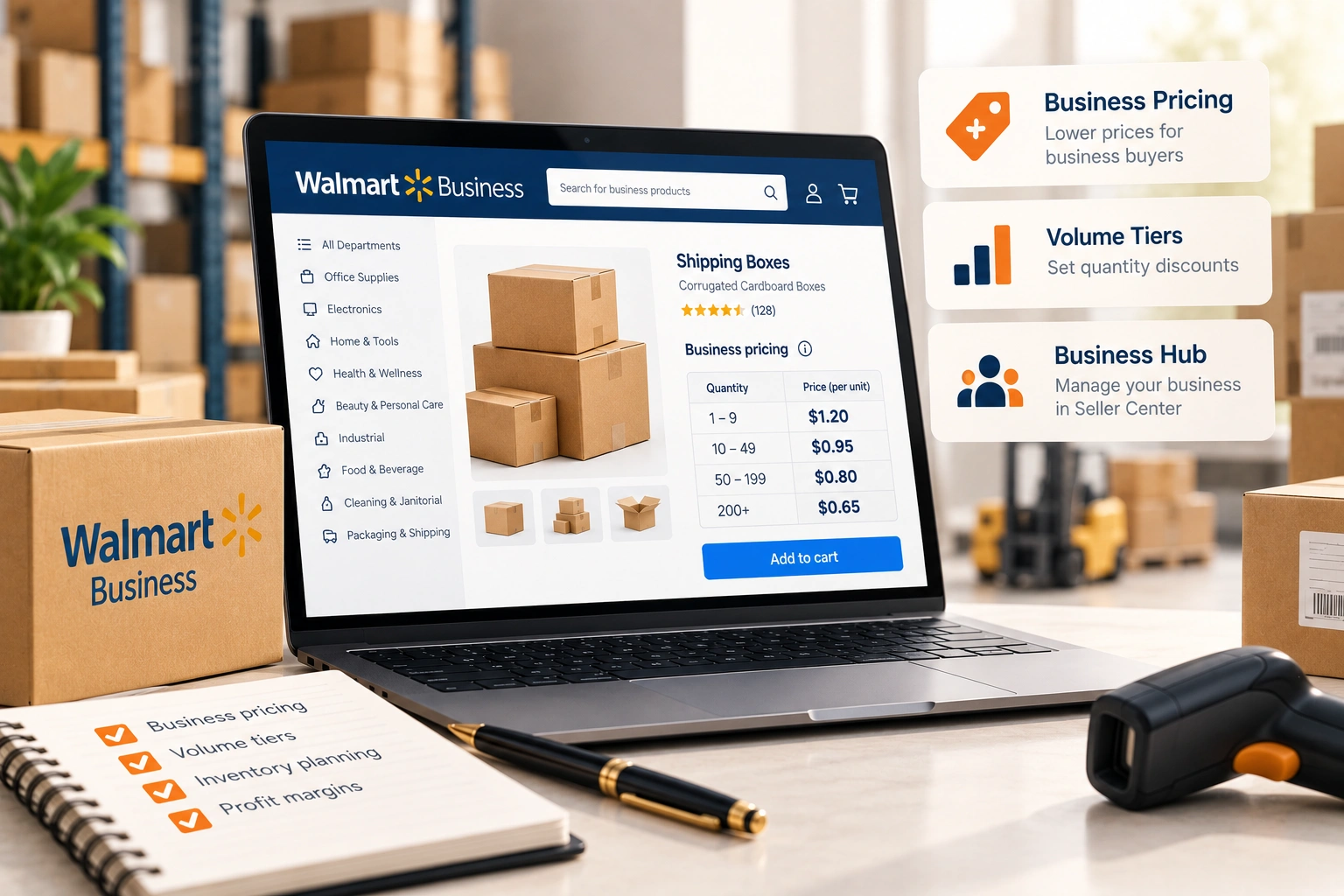
Wholesale. You are advertising an item other sellers also offer, so the buy box has to be yours before the advertising is worth anything.
Dropshipping. Margins are thin, so the acceptable return is high and the room for discovery spend is small. Manual, tightly controlled, and patient.
Arbitrage. Stock is finite and often small, so a campaign that works can exhaust the inventory it was selling. Budget to the stock, not to the opportunity.
B2B and bulk. Fewer, larger orders make averages misleading. One order can rescue a month, and building a plan around that is building a plan around luck.
A sensible first ninety days
Start with automatic campaigns on the items whose listings are actually complete, at a budget you would not mind losing entirely.
Leave it long enough to accumulate real search term data, which is longer than feels comfortable.
Move the terms that converted into manual campaigns with their own bids, and add the ones that spent without converting as negatives.
Only then consider expanding to more items, because the second item costs the same attention as the first and most catalogues have a small number of products worth advertising at all.
Running that programme across a catalogue is part of our Walmart marketplace management, and the wider cross-channel version is in eCommerce performance marketing.
Related reading: Walmart Fulfillment Services: What WFS Changes.
Related reading: Selling on Walmart vs Amazon: What Really Differs.
Frequently asked questions
The questions that come up most often on this subject.
Costs per click are generally lower because fewer sellers advertise, but there is also less traffic. The same budget buys more clicks against a smaller pool, so the risk shifts from not affording enough to buying more than is worth having.
The vocabulary and the structure transfer almost intact. What does not transfer is the optimisation cadence: less traffic means terms take longer to accumulate meaningful data, and an Amazon weekly routine applied here prunes terms on noise.
Both. Automatic discovers terms you would not have chosen, manual controls what you pay for the ones that work, and the search term report is what moves terms from the first to the second.
Usually relevance rather than bid. An advertised item still has to be considered relevant to the search, and relevance comes from the listing content, so an incomplete listing cannot be advertised into terms it does not support.
Long enough to accumulate a number of clicks per term that would justify a decision, which at lower traffic is typically weeks rather than days. A keyword with four clicks and no sales is not evidence of anything.
Do not carry an Amazon target across unchanged. A return that would be poor on Amazon can be acceptable at a lower cost per click with the same margin, and the reverse holds in competitive categories.
No. Most catalogues have a small number of items worth advertising, and every additional item costs the same attention as the first. Start with the ones whose listings are complete and that already sell.
For wholesale and any item several sellers offer, advertising an item whose buy box belongs to somebody else is buying traffic for a competitor's offer. Settle the buy box first.
An amount you would not mind losing entirely, because the first period is buying search term data rather than a return. What matters more than the figure is leaving it running long enough for that data to exist.
Yes, and it is usually better, provided they adjust the cadence and the benchmarks rather than running the Amazon playbook. The failure is not a lack of skill, it is applying a routine tuned for volume to an account that does not have it.