Walmart Marketplace Holiday 2026: WFS Deadlines, Deals Events and the Plan
Walmart's holiday is not Amazon's with the word changed. The WFS inbound dates fall a month earlier than most sellers expect, the deals events are invitation and nomination based, and the buyer is in a different place. What to do by when.


Loading Article banner
The mistake sellers make on Walmart in the fourth quarter is to run the Amazon plan with the names changed. The dates are earlier, the deals events do not work the same way, and the buyer who shops Walmart.com in November is more often buying for a household than for themselves. Every one of those changes what to send and when.
This is the Walmart holiday in one place for a seller who already has Amazon's dates on the wall. The WFS figures below are reported from Walmart's holiday guidance as covered in the seller press, not read from Seller Center, and are marked so; the plan is the same either way, because the pattern of the dates is the point.
The WFS inbound dates come first, and early
As reported from Walmart's holiday guidance, inventory for the October deals event had to be in a Walmart Fulfillment Services centre by 1 September, and inventory for the annual holiday deals event by 15 September. The peak period for WFS runs from 1 October to 31 December, and Walmart's guidance is that receiving slows through it, so a shipment that arrives in the second half of October is received when the centres are already handling orders.
Those dates are three to six weeks ahead of Amazon's, and the reason is Walmart's smaller fulfilment network: fewer centres, fewer receiving doors, and a queue that cannot flex the way Amazon's does. A seller who plans Walmart inbound from Amazon's calendar sends stock in the second week of October and watches it sit. Walmart Fulfillment Services explained covers how the receiving process works in a normal month; in October the same process runs with a queue in front of it.
The deals events, and how a product gets into one
Walmart runs an October deals event, timed against Amazon's Prime Big Deal Days, and an annual holiday event across Black Friday and Cyber Monday. Products do not enter them by submitting a deal with a fee, the Amazon way. They are nominated through Seller Center's promotions tools, against a deal price and a stock commitment, and Walmart's category teams choose from the nominations. Placement follows the price cut and the stock; a nomination without both is a nomination that is passed over.
That structure changes the sequence. On Amazon the deal fee is the cost and the decision is whether to pay it; on Walmart the cost is the price, and the decision is whether the product can carry a deep enough cut to be chosen and still make money after the referral fee and WFS fees. Walmart pricing strategy sets out the price rules that apply the rest of the year, including the one that suspends a listing whose price is beaten elsewhere, which matters more in a quarter when everybody is cutting.
What Walmart's holiday buyer is doing
Walmart's marketplace shopper in November is more often a household buying for the season: toys, kitchen, home, seasonal decor, gifts under a price point, and the everyday goods that go in the same basket. The listing that wins is the one that answers a household question in the title and the first image, at a price that reads as a Walmart price, with the delivery promise WFS gives it. Walmart listing optimisation is the year round version; the holiday version is the same work with the gift question added to the content.
Advertising follows the same shape. Sponsored Products on Walmart is an auction with fewer bidders than Amazon's, and the November auction is where most of the year's new bidders arrive. Bids set in September on the product's own terms hold position for less in November than bids raised on the day, and the Walmart PPC article covers the campaign structure that makes a budget change a one line edit rather than a rebuild.
The plan, September to January
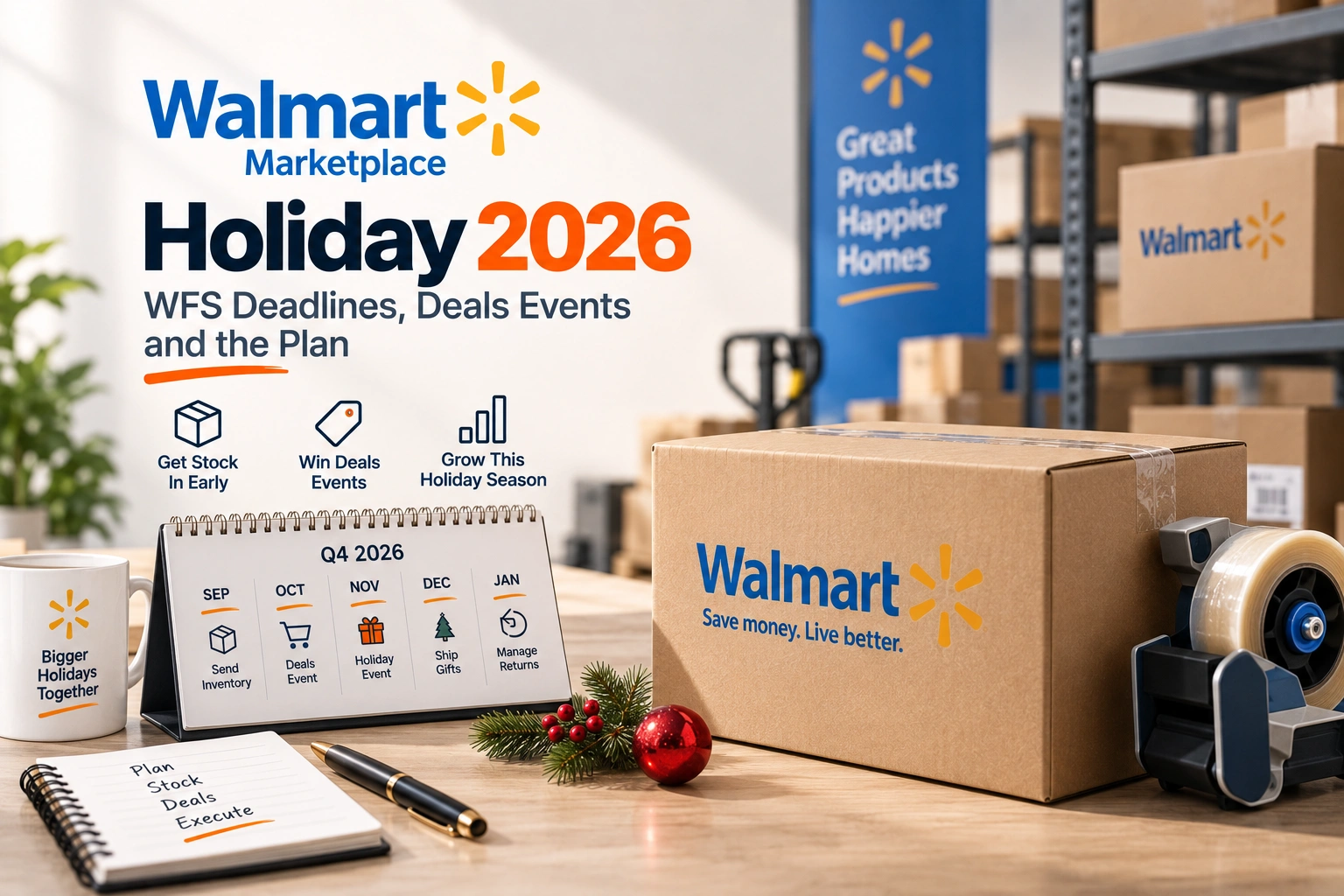
September: the stock is in WFS or it is not going to be, on the reported dates above. The nomination for the annual event goes in against a price that has been checked against the referral fee, the WFS fee and the deal cut together. Bids on the core terms are already in position.
October: the October event runs, and what sells in it is the forecast for November. Stock that did not sell is the stock to cut before the annual event, because a product that sits through October will sit through December. Restocks go in as small shipments, which are received faster than a truckload during peak.
November: the annual event, the budget released on the day, and the stock watched daily. A WFS listing that runs out in the last week of November is a listing that lost the month it was stocked for. December: the delivery promise is the thing to protect, and the last shipping date for a WFS order to arrive before the 25th is the real end of the selling season.
January: the returns arrive, the December stock that did not sell is what the year starts with, and the quarter's figures are read against the plan. That review is the one piece of Q4 work most sellers skip, and it is the subject of the post holiday planning article in this set. For the brands we run, the whole calendar above is the autumn's work in Walmart marketplace management: the inbound in by the reported dates, the nomination priced, the auction entered before the crowd arrives.
The stock question, which is the whole question
Every part of this comes back to what is in WFS by mid September. Too little and the deals events are nominations without stock; too much and January starts with storage fees on product the season did not want. The forecast is built from last year's October and November by product, adjusted for the price cut a deal will carry, and the method is the one in Walmart inventory management. The fourth quarter is where a weak forecast shows first and costs most.
Frequently asked questions
The questions that come up most often on this subject.
As reported from Walmart's holiday guidance, 1 September for the October deals event and 15 September for the annual holiday event, with the WFS peak period running from 1 October to 31 December. Check Seller Center for the dates as published to your account.
By nominating it through Seller Center's promotions tools against a deal price and a stock commitment. There is no per deal fee as on Amazon; Walmart's category teams choose from the nominations, and the price cut and the stock behind it decide whether a product is chosen.
Walmart's fulfilment network is smaller, with fewer centres and receiving doors, so it cannot absorb a late surge of inbound the way Amazon's can. The inbound dates are set so that receiving is finished before the centres turn to orders in October.
Set them in September so the campaigns already hold position, then release budget on the event days rather than raising bids into the November auction, which is when most of the year's new bidders arrive. Bring them back down in the week after Cyber Monday.
The last WFS shipping date that delivers before 25 December, which Walmart publishes each year in Seller Center. Orders after it ship with a January delivery promise, and the selling season for gifts ends on that date, not on the 25th.