TikTok Shop Returns: What Changed for Sellers in 2026
Return addresses you must own, refunds you can only review after the parcel is delivered, forward shipping fees you no longer get back, and an Account Health Rating that now counts more kinds of violation. The changes, in order.


Loading Article banner
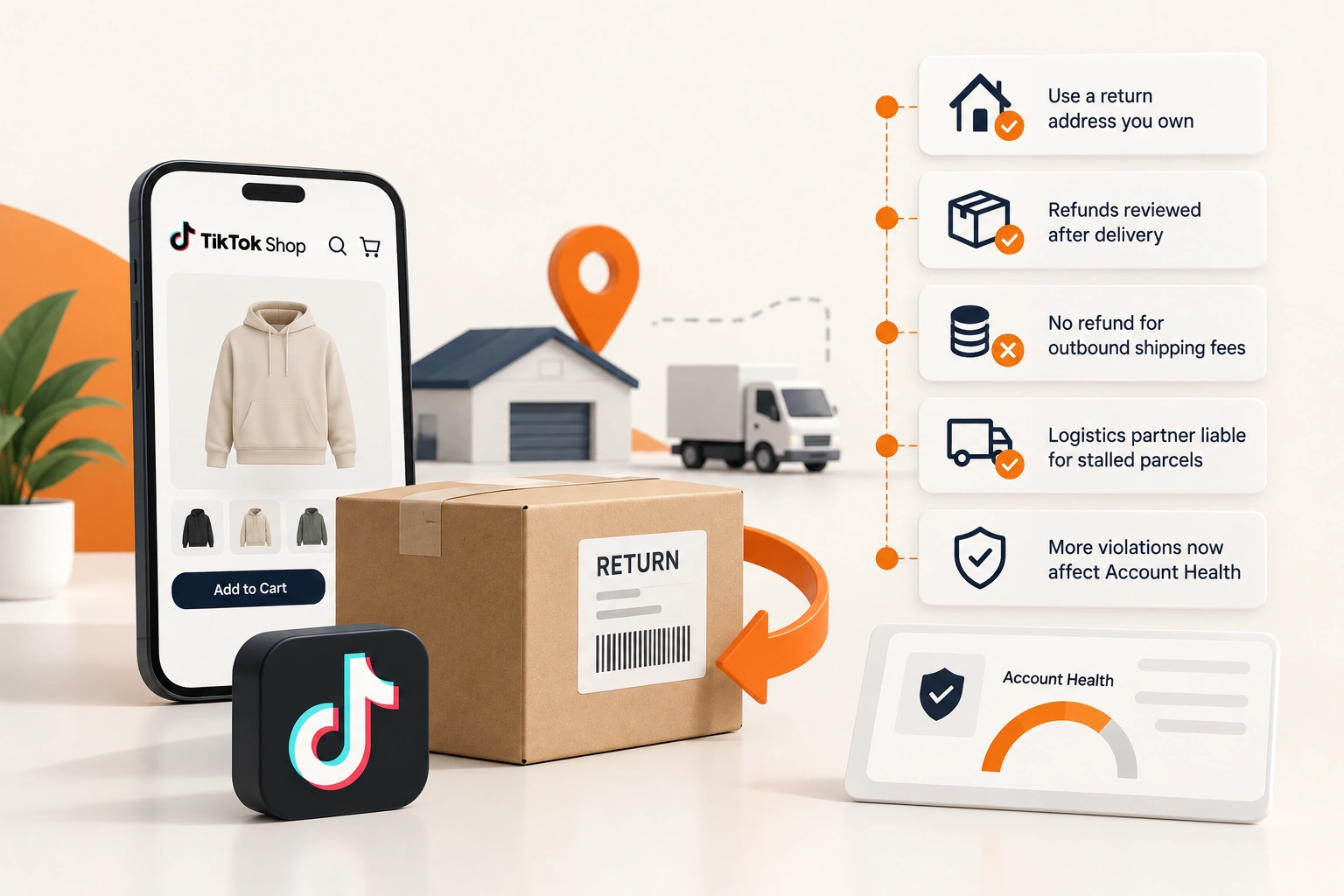
TikTok Shop changed the economics of a return three times in one quarter, and none of the three was announced as a headline. They arrived in the monthly policy notes, which is where the changes that actually cost money usually live.
Taken together they move risk from the platform to the seller in some places and from the seller to the platform in others, and they attach the whole thing to Account Health. Here is each one, what it means operationally, and what to change before it costs you a rating.
Return addresses have to be yours
From 5 August 2026, TikTok Shop requires that sellers use return addresses they own, are authorized to use, and that are affiliated with business operations. Sending returns to unauthorized, unaffiliated, residential or non verified addresses is now an enforcement issue rather than a configuration choice.
This is aimed at a real pattern. Plenty of shops, particularly ones running a dropshipping model, had return addresses pointing at a supplier who had never agreed to receive returns, at a warehouse the seller had no relationship with, or at an address chosen because parcels sent there were quietly never claimed.
A 3PL address is fine if you are authorized to use it. A supplier address is fine if the supplier has agreed. A home address is the one to look at first, because residential is named explicitly, and a lot of small shops are running one without thinking about it.
The address has to verify
Own it and be authorized to use it is the policy. Verifiable is the practical requirement, and it is where most rejections happen. An address that fails carrier validation is a non verified address, and the failure is almost always the same thing: a unit, suite or floor left out of a commercial address.
Check the address against the carrier's own validation before saving it, with the unit number in the field it belongs in rather than appended to the street line. It is two minutes of work that prevents a category of problem you would otherwise diagnose one return at a time.
You review the refund after the parcel arrives
From July 2026, sellers must wait until a returned package is marked as delivered before reviewing certain refunds. Previously a seller could act while the parcel was in transit.
The intent is obvious and reasonable: it stops refunds being refused on the basis of what a seller expects to find rather than what arrived. The operational effect is that your returns queue now has a waiting stage in it, and the clock on your response starts later than it used to.
If your process was to review on receipt of the tracking number, it now has to trigger on the delivery scan. That is a workflow change, not a policy opinion, and a queue built the old way will look like inaction to TikTok.
The outbound shipping fee is gone
Also from July 2026, forward shipping fees are no longer refunded for buyer responsible return reasons. Previously a return where the buyer simply changed their mind did not cost the seller the original postage.
It does now, and the number is bigger than it looks. On a low margin item with free delivery, one buyer responsible return can eat the contribution from three sales. This is the change that should prompt a review of which products you are willing to sell at which price, because it lands hardest on exactly the cheap, impulse bought categories TikTok is best at moving.
It also raises the value of getting the listing right the first time. A return caused by a size, colour or material surprise is a return you paid twice for, and the fix is in the content rather than in the returns process.
Parcels that stop moving
One change went the seller's way. In stagnant reverse logistics cases where there has been no update for 10 or more days, the logistics partner becomes liable. A return that disappears into a carrier network is no longer automatically your problem.
Alongside it, eligible package not received refund only cases on 4PL shipments moved from seller review to platform review. TikTok decides those rather than handing them to you. Fewer decisions to make, and less exposure to being wrong about one.
Both are worth knowing because they change what you should escalate. A stalled return at day eleven is a case to raise, not a loss to absorb.
And it all lands on Account Health
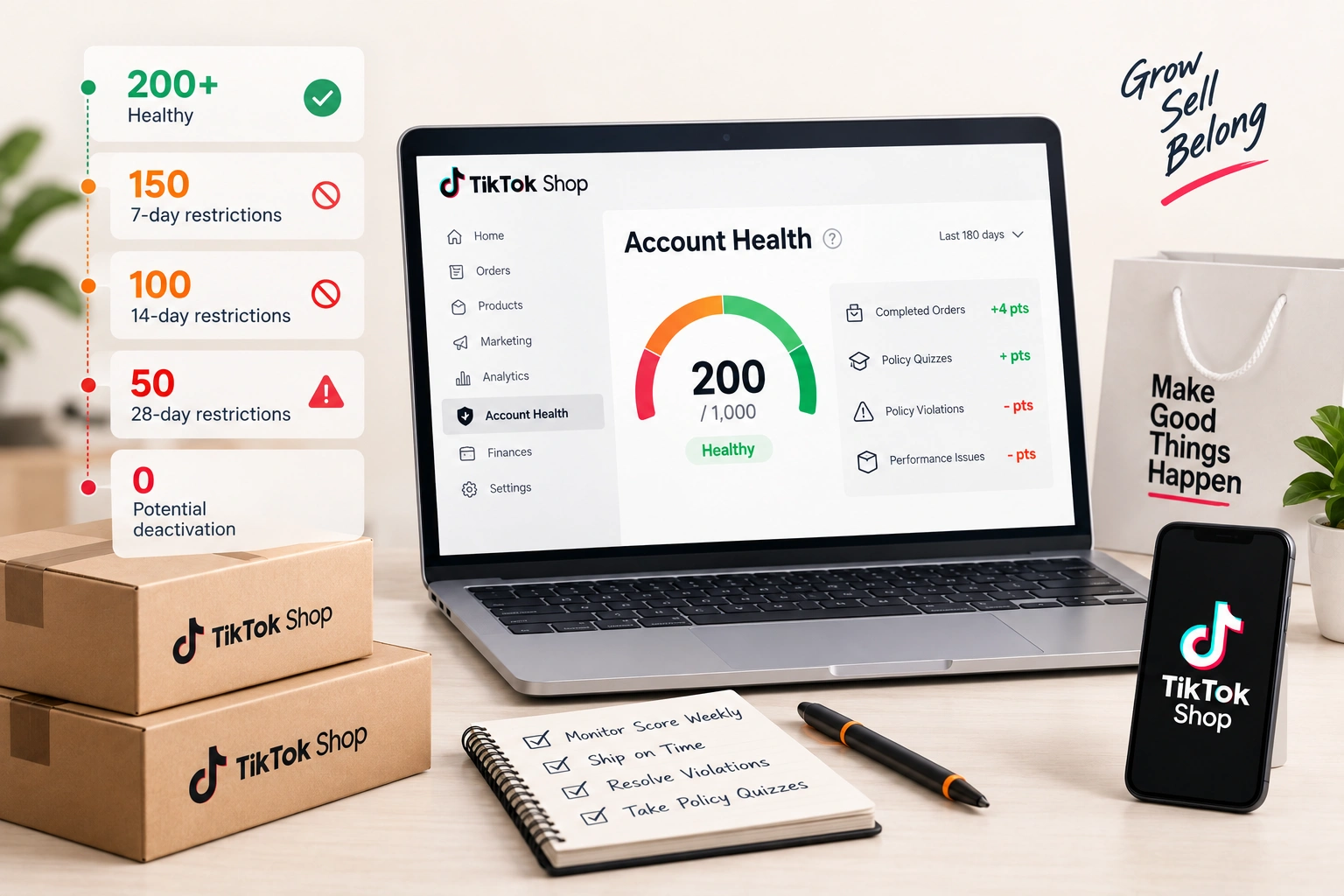
From 17 August 2026, additional violation types may affect the Account Health Rating, and some violations may deduct more points depending on type and severity.
That is the sentence that connects the rest. A returns process that was merely untidy used to cost money. Now it can cost points on the score that decides whether the shop keeps its privileges, and the rating is the thing worth protecting above any individual order.
The compounding is the risk. An unverified return address produces failed returns, failed returns produce disputes, disputes produce violations, and violations now deduct more than they used to.
What to set up this week
Open the return address in Seller Center and confirm three things: that you own it or are authorized to use it, that it is a business address rather than a residence, and that it validates with the carrier including the unit or suite.
Move the returns workflow trigger from despatch to the delivery scan, and put a rule on anything with no movement for ten days so it gets escalated rather than forgotten.
Then reprice or relist the products that generate the most buyer responsible returns, now that they cost the outbound postage too. If you sell through Fulfilled by TikTok the return path is different again, and worth separating in your reporting so the two do not average into one meaningless number.
Where this goes next
None of these changes is unreasonable on its own. Together they mean a TikTok shop cannot be run as a front end with returns handled by whoever happens to receive the parcel, which is how a lot of them were started.
Getting the returns path, the addresses and the account health signals into one working system is ordinary operational work and it is most of what TikTok Shop management is: not the content, which everyone focuses on, but the machinery underneath it that decides whether the content is allowed to keep selling.
Related reading: How to Sell on TikTok Shop, and What Actually Moves Units.
Frequently asked questions
The questions that come up most often on this subject.
Yes, if you are authorized to use it. TikTok's requirement from 5 August 2026 is that return addresses are ones the seller owns or is authorized to use and that are affiliated with business operations. A supplier address without the supplier's agreement does not meet that, and neither does a warehouse you have no relationship with.
TikTok names residential addresses among those that are now an enforcement issue, alongside unauthorized, unaffiliated and non verified addresses. If your shop is run from home, a business address or an authorized 3PL is the safer setup.
No. From July 2026 forward shipping fees are no longer refunded for buyer responsible return reasons. On a low margin item sold with free delivery this can remove the contribution from several sales, so it is worth reviewing pricing on the products that return most.
For certain refunds, only once the returned package is marked as delivered. Review used to be possible while the parcel was in transit. If your process triggers on the tracking number rather than the delivery scan, it needs changing.
In stagnant reverse logistics cases with no update for 10 or more days, the logistics partner becomes liable. Eligible package not received refund only cases on 4PL shipments also moved from seller review to platform review. Both mean a stalled return is a case to escalate rather than a loss to absorb.