TikTok Shop Holiday 2026: Campaigns, Creators and the November Plan
TikTok Shop's holiday is sold by creators who were found in September. The campaign windows, the eligibility rules to check, the creator pipeline, the live schedule, and the stock and shipping promise that decide whether the sales are kept.


Loading Article banner
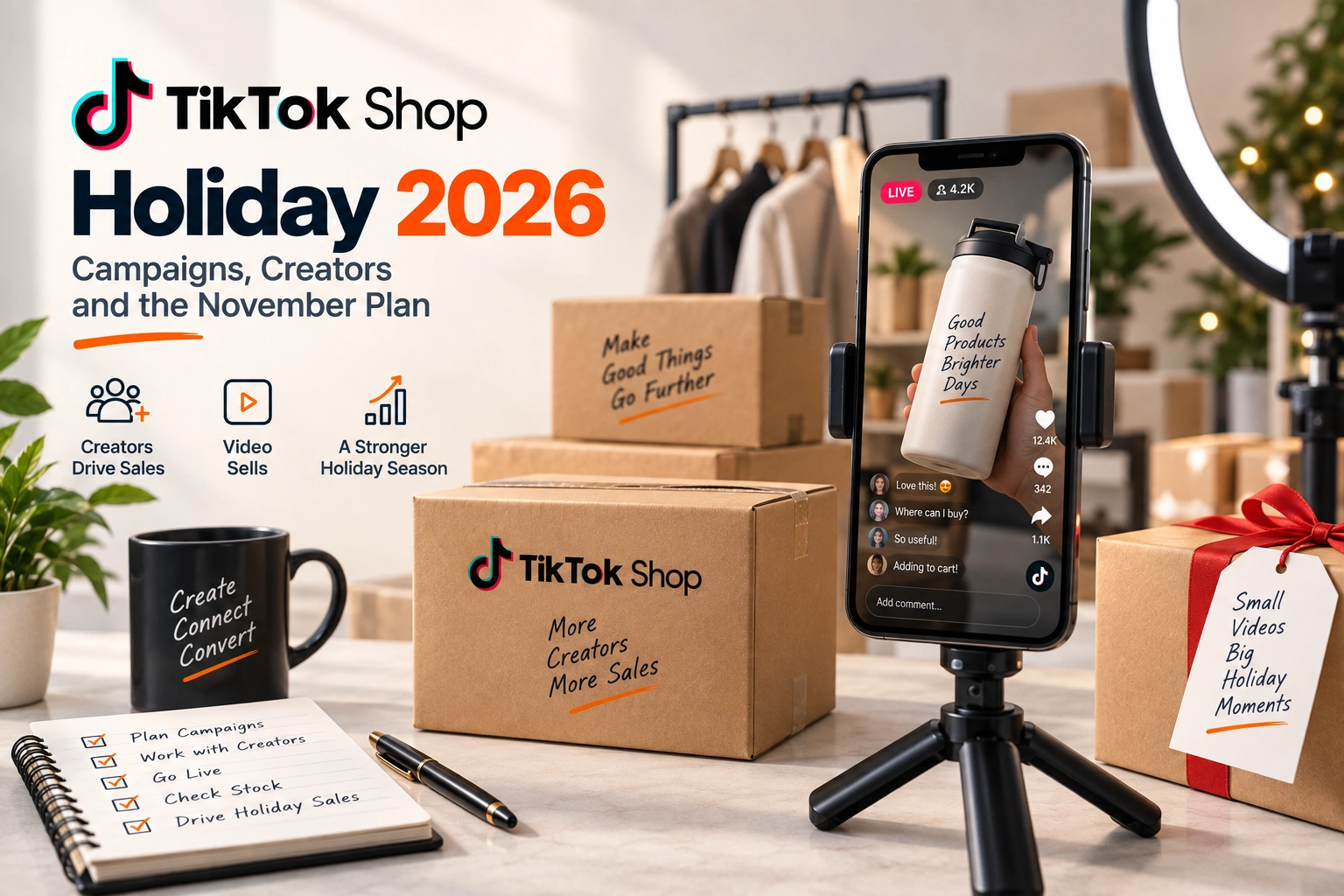
On Amazon the fourth quarter is won by stock and deals. On TikTok Shop it is won by people, and the people have to be found two months before they sell anything. A seller who opens Seller Center in November to join the Black Friday campaign has the stock, the price and the badge, and none of the videos that would make anybody see them.
This is the TikTok Shop holiday for a seller who already sells there, in the order the work has to happen. The platform's campaign pages carry the eligibility rules and thresholds for each event, and they change year to year; they are named here as things to check rather than quoted, because the Seller Center pages were not readable at the time of writing and an agency's summary is not a rule.
The campaign windows
TikTok Shop runs its holiday as a sequence of platform campaigns: an early holiday event in October, a Black Friday campaign around 27 November, a Cyber Monday campaign around 30 November, and a December gifting window that runs to the last shipping date. Each campaign has a registration window in Seller Center, a required discount depth, and a minimum stock commitment, and each one is entered product by product.
Registration opens weeks ahead of the event and closes before it. The pattern from the last two years is that October's campaign registration opens in September and Black Friday's in October, which means the price for Black Friday is decided in the same month as the stock for it. The platform's own campaign page in Seller Center is the source for the dates and the thresholds; check the shop health and fulfilment requirements on it before assuming a product qualifies, because a shop below the health threshold is not shown the registration at all.
The creator pipeline, built in September
The holiday on TikTok Shop is sold in video, and the videos are made by creators who agreed to make them. A creator who receives a sample in October, posts in November and has a video take off in the week of Black Friday is the whole model; the timeline is fixed by the sample and the posting, and it starts in September. How to sell on TikTok Shop covers the affiliate programme in its normal shape; the holiday version is the same programme run at three times the volume with a deadline.
The pipeline is a list: creators who have sold the product before, creators in the category who have not, and the open collaboration with a commission set for the season. The first group gets the holiday sample and the deal price first, with the campaign dates, so their videos land before the event rather than during it. The second group is where the volume comes from, and the offer to them is a higher commission for the quarter, because November is when every seller in the category is asking the same people.
What the videos have to do is the same as always: show the product being used, name the problem it solves, and put the price in the first three seconds when there is a deal on. The video formats article covers the shapes that convert; for the holiday, the gift framing is the one to add, because a product shown being unwrapped is a product a viewer can imagine giving.
Live, scheduled like a shift
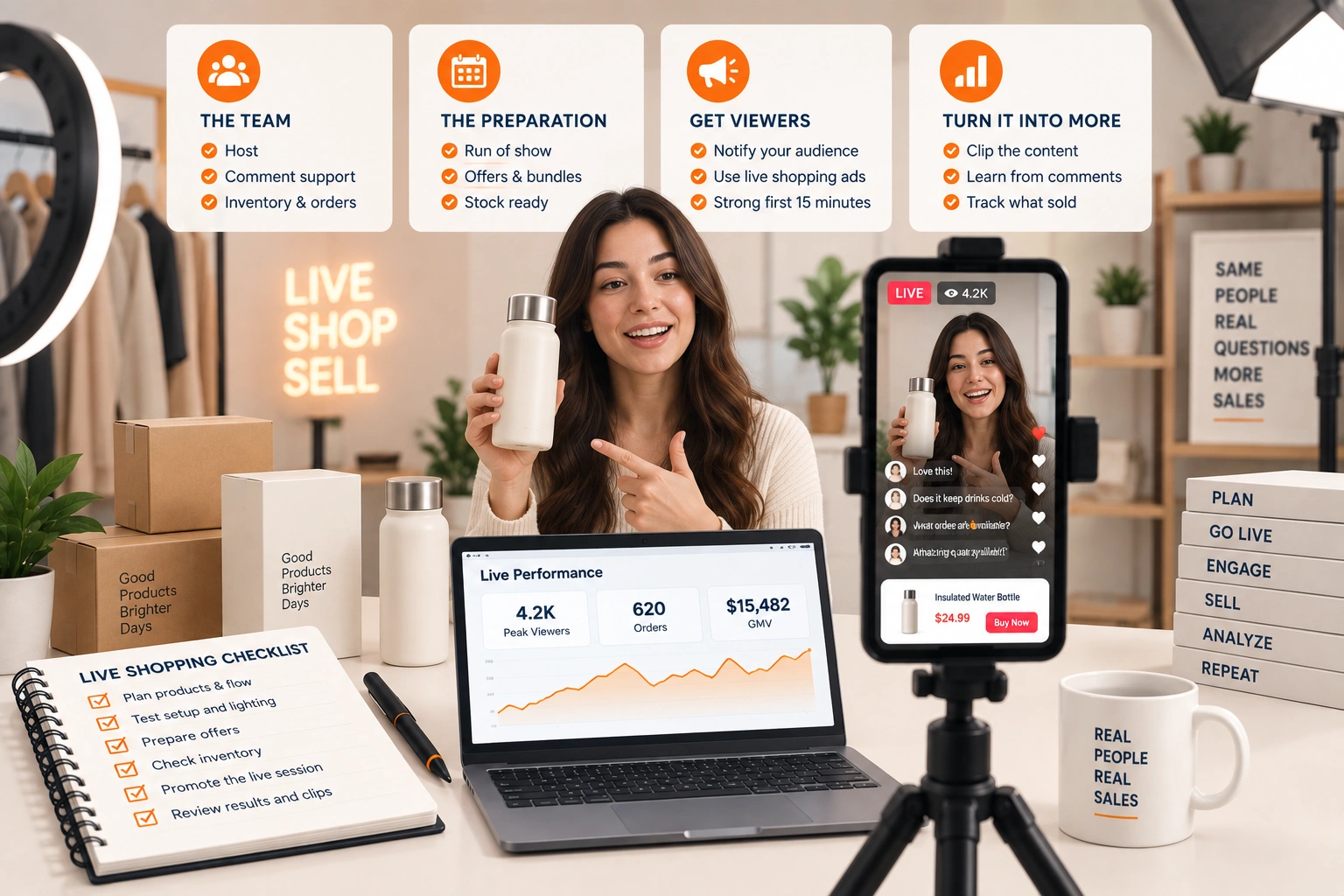
Live shopping on TikTok is the highest converting surface the platform has and the one most sellers run badly, by going live when somebody is free. In the holiday it is scheduled like a shift: a fixed slot on the event days, a host who has run the product before, the deal price on screen, and the flash deals set up inside the live rather than improvised. TikTok Live shopping: what it takes is the how; the holiday adds the calendar.
The platform rewards lives that hold viewers, and the holiday lives that hold them are the ones with something happening: a bundle that only exists in the live, a countdown to a price, a giveaway that needs the viewer to stay. A live that reads the product page aloud loses the room in a minute, in November as in March.
The stock and the shipping promise
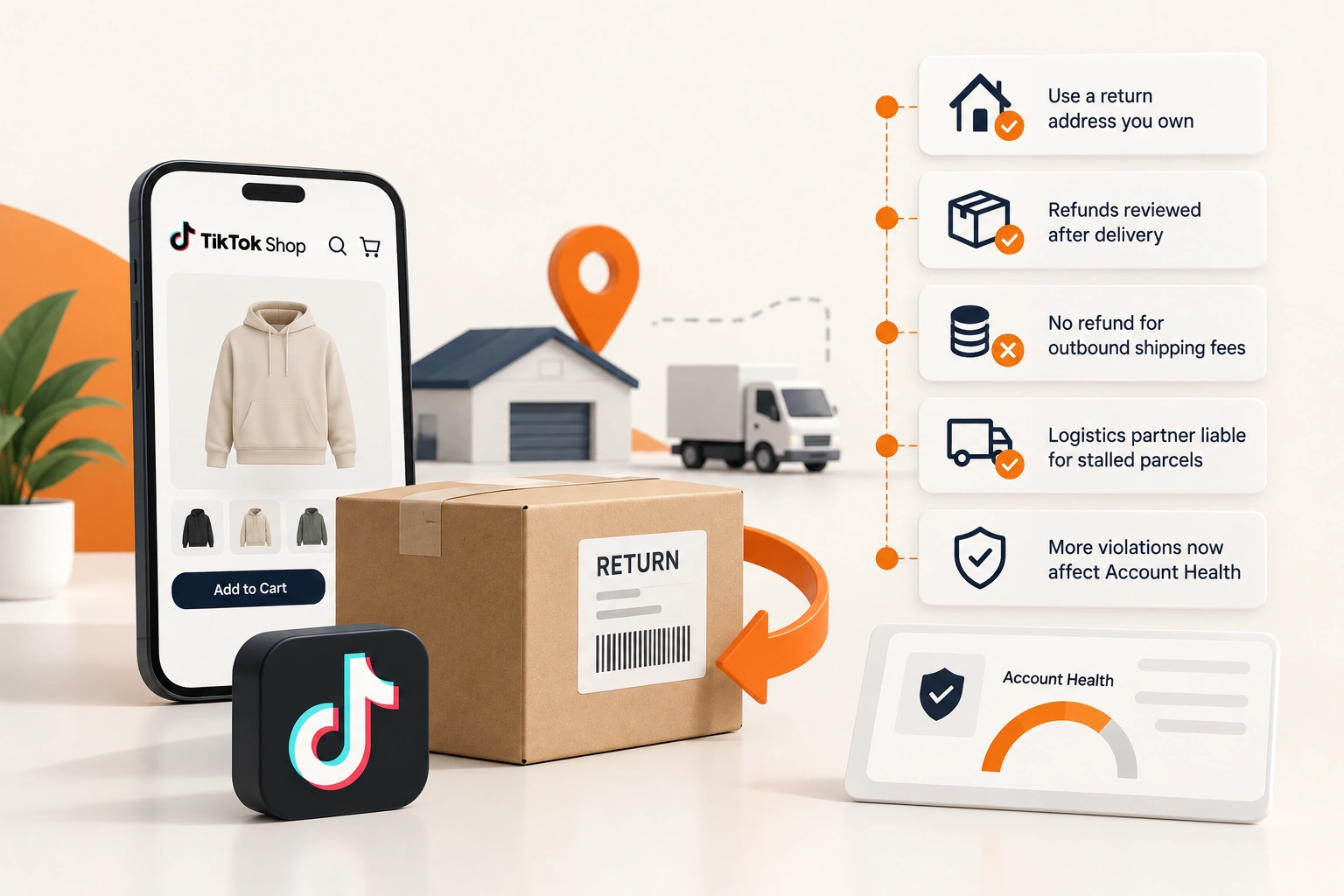
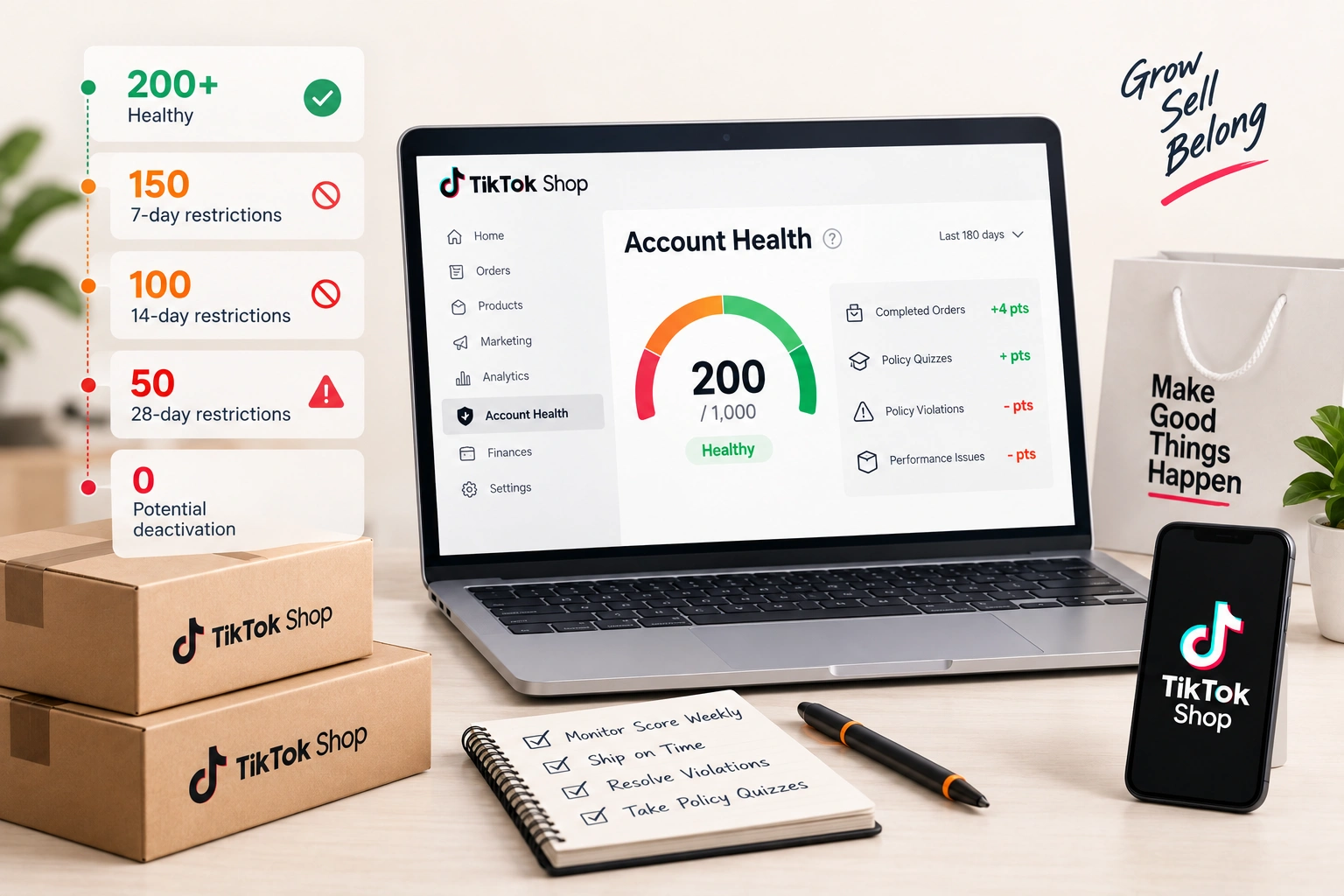
TikTok Shop's shop health measures shipping time, cancellation and returns, and the holiday is when all three are hardest to hold. A video that takes off sells out a product in a day, and the orders that arrive after the stock has gone are the cancellations that pull the shop below the threshold for the next campaign. Stock is the constraint on how much a video is allowed to work.
Fulfilled by TikTok, a third party warehouse, or Amazon's multi channel fulfilment are the three ways to hold the shipping promise at holiday volume, and the multi channel fulfilment article sets out when the last of those is the right answer. A seller shipping from a back room can hold the promise in October and cannot in the week of Black Friday, and the shop health score records the week it broke.
For the brands we run, this is what TikTok Shop management means in the autumn: the campaigns registered as they open, the creator list worked from September, the lives scheduled, and the stock sized to what the videos are allowed to sell. The advertising that sits beside it is measured the way the ROAS standards article describes, against the platform's own numbers rather than Amazon's.
Frequently asked questions
The questions that come up most often on this subject.
Black Friday falls on 27 November 2026 and Cyber Monday on 30 November. TikTok Shop runs platform campaigns around both, with an early holiday event in October and a December gifting window. Registration windows, discount depths and stock commitments are on the campaign pages in Seller Center and change each year.
A shop above the health thresholds for shipping, cancellation and returns, products at or below the campaign's required discount, and the minimum stock commitment the campaign names. Check the campaign page in Seller Center for the current figures rather than a summary from elsewhere.
September. A creator needs the sample in October to post in November, and the videos that sell in the week of Black Friday were posted before it. Existing sellers of the product get the holiday sample and deal price first; new creators in the category get a higher commission for the quarter.
The orders placed after the stock is gone become cancellations, and cancellations are part of the shop health score that decides campaign eligibility. Stock the product to what its videos can sell, and pause the affiliate offer before the stock runs out rather than after.
Yes, as a scheduled slot with a host who knows the product, the deal price on screen and flash deals set up inside the live. Lives that hold viewers with something happening convert; a live that reads the product page aloud does not, whatever the day.