Using Amazon to Fulfil Orders You Did Not Sell on Amazon
Multi-Channel Fulfilment ships your Shopify and TikTok Shop orders out of Amazon stock. It solves the duplicate inventory problem and introduces two of its own.


Loading Article banner
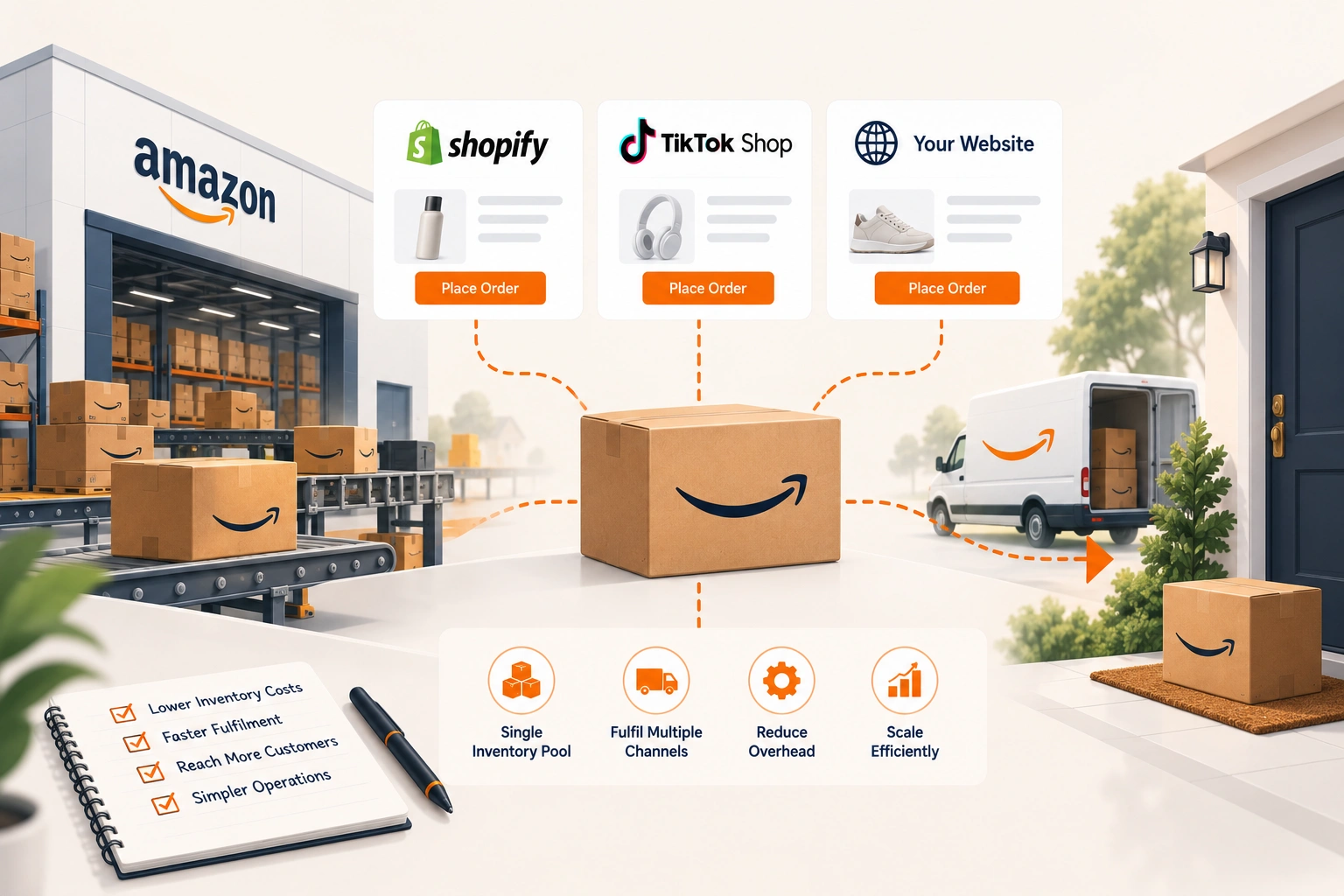
A brand selling on Amazon and somewhere else carries the same problem twice: stock in Amazon's warehouse cannot fill a Shopify order, and stock in your own cannot fill an Amazon one. So both pools carry their own safety stock, both can run out independently, and the total inventory needed is larger than the demand justifies.
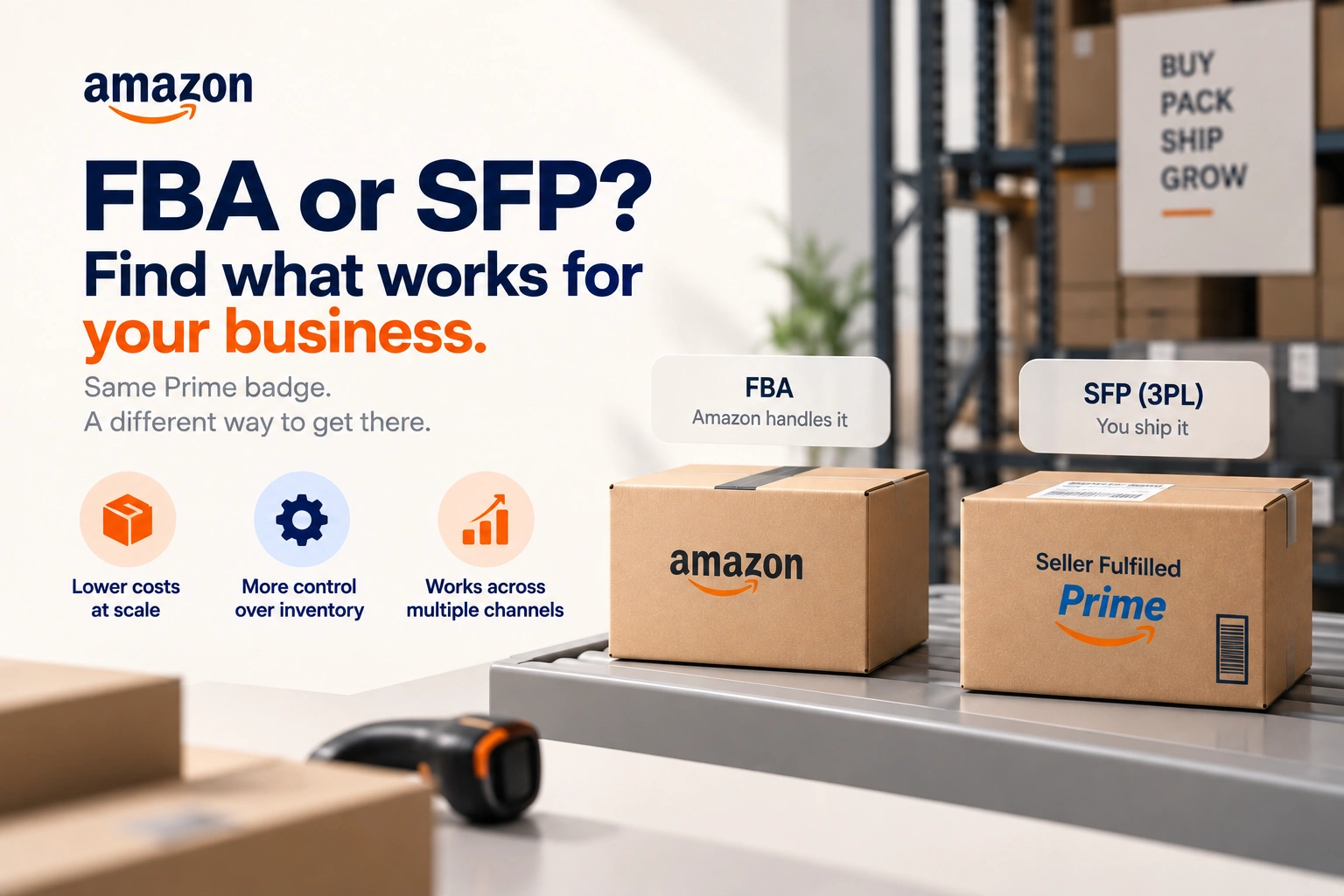
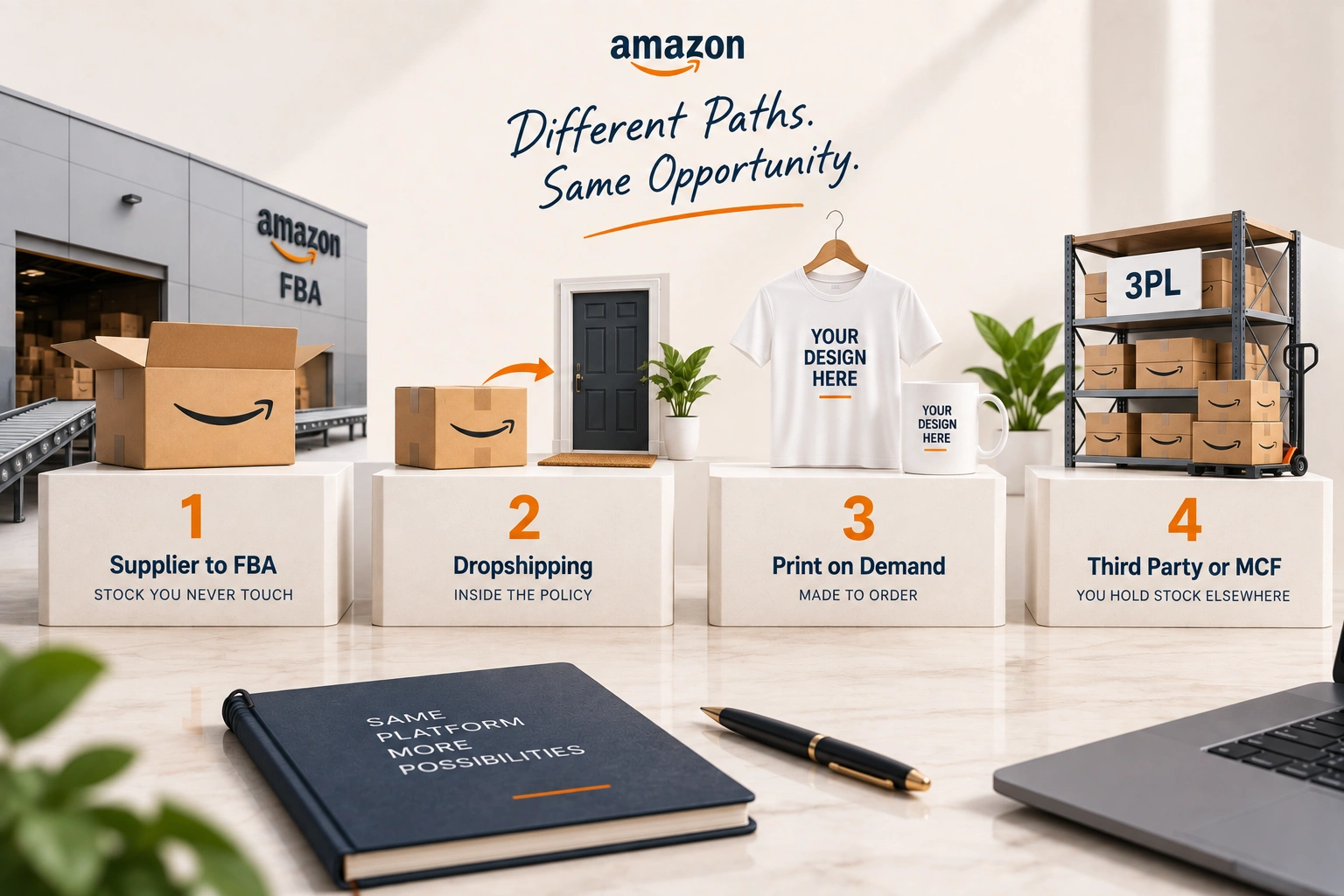
Multi-Channel Fulfilment is Amazon's answer to that. An order taken anywhere is sent to Amazon, picked from the same inventory that serves the marketplace, and shipped to the customer. One pool, several storefronts.
What it costs, and why the comparison is not obvious
MCF is priced differently from FBA and usually higher per unit for the same product, which reads as a penalty and is not the whole picture. FBA's fee is subsidised by the marketplace taking a referral fee on the sale. There is no referral fee on a Shopify order, so MCF prices the fulfilment on its own terms.
The honest comparison is therefore MCF against what a third party warehouse would charge you, not MCF against your FBA rate. Against a 3PL it is competitive for small light items and poor for bulky ones, which is the same shape as the FBA comparison and for the same reasons.
What it removes from the other side of the ledger is duplicate safety stock, and that is the number people leave out. Carrying two pools costs capital, storage and stockouts, and none of those appear on a fulfilment invoice. The full fee picture is worth having in front of you first, and what it actually costs to sell on Amazon sets it out in the order the charges arrive.
What actually arrives at the customer
This is the objection that decides it for a lot of brands. MCF can ship in unbranded packaging, and whether that is acceptable depends on what the brand is selling and what the customer expects after buying direct.
For a commodity product it does not matter. For a brand whose direct channel exists precisely because the unboxing is part of the product, it matters a great deal, and MCF is the wrong tool. There is no inserting a card, no tissue paper and no control over the box.
Delivery speed is buyable in tiers, and the fastest tier costs meaningfully more. The mistake is buying the fastest by default: a direct customer who has just chosen your site over a marketplace is usually less speed sensitive than a marketplace shopper, because they came for the brand rather than for the delivery promise.
Where it fits, and where it does not
It fits a brand whose direct channel is smaller than its marketplace channel, selling products that are not bulky, where the packaging is not part of the offer. That is a large share of brands and the arrangement is close to free to try, because the inventory is already there.
It does not fit a direct-first brand. When most of the volume is your own site, you are paying marketplace fulfilment economics for the majority of your orders and taking packaging constraints with it, which is the tail wagging the dog.
It also does not fit anything where the return needs to come back to you. An MCF return goes into Amazon's process, which is designed for marketplace returns rather than for a brand that wants to inspect, refurbish or ask why.
The thing to watch once it is running
Stock competition. One pool serving several channels means a good week on TikTok Shop can empty the inventory that Amazon was ranking on, and losing availability on Amazon costs ranking that takes far longer to rebuild than the stock takes to replace.
The defence is not clever, it is forecasting the combined demand rather than the Amazon demand, and holding a buffer that reflects the volatility of the noisiest channel rather than the steadiest. Social commerce is the volatile one by a distance.
Watch availability by region too, because the same network decides where units sit and a direct customer quoted five days because the stock drifted is a direct customer who does not come back. Keeping that visible is ordinary inventory discipline, and the same problem on another marketplace is covered in managing Walmart inventory, where the reporting works the same way. Anything that goes missing in the network is reimbursable and rarely volunteered.
What it does to the numbers you report
Two things break in the reporting the moment one pool serves several channels, and both are worth fixing before they mislead somebody.
Cost of goods stops being attributable by channel in the obvious way. The same unit could have gone to any storefront, and the fulfilment cost it eventually carried depends on where the order came from rather than on anything about the product. Contribution per channel is still knowable, and it has to be built from the order rather than from the inventory.
Stockouts stop being one channel's fault. A marketplace stockout caused by a social commerce spike shows up in the marketplace reporting as lost sales, with no indication of where the units went. Anybody reading the two channels separately concludes the wrong thing about both.
The practical fix is that the inventory report is read at brand level, once, and the channel reports are read for demand rather than for supply. That is a change in how the weekly review runs rather than a change to any system, and it is the part most brands skip. Getting the forecast right across channels is squarely part of Amazon account management rather than a logistics detail.
Where this goes next
One pool of stock for every channel is only a saving if it is counted as one, and the inventory numbers that matter is where that counting is done. The fees quoted above are FBA's, and how FBA works and what it costs is the fuller account of them.
Frequently asked questions
The questions that come up most often on this subject.
Yes, through Multi-Channel Fulfilment. The order is sent to Amazon, picked from the same inventory that serves the marketplace and shipped to your customer, so one pool of stock serves every storefront instead of each channel carrying its own.
Because FBA's fee is subsidised by the referral fee the marketplace takes on the sale, and there is no referral fee on a Shopify order. The comparison worth making is MCF against a third party warehouse rather than against your FBA rate.
It can ship unbranded, which is the usual choice, but there is no inserting a card or controlling the packaging. For a commodity product that is fine. For a brand whose direct channel exists because the unboxing is part of the product, it is the wrong tool.
Channels compete for it. A good week on TikTok Shop can empty the stock Amazon was ranking on, and losing availability costs ranking that takes far longer to rebuild than the stock takes to replace. Forecast the combined demand rather than the marketplace demand.
In Seller Central only. Go to Payments, then Transaction View, filter the date range and open an order's total to see the fulfilment fee Amazon charged for it; the current per-unit rates are on the MCF fee schedule. Shopify records the order and the sale, never the fee, so a margin by channel is reconciled from the Payments report or through an accounting connector that reads it. Sellers on the Shopify forums asking how to fetch MCF fees into Shopify were asking for something Shopify does not hold.