TikTok Shop is the one large marketplace where the listing is not the thing that sells. On Amazon, Walmart and eBay a shopper searches, compares and buys, so the work is being findable and being chosen. Here, most purchases begin with somebody watching a video they did not go looking for.
That single difference decides everything else: what to sell, who sells it for you, and why a catalogue exported from another channel usually sits there doing nothing.
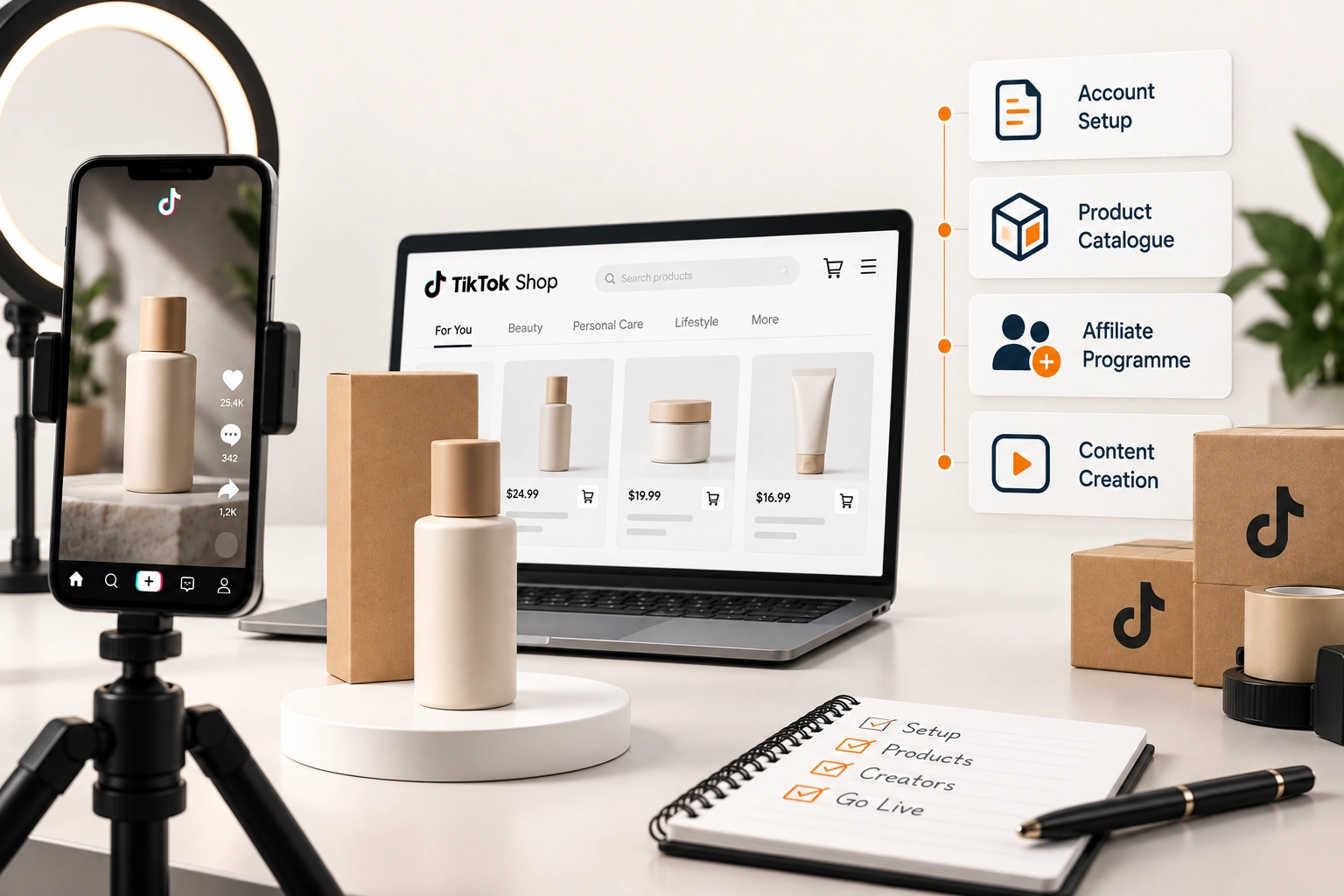
The account itself is administrative: a business entity, tax details, a bank account, and verification. It is the least interesting part and the part sellers spend the most time worrying about.
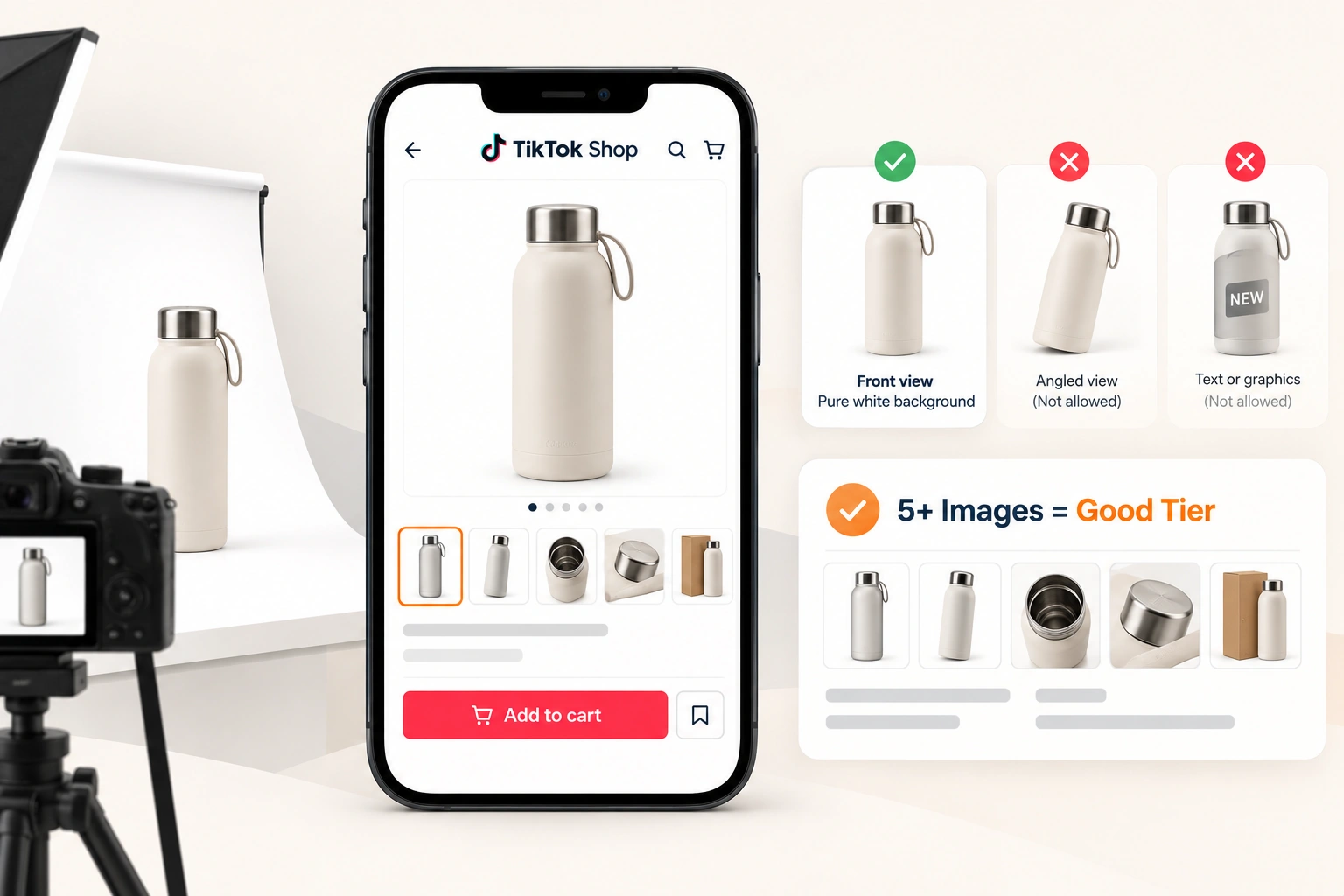
Products are then added by hand or through a catalogue feed, with categories, attributes, images and stock in the shape any marketplace expects. If you already sell on
Amazon or
Shopify, most of that content transfers with light editing.
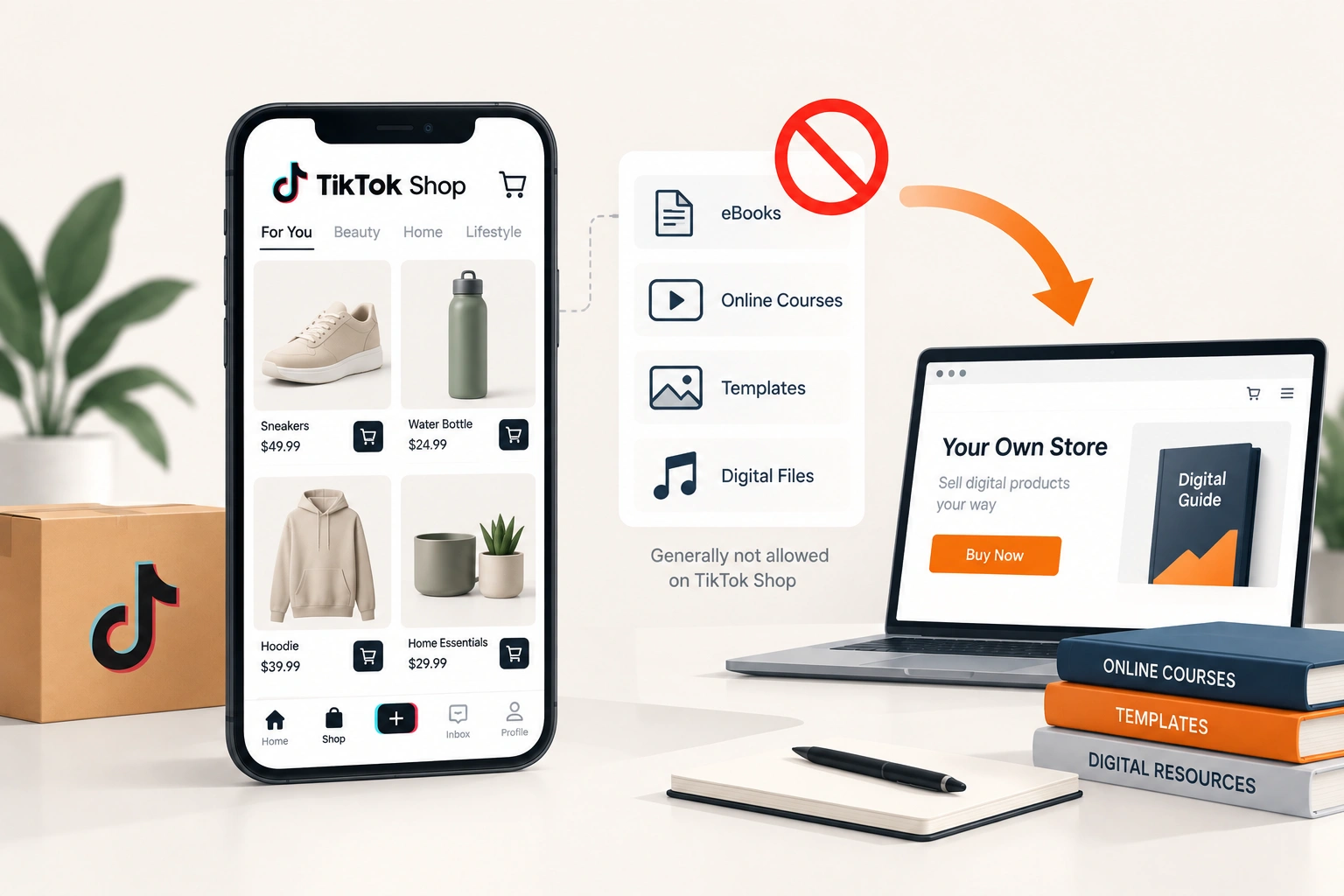
Some categories are restricted and some are prohibited outright, and the list is enforced rather than advisory. Check it before sourcing, not after listing, because the cost of finding out late is stock you cannot sell on the channel you bought it for.
A complete, well written listing on TikTok Shop earns you the ability to convert traffic. It does not produce traffic. Nobody browses a TikTok Shop catalogue the way they browse a marketplace search.
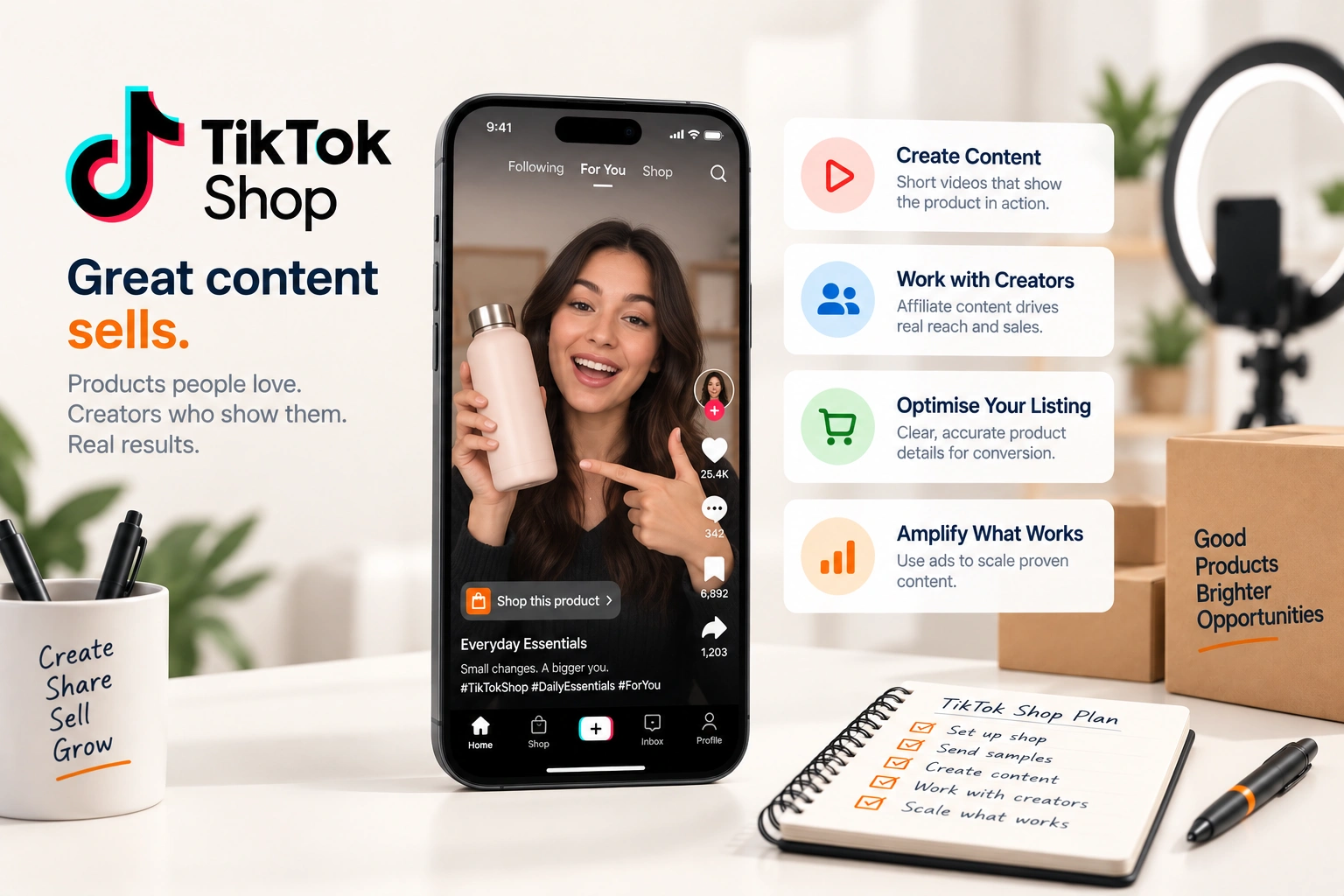
Traffic comes from content: your own videos, creators posting about the product, and live sessions. The listing is where that content lands.
This is why sellers who arrive from a search marketplace and treat this as another listing channel report the same experience: everything is set up correctly and nothing sells. There is no queue of people searching to be won.
The affiliate programme lets creators list your product, make content about it, and take a commission on what sells. It is the closest thing the channel has to a growth lever you can operate deliberately.
Commission is the price of distribution here, and setting it too low is the most common reason a product gets no creator interest: creators pick from a marketplace of offers, and yours is competing with everything else in the category.
Sampling matters too. A creator who has the product makes better content about it than one working from photographs, and the cost of sending units is small against the content it produces.
The work is ongoing rather than a launch: finding creators, briefing them, sending product, watching which content converts, and doing more of that. It is closer to running an affiliate programme than to managing a marketplace, which is why it usually needs somebody whose job it is.
Products that demonstrate. Anything with a visible before and after, a satisfying use, or an unexpected feature. If a video can show why it is good in five seconds, the channel works.
Impulse price points. Decisions made while scrolling are small decisions. Considered purchases with long research cycles convert badly.
Consistent supply. A product that goes viral and runs out has bought a spike and lost the momentum. This punishes arbitrage inventory more than any other channel.
Not high consideration goods. Anything a buyer wants to compare specifications on belongs where comparison happens, which is a search marketplace or your own
store.
Live selling works and it is a genuine skill. A good session is somebody who can hold attention, answer questions, and demonstrate repeatedly for an hour without it becoming a loop.
It also needs scheduling, promotion beforehand, stock reserved for it, and somebody managing comments during it. Sellers who try it once with no preparation conclude it does not work, which is a fair conclusion from that evidence and the wrong one.
Start by watching sessions in your category rather than by booking one.
Paid placement can put content in front of more people. It cannot make content that nobody watches worth watching, and boosting a video that is not converting organically is buying a larger version of the same result.
The sequence that works is: make content, see what performs on its own, then put budget behind that. Which is the opposite of how most sellers arrive, having budgeted for advertising first.
The measures and what to expect from them across channels are set out in
ROAS standards for Amazon PPC, TikTok Shop and Walmart Connect.
Private label. The best fit. You control supply, margin and the story, and the story is what the content is made of.
Wholesale. Workable when you have exclusivity or enough margin to fund creator commission, and difficult when several sellers offer the same item.
Dropshipping. Possible, and constrained by delivery speed and margin, both of which this audience notices. Covered separately.
Arbitrage. The worst fit, because content builds demand and inconsistent stock cannot serve it.
B2B. Not this channel. The audience is consumers deciding quickly.
Open the shop, list the products that demonstrate well, and leave the rest of the catalogue where it already sells.
Set a commission that is competitive in your category rather than one that protects margin, and treat it as the cost of distribution.
Get product into creators' hands and make your own content, weekly rather than in a burst.
Watch which content converts and repeat the shape of it. Nothing else you can do here compounds the way that does.
Running that programme, the creators, the content calendar and the advertising behind it, is what our
TikTok Shop management does, alongside the
creative that the whole channel is built on.
Related reading: TikTok Shop Returns: What Changed for Sellers in 2026, TikTok Shop Fulfilment Rules for Orders You Ship Yourself: Handling Time, Tracking and the Thresholds, TikTok Shop Setup: What a Brand Needs First, TikTok Shop Account Health Rating: How the Score Works, and How Not to Lose Your Shop, What TikTok Shop Will Not Let You Sell, Fulfilled by TikTok, and What It Changes, GMV Max, and What It Does With Your Budget, Live Shopping, and What It Actually Takes and Who Should Actually Make Your TikTok Shop Content.