TikTok Dropshipping: What Works and What Gets You Suspended
The model is allowed. What fails is the version of it with a fortnight of shipping and a product nobody has held, on a channel that measures both.


Loading Article banner
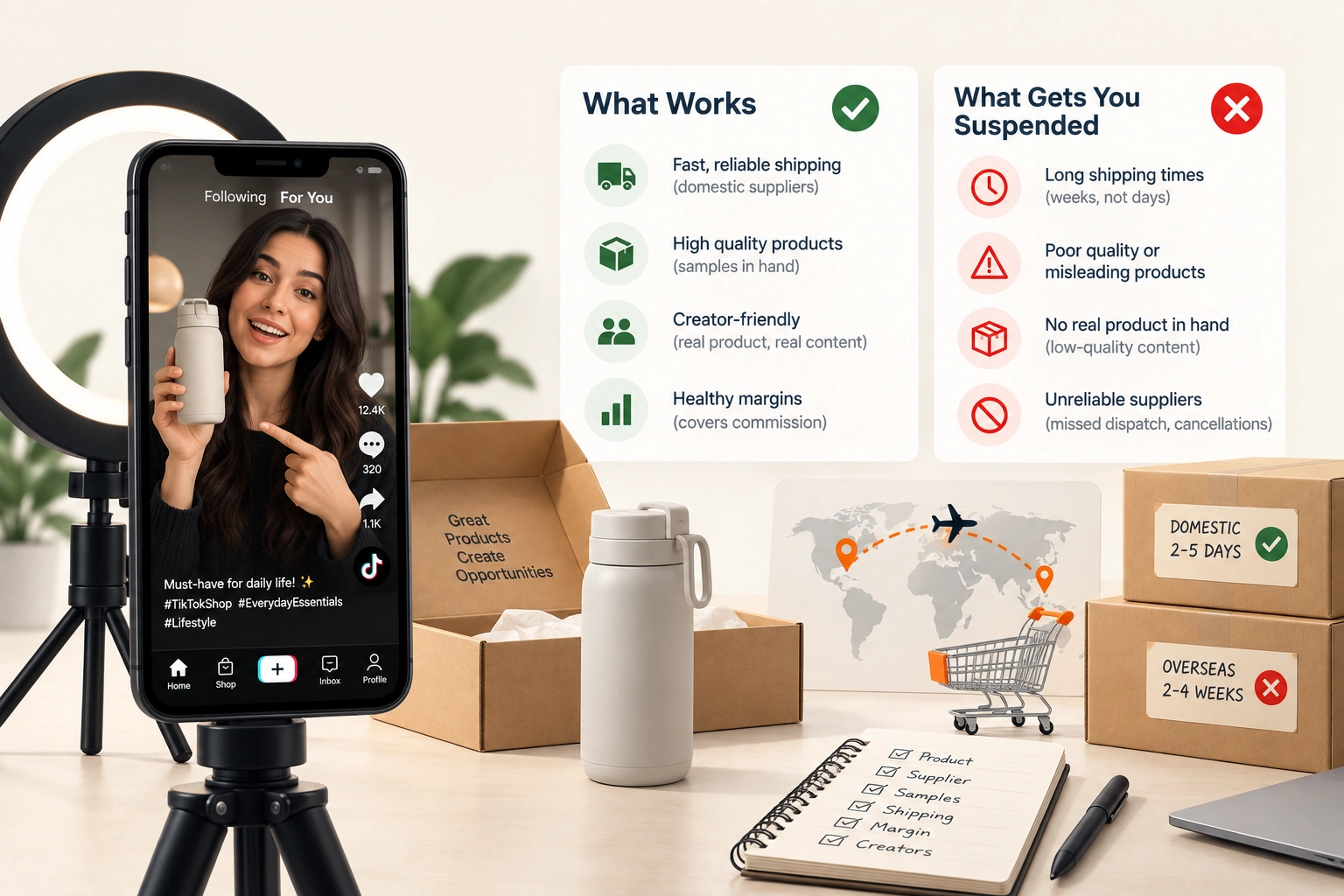
Dropshipping on TikTok Shop is not prohibited. Selling something you have never seen, shipped in a fortnight from a supplier you have never spoken to, is where it goes wrong, and that is the version most people mean when they say the word.
The channel is unusually unforgiving of it, for a reason worth understanding before starting: the thing that sells the product is content made by somebody who has the product in their hands.
Why this channel is harder for the model
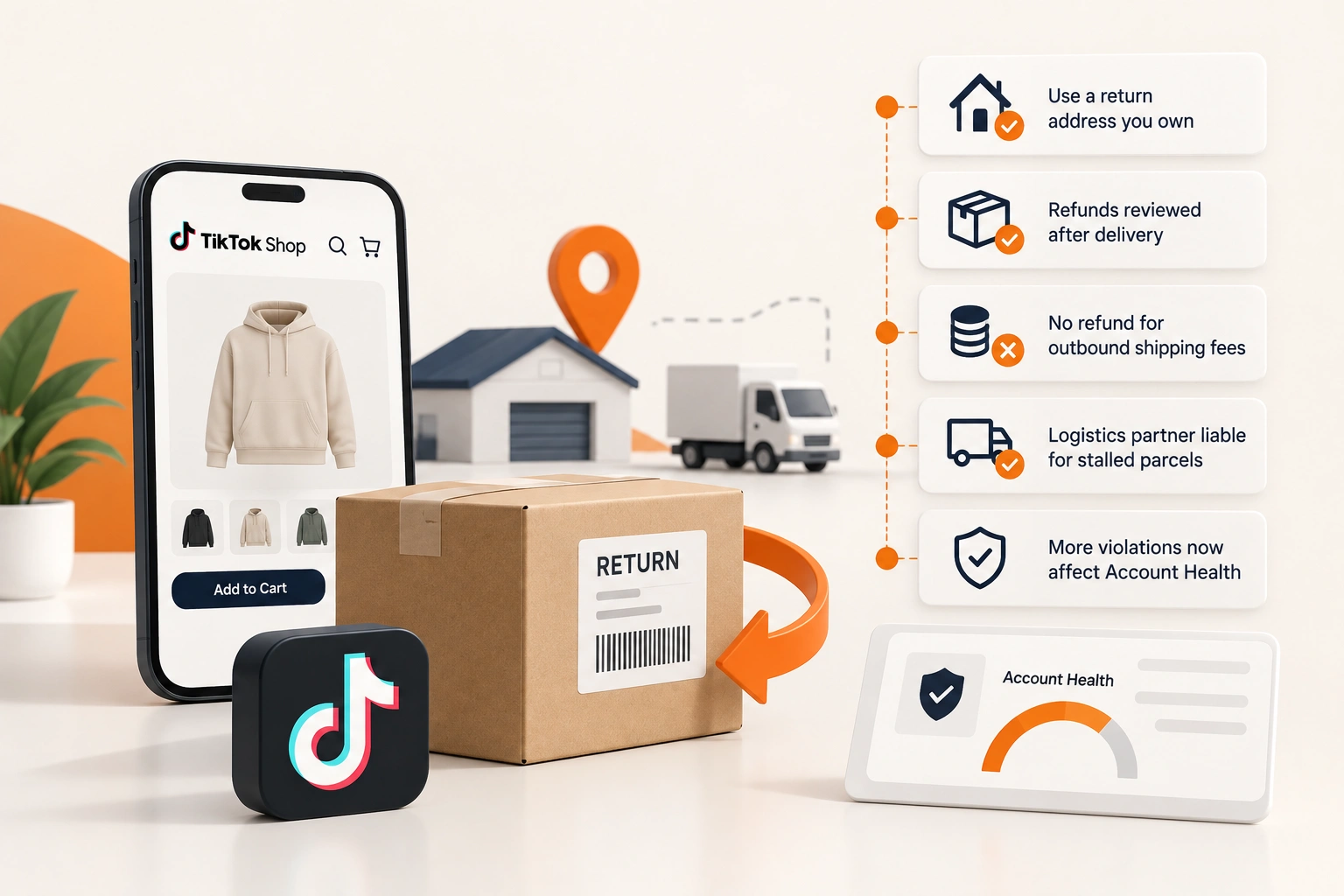
Delivery time is visible and measured. Buyers who bought on impulse are the least patient buyers there are, and the channel tracks fulfilment performance.
Quality problems arrive fast. A video reaches thousands of people at once, so a batch problem does not surface as a trickle of returns over a month, it surfaces as a wave in a week.
Creators need the product. The distribution that makes this channel work depends on somebody holding, using and filming the item. That is difficult when the item is at a supplier and you have never seen one.
Margins have to cover commission. Creator commission is the cost of distribution, and thin dropshipping margins leave nothing to pay it with.
What the rules actually require
The published seller policies cover the same ground on every marketplace: dispatch within the promised window, accurate descriptions, genuine goods, and a returns process that works. TikTok Shop enforces those with performance measures rather than with a rule about sourcing.
So the model is not the violation. Late dispatch, misdescribed goods, counterfeits and unanswered complaints are, and dropshipping arrangements produce all four more often than holding stock does.
The specific thresholds change, so work from the seller centre's current figures rather than from any article, this one included.
The version that does work
Domestic suppliers. Delivery measured in days rather than weeks is the single change that makes the model viable here.
A relationship, not a marketplace listing. Somebody you can telephone when a batch is wrong, who tells you before they run out.
Samples in hand. Yours and your creators'. You cannot brief content about a product nobody has touched.
Fewer products, chosen deliberately. The scattergun version of dropshipping is incompatible with a channel where every product needs content made for it.
Margin that funds commission. If the arithmetic does not leave room for creators, the channel has no distribution and you are relying on your own posting alone.
What it costs when it goes wrong
Cancellations and late dispatch damage seller performance, and performance affects how much the channel is willing to show you. The same mechanism runs on Walmart and eBay, where a defect costs visibility for months rather than for the order it came from. That is the same mechanism on every marketplace and it is the reason a bad month is expensive for longer than the month.
Refunds on impulse purchases are higher than on considered ones, because the buying decision was quick and the reconsidering is quick too.
And the content is wasted. A creator who made a video for a product that then shipped late or arrived wrong is a creator who does not make the next one, which costs more than the orders did.
How it compares with the other models here
Private label is the model this channel was built for: you hold stock, you control quality, and the margin funds the content that sells it.
Wholesale works with exclusivity or enough margin, and struggles when several sellers offer the same product to the same creators.
Arbitrage is the worst fit anywhere on TikTok Shop, because content builds demand over weeks and inconsistent stock cannot serve it.
The same comparison for a search marketplace is a different answer, and worth reading before assuming a model transfers: the mechanics on Amazon reward stock depth in a way this channel does not.
If you are going to do it anyway
Start with one product you have held, from a supplier who answers the telephone, shipping domestically.
Set the dispatch window to what the supplier actually achieves on a bad week, not a good one.
Order enough samples to put the product in the hands of every creator you brief.
Watch the cancellation and late dispatch figures weekly, and treat a rise as a supplier problem rather than a seasonal one.
Running that carefully, with the creator programme it depends on, is what our TikTok Shop management does, and the creative it needs is our design work. What the channel rewards when the stock is genuinely yours is in how to sell on TikTok Shop.
Related reading: Amazon FBA vs Dropshipping: What Actually Differs.
Related reading: GMV Max, and What It Does With Your Budget and Live Shopping, and What It Actually Takes.
Frequently asked questions
The questions that come up most often on this subject.
The model is not prohibited. What is enforced is dispatch within the promised window, accurate descriptions, genuine goods and a returns process that works, and dropshipping arrangements fail those more often than holding stock does.
Because impulse buyers are impatient, a viral video surfaces batch problems in a week rather than a month, creators need the product in their hands to make content about it, and thin margins leave nothing to pay creator commission with.
You can, and delivery time is the thing that decides whether it works. Weeks of shipping against an impulse purchase produces cancellations and complaints, both of which are measured and both of which reduce how much the channel shows you.
Yes, and more than one. You cannot brief content about a product nobody has touched, and the creators doing the selling need the item in their hands to make anything worth watching.
Enough to fund creator commission on top of the usual costs, because commission is the price of distribution on this channel. If the arithmetic leaves nothing for it, there is no distribution and you are relying on your own posting alone.
It counts against seller performance, which affects how much the channel is willing to show you, and it is not confined to the orders that were late. A bad month is expensive for longer than the month.
With a domestic supplier you have a relationship with, samples in hand and one product chosen deliberately, it can work. The scattergun version, many products nobody has held from suppliers nobody has spoken to, does not.
One, or very few. Every product on this channel needs content made for it, so listing fifty is fifty products with no content rather than a wider net.
The process is the marketplace's, and the rate is usually higher than on a search marketplace, because a decision made in seconds is reconsidered in seconds. Budget for it rather than being surprised by it.
It is the model the channel suits best: you hold the stock, control the quality and keep the margin that funds the content. Most sellers who do well here are selling something they own.