Amazon FBA vs Dropshipping: What Actually Differs
They are compared as if they were two versions of the same business. They are not. One is a fulfilment method and the other is a sourcing model.


Loading Article banner
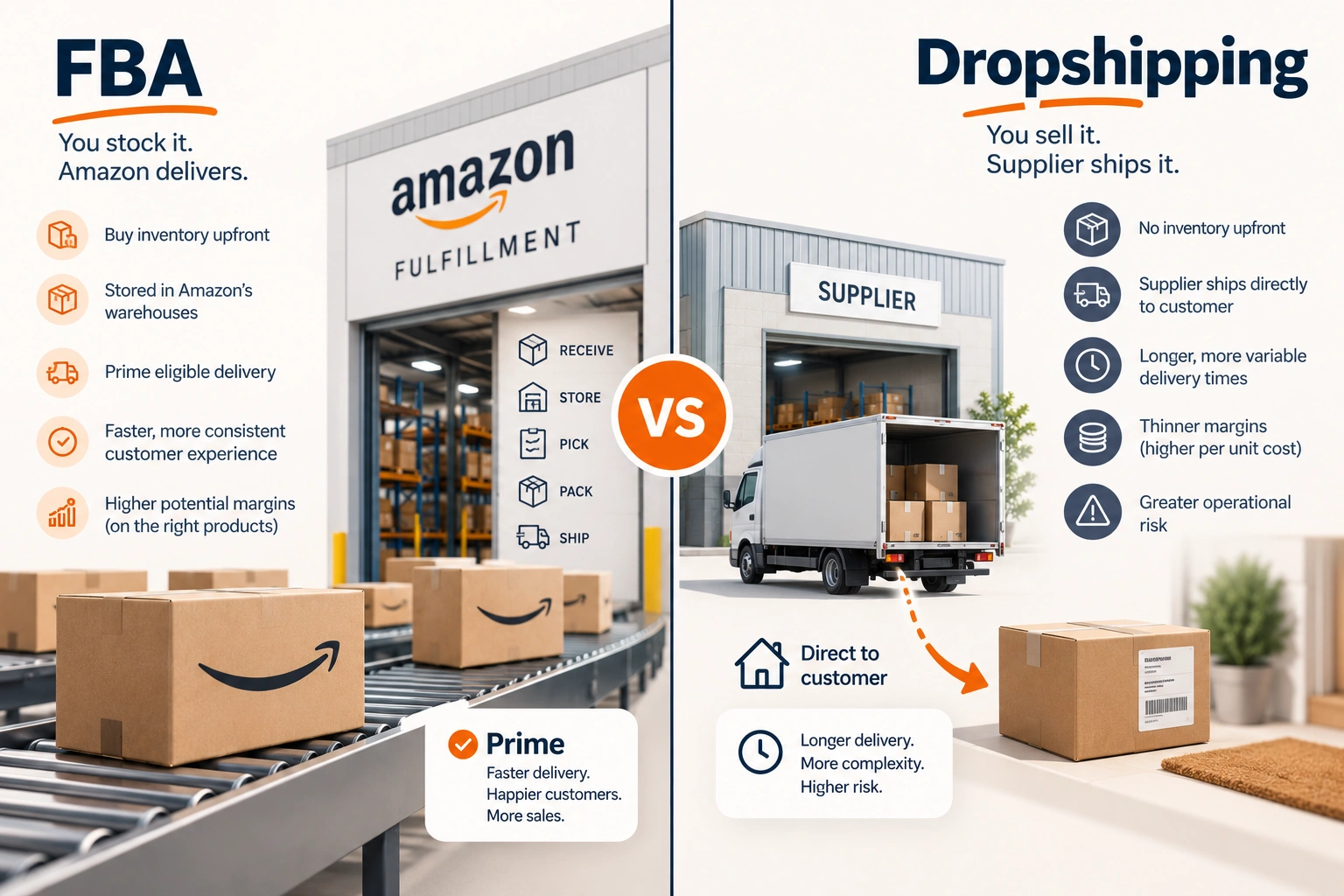
These two get compared constantly, usually as a choice between them. The comparison is slightly off from the start, because they are not the same kind of thing. FBA is a way of fulfilling orders. Dropshipping is a way of sourcing and holding, or rather not holding, stock.
You can dropship without FBA, use FBA without dropshipping, and in some configurations do both. What follows is what actually differs once that is straightened out.
Capital and cash flow
FBA requires buying inventory before selling it, shipping it to Amazon, and waiting. Capital is tied up in stock that may or may not move, and the cycle from paying a supplier to being paid by Amazon can run for months.
Dropshipping largely removes that. Stock is bought after it is sold, so the working capital requirement is far smaller. That is the genuine and often decisive advantage, particularly for somebody starting without capital.
The cost of that advantage is everything below.
Control over the customer experience
With FBA, Amazon holds the stock and controls dispatch. Delivery is fast, Prime eligible, and consistent, which lifts conversion measurably.
With dropshipping, dispatch is controlled by a third party whose priorities are not yours. Delivery times are longer and more variable, and every late shipment, wrong item and stockout lands on your seller metrics rather than theirs.
On Amazon that is not a minor operational irritation. Late dispatch and defect rates feed account health, and account health feeds everything else.
What Amazon actually permits
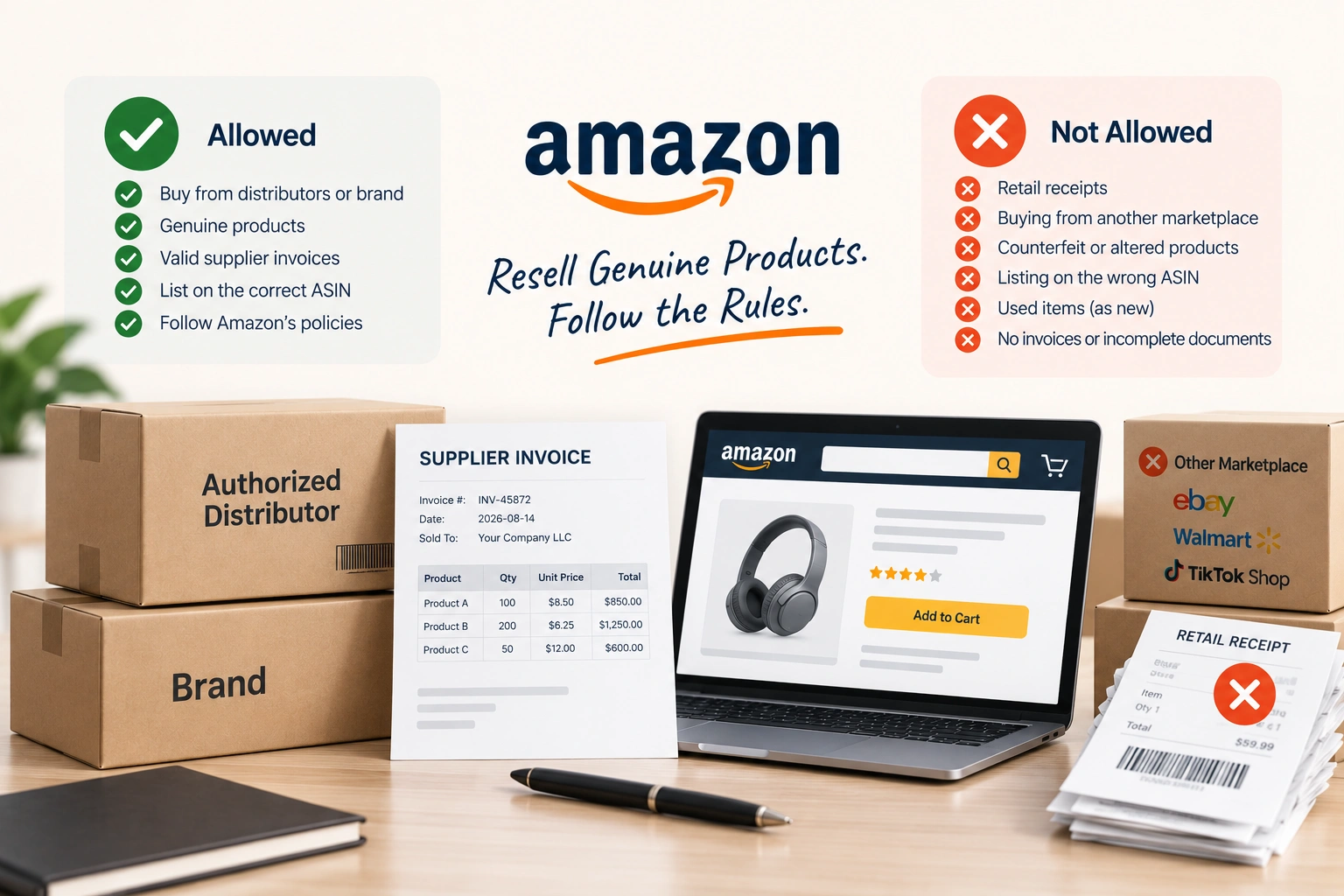
Amazon does allow dropshipping, and this is where most confusion sits. What it requires is that you are the seller of record: your name on the packing slip, invoices and packaging, and you responsible for returns.
What it prohibits is buying from another retailer and having that retailer ship to your customer, which includes the widely marketed model of fulfilling Amazon orders from another marketplace. That is a policy violation, and accounts are suspended for it regularly.
So the model marketed as easy Amazon dropshipping is frequently the one Amazon does not allow, while the compliant version, working with a supplier who ships under your branding, is a real business with real supplier relationships to negotiate.
Margin
FBA carries fulfilment fees, storage fees, and referral fees, which are substantial and predictable. Dropshipping avoids fulfilment and storage fees but usually buys at worse unit prices, because you are buying in ones rather than in hundreds.
In practice FBA margins tend to be higher on products that move steadily and lower on slow movers accruing storage costs. Dropshipping margins are thinner but require no capital, which means the return on capital can look better even when the return on revenue is worse.
The arithmetic is per product rather than per model, which is why blanket claims about which is more profitable are worth ignoring.
Risk
FBA's risk is inventory: buying the wrong thing, or too much of the right thing, and holding it while storage fees accumulate.
Dropshipping's risk is operational and regulatory: a supplier who runs out or ships late damages metrics you cannot control, and the compliance line is easy to cross without noticing. The failure mode is worse, too. Bad inventory loses money slowly. A suspension stops the business.
Which suits which
FBA suits established products with predictable demand, brands that own what they sell, and anybody whose margins can absorb the fees in exchange for Prime conversion.
Compliant dropshipping suits large or heavy items where FBA fees are punitive, long-tail catalogues where holding stock is impractical, and testing demand before committing capital.
Most brands we work with end up with FBA for the core range and seller fulfilled for the exceptions, which is less exciting than either model marketed on its own and works better than both.
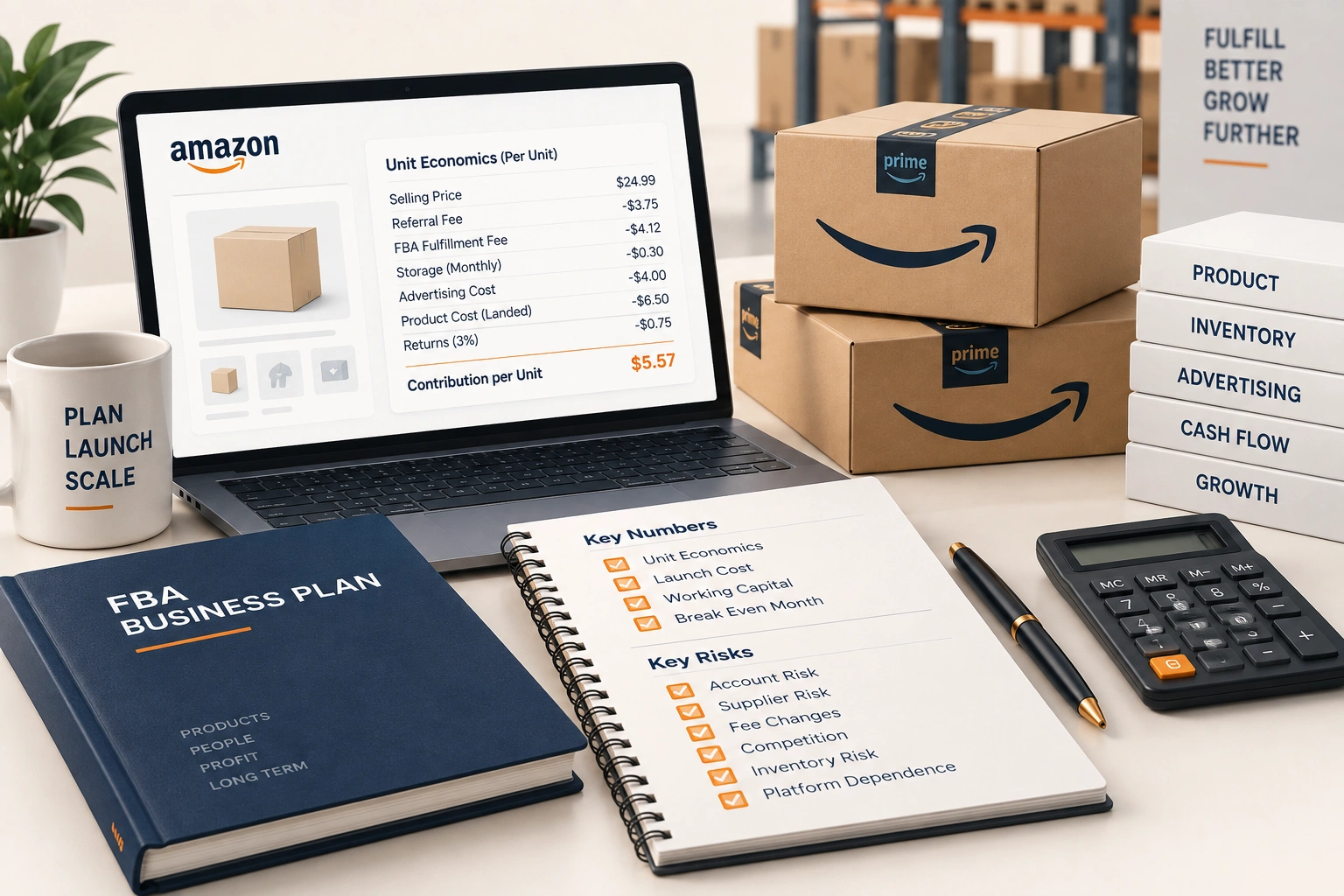
If you are weighing this for an existing catalogue rather than in the abstract, the answer is usually visible in the unit economics per product, which is where our Amazon account management work starts.
Where the other models sit
Keep reading
- Amazon Private Label, and What It Actually Takes
- How to Sell on Amazon Without Inventory: The Four Models and What Amazon Allows
Related reading: Amazon FBA Explained: How It Works, What It Costs, and Whether It Is Worth It.
Frequently asked questions
The questions that come up most often on this subject.
Yes, with conditions. You must be the seller of record: your name on packing slips, invoices and packaging, and you responsible for returns. What Amazon prohibits is buying from another retailer and having that retailer ship directly to your customer, which is the model most commonly marketed as Amazon dropshipping.
For small, standard-sized, steadily moving products, usually yes, because Prime eligibility lifts conversion enough to cover the fees. It stops being worth it on large or heavy items, slow movers accruing storage fees, and products whose margins cannot absorb fulfilment and referral fees together. It is a decision per product rather than per catalogue.
Private label means selling products under your own brand, usually manufactured to your specification. You own the listing and the detail page rather than sharing it, which removes Buy Box competition and gives the highest margin potential, in exchange for the highest capital requirement and product development risk.
Wholesale means buying genuine branded products from distributors or the brand and reselling them. Margins are lower than private label and setup is faster, and the constraints are supply relationships and gating approvals rather than product development.
It is cheap to start and difficult to sustain. Supply is inconsistent, retail receipts are not the supplier invoices Amazon accepts when a listing is challenged, and it does not scale without effectively becoming wholesale. It works as a way to learn the platform rather than as a business to build on.
It depends on the product. FBA generally produces higher margin on goods that move steadily, because of better unit costs and higher conversion. Dropshipping produces lower margin but requires almost no capital, so return on capital can be better even when return on revenue is worse.
You can run both models across a catalogue: FBA for core products where the fees are justified, and seller fulfilled or supplier fulfilled for items where they are not. The two are not exclusive, because one is a fulfilment method and the other is a sourcing model.
Most commonly for shipping from another retailer, which is a direct policy breach, and for the metric damage that follows unreliable third party dispatch: late shipments, cancellations for out of stock, and defect rates above Amazon's thresholds.