Can You Sell Used Items on Amazon? Conditions, Categories and the Rules
Yes, in most categories, under four condition grades Amazon defines to the word, and no in the categories where the product goes in or on the body. What each grade means, where used is not allowed, how the used offer sits on the listing, and the two programmes for used stock at scale.


Loading Article banner
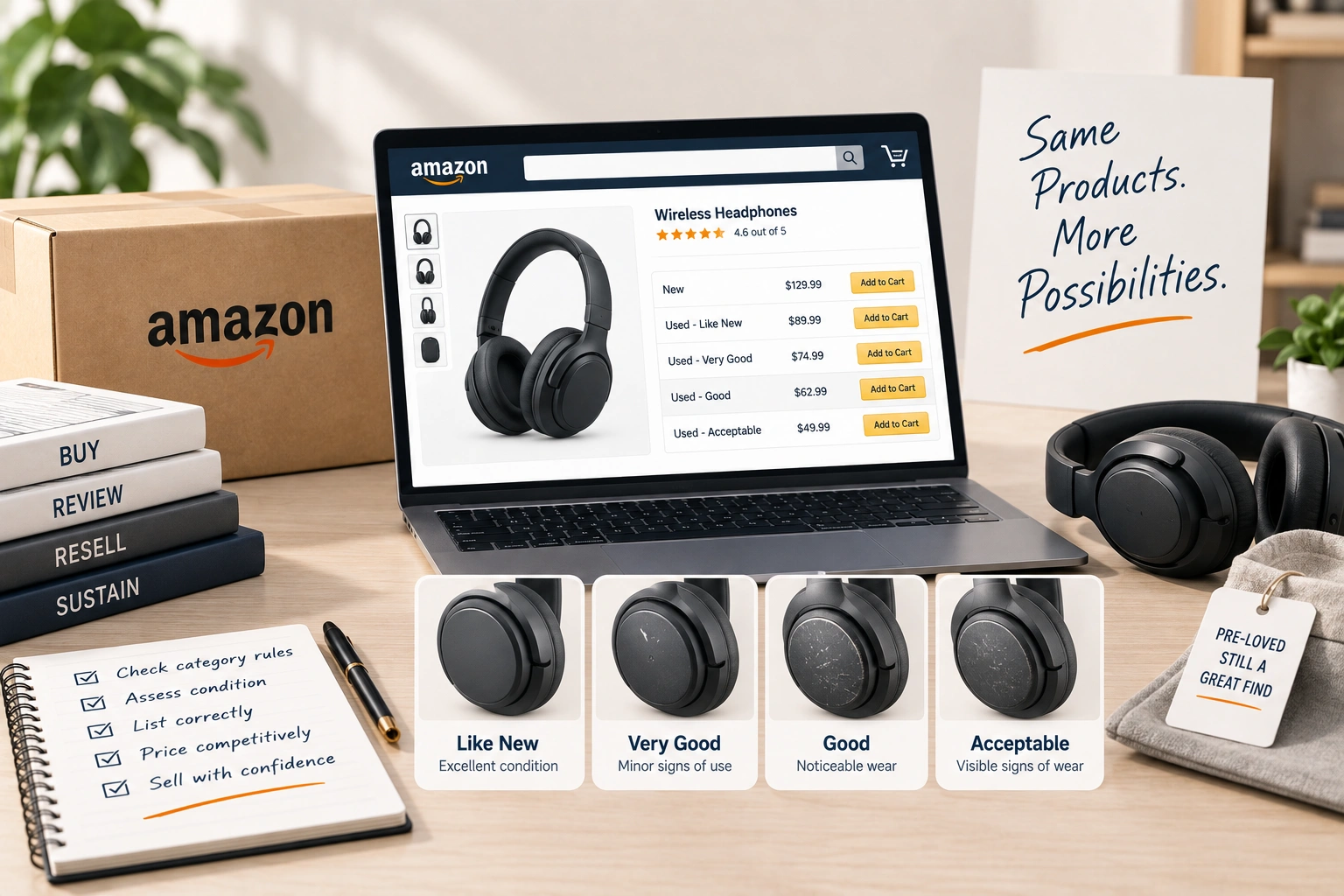
Amazon sells used goods, and has since it sold books. What changed is the reach: a used offer today sits on the same product page as the new one, under the same title and images, and a buyer choosing between them sees a price and a condition grade. That makes the condition grade the whole listing. A used item described to Amazon's definition sells; one described to the seller's optimism comes back.
This is the rule set: the four grades in Amazon's own words, the categories where used is not permitted at all, how the used offer works on a page, and the two programmes that exist for used stock in volume.
The four grades, as Amazon defines them
Used, Like New or Open Box: an apparently untouched item in perfect condition. The original protective wrapping may be missing, but the original packaging is intact and pristine; there are no signs of wear on the item or its packaging; instructions are included; the item is suitable for presenting as a gift. That is the grade for a returned item that was never used.
Used, Very Good: a well cared for item that has seen limited use but remains in great condition. It works perfectly. Minor wear on the packaging, a small mark, a missing accessory that is named in the description. Used, Good: an item showing wear from consistent use that continues to work perfectly, with signs of use and possibly missing packaging or accessories. Used, Acceptable: fairly worn but continues to work perfectly, with scratches, dents, worn corners and identifying marks. Amazon's post is explicit that Good and Acceptable may be used only where the category specific condition guidelines allow them, so a category can permit used stock and still refuse its two lower grades.
The rule under all four is that the item works perfectly. A used grade is not a place for a product with a fault; a fault is a for parts listing where the category has one, and a return where it does not.
Where used is not allowed
The category guidelines decide it, and the plain cases are the categories where the product is consumed or touches the body: beauty, grocery, health and personal care, and the baby categories for items that go in a mouth or a cot. Those take new only, sealed. Clothing and shoes are governed by their own guidelines and their own programmes rather than the general used grades, and jewellery and watches have their own rules on used and on authenticity. Anything with a safety certification, from car seats to helmets, is new only for the reason the certification exists.
The listing workflow is the authority: on the product's page in the catalogue, the condition menu shows the grades the category allows for that item, and a grade that is not offered is not permitted. A seller who lists a used item in a new only category by choosing new is committing the violation that the policy warnings article describes as a product condition complaint, and the complaint arrives with the first return.
How a used offer sits on the page
A used offer is an offer on an existing ASIN, not a new listing. The product page belongs to the catalogue; the seller adds an offer against it with a condition, a condition note, a price and a fulfilment method. The used offer appears in the other sellers list and, where there is no new offer or the used price is far enough below it, in the used and new box on the page. It does not win the buy box against a new offer, and a used seller's competition is the other used offers, graded and priced.
The condition note is the sales copy. It is the one field a used seller writes, it is shown to the buyer, and it is what the return is judged against. Name the wear, the missing accessory, the mark on the case; a buyer who was told is a buyer who keeps it. Fulfilment can be FBA, where the item is prepped and graded as it arrives, or merchant, and the fee stack is the same one as for new, which Amazon seller fees explained sets out. A used offer that ignores the referral fee on a low price is a used offer that loses money on every sale.
Used at scale: the two programmes
For a business with used stock in volume, the grades above are the retail route and there are two others. Amazon Renewed is the programme for refurbished products, with its own qualification, its own quality standard and its own placement on the page; a reseller of refurbished electronics, appliances or tools who qualifies sells under it rather than as used, and our Amazon Renewed service is the onboarding for it. Returns that come back to a seller's own FBA stock are graded by Amazon on arrival and relisted or removed by the seller's settings, which is the closest thing to automatic used selling the platform has.
The second route is the one for returns in bulk: liquidation and removal, where the stock leaves Amazon rather than being resold on it. That is a cost decision rather than a sales one, and it belongs with the removal and unsellable stock rules. For a brand we run under Amazon marketplace management, the returned unit's path is set before the first return arrives: relist as Like New where the category allows, Renewed where the product qualifies, remove where neither applies. What a reseller may list at all, used or new, is the wider rule in the reselling article.
Frequently asked questions
The questions that come up most often on this subject.
Yes, in most categories, under the condition grades Amazon defines: Used, Like New or Open Box; Very Good; Good; and Acceptable, with the last two only where the category guidelines allow. Beauty, grocery, health and personal care and safety certified products are new only.
Clothing and shoes are governed by their own category guidelines and programmes rather than the general used grades. The condition menu on the item's catalogue page shows what the category permits; if a used grade is not offered there, it is not allowed.
In Amazon's words, an apparently untouched item in perfect condition, with the original packaging intact and pristine, no signs of wear on the item or its packaging, instructions included, and suitable for presenting as a gift. The protective wrapping may be missing.
Not against a new offer. A used offer appears in the other sellers list and in the used and new box where there is no new offer or the used price is far enough below. Its competition is the other used offers, graded and priced.
Amazon's programme for refurbished products, with its own qualification, quality standard and placement. A business selling refurbished electronics, appliances or tools in volume sells under it rather than as used.