Finding an FBA Niche That Is Worth Entering
Most product research finds things that sell. The harder question is whether you can still be selling them profitably in a year.


Loading Article banner
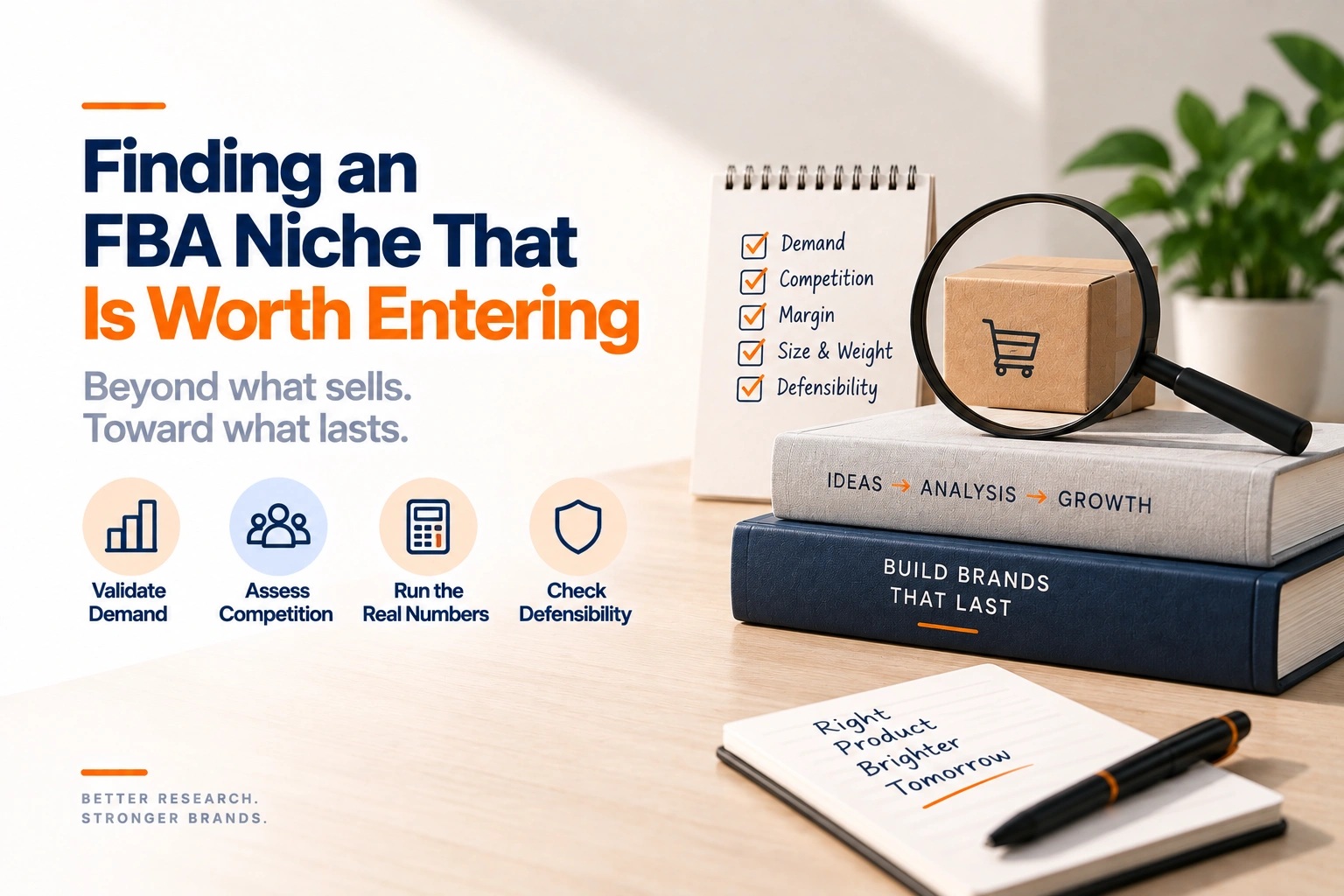
Product research tools answer one question well: what is selling. That is the easy half, and it is the half every other seller with the same tool can also see.
The harder question is whether a product will still be worth selling once you are in it, competitors have noticed, and the real costs have arrived.
Demand, and what is enough
Enough sales in the category to support another seller without you needing to be first. A niche where the top listing sells a hundred a day and the tenth sells one is a niche with one winner.
Look at the spread rather than the peak. A category where the third, fifth and tenth listings all sell steadily is one where a good listing finds room; a category dominated by two ASINs is one where being third is worthless.
Competition, read properly
Review counts are the usual proxy and a poor one on their own. A listing with four thousand reviews and a 3.9 rating is more beatable than one with eight hundred and a 4.8.
Read the one and two star reviews on the top five listings. If the complaints repeat and are fixable, that is the product brief: the same item made properly is the whole opportunity.
If the complaints are about the category itself rather than the products, the category is the problem and no version of it will do better.
Margin after everything
Landed cost, referral fee, fulfilment by size band, storage for the time it actually sits, returns at the category's real rate, and advertising at what the category's clicks cost.
The last two are what people leave out, and together they are frequently the difference between a good idea and a loss. A product with a 35% gross margin and a 12% return rate in a category where clicks are expensive is not a 35% margin product.
Work it out before ordering anything. It takes an afternoon and it rules out more ideas than any tool.
Size, weight and the boundaries
Fulfilment is priced in bands, so a product a few ounces or a centimetre over a threshold pays the next band on every unit for its whole life.
Small and light wins on fees, on storage, on freight and on returns. It is the single most reliable structural advantage available to a new seller, and it costs nothing to prefer.
Defensibility, which most research skips
If your product can be copied from a supplier catalogue by anybody who sees it selling, it will be, and quickly. The question is what stops that being a race to the bottom.
The honest answers are few: a trademark and Brand Registry, a genuine design or bundle nobody else has, a supplier relationship that is exclusive in practice, or a brand people ask for by name. Everything else is a head start rather than a moat.
What rules an idea out fastest
Gated categories you cannot get ungated in. Anything with safety, electrical or medical requirements you are not equipped to meet. Products with a shelf life. Anything oversized. Fragile items with a return rate to match.
And any product where your margin depends on being the cheapest, because there is always somebody willing to be cheaper for longer than you can afford.
What we do with this
Product and category research sits alongside Amazon account management because the same evidence drives both: the reviews that say what is wrong with the category are the reviews that write the listing.
The arithmetic differs on Walmart and eBay, and a product that cannot work on Amazon sometimes works on one of those, where competition is thinner.
If you have a shortlist and want the numbers done properly before the order, that is a good use of an hour.
Frequently asked questions
The questions that come up most often on this subject.
Start with categories where several listings sell steadily rather than one dominating, read the negative reviews on the top five for a fixable, repeated complaint, and work out the margin after every fee including returns and advertising. The last step rules out more ideas than the first two combined.
Enough that the third, fifth and tenth listings all sell steadily, not just the first. A niche where the top seller does a hundred a day and the tenth does one has a single winner, and being tenth in it is worth nothing.
On their own, no. A listing with four thousand reviews at 3.9 is more beatable than one with eight hundred at 4.8, because the first has a documented list of what is wrong with it and the second has satisfied customers.
Enough to survive advertising and returns at the category's real rates, which is the calculation people skip. A 35% gross margin in a category with a 12% return rate and expensive clicks is not a 35% margin business, and the difference is knowable before ordering anything.
More than almost anything else. Fulfilment is priced in bands, so a few ounces over a threshold costs the next band on every unit for the life of the product, and small and light also wins on storage, freight and returns.
Mostly you cannot, so the question is what makes copying unprofitable: a trademark and Brand Registry, a genuine design or bundle, a supplier relationship that is exclusive in practice, or a brand people ask for. Everything else is a head start rather than a moat.
Avoid the ones you cannot realistically get ungated in, and treat the ones you can as an advantage: a gate that keeps you out keeps others out too, and a seller who has cleared it faces less competition inside.
For the demand estimate and the shortlist, yes, with the caveat that their sales figures are estimates and everybody with the same subscription sees the same list. The judgement that follows, about margin, defensibility and whether the complaints are fixable, is where the decision actually happens.
Enough to test the demand and small enough to be wrong about. The first replenishment carries the real information, so plan to reorder early rather than to order deep, and treat the first batch as buying data as much as inventory.
Choosing on demand alone. A high volume product with thin margins, expensive clicks and a high return rate is a busy way to lose money, and every one of those figures was available before the order was placed.